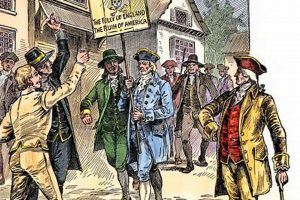
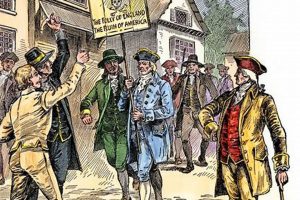
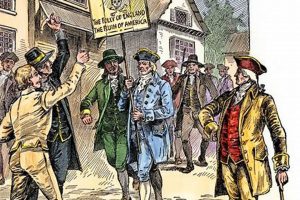
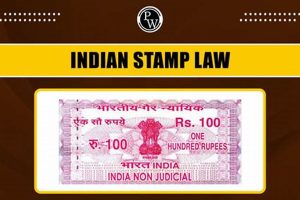
The Stamp Act of 1765, requiring all printed materials in the American colonies to carry a tax stamp purchased from British authorities, arose from Britain’s need to alleviate war debt incurred during the French and Indian War (Seven Years’ War). Colonial subjects were expected to share the financial burden of their defense. This act served as a direct tax, unlike previous regulations of trade, directly impacting colonists from all walks of life lawyers, printers, merchants, and even players of card games. Colonists were further incensed that they had no representation in the British Parliament to voice their concerns or consent to such taxation.
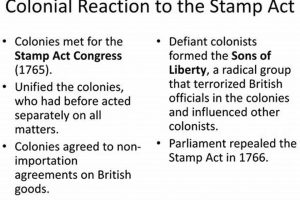
The consequences of this act were profound and far-reaching, igniting widespread colonial resistance. Boycotts of British goods, organized through groups like the Sons of Liberty, severely impacted British merchants. Colonial assemblies passed resolutions condemning the act. The Stamp Act Congress, convened in 1765, represented a significant step toward colonial unity. This collective defiance highlighted the growing discontent with British policies and contributed to the rising tide of revolutionary sentiment. The act’s economic and political repercussions ultimately led to its repeal in 1766, demonstrating the power of colonial resistance and setting the stage for future conflicts over taxation and representation.
Understanding this historical sequence of events provides a crucial foundation for exploring the broader themes of the American Revolution, including the development of colonial identity, the rise of revolutionary ideology, and the eventual struggle for independence.
Understanding the Stamp Act’s Impact
Gaining deeper insights into the Stamp Act requires examining its underlying causes and resulting consequences. The following points offer guidance for a more comprehensive understanding.
Tip 1: Explore the financial context. Research Britain’s fiscal situation following the French and Indian War to grasp the motivation behind implementing the Stamp Act. Examine the cost of maintaining a military presence in the colonies and the perceived need for colonial financial contributions.
Tip 2: Consider colonial perspectives. Investigate the colonial arguments against taxation without representation. Analyze how the Stamp Act challenged existing colonial political and economic structures and fueled discontent.
Tip 3: Analyze the forms of resistance. Research the various methods of colonial protest, from boycotts and non-importation agreements to the formation of groups like the Sons of Liberty. Consider the effectiveness of each approach.
Tip 4: Study the Stamp Act Congress. Understand the significance of this intercolonial gathering. Examine its role in fostering colonial unity and articulating shared grievances against British policies.
Tip 5: Evaluate the British response. Investigate the reasons behind the British government’s decision to repeal the Stamp Act. Analyze the political pressures and economic considerations that influenced this decision.
Tip 6: Connect to long-term consequences. Consider how the Stamp Act crisis contributed to the escalating tensions between Britain and the colonies. Trace its influence on the development of revolutionary ideology and the eventual path toward independence.
By considering these points, one can develop a more nuanced understanding of the Stamp Act’s significance in the broader narrative of the American Revolution.
This exploration of the Stamp Act provides essential context for understanding the complex relationship between Britain and its American colonies in the years leading to revolution.
1. British War Debt

The significant British war debt following the French and Indian War (1754-1763) served as the primary catalyst for the Stamp Act of 1765 and its cascading consequences. Understanding the financial pressures on the British government is crucial to comprehending the rationale behind the act and the colonial reaction it provoked.
- Cost of Imperial Defense
Protecting the American colonies during and after the war required a substantial military presence, placing a significant strain on British finances. Maintaining troops, fortifications, and naval forces necessitated new revenue streams, leading the British government to seek increased financial contributions from the colonies.
- Taxation as a Solution
The British government, burdened by war debt, viewed direct taxation of the colonies as a necessary solution. While colonists had contributed financially in the past, the scale and direct nature of the Stamp Act marked a departure from previous practices, directly impacting a wider range of colonial economic activity.
- Colonial Resentment
The imposition of the Stamp Act without colonial representation in Parliament fueled resentment and resistance. Colonists argued that they should not be subjected to taxation without having a voice in the legislative process, a principle central to British governance. This perceived injustice ignited protests, boycotts, and the formation of groups like the Sons of Liberty.
- Repeal and its Aftermath
While the Stamp Act was eventually repealed due to colonial pressure, the underlying issue of British war debt remained. The attempt to levy taxes on the colonies established a precedent and exacerbated tensions, contributing to the escalating conflict that ultimately led to the American Revolution. The repeal demonstrated the power of colonial resistance, but it did not resolve the fundamental financial and political disagreements between Britain and its American colonies.
The British war debt, therefore, provides crucial context for understanding the cause and effect of the Stamp Act. While designed to address a financial crisis, the act inadvertently ignited a firestorm of colonial resistance, laying the groundwork for the revolutionary movement and the eventual struggle for independence.
2. Colonial Taxation
Colonial taxation played a central role in the cause and effect of the Stamp Act. Understanding the existing system of taxation in the American colonies, and how the Stamp Act deviated from established practice, is crucial for comprehending the colonial outrage that followed its implementation. This exploration delves into the various facets of colonial taxation and its impact on the relationship between Britain and its American colonies.
- Existing Colonial Taxes
Prior to the Stamp Act, colonial taxation primarily focused on regulating trade through tariffs and duties. These taxes were generally accepted as a means of controlling commerce within the empire. The Navigation Acts, for example, regulated colonial trade and generated revenue for the British crown. However, these taxes were largely viewed as external taxes related to trade rather than direct internal taxes on the colonists themselves.
- The Stamp Act as a Direct Tax
The Stamp Act marked a significant shift in British taxation policy. Unlike previous taxes, the Stamp Act was a direct internal tax levied on the colonists themselves. It required the purchase of stamps for a wide range of printed materials, including legal documents, newspapers, pamphlets, and even playing cards. This direct taxation impacted a broad spectrum of colonial society, from merchants and lawyers to ordinary citizens, generating widespread resentment.
- Taxation Without Representation
The cry of “No taxation without representation” encapsulated the core colonial grievance against the Stamp Act. Colonists argued that they should not be subjected to taxation by a Parliament in which they had no elected representatives. This perceived violation of fundamental British principles of governance fueled resistance and protests throughout the colonies.
- Economic and Political Consequences
The Stamp Act’s economic consequences were substantial. Colonial boycotts of British goods, organized through groups like the Sons of Liberty, significantly impacted British merchants. The political consequences were even more profound. The Stamp Act Congress, convened in 1765, represented a critical step toward colonial unity and provided a forum for articulating shared grievances. The act’s economic and political repercussions ultimately led to its repeal in 1766.
The Stamp Act, and the colonial reaction it provoked, highlighted the fundamental disagreements between Britain and its American colonies regarding taxation and representation. While the act itself was repealed, the underlying tensions persisted, ultimately contributing to the escalating conflict that culminated in the American Revolution. The Stamp Act serves as a pivotal example of how colonial taxation became a central issue in the struggle for independence.
3. No Taxation Without Representation

The phrase “No taxation without representation” encapsulates the core grievance at the heart of the Stamp Act crisis and its escalating consequences. The Stamp Act, imposing direct taxes on the American colonies without their consent or representation in the British Parliament, sparked outrage and resistance across the colonial landscape. This perceived violation of fundamental British political principles ignited a firestorm of protest and laid the groundwork for the revolutionary movement.
The absence of colonial representation in Parliament meant that colonists had no voice in the decisions made regarding their taxation. This lack of representation was seen not only as unjust but also as a dangerous precedent, potentially opening the door to further unchecked taxation and erosion of colonial autonomy. Colonists argued that they were entitled to the same rights and liberties as British subjects residing in Britain, including the right to be taxed only by their own elected representatives. The Stamp Act Congress, convened in 1765, provided a platform for colonial leaders to articulate this grievance and coordinate resistance efforts. The boycotts and protests that followed demonstrated the widespread colonial opposition to taxation without representation and the growing sense of unity among the colonies.
The principle of “No taxation without representation” became a rallying cry for the burgeoning revolutionary movement. It highlighted the fundamental philosophical and political differences between Britain and its American colonies. The Stamp Act crisis, fueled by this central grievance, demonstrated the power of colonial resistance and set in motion a chain of events that ultimately led to the American Revolution. Understanding the connection between “No taxation without representation” and the Stamp Act is crucial for comprehending the origins and evolution of the American Revolution and the foundational principles upon which the United States was built.
4. Widespread Boycotts

Widespread boycotts of British goods played a crucial role in the colonial resistance to the Stamp Act of 1765. These boycotts, organized primarily by groups like the Sons of Liberty, represented a powerful form of economic and political protest, significantly impacting British merchants and contributing to the eventual repeal of the act. Examining the organization, effectiveness, and broader implications of these boycotts provides critical insight into the “cause and effect of the Stamp Act.”
- Organization and Implementation
The boycotts were orchestrated through a network of colonial organizations, including the Sons of Liberty, committees of correspondence, and local town meetings. These groups disseminated information, coordinated protest activities, and enforced participation in the boycotts. Non-importation agreements, signed by merchants and consumers, pledged to abstain from purchasing British goods. This organized effort demonstrated a remarkable degree of colonial unity and resolve.
- Economic Impact on Britain
The boycotts had a substantial impact on British merchants and manufacturers, particularly those involved in the textile trade. The decline in colonial purchases created economic hardship in Britain, putting pressure on Parliament to reconsider the Stamp Act. This economic pressure played a significant role in the decision to repeal the act in 1766, demonstrating the effectiveness of the colonial boycotts as a tool of resistance.
- Political Implications and Colonial Unity
Beyond their economic impact, the boycotts fostered a sense of unity and shared purpose among the American colonies. The collective action required to organize and enforce the boycotts strengthened intercolonial communication and cooperation, laying the groundwork for future resistance efforts. The Stamp Act Congress, convened in 1765, exemplified this growing colonial unity and served as a forum for articulating shared grievances against British policies.
- Long-Term Consequences and Legacy
The success of the boycotts in achieving the repeal of the Stamp Act demonstrated the power of collective action and nonviolent resistance. The experience of organizing and participating in these boycotts further radicalized many colonists and contributed to the growing sense of American identity distinct from British rule. The widespread boycotts of the Stamp Act era serve as a pivotal example of how economic pressure and popular protest can influence political change and shape the course of history.
The widespread boycotts associated with the Stamp Act were not merely a response to a specific tax; they represented a significant turning point in the relationship between Britain and its American colonies. By examining these boycotts, one gains a deeper understanding of the complex interplay of economic, political, and social factors that fueled the American Revolution. The boycotts’ effectiveness in achieving the repeal of the Stamp Act established a precedent for future resistance and contributed significantly to the growing movement toward independence.
5. Colonial Unity

The Stamp Act of 1765, while intended to generate revenue for the British Crown, inadvertently fostered a sense of unity among the American colonies that proved crucial in the unfolding narrative leading to revolution. Before the Act, colonial identity was largely localized. Colonists identified primarily with their individual colonies rather than a collective American identity. The Stamp Act, however, impacting all colonies equally, created a shared grievance that transcended geographical boundaries. This shared experience of perceived injustice became a catalyst for intercolonial cooperation and the development of a broader American identity.
The Stamp Act Congress, convened in October 1765, exemplifies this burgeoning colonial unity. Representatives from nine colonies gathered to discuss their shared opposition to the Act, marking a significant step towards collective action. The Congress drafted petitions to the King and Parliament, articulating a unified colonial voice against taxation without representation. This coordinated response, alongside widespread boycotts of British goods organized through groups like the Sons of Liberty, demonstrated a level of intercolonial cooperation rarely seen before. The success of these collective actions in securing the repeal of the Stamp Act further reinforced the power of colonial unity and set a precedent for future coordinated resistance against British policies.
The legacy of the Stamp Act in fostering colonial unity cannot be overstated. It laid the foundation for future intercolonial collaborations, including the Committees of Correspondence, which facilitated communication and information sharing among the colonies in the years leading to the American Revolution. The shared experience of resisting the Stamp Act, through coordinated political action and economic boycotts, solidified a sense of collective identity and purpose among the American colonies, proving instrumental in their eventual struggle for independence. The Stamp Act, therefore, stands as a pivotal moment not only in the history of taxation but also in the development of a unified American consciousness.
6. Eventual Repeal
The repeal of the Stamp Act in 1766 stands as a pivotal event in the escalating tensions between Great Britain and its American colonies. While the act itself was short-lived, its eventual repeal holds significant weight in understanding the broader cause and effect of the Stamp Act. The repeal demonstrates the tangible impact of colonial resistance, highlighting the effectiveness of organized boycotts, petitions, and protests in influencing British policy. Furthermore, the repeal underscores the complex economic and political considerations at play within the British government and its relationship with the colonies.
The colonial boycotts of British goods, orchestrated through groups like the Sons of Liberty, significantly impacted British merchants and manufacturers. This economic pressure, coupled with the vocal protests and petitions from colonial assemblies and the Stamp Act Congress, forced the British government to reconsider the Act’s efficacy and political ramifications. The repeal, however, was not solely a result of colonial pressure. Internal political divisions within the British government also played a role. The debate surrounding the Stamp Act exposed differing views on colonial governance and the proper balance between imperial control and colonial autonomy. The repeal demonstrates the interplay of these various factors, highlighting the complexity of the relationship between Britain and its American colonies.
While the repeal of the Stamp Act temporarily eased tensions, it did not resolve the underlying issues of taxation and representation. The British government, still facing financial pressures, asserted its right to tax the colonies, setting the stage for future conflicts. The Declaratory Act, passed alongside the repeal of the Stamp Act, affirmed Parliament’s authority to legislate for the colonies “in all cases whatsoever.” This assertion of parliamentary supremacy laid the groundwork for future clashes over colonial autonomy and ultimately contributed to the outbreak of the American Revolution. Therefore, understanding the eventual repeal of the Stamp Act is not merely about acknowledging the end of a specific tax; it requires analyzing the complex interplay of colonial resistance, British politics, and the unresolved issues that continued to fuel the growing divide between Britain and its American colonies. The repeal, therefore, serves as a crucial turning point, highlighting the escalating tensions and the inevitable path toward revolution.
Frequently Asked Questions
The following addresses common inquiries regarding the Stamp Act of 1765, providing concise yet informative responses.
Question 1: Why did the British government implement the Stamp Act?
The primary motivation was financial. The British government faced substantial debt following the French and Indian War and sought to generate revenue by taxing the American colonies, who were perceived to have benefited from British military protection during the conflict.
Question 2: How did the Stamp Act differ from previous taxes levied on the colonies?
Unlike earlier taxes, which primarily focused on regulating trade, the Stamp Act represented a direct internal tax on the colonists themselves. It required the purchase of stamps for a wide range of printed materials, impacting various aspects of colonial life and commerce.
Question 3: Why did the colonists object to the Stamp Act?
The central objection stemmed from the lack of colonial representation in the British Parliament. Colonists argued that being taxed without having elected representatives to voice their interests violated fundamental British principles of governance. This “taxation without representation” became a rallying cry for resistance.
Question 4: How did the colonists resist the Stamp Act?
Resistance took various forms, including organized boycotts of British goods, protests, petitions to the King and Parliament, and the formation of groups like the Sons of Liberty. The Stamp Act Congress, convened in 1765, provided a platform for a unified colonial response.
Question 5: Why was the Stamp Act eventually repealed?
The combination of colonial resistance, particularly the economic pressure exerted by boycotts, and internal political debates within the British government led to the Act’s repeal in 1766. British merchants, suffering from the colonial boycotts, lobbied Parliament for the Act’s revocation.
Question 6: Did the repeal of the Stamp Act resolve the tensions between Britain and the colonies?
While the repeal provided temporary relief, it did not address the underlying issue of Parliament’s authority to tax the colonies. The passage of the Declaratory Act, affirming Parliament’s right to legislate for the colonies “in all cases whatsoever,” maintained the potential for future conflict and ultimately contributed to the escalating tensions that culminated in the American Revolution.
Understanding the context, implementation, and consequences of the Stamp Act is crucial for comprehending the origins of the American Revolution. The issues of taxation, representation, and colonial autonomy raised by the Stamp Act crisis played a pivotal role in shaping the course of history and the eventual birth of the United States.
Exploring further the specific forms of colonial resistance, the economic impact of the boycotts, and the long-term consequences of the Stamp Act offers a deeper understanding of this pivotal period.
The Stamp Act
Examination of the Stamp Act reveals a pivotal moment in the relationship between Great Britain and the American colonies. Driven by the financial burdens of imperial warfare, the British government’s attempt to impose direct taxation without colonial representation ignited a firestorm of resistance. Organized boycotts, coupled with unified colonial protest through the Stamp Act Congress, demonstrated the power of collective action and underscored the colonists’ commitment to the principle of “No taxation without representation.” While the Act’s eventual repeal offered temporary respite, the underlying tensions regarding parliamentary authority and colonial autonomy remained unresolved. The Stamp Act, therefore, serves not merely as an isolated historical event but as a crucial turning point, foreshadowing the inevitable march toward revolution.
The legacy of the Stamp Act extends far beyond its immediate consequences. It stands as a testament to the enduring power of principles such as representation, self-governance, and the right to resist unjust laws. The events surrounding the Stamp Act offer invaluable insights into the complexities of imperial power, colonial resistance, and the enduring human struggle for liberty. Continued study of this period provides a deeper understanding of the forces that shaped the American Revolution and the foundational principles upon which the United States was built. This understanding remains crucial for navigating contemporary political and social challenges and for appreciating the enduring relevance of the struggle for freedom and self-determination.