

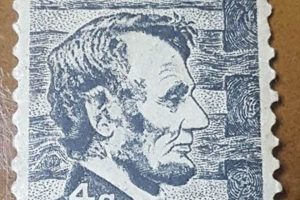

Several factors contribute to the desirability of a four-cent Lincoln stamp. Condition is paramount; an unused stamp with vibrant color, sharp corners, and intact gum holds significantly more value than a worn,... Read more »
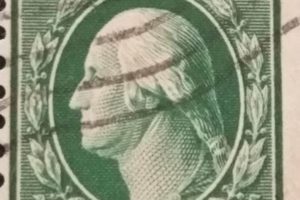
A one-cent postage stamp issued by the United States Postal Service represents the smallest denomination of postage. These stamps have existed since the earliest days of the national postal system, with the... Read more »

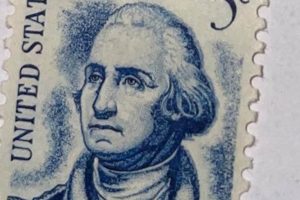
The value of a postage stamp depicting George Washington and originally denominated five cents is influenced by a multitude of factors. Condition, including centering, gum quality, and any flaws such as tears... Read more »
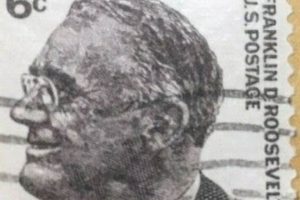
A postage stamp honoring the 32nd President of the United States, Franklin Delano Roosevelt, and issued with a denomination of six cents, represents a specific piece of American philatelic history. These stamps... Read more »
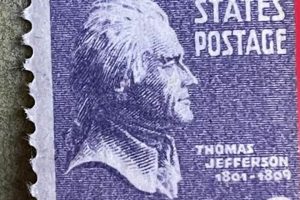
The value of a postage stamp depicting Thomas Jefferson and issued with a face value of three cents is determined by several factors, including its condition, the printing method used, and any... Read more »
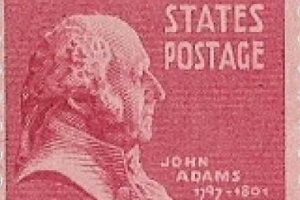
The value of a postage stamp depicting John Adams, specifically the two-cent denomination, is influenced by several factors. These include its condition (mint, used, any flaws), the specific printing or issue (some... Read more »
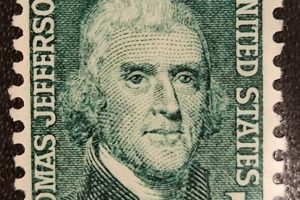
The one-cent postage stamp featuring a portrait of Thomas Jefferson printed in green ink has a rich history in American philately. Issued in various designs over the decades, this small piece of... Read more »
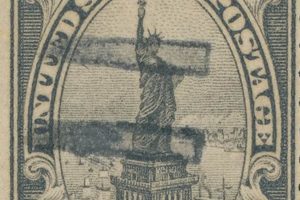
The Statue of Liberty has frequently been featured on United States postage, including a definitive stamp initially released in 1922 with a face value of fifteen cents. This depicted the iconic statue... Read more »
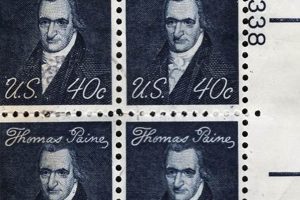
A postage stamp featuring the image of Thomas Paine, one of the Founding Fathers of the United States, was issued with a denomination of 40 cents. This stamp served as a form... Read more »
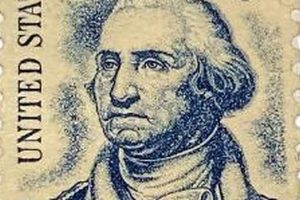
The 1861 five-cent stamp depicting George Washington, printed in blue ink, represents a significant piece of American postal history. This adhesive stamp, issued during a tumultuous period leading up to the Civil... Read more »