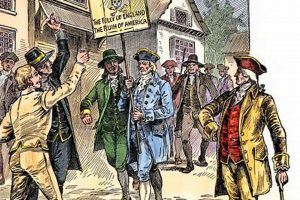
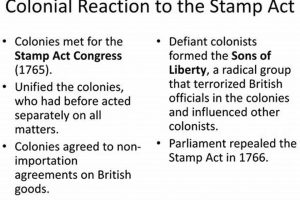
Original materials from the mid-18th century directly related to the Stamp Act of 1765 provide firsthand accounts of this pivotal moment in colonial American history. These materials can include handwritten letters, diaries, official documents, newspapers, pamphlets, and even physical objects like stamped paper. For example, a letter written by a colonial merchant complaining about the tax or a copy of the Act itself printed in a 1765 newspaper would be considered such material.
Accessing these authentic historical records offers valuable insights into the social, political, and economic climate surrounding the Act’s implementation. They reveal the colonists’ diverse reactions, ranging from reasoned legal arguments to passionate protests and boycotts. Studying these materials allows researchers to understand the Act’s profound impact on colonial society and its contribution to the growing tensions between Great Britain and its American colonies, ultimately leading to the American Revolution. These documents provide a window into the past, enabling a richer understanding of the historical context and human experiences shaped by this legislation.
Further exploration of this topic might include examining the Act’s specific provisions, the various forms of colonial resistance it provoked, and the British government’s response to this opposition. Investigating the roles played by key figures on both sides of the Atlantic can also provide a more nuanced understanding of this critical period.
Tips for Researching Stamp Act Primary Sources
Locating and interpreting original materials related to the Stamp Act of 1765 requires careful consideration of several factors. The following tips offer guidance for effective research.
Tip 1: Identify Relevant Repositories: Begin by identifying archives, libraries, and historical societies known to hold significant collections from this period. Examples include the National Archives, the Library of Congress, and various state historical societies.
Tip 2: Utilize Online Databases: Explore digital archives and online databases that offer digitized versions of primary sources. These resources can provide access to materials from diverse locations without requiring physical travel.
Tip 3: Refine Search Terms: Employ specific keywords and search strategies to narrow research focus. Consider terms like “colonial correspondence,” “taxation protests,” “Sons of Liberty,” or specific names of individuals involved in the events surrounding the Stamp Act.
Tip 4: Analyze Source Context: Evaluate the creator of each document, their intended audience, and the historical circumstances surrounding its creation. This contextual analysis enhances understanding of potential biases and motivations.
Tip 5: Corroborate Information: Compare information gleaned from multiple primary sources to ensure accuracy and develop a more complete understanding of events. Discrepancies between accounts can themselves offer valuable insights.
Tip 6: Consider Diverse Perspectives: Seek out primary sources representing various viewpoints, including those of colonial merchants, British officials, printers, and ordinary colonists. This multifaceted approach provides a more nuanced perspective.
Tip 7: Cite Sources Meticulously: Maintain accurate and consistent citations for all utilized materials. This practice allows others to verify findings and contributes to scholarly integrity.
By following these guidelines, researchers can effectively navigate the wealth of available historical materials and gain deeper insights into the Stamp Act’s significance in American history.
These research strategies facilitate a deeper understanding of the past and contribute to a more nuanced interpretation of the events leading up to the American Revolution.
1. Original Documents

Original documents serve as the bedrock of historical research on the Stamp Act. These materials, created contemporaneously with the events of 1765-1766, offer direct access to the perspectives and experiences of those affected by the legislation. Examining original documents is crucial for understanding the Act’s impact and the complex social and political dynamics of the period.
- Official Records:
Government documents, such as the text of the Stamp Act itself, parliamentary debates, and official correspondence, reveal the legal and political dimensions of the crisis. These records provide insight into the British government’s rationale for implementing the tax and the colonial assemblies’ responses.
- Personal Correspondence:
Letters, diaries, and journals of individuals living during this period offer personal accounts of the Stamp Act’s impact on daily life. These sources can reveal the emotional responses, economic hardships, and social tensions arising from the tax. A merchant’s letter describing lost business due to the boycotts, for instance, adds a human dimension to the historical narrative.
- Printed Materials:
Newspapers, pamphlets, and broadsides circulated widely during the Stamp Act crisis. These printed materials reflect public opinion, political arguments, and the strategies employed by both sides in the debate. Examining newspapers from different colonies reveals the range of responses to the Act.
- Legal and Financial Records:
Court records, tax receipts, and other financial documents provide concrete evidence of the Act’s practical implementation and its effects on colonial commerce. These sources offer quantifiable data that can be used to assess the economic impact of the tax and the extent of colonial resistance.
Through careful examination of these diverse original documents, researchers can reconstruct a more complete and nuanced understanding of the Stamp Act crisis. These materials not only illuminate the historical context but also provide valuable insights into the experiences of those who lived through this pivotal period in American history, ultimately leading to the Revolution. They serve as a bridge to the past, offering a direct connection to the individuals and events that shaped the nation’s founding.
2. First-hand Accounts
First-hand accounts represent a critical category within the broader scope of Stamp Act primary sources. These accounts, generated by individuals directly experiencing the Act’s impact, offer invaluable insights into the lived realities of the period. They provide perspectives often absent in official documents or later historical interpretations. A diary entry from a Boston shopkeeper detailing anxieties about dwindling sales due to the stamp tax boycotts, for example, provides an immediacy and emotional resonance lacking in broader economic data. Similarly, letters exchanged between colonists discussing their resistance strategies reveal the grassroots organization behind the opposition movement. These personal narratives illuminate the human consequences of the Act and contribute to a deeper understanding of the social and political climate.
The power of first-hand accounts lies in their ability to convey not just the facts of historical events, but also the emotional responses, personal struggles, and individual motivations of those involved. A colonial lawyer’s letter describing the frustration of being unable to practice law due to the lack of stamped paper illustrates the disruption caused by the Act on a personal level. Such accounts humanize historical events, offering a more nuanced and relatable understanding than official records alone can provide. The depth of information embedded within these accounts can be explored through thematic analysis, revealing patterns in public sentiment and strategies employed by colonists to navigate the changing political landscape. This detailed analysis enables a richer, more textured understanding of the pre-revolutionary period.
Understanding the significance of first-hand accounts requires acknowledging their inherent limitations. Individual perspectives, shaped by personal biases and social contexts, do not necessarily represent universal experiences. Furthermore, the survival of such accounts can be subject to historical accidents and biases, potentially skewing the available record. However, despite these limitations, first-hand accounts remain indispensable resources for understanding the Stamp Act’s profound impact on colonial society. By carefully analyzing these accounts alongside other primary source materials, researchers can construct a more comprehensive and empathetic view of this critical period in American history, illuminating the complexities of the pre-revolutionary era and the forces driving the colonies toward independence.
3. Period Artifacts

Period artifacts offer tangible connections to the Stamp Act era, providing material evidence of the Act’s implementation and its impact on colonial life. These artifacts complement documentary sources, offering a nuanced understanding of the material culture surrounding this pivotal period. Examining these objects provides valuable insights into the daily lives of colonists and the ways in which the Stamp Act intruded upon them.
- Stamped Paper and Documents:
Surviving examples of stamped legal documents, newspapers, pamphlets, and playing cards demonstrate the Act’s physical manifestation in colonial society. These artifacts provide concrete evidence of the tax’s implementation and the types of materials subject to it. The presence of stamps on everyday items underscores the pervasive nature of the Act’s reach.
- Printed Ephemera:
Pamphlets, broadsides, and other printed materials advocating for or against the Stamp Act offer insights into the public discourse surrounding the tax. These artifacts reflect the arguments and propaganda employed by both sides of the debate. Analyzing the imagery and language used in these materials reveals the strategies employed to sway public opinion.
- Objects of Protest and Resistance:
Effigies of tax collectors, protest banners, and other objects associated with colonial resistance movements offer tangible evidence of the widespread opposition to the Stamp Act. These artifacts highlight the creative and often theatrical nature of colonial protests.
- Personal Possessions and Household Items:
While not directly related to the Act’s administration, personal items like clothing, furniture, and tools provide context for understanding the daily lives of those affected by the tax. Examining these artifacts illuminates the broader material culture of the period and provides a backdrop against which to understand the impact of the Stamp Act on colonial society.
By studying period artifacts in conjunction with documentary sources, researchers gain a more comprehensive understanding of the Stamp Act’s impact on colonial life. These objects provide tangible evidence of the Act’s implementation, the resistance it provoked, and the broader material culture of the era. The artifacts offer a sensory connection to the past, enhancing our understanding of this transformative period in American history. They illustrate how the Stamp Act permeated daily life and contributed to the growing tensions that would ultimately lead to revolution.
4. Uninterpreted Evidence
Uninterpreted evidence forms the core of historical inquiry into the Stamp Act. Unlike secondary sources, which offer interpretations and analyses of past events, uninterpreted evidence comprises the raw materials of historydocuments, objects, and other artifacts untouched by subsequent narratives. These materials offer researchers the opportunity to draw their own conclusions based on direct engagement with the historical record. Examining uninterpreted evidence is essential for developing independent understandings of the Stamp Act and its impact.
- Original Documents:
Uninterpreted documents from the Stamp Act period, such as the Act itself, official correspondence, and personal letters, provide direct access to the language and arguments of the time. A handwritten letter from a colonial merchant complaining about the tax, unaltered by later editorial interventions, allows researchers to analyze the writer’s immediate reaction without the filter of subsequent interpretations. This direct engagement with original materials is fundamental to historical scholarship.
- Period Artifacts:
Material objects from the era, like stamped paper or protest banners, serve as uninterpreted evidence of the Act’s tangible presence in colonial life. A surviving piece of stamped legal paper, for example, offers direct physical evidence of the tax’s implementation without requiring reliance on later descriptions or summaries. Examining such artifacts offers valuable insights into the material culture surrounding the Stamp Act.
- Statistical Data:
Contemporary records of tax revenue collected, trade figures impacted by boycotts, or legal cases related to the Stamp Act constitute uninterpreted statistical evidence. Analyzing these figures allows researchers to quantify the Act’s economic and social impact, drawing conclusions based on raw data rather than relying on later interpretations. These quantitative data provide a concrete foundation for understanding the scale and scope of the Act’s consequences.
- Visual and Artistic Representations:
Engravings, political cartoons, and other visual representations from the period offer uninterpreted visual evidence of contemporary reactions to the Stamp Act. A political cartoon satirizing British tax collectors, for example, offers insight into colonial public opinion without the mediation of later historical narratives. Analyzing such visual materials provides a glimpse into the cultural and artistic landscape of the period.
By engaging with uninterpreted evidence related to the Stamp Act, researchers can develop independent historical analyses and interpretations. This direct engagement with the raw materials of history is critical for fostering a deeper understanding of the past and generating new perspectives on this pivotal era. Examining uninterpreted sources empowers researchers to construct their own narratives based on direct encounters with historical evidence, contributing to a more nuanced and comprehensive understanding of the Stamp Act and its role in shaping the American Revolution.
5. Direct Historical Insight

Direct historical insight, derived from engaging with stamp act primary sources, offers an unmediated understanding of this pivotal period. These sourcesoriginal documents, period artifacts, and first-hand accountsprovide a window into the past, unfiltered by later interpretations or analyses. This direct connection allows researchers to grasp the complexities of the era, understanding the motivations, anxieties, and lived experiences of those affected by the Stamp Act. For instance, a letter written by a colonial merchant in 1765 detailing the impact of the tax on their business offers a more immediate and visceral understanding of the economic consequences than a later historical analysis. Similarly, examining a surviving copy of a stamped newspaper provides tangible evidence of the Act’s implementation and its intrusion into daily life.
The value of direct historical insight lies in its capacity to illuminate the nuances of historical events. A study of official pronouncements alongside personal correspondence reveals the discrepancies between government rhetoric and public sentiment. Analyzing legal documents alongside objects of protest illuminates the interplay between formal legal processes and popular resistance. This multifaceted approach, facilitated by access to primary sources, fosters a more complete and textured understanding of the Stamp Act crisis. Consider the impact of reading a Loyalist pamphlet arguing for the Act’s necessity alongside a Patriot broadside advocating for resistance. The juxtaposition of these contrasting viewpoints, expressed in the language of the time, provides a richer understanding of the ideological divisions within colonial society.
Direct engagement with stamp act primary sources fosters a deeper appreciation of the historical process. Researchers confront the challenges of interpreting incomplete and often contradictory evidence, developing critical thinking skills essential for historical analysis. This direct encounter with the past fosters a more nuanced understanding of the complexities of historical causation and the contingency of events. The challenges inherent in working with primary sourcesdeciphering handwriting, interpreting archaic language, and contextualizing fragmented informationultimately enrich the understanding of this transformative period, fostering greater historical empathy and a more profound appreciation for the human drama of the American Revolution’s prelude.
6. Pre-Revolution Context

Understanding the Stamp Act requires situating it within the broader pre-revolutionary context. The Act did not emerge in a vacuum but arose from specific historical circumstances that shaped its enactment and the colonial reaction. Examining primary sources related to the Stamp Act within this context illuminates the escalating tensions between Great Britain and its American colonies. The pre-revolutionary context encompasses factors such as the financial burdens of the Seven Years’ War, evolving British imperial policies, and growing colonial anxieties about representation and autonomy. For example, British correspondence concerning colonial administration and wartime expenses reveals the financial pressures motivating the implementation of new revenue measures like the Stamp Act. Colonial pamphlets protesting the lack of representation in Parliament demonstrate the growing discontent with British rule predating the Act’s passage. These pre-existing tensions amplified the colonial response to the Stamp Act, transforming what might have been a mere administrative dispute into a major political crisis.
Analyzing primary sources within the pre-revolutionary context allows one to discern cause and effect. The Stamp Act did not solely ignite colonial resistance; rather, it catalyzed existing grievances. Examining petitions, letters, and pamphlets from the years leading up to 1765 reveals growing colonial concerns about British policies. These documents provide evidence of escalating anxieties regarding taxation, trade regulations, and perceived infringements on colonial autonomy. The Stamp Act, viewed through this lens, becomes not the origin of colonial resistance but a critical turning point. It escalated existing tensions, transforming simmering discontent into open defiance. Understanding this progression requires analyzing primary sources within the broader narrative of pre-revolutionary America.
Appreciating the pre-revolutionary context enhances comprehension of the Stamp Act’s significance. The Act’s passage and the subsequent colonial resistance marked a significant escalation in the relationship between Great Britain and its American colonies. The crisis surrounding the Stamp Act radicalized colonial political thought, fostering a sense of shared identity and purpose among the colonies. Analyzing primary sources related to the Act within this context underscores its role as a catalyst for revolutionary sentiment. The study of such materialsletters, diaries, pamphlets, and official documentsprovides crucial insights into the escalating tensions, the development of colonial resistance strategies, and the ideological currents that ultimately led to the American Revolution. This nuanced understanding underscores the importance of studying the Stamp Act not as an isolated event but as a pivotal moment within the larger narrative of America’s journey toward independence.
Frequently Asked Questions about Stamp Act Primary Sources
Researchers encountering Stamp Act primary sources often have recurring questions about locating, interpreting, and utilizing these materials effectively. This section addresses some common inquiries.
Question 1: Where can original materials related to the Stamp Act be found?
Repositories holding significant collections include the National Archives, the Library of Congress, prominent university libraries, and various state historical societies. Many institutions also offer digitized collections accessible online.
Question 2: How can one distinguish between primary and secondary sources regarding the Stamp Act?
Primary sources are materials produced during the period under study (1765-1766 in the case of the Stamp Act). These include original documents, letters, newspapers, and objects. Secondary sources offer later interpretations or analyses of the period, often utilizing primary sources as evidence.
Question 3: What challenges might researchers encounter when working with these historical materials?
Challenges include deciphering archaic handwriting, interpreting 18th-century language and terminology, and evaluating the biases and perspectives of the source creators. Fragmentary or incomplete records can also pose interpretive challenges.
Question 4: How can one assess the reliability and credibility of a primary source?
Consider the source’s creator, their intended audience, and the historical context in which it was produced. Comparing multiple sources and corroborating information are essential strategies for verifying accuracy and identifying potential biases.
Question 5: What types of information can be gleaned from Stamp Act-era newspapers?
Period newspapers provide insights into public opinion, political debates, and the dissemination of news and propaganda related to the Act. They reflect contemporary reactions and the evolving discourse surrounding the crisis.
Question 6: How can the study of material culture, such as stamped paper, enhance understanding of the Stamp Act?
Material culture provides tangible evidence of the Act’s implementation and its impact on daily life. Examining stamped documents, for instance, underscores the Act’s pervasive reach and offers insights into the material realities of the period.
Engaging with primary sources offers invaluable insights into the Stamp Act’s complexities. These materials provide a direct link to the past, enabling researchers to reconstruct the historical context and explore the diverse perspectives of those who lived through this pivotal period.
Further exploration might consider specific case studies of individuals or communities affected by the Stamp Act, offering detailed analyses of the social, economic, and political ramifications of this pivotal legislation.
Conclusion
Exploration of original materials related to the Stamp Act of 1765 provides invaluable insights into this pivotal era. From official documents and personal correspondence to period artifacts and uninterpreted data, these sources offer a multifaceted perspective on the Act’s implementation, the diverse colonial responses, and the escalating tensions between Great Britain and its American colonies. Direct engagement with these materials allows researchers to reconstruct the historical context, understand the motivations and anxieties of those affected, and appreciate the complexities of the pre-revolutionary period. Careful analysis of these sources, contextualized within the broader historical narrative, illuminates the Stamp Act’s profound impact on the political, social, and economic landscape of colonial America. The examination of such diverse evidence fosters a more nuanced understanding of this pivotal event and its contribution to the growing movement toward independence.
The legacy of the Stamp Act continues to resonate in contemporary discussions of governance, representation, and individual liberties. Continued engagement with primary sources related to this period remains essential for fostering informed historical understanding and promoting critical reflection on the enduring principles at stake during this transformative era. Deeper exploration of these materials promises to yield further insights, enriching our comprehension of this critical juncture in American history and its enduring relevance to contemporary society. The examination of these primary sources offers not only a glimpse into the past but also a framework for understanding the present and shaping the future.