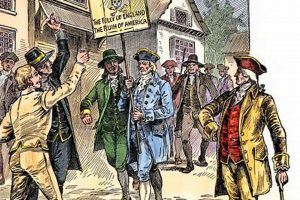
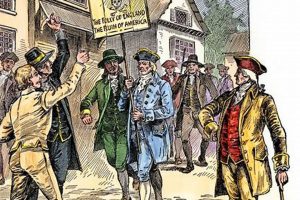
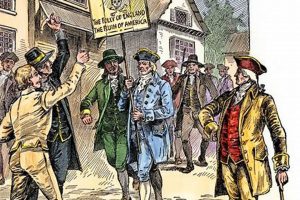
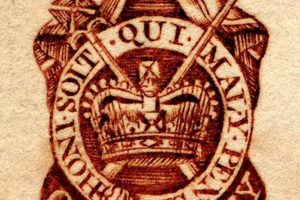
The 1766 revocation of a controversial tax levied on printed materials in the American colonies marked a significant turning point in British-colonial relations. This tax, imposed the previous year, mandated the use of embossed revenue stamps on legal documents, newspapers, pamphlets, and other paper goods. Its purpose was to raise funds for British military expenses in North America following the French and Indian War. However, it was met with widespread resistance, boycotts, and protests throughout the colonies, highlighting growing resentment towards British rule.
Elimination of this unpopular tax averted further escalation of tensions between Great Britain and its American colonies. It demonstrated a responsiveness to colonial grievances and temporarily eased the growing discontent that fueled the movement toward independence. While the British government maintained its right to tax the colonies in principle, the decision underscored the practical limitations of enforcing unpopular measures across the Atlantic. The subsequent Declaratory Act, passed alongside the revocation, asserted Parliament’s sovereignty, creating a backdrop for future conflict.
This historical event provides valuable insights into the dynamics of colonial resistance, the challenges of imperial administration, and the events that ultimately led to the American Revolution. Exploring the surrounding political climate, the colonial reactions, and the long-term consequences offers a deeper understanding of the era and its lasting impact on the development of American identity and governance.
Tips for Researching the 1766 Revenue Act Revocation
Exploring the rescindment of the 1765 revenue act requires careful consideration of various historical sources and perspectives. The following tips offer guidance for navigating this complex topic.
Tip 1: Consider the colonial context. Research the economic and social conditions in the American colonies before and during the period of the tax. Examine the impact on different colonial groups, such as merchants, printers, and ordinary citizens.
Tip 2: Explore the various forms of resistance. Investigate the diverse methods of protest employed by colonists, including boycotts, petitions, and public demonstrations. Analyze the effectiveness of each approach and their contribution to the eventual revocation.
Tip 3: Examine the British perspective. Research the motivations behind the initial tax and its subsequent revocation. Consider the political pressures on the British government and the debates surrounding colonial policy.
Tip 4: Analyze the Declaratory Act. Research the implications of the Declaratory Act, passed alongside the tax revocation, which asserted Parliament’s authority to legislate for the colonies. Consider how this act shaped future relations between Great Britain and the colonies.
Tip 5: Consult primary sources. Explore historical documents from the period, such as letters, pamphlets, and newspaper articles, to gain firsthand insights into the events and perspectives surrounding the revocation.
Tip 6: Compare and contrast historical interpretations. Analyze various scholarly accounts and interpretations of the tax revocation. Consider different perspectives on the significance of the event and its contribution to the growing tensions between Great Britain and the colonies.
By following these research tips, one can develop a comprehensive understanding of the tax revocation, its context, and its long-term consequences. This knowledge provides crucial insight into the events that shaped the American Revolution and the development of American identity.
Further research into related topics, such as colonial governance, British imperial policy, and the growth of revolutionary sentiment, can deepen one’s understanding of this pivotal period in American history.
1. Colonial Resistance

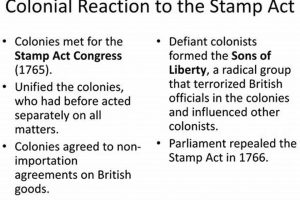
Colonial resistance played a crucial role in the 1766 revocation of the Stamp Act. The widespread and multifaceted nature of this resistance demonstrated the colonists’ deep-seated opposition to taxation without representation. Boycotts of British goods, organized by groups like the Sons of Liberty, severely impacted British merchants and manufacturers, who subsequently pressured Parliament for the Act’s repeal. Furthermore, colonial assemblies passed resolutions condemning the Act and asserting colonial rights, adding to the political pressure on the British government. These collective actions demonstrated the colonists’ resolve and their ability to effectively challenge British policies. The Stamp Act Congress, convened in 1765, provided a unified platform for colonial leaders to articulate their grievances and coordinate resistance efforts, further amplifying the impact of colonial actions.
The success of the resistance movement in achieving the Act’s revocation served as a powerful example of collective action and underscored the importance of popular sovereignty. The colonists’ ability to mobilize effectively and exert economic and political pressure on the British government highlighted the potential for challenging seemingly insurmountable authority. The experience gained during this period contributed to the development of a stronger sense of colonial unity and laid the groundwork for future resistance efforts. The economic disruption caused by the boycotts provided concrete evidence of the colonies’ economic importance to Great Britain, strengthening the colonists’ bargaining position.
The repeal of the Stamp Act, achieved largely through colonial resistance, marked a significant victory for the colonists and underscored the power of collective action in challenging unjust policies. However, it also foreshadowed future conflicts. While the repeal provided temporary relief, the underlying issues of taxation and representation remained unresolved. The subsequent passage of the Declaratory Act, asserting Parliament’s ultimate authority over the colonies, reaffirmed British control and laid the foundation for future tensions that ultimately culminated in the American Revolution. Understanding the integral role of colonial resistance in securing the repeal provides crucial insight into the dynamics that shaped the relationship between Great Britain and its American colonies and contributed to the eventual struggle for independence.
2. Economic Pressures

Economic pressures played a pivotal role in the 1766 repeal of the Stamp Act. The Act, intended to generate revenue for the British crown, inadvertently triggered a series of economic consequences that ultimately contributed to its demise. Examining these pressures provides crucial insight into the complex interplay of economic and political factors that shaped this historical event.
- Colonial Boycotts
Merchants and consumers in the American colonies organized widespread boycotts of British goods in protest against the Stamp Act. These boycotts significantly reduced the demand for British imports, impacting manufacturers and merchants in Britain. The economic downturn resulting from these boycotts exerted substantial pressure on the British government to reconsider the Act. Organizations like the Sons of Liberty played a key role in organizing and enforcing these boycotts, demonstrating the effectiveness of collective action in exerting economic pressure. The boycotts extended to a wide range of goods, including textiles, tea, and other manufactured items, demonstrating the breadth and depth of colonial resistance.
- Impact on British Merchants
British merchants and manufacturers, facing declining sales and mounting inventories due to the colonial boycotts, became vocal advocates for repealing the Stamp Act. Their lobbying efforts, coupled with the broader economic downturn, influenced members of Parliament and contributed to the growing momentum for repeal. Petitions from major trading centers like London, Bristol, and Glasgow highlighted the severity of the economic crisis and underscored the interdependence of the British and colonial economies. The merchants’ direct appeals to Parliament provided concrete evidence of the Act’s negative economic impact, strengthening the case for repeal.
- The Cost of Enforcement
The British government faced significant challenges and costs associated with enforcing the Stamp Act in the American colonies. The vast distances, coupled with widespread resistance, made effective enforcement difficult and expensive. The need to deploy troops and officials to collect the tax added to the financial burden on the British treasury, further weakening the economic rationale for maintaining the Act. The logistical complexities of distributing stamps and enforcing compliance across the vast colonial territory proved to be a significant obstacle, undermining the Act’s effectiveness and contributing to its eventual repeal.
- Alternative Revenue Sources
The British government explored alternative revenue sources as the economic pressures mounted and the impracticality of enforcing the Stamp Act became increasingly apparent. The search for less contentious methods of raising revenue in the colonies highlighted the need for a more sustainable and less disruptive fiscal policy. This exploration underscored the realization that the Stamp Act had not only failed to generate the expected revenue but had also created significant economic instability, further strengthening the case for its repeal.
These combined economic pressures created a compelling case for the repeal of the Stamp Act. The boycotts, merchant lobbying, enforcement costs, and the search for alternative revenue sources converged to demonstrate the Act’s economic unsustainability. The repeal, while driven by economic considerations, also had significant political ramifications, shaping the future relationship between Great Britain and its American colonies and contributing to the growing tensions that eventually led to the American Revolution.
3. British Politics

British political dynamics played a crucial role in the 1766 repeal of the Stamp Act. Understanding the interplay of factions, personalities, and political pressures within the British government is essential for comprehending the decision to revoke this controversial tax. The repeal was not simply a response to colonial resistance but also a reflection of evolving political calculations and shifting power dynamics within Britain itself.
- The Rockingham Ministry
The rise of the Marquess of Rockingham to the position of Prime Minister in 1765 marked a turning point in the debate over the Stamp Act. Rockingham and his supporters viewed the Act as a political and economic blunder, and they actively sought its repeal. Their political ascendancy created an opportunity for reconsideration of colonial policy and contributed to the growing momentum for repeal.
- William Pitt’s Influence
William Pitt the Elder, a prominent political figure known for his support of colonial liberties, played a significant role in advocating for the repeal of the Stamp Act. His eloquent speeches in Parliament, condemning the Act as unjust and counterproductive, resonated with many and bolstered the arguments for repeal. Pitt’s political stature and persuasive rhetoric added considerable weight to the movement for reconsideration.
- Pressures from British Merchants
British merchants and manufacturers, facing economic hardship due to colonial boycotts of their goods, exerted significant pressure on Parliament to repeal the Stamp Act. Their lobbying efforts and petitions highlighted the economic consequences of the Act and influenced the political calculus surrounding its continuation. The merchants’ direct appeals to their parliamentary representatives demonstrated the tangible economic impact of the colonial resistance, further strengthening the case for repeal.
- Division within Parliament
The debate over the Stamp Act exposed deep divisions within the British Parliament. While some members defended the Act as a necessary assertion of parliamentary sovereignty, others argued that it was economically damaging and politically unwise. This internal debate reflected broader disagreements over colonial policy and the nature of the relationship between Great Britain and its American colonies. The repeal ultimately represented a victory for those who favored a more conciliatory approach to colonial affairs, albeit a temporary one.
The repeal of the Stamp Act was a complex event shaped by a confluence of factors, including colonial resistance and shifting economic conditions. However, the political landscape in Great Britain, marked by the rise of the Rockingham ministry, the influence of figures like William Pitt, pressure from British merchants, and divisions within Parliament itself, played a critical role in the decision to revoke the Act. Understanding these internal political dynamics is crucial for comprehending the events leading up to the repeal and its subsequent impact on the relationship between Great Britain and the American colonies. The repeal, while offering a temporary reprieve from escalating tensions, also laid bare the underlying unresolved issues of taxation and representation that would continue to fuel the growing conflict between the colonies and the mother country.
4. Parliamentary Debates

Parliamentary debates played a crucial role in the 1766 repeal of the Stamp Act. These debates provided a forum for contending arguments regarding the Act’s merits and drawbacks, reflecting the complex political and economic considerations at play. Examining these debates offers valuable insights into the factors that ultimately led to the Act’s revocation.
- Arguments for Repeal
Proponents of repeal, including prominent figures like William Pitt the Elder, argued that the Stamp Act was economically unsound and politically unwise. They highlighted the colonial resistance, emphasizing the economic disruption caused by boycotts and the potential for further unrest. Furthermore, they questioned the Act’s effectiveness in generating revenue, citing the high costs of enforcement. These arguments resonated with members concerned about the potential for escalating conflict and the negative impact on British trade.
- Arguments against Repeal
Opponents of repeal defended the Stamp Act as a necessary assertion of Parliament’s authority to tax the colonies. They argued that yielding to colonial pressure would set a dangerous precedent, undermining British sovereignty and encouraging further resistance. They emphasized the need to maintain control over colonial affairs and secure revenue for the defense of the empire. These arguments reflected a belief in the importance of upholding parliamentary supremacy and maintaining a firm stance against colonial defiance.
- Testimony from Merchants and Agents
The parliamentary debates included testimony from British merchants and colonial agents, providing firsthand accounts of the economic and political situation in the colonies. Merchants testified to the devastating impact of colonial boycotts on their businesses, while colonial agents presented petitions and appeals highlighting the colonists’ grievances. These testimonies provided crucial evidence for both sides of the debate and influenced the opinions of undecided members of Parliament.
- The Role of Public Opinion
Public opinion in Great Britain also played a role in the parliamentary debates surrounding the Stamp Act. Newspapers, pamphlets, and public meetings provided platforms for discussing the Act’s implications. Growing public awareness of the colonial resistance and its potential consequences influenced the political climate and added to the pressure on Parliament to reconsider the Act. The debates reflected this broader public discourse, highlighting the importance of public sentiment in shaping political decisions.
The parliamentary debates surrounding the Stamp Act reveal the complex interplay of political, economic, and social factors that influenced its repeal. The arguments for and against repeal reflected fundamental disagreements over the nature of the relationship between Great Britain and its American colonies, foreshadowing the escalating tensions that would ultimately culminate in the American Revolution. The debates also demonstrated the importance of parliamentary procedures, public opinion, and economic considerations in shaping political decisions. By examining these debates, we gain a deeper understanding of the context surrounding the Stamp Act’s repeal and its significance in the broader narrative of American history.
5. Declaratory Act

The Declaratory Act, passed by the British Parliament in 1766, holds a crucial, albeit often overlooked, connection to the repeal of the Stamp Act. While the repeal represented a concession to colonial grievances, the Declaratory Act served as a simultaneous assertion of Parliament’s ultimate authority over the American colonies. This seemingly contradictory pairing of actions reflects the complex political landscape in Great Britain at the time and reveals the underlying tensions that continued to fuel the growing conflict between the colonies and the mother country. Essentially, Parliament appeased colonial economic concerns while emphatically reiterating its legislative powera power the colonists fundamentally challenged.
The Declaratory Act stated unequivocally that Parliament possessed the full power and authority to make laws binding the colonies “in all cases whatsoever.” This broad assertion of power directly countered the colonial argument that they could not be taxed without representation. While the repeal of the Stamp Act addressed the immediate economic grievances, the Declaratory Act aimed to prevent future challenges to parliamentary authority. This attempt to assert control, however, ultimately proved ineffective and arguably fueled further colonial resentment. The colonists viewed the Declaratory Act as a direct threat to their autonomy and a clear indication that Parliament had no intention of recognizing their demands for greater self-governance. The passage of the Declaratory Act so closely following the Stamp Acts repeal illustrates the conflicting pressures on the British government the need to maintain economic stability alongside a desire to uphold its perceived sovereign authority.
Understanding the connection between the Declaratory Act and the repeal of the Stamp Act is crucial for comprehending the escalating tensions that led to the American Revolution. The repeal, while offering a temporary reprieve, failed to address the fundamental issue of colonial representation. The Declaratory Act, in turn, solidified the colonists’ perception of British intransigence, fueling their resolve to resist further infringements on their perceived liberties. The concurrent passage of these two acts reveals the inherent contradictions in British colonial policy and foreshadows the inevitable clash that would follow. This historical context provides a crucial lens for understanding the complexities of the period and the factors that ultimately led to American independence.
6. Future Conflict
While the repeal of the Stamp Act in 1766 temporarily eased tensions between Great Britain and its American colonies, it ultimately failed to resolve the underlying issues that would lead to future conflict. The repeal, though welcomed by the colonists, did not address the fundamental disagreement over parliamentary authority and colonial representation. This unresolved conflict, exacerbated by subsequent British policies, laid the groundwork for the escalating tensions that culminated in the American Revolutionary War.
- The Declaratory Act
Passed alongside the repeal of the Stamp Act, the Declaratory Act asserted Parliament’s absolute right to legislate for the colonies “in all cases whatsoever.” This assertion of parliamentary sovereignty directly contradicted colonial claims of self-governance and fueled resentment. The Declaratory Act signaled that while Britain might concede on specific taxes, it would not relinquish its claim of ultimate authority over the colonies. This fundamental disagreement over governance remained a central point of contention and contributed to the growing divide between the colonies and Great Britain. The colonists viewed the Declaratory Act as a direct challenge to their autonomy and a clear indication that future conflicts over taxation and representation were inevitable.
- Continued Revenue-Raising Attempts
Following the repeal of the Stamp Act, the British government continued to seek ways to raise revenue from the colonies. The Townshend Acts of 1767, which imposed taxes on goods like tea, glass, and paper, reignited colonial resistance. These new taxes demonstrated that the British government had not abandoned its belief in its right to tax the colonies without their consent. The colonists’ renewed resistance underscored the ongoing tension over taxation and representation and further fueled the movement towards independence. The Townshend Acts served as a clear reminder that the underlying conflict remained unresolved, despite the temporary reprieve offered by the Stamp Act’s repeal.
- Intensified Colonial Resistance
Colonial resistance, initially sparked by the Stamp Act, gained momentum and became more organized in the years following its repeal. Groups like the Sons of Liberty continued to agitate against British policies, and colonial assemblies increasingly coordinated their resistance efforts. The experience gained during the Stamp Act crisis provided a foundation for future resistance movements and strengthened the colonists’ resolve to challenge British authority. The repeal, rather than quelling dissent, had inadvertently emboldened the colonists and laid the groundwork for more widespread and effective resistance in the future.
- The Boston Massacre and Tea Party
Events like the Boston Massacre in 1770 and the Boston Tea Party in 1773 further inflamed tensions between the colonies and Great Britain. These incidents, rooted in the underlying conflict over colonial governance and representation, demonstrated the escalating potential for violence and further polarized public opinion on both sides of the Atlantic. While the repeal of the Stamp Act had temporarily eased tensions, these subsequent events highlighted the fragility of the peace and the inevitability of further conflict. The Boston Massacre and Tea Party served as dramatic reminders of the unresolved issues that continued to divide the colonies and Great Britain, pushing them closer to open warfare.
The repeal of the Stamp Act, while significant in its immediate impact, ultimately failed to prevent future conflict between Great Britain and the American colonies. The underlying issues of parliamentary authority, colonial representation, and the right to self-governance remained unresolved. The subsequent passage of the Declaratory Act, continued attempts to raise revenue from the colonies, intensified colonial resistance, and escalating violence all contributed to the inevitable outbreak of the American Revolutionary War. The repeal, therefore, can be seen as a pivotal moment not of resolution but as a catalyst that shaped the course of events leading to American independence. By examining the connection between the repeal and the subsequent conflict, one gains a deeper understanding of the complexities of the period and the factors that ultimately led to the birth of a new nation.
Frequently Asked Questions
This section addresses common inquiries regarding the revocation of the 1765 revenue act imposed on printed materials in the American colonies.
Question 1: Why was the revenue act initially implemented?
The British government implemented the act primarily to generate funds for defense expenditures in North America following the French and Indian War. It aimed to offset the costs of maintaining a military presence in the colonies.
Question 2: What specific materials were subject to the revenue act?
Printed materials, including legal documents, newspapers, pamphlets, playing cards, and dice, required embossed revenue stamps as proof of tax payment.
Question 3: How did colonists react to the revenue act?
The act was met with widespread resistance, including boycotts of British goods, protests, and the formation of groups like the Sons of Liberty. Colonists argued that taxation without representation in Parliament was unjust.
Question 4: What factors led to the act’s revocation?
Economic pressure from colonial boycotts, which negatively impacted British merchants, combined with political pressure from figures like William Pitt the Elder, contributed to the decision to revoke the act.
Question 5: What was the significance of the Declaratory Act passed alongside the revocation?
The Declaratory Act asserted Parliament’s authority to legislate for the colonies “in all cases whatsoever.” It aimed to reaffirm British control despite the revocation of the revenue act, setting the stage for future conflict.
Question 6: Did the revocation resolve the underlying tensions between Great Britain and the colonies?
While the revocation provided temporary relief, it failed to address the fundamental issue of colonial representation and the extent of parliamentary authority. Tensions persisted, ultimately contributing to the American Revolution.
Understanding the context surrounding the revenue act, its revocation, and the subsequent Declaratory Act provides valuable insights into the escalating tensions that shaped the relationship between Great Britain and the American colonies.
Further exploration of related topics like colonial governance, British imperial policy, and the growth of revolutionary sentiment can offer a more comprehensive understanding of this pivotal period in American history. Specific events, key figures, and the economic and social climate of the time offer additional areas of study.
The Repeal of the Stamp Act
Examination of the 1766 Stamp Act revocation reveals its significance as a pivotal moment in the relationship between Great Britain and the American colonies. Driven by colonial resistance, economic pressures, and British political dynamics, the revocation temporarily eased tensions but failed to address fundamental disagreements over parliamentary authority and colonial representation. The simultaneous passage of the Declaratory Act underscored Britain’s resolve to maintain control, foreshadowing future conflict. Exploration of the surrounding events, including colonial boycotts, parliamentary debates, and the evolving political climate, provides crucial context for understanding this historical turning point.
The legacy of the Stamp Act revocation resonates within the broader narrative of the American Revolution. While the revocation offered a temporary reprieve, the underlying tensions and unresolved issues ultimately fueled the growing movement toward independence. Further exploration of this period encourages a deeper understanding of the complexities of colonial resistance, the challenges of imperial governance, and the enduring struggle for self-determination. This historical lens offers valuable insights into the events that shaped the course of American history and the enduring principles upon which the nation was founded.