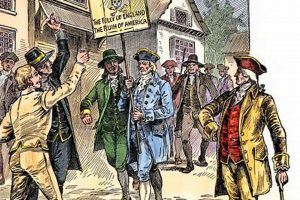
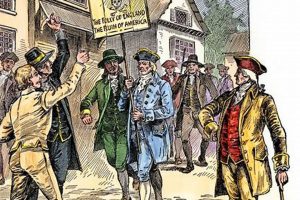
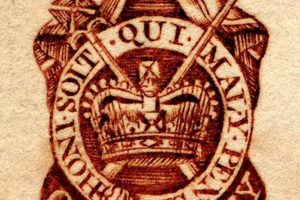
Visual representations of the 1765 Stamp Act, whether through engravings, woodcuts, or other artistic mediums, served as powerful tools for disseminating information and shaping public opinion. These depictions could range from straightforward illustrations of the stamps themselves to more complex allegorical scenes representing the Act’s perceived injustices. One common example depicts a skull and crossbones superimposed on a stamp, symbolizing the perceived detrimental effects of the tax. These illustrations could be found on broadsides, pamphlets, and newspapers, reaching a wide audience regardless of literacy.
In a period characterized by limited access to information, these visual representations played a crucial role in public discourse. They provided a readily understandable depiction of the Act’s implications, fueling colonial resistance and galvanizing opposition to British policies. The accessibility of these images made them particularly potent tools in shaping public sentiment and mobilizing support for the burgeoning revolutionary movement. Their historical significance lies in their contribution to the spread of information and the fostering of a collective identity among colonists opposed to British rule.
This exploration of visual representations provides a foundation for understanding broader themes related to the Stamp Act, including its economic impact, its role in escalating tensions between the colonies and Great Britain, and its ultimate contribution to the American Revolution. It is through understanding these images, and the context in which they were created and circulated, that we can gain a more nuanced understanding of this pivotal period in American history.
Tips for Researching Visual Representations of the Stamp Act
Examining historical imagery requires careful consideration of several factors. The following tips provide guidance for effectively researching visual representations of the 1765 Stamp Act.
Tip 1: Consider the Source: Identify the origin and purpose of the image. Was it created by a colonist or someone in Britain? Understanding the creator’s perspective helps to interpret the intended message.
Tip 2: Analyze the Symbolism: Decipher the meaning of symbols used in the image. A skull and crossbones, for example, signifies danger and mortality, reflecting colonial anxieties about the Act.
Tip 3: Examine the Medium: Note the medium used (engraving, woodcut, etc.) as this can impact the image’s distribution and audience reach. Woodcuts, for instance, were often less detailed but easier to reproduce than engravings.
Tip 4: Explore the Historical Context: Research the political and social climate surrounding the Stamp Act’s enactment. This context illuminates the image’s significance and intended impact.
Tip 5: Compare and Contrast: Analyze multiple images to identify recurring themes and divergent perspectives. This comparative approach can reveal a more nuanced understanding of public sentiment.
Tip 6: Consult Primary Sources: Examine contemporary newspapers, pamphlets, and letters to gain insights into how these images were perceived and utilized by the public at the time.
By employing these strategies, researchers can gain a deeper appreciation for the historical significance of these visual representations and their role in shaping public opinion during this pivotal era.
This analysis of research strategies lays the groundwork for a more comprehensive understanding of the Stamp Act and its impact on the American colonies, leading to a richer appreciation of the events preceding the American Revolution.
1. Visual Communication

Visual communication played a crucial role in disseminating information and shaping public opinion regarding the 1765 Stamp Act. In a society with varying literacy rates, images provided accessible and immediate understanding of complex political issues. Visual representations of the Stamp Act, therefore, became powerful tools for influencing colonial sentiment.
- Symbolism and Allegory:
Images employed powerful symbols, such as skulls and crossbones superimposed on stamps, to evoke strong emotional responses and convey the perceived dangers of the Act. Allegorical representations, often depicting Britannia or other symbolic figures, further communicated complex political messages through easily understood visual metaphors. These symbols resonated with colonists, contributing to a shared understanding of the Act’s implications.
- Dissemination and Reach:
The relatively simple reproduction of woodcuts and engravings allowed for wide dissemination of these visual messages. Printed on broadsides, pamphlets, and newspapers, these images reached a broad audience, transcending literacy barriers. Their presence in public spaces and private homes ensured continuous exposure to the Stamp Act’s perceived injustices, fueling discontent and fostering a sense of collective grievance.
- Emotional Impact and Engagement:
Unlike written text, images possess an immediacy that can evoke powerful emotional responses. Visual representations of the Stamp Act often aimed to elicit feelings of anger, injustice, and defiance. This emotional engagement fostered a sense of shared identity and purpose among colonists, contributing to the growing resistance movement.
- Propaganda and Persuasion:
Visuals served as potent propaganda tools, effectively conveying simplified and often biased messages to influence public opinion. By presenting the Stamp Act in a negative light, these images aimed to persuade colonists of its unfairness and mobilize opposition. The strategic use of visual communication contributed significantly to the escalating tensions between the colonies and Great Britain.
The effectiveness of visual communication during the Stamp Act crisis demonstrates its significance in shaping public understanding and influencing political action. By analyzing these images, one gains valuable insight into the power of visual rhetoric and its lasting impact on historical events. The strategic deployment of symbols, the wide reach of printed materials, and the emotional impact of visual propaganda all contributed to the Stamp Act’s legacy and its role in the burgeoning American Revolution.
2. Propaganda

Propaganda played a significant role in shaping public perception of the 1765 Stamp Act. Visual representations of the Act frequently served as vehicles for disseminating persuasive, and often biased, messages designed to influence colonial opinion and incite resistance against British policies. Understanding the propagandistic nature of these images is crucial for interpreting their historical significance and the impact they had on the escalating tensions leading to the American Revolution.
- Demonization of British Authority
Many depictions of the Stamp Act sought to portray British rule in a negative light. Illustrations might depict oppressive British officials or symbolize the perceived tyranny of the Act through imagery like chains or shackles. This demonization fostered resentment and distrust towards the British government, contributing to the growing colonial resistance movement. By associating the Stamp Act with oppression, these images aimed to solidify colonial opposition and justify acts of defiance.
- Exaggeration of Negative Consequences
Propaganda often relies on exaggeration to amplify its message. Visual representations of the Stamp Act might exaggerate the economic burden or the infringement on colonial liberties. For example, some depictions portrayed colonists as impoverished or enslaved due to the Act, even though the actual economic impact was more nuanced. This exaggeration aimed to elicit stronger emotional responses and galvanize support for resistance.
- Simplification of Complex Issues
The Stamp Act was a complex piece of legislation with various economic and political implications. However, propaganda often simplifies complex issues to create easily digestible messages. Visual representations might reduce the Act to a single, easily understood symbol of oppression, ignoring the complexities of the transatlantic relationship. This simplification, while potentially misleading, proved effective in rallying public support against the Act.
- Appeal to Emotion
Effective propaganda often appeals to emotions rather than logic. Visual representations of the Stamp Act frequently employed emotionally charged imagery, such as skulls and crossbones or weeping figures, to evoke feelings of fear, anger, and resentment. By bypassing rational arguments and tapping into emotional responses, these images aimed to mobilize support for resistance on a visceral level.
Recognizing the propagandistic elements within these visual representations is essential for understanding their historical impact. While these images offer valuable insights into colonial perceptions of the Stamp Act, it’s crucial to analyze them critically, acknowledging the inherent biases and exaggerations often present in propaganda. By understanding how these images functioned as tools of persuasion, we can gain a more nuanced understanding of the social and political climate of the time and the factors that contributed to the American Revolution.
3. Symbolism (skull, stamps)
Symbolism played a crucial role in the visual rhetoric surrounding the 1765 Stamp Act. Specific motifs, particularly the skull and crossbones juxtaposed with the mandated stamps, became potent symbols of colonial resistance. This imagery conveyed a multifaceted message, associating the Act with death, financial ruin, and the suppression of liberty. The skull and crossbones, a well-established symbol of mortality, implied that the Stamp Act threatened the very lifeblood of the colonies, whether economically or politically. Its presence on or near the stamps themselves directly linked the tax to these dire consequences. This visual shorthand effectively communicated complex anxieties to a broad audience, regardless of literacy levels.
The strategic use of these symbols reflected a deliberate effort to manipulate public opinion and incite opposition to British policies. By associating the stamps with death and oppression, colonial propagandists aimed to generate outrage and mobilize resistance. The simplicity and starkness of the imagery made it easily reproducible and readily understood, ensuring widespread dissemination through various printed media, including newspapers, pamphlets, and broadsides. For example, a prominent image circulated at the time depicted a skull and crossbones superimposed on a stamp, with the caption “The Fatal Stamp.” This succinct yet powerful message encapsulated colonial anxieties and fueled the growing resistance movement. Similarly, depictions of stamped documents chained or locked further emphasized the perceived restriction of liberties imposed by the Act.
Understanding this symbolic language is essential for interpreting the visual culture surrounding the Stamp Act and its contribution to the escalating tensions between Great Britain and its American colonies. These symbolic representations served not only as expressions of protest but also as powerful tools of persuasion, shaping public opinion and ultimately contributing to the events leading up to the American Revolution. Recognizing the deliberate choices made by colonial artists and propagandists in their use of symbolism provides valuable insights into the complex social and political dynamics of the period. The power of these symbols lay in their ability to distil complex political arguments into readily understandable and emotionally charged images, fostering a sense of shared grievance and fueling the movement for independence.
4. Dissemination (broadsides, newspapers)

The dissemination of visual representations of the Stamp Act, primarily through broadsides and newspapers, proved crucial in shaping colonial public opinion and galvanizing resistance. Printed media offered a powerful platform for distributing these images to a wide audience, amplifying their impact and contributing significantly to the escalating tensions between the colonies and Great Britain. Understanding the methods of dissemination provides essential context for interpreting the role of these images in the pre-revolutionary era.
- Broadsides: Accessible and Public
Broadsides, single-sheet prints often posted in public spaces, provided an accessible medium for disseminating visual representations of the Stamp Act. Their large format and strategic placement ensured high visibility, reaching a broad audience regardless of literacy. Often featuring bold imagery and concise messaging, broadsides served as effective tools for quickly spreading information and shaping public perception. The simplicity of their production also allowed for rapid dissemination of news and commentary related to the Act, furthering their impact on public discourse.
- Newspapers: Shaping Narratives
Colonial newspapers played a vital role in disseminating both news and opinion related to the Stamp Act. In addition to reporting on events, newspapers often featured engravings and woodcuts depicting the Act and its perceived consequences. These visual representations, accompanied by editorials and letters, contributed to the shaping of public narratives surrounding the Act. The regular publication schedule of newspapers ensured consistent exposure to these messages, reinforcing colonial anxieties and fueling resistance. Newspapers also facilitated the spread of information across different colonies, fostering a sense of shared grievance and solidifying opposition to British policies.
- Pamphlets: Detailed Arguments
Pamphlets, offering more space for detailed arguments and analysis, provided a platform for in-depth discussions of the Stamp Act. These longer-form publications often included visual representations alongside written texts, combining the persuasive power of images with more complex political arguments. Pamphlets circulated among literate colonists, influencing intellectual and political elites and contributing to the development of sophisticated arguments against the Act. While not as visually prominent as broadsides, pamphlets played a significant role in shaping the intellectual discourse surrounding the Stamp Act.
- Taverns and Coffeehouses: Centers of Discourse
Taverns and coffeehouses functioned as vital centers of social and political exchange in colonial America. Broadsides and newspapers, often displayed prominently in these spaces, became subjects of discussion and debate. The communal nature of these settings amplified the impact of visual representations, fostering a shared understanding of the Stamp Act and its implications. These informal gatherings played a crucial role in disseminating information and shaping public opinion outside of formal political channels.
The various methods of dissemination, from the public display of broadsides to the circulation of pamphlets and newspapers, ensured that visual representations of the Stamp Act reached a wide audience, influencing public opinion and contributing significantly to the growing colonial resistance movement. By understanding the reach and impact of these dissemination methods, one gains a deeper appreciation for the role of visual culture in shaping historical events leading up to the American Revolution.
5. Public Opinion

Public opinion played a pivotal role in the escalating tensions surrounding the 1765 Stamp Act. Visual representations of the Act, disseminated through various printed media, significantly influenced colonial sentiment and fueled resistance against British policies. Examining the interplay between these visual depictions and public opinion provides crucial insights into the sociopolitical climate of the pre-revolutionary era.
- Shaping Perceptions
Visual representations of the Stamp Act, often employing symbolic and emotionally charged imagery, actively shaped colonial perceptions of the tax. Depictions of skulls and crossbones, for example, associated the Act with death and oppression, fostering negative sentiment and contributing to a sense of shared grievance. These images provided a readily accessible interpretation of the Act’s implications, influencing public understanding even among those with limited literacy.
- Mobilizing Resistance
The widespread circulation of these images, through broadsides, newspapers, and pamphlets, served as a powerful tool for mobilizing resistance. Visual propaganda effectively simplified complex political issues, presenting the Stamp Act as a symbol of British tyranny and inspiring collective action. The emotional impact of these images further fueled public outrage and contributed to the growing movement against British policies. The visual nature of the protests, with effigies and symbolic displays, underscores the importance of visual communication in mobilizing public action.
- Reflecting Colonial Anxieties
Visual representations of the Stamp Act reflected underlying colonial anxieties about economic hardship and the erosion of liberties. Depictions of impoverished colonists or symbolic representations of lost freedoms resonated with public concerns, amplifying existing fears and grievances. These images served as a visual manifestation of colonial anxieties, providing a focal point for collective dissent and solidifying opposition to the Act. The specific imagery employed often reflected existing cultural anxieties within colonial society, such as fears of economic exploitation or the loss of self-governance.
- Creating a Shared Identity
The shared experience of viewing and discussing these images contributed to the formation of a collective colonial identity. Visual representations of the Stamp Act fostered a sense of unity and shared purpose among colonists, transcending regional and social divisions. This shared visual language facilitated communication and solidified opposition to British policies, creating a powerful sense of collective resistance. The dissemination of these images across different colonies fostered a shared understanding of the issues at stake, contributing to a broader movement for colonial rights.
The interplay between public opinion and visual representations of the Stamp Act demonstrates the significant power of images in shaping political discourse and mobilizing collective action. These visual depictions not only reflected existing colonial anxieties but also actively shaped public perceptions, fueled resistance, and fostered a sense of shared identity, ultimately contributing to the events that culminated in the American Revolution. Further examination of specific examples of these images and their reception within different colonial communities can provide a more nuanced understanding of the role of visual culture in shaping this pivotal period in American history.
6. Historical Context (1765)
Understanding the historical context of 1765 is crucial for interpreting the visual representations of the Stamp Act. The Seven Years’ War, concluding in 1763, left Great Britain with a substantial national debt. The British government, seeking to increase revenue and exert greater control over the American colonies, enacted the Stamp Act, requiring the purchase of stamps for various printed materials. This context of financial strain and increased imperial control directly influenced the creation and reception of images related to the Act. Colonial anxieties over taxation without representation and perceived infringements on liberty found expression in the symbolic language employed in these visual depictions. For instance, the use of skulls and crossbones on stamped documents reflected the colonial perception of the Act as a threat to their economic and political well-being. Without understanding this historical backdrop of fiscal pressure and imperial control, the full significance of these images remains elusive.
The specific historical context of 1765, including the recent conclusion of the Seven Years’ War and the evolving relationship between Great Britain and its American colonies, provides essential context for analyzing the creation and dissemination of these images. The Act was not an isolated incident but rather a pivotal moment in the escalating tensions that ultimately led to the American Revolution. Visual representations served as barometers of public sentiment, reflecting growing colonial resistance and anxieties about British policies. The choice of specific symbols, such as the skull and crossbones or representations of Britannia, reflected contemporary political discourse and cultural anxieties. For example, images depicting Britannia as oppressive or tyrannical reflected the shifting colonial perception of British rule. Furthermore, the dissemination of these images through newspapers, pamphlets, and broadsides highlights the importance of print culture in shaping public opinion during this period. Examining the distribution networks for these images reveals the influence of printers, publishers, and other key figures in disseminating information and shaping public discourse.
The historical context of 1765 provides an indispensable framework for interpreting visual representations of the Stamp Act. These images offer valuable insights into colonial perceptions of British policies, the growing resistance movement, and the anxieties that ultimately fueled the American Revolution. Analyzing these visual representations within their proper historical context allows for a deeper understanding of the complex social and political dynamics at play during this pivotal period. Furthermore, this analysis highlights the power of visual communication in shaping public opinion and mobilizing political action, offering valuable lessons for understanding the role of imagery in political discourse throughout history. Neglecting this historical context risks misinterpreting the significance of these images and their contribution to the narrative of the American Revolution.
7. Colonial Resistance

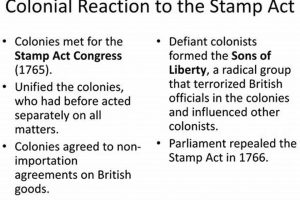
Colonial resistance to the 1765 Stamp Act found a potent voice in the visual representations of the Act itself. These drawings, encompassing various forms of printed imagery, became integral tools for mobilizing opposition and fostering a sense of shared grievance among colonists. The imagery served as a powerful form of protest, accessible to a wider audience than written text alone, and effectively bypassed literacy barriers to communicate discontent. The symbolic language employed in these depictions, notably the use of skulls and crossbones juxtaposed with stamps, directly linked the Act to concepts of death, economic hardship, and the suppression of liberty. This visual rhetoric fueled public outrage and contributed directly to organized acts of resistance, such as boycotts of British goods and the formation of protest groups like the Sons of Liberty.
The effectiveness of these visual representations in galvanizing colonial resistance stemmed from several factors. Firstly, their widespread dissemination through broadsides, newspapers, and pamphlets ensured broad exposure to the intended message. Secondly, the emotional impact of the imagery, appealing to fear and outrage, proved more persuasive than reasoned arguments alone. Thirdly, the symbolic nature of the depictions fostered a sense of collective identity among colonists, uniting them in opposition to British policies. For instance, the image of a stamp superimposed on a skull and crossbones quickly became a recognizable symbol of the resistance movement, appearing on banners, flags, and other forms of protest material. This shared visual language solidified opposition and encouraged collective action against the Stamp Act.
Understanding the crucial role of visual representations in fueling colonial resistance provides valuable insight into the power of imagery in shaping political discourse. These depictions served not merely as illustrations of the Stamp Act but as active agents of change, fostering public outrage, mobilizing resistance, and ultimately contributing to the broader movement for independence. The legacy of these images underscores the importance of visual communication in shaping historical events and serves as a testament to the power of art and propaganda in influencing political movements. Further examination of specific images and their dissemination reveals the complex strategies employed by colonial leaders and activists in leveraging visual media to achieve political goals.
Frequently Asked Questions
This section addresses common inquiries regarding visual representations of the 1765 Stamp Act.
Question 1: How did visual representations of the Stamp Act differ from written accounts?
Visuals offered an immediate, accessible understanding of the Act’s implications, transcending literacy barriers. They often employed symbolic language, conveying complex political messages through readily understood imagery, unlike written accounts that might require greater literacy and comprehension.
Question 2: What specific symbols were commonly used in these depictions?
The skull and crossbones, representing mortality and danger, frequently appeared juxtaposed with images of the stamps themselves. This symbolized the perceived threat to colonial well-being. Other symbols, such as chains or shackles, represented the perceived suppression of liberties.
Question 3: Where would one typically encounter these visual representations?
These images circulated widely through various forms of printed media, including newspapers, broadsides, pamphlets, and even playing cards. They were also displayed prominently in public spaces, such as taverns and coffeehouses, ensuring broad public exposure.
Question 4: What role did these images play in colonial resistance?
Visual representations served as powerful propaganda tools, fueling public outrage and mobilizing opposition to the Stamp Act. Their accessibility and emotional impact proved highly effective in galvanizing resistance movements.
Question 5: How did the dissemination of these images contribute to a shared colonial identity?
The widespread circulation of these images created a shared visual language of protest. This fostered a sense of unity and collective grievance among colonists, contributing to the development of a distinct colonial identity in opposition to British policies.
Question 6: Are these images considered reliable historical sources?
While valuable as reflections of colonial sentiment and anxieties, these visual representations should be analyzed critically. Their propagandistic nature often involved exaggeration and bias, requiring careful consideration of their historical context and intended purpose.
Understanding the historical context, symbolic language, and dissemination methods associated with these visual representations is crucial for comprehending their significance in the escalating tensions leading to the American Revolution.
Further exploration of primary source materials, including original prints and contemporary written accounts, can provide a richer and more nuanced understanding of this period.
Conclusion
Visual representations of the Stamp Act served as powerful tools of communication and persuasion during a period of escalating tensions between Great Britain and its American colonies. Disseminated widely through various forms of printed media, these depictions, often employing symbolic and emotionally charged imagery, played a significant role in shaping public opinion and mobilizing colonial resistance. Analysis of these images provides valuable insight into colonial anxieties regarding taxation without representation, perceived infringements on liberty, and the growing discontent that ultimately fueled the American Revolution. The strategic use of symbolism, such as the skull and crossbones juxtaposed with stamps, effectively conveyed complex political messages to a broad audience, transcending literacy barriers and fostering a sense of shared grievance. Understanding the historical context, creation, dissemination, and reception of these visual representations is crucial for comprehending the social and political dynamics of the pre-revolutionary era.
The legacy of these visual representations extends beyond their immediate historical impact. They serve as a testament to the power of imagery in shaping public discourse, influencing political movements, and fostering collective identity. Continued scholarly examination of these depictions, within their proper historical context, offers valuable opportunities for deeper understanding of the complexities of the American Revolution and the enduring power of visual communication in shaping historical events. Further research might explore the specific artists and engravers involved in creating these images, the intended audience and their reception, and the long-term impact of these visual representations on the collective memory of the American Revolution.