This historical legislation required American colonists to pay a tax on printed materials, including newspapers, legal documents, and playing cards. These materials were stamped to prove the tax had been paid. For example, a newspaper would have a small, embossed stamp affixed to it, demonstrating compliance with the law.
Understanding this 1765 act is crucial for grasping the growing tensions between Great Britain and its American colonies. The tax was seen as an unjust burden by the colonists, who argued they were being taxed without representation in the British Parliament. This resentment fueled protests, boycotts, and ultimately contributed to the movement toward independence. It serves as a key example of the economic and political grievances that led to the American Revolution.
Exploring the events surrounding this pivotal period illuminates the concepts of representative government, colonial resistance, and the development of American identity. This background provides a foundation for understanding the subsequent events that shaped the nations founding.
Understanding the Stamp Act
These tips provide guidance for exploring the historical significance of the 1765 Stamp Act and its impact on the American colonies.
Tip 1: Focus on “No Taxation Without Representation”: Examine how this central grievance fueled colonial resistance. The colonists argued that being taxed by a Parliament in which they lacked representation violated their fundamental rights.
Tip 2: Explore the Variety of Affected Materials: Research the range of printed items subject to the tax, from legal documents and newspapers to playing cards and pamphlets. This demonstrates the act’s broad reach into daily colonial life.
Tip 3: Consider the Economic Impact: Investigate how the tax affected businesses, printers, and ordinary colonists. Analyze how boycotts and protests disrupted trade and put pressure on British merchants.
Tip 4: Research the Sons of Liberty and other Resistance Groups: Learn about the organizations that formed to oppose the Stamp Act, and how their actions contributed to growing unrest.
Tip 5: Connect the Stamp Act to the Larger Context: Understand how this event fits into the broader narrative of growing tensions between Great Britain and the American colonies. Recognize it as a key step toward revolution.
Tip 6: Examine Primary Sources: Explore letters, diaries, and pamphlets from the period to gain firsthand insights into colonial perspectives on the tax and its implications.
Tip 7: Compare and Contrast: Consider how the Stamp Act compares to other British policies, such as the Townshend Acts, and how these collective grievances influenced the move toward independence.
Gaining a deeper understanding of the Stamp Act offers valuable insights into the principles of representative government, the causes of the American Revolution, and the development of American national identity.
By exploring these facets of the Stamp Act, one can develop a more nuanced understanding of this crucial period in American history.
1. Taxation without Representation

The Stamp Act of 1765 ignited fervent colonial resistance primarily due to the principle of “taxation without representation.” This core grievance stemmed from the colonists’ belief that they should not be subjected to taxes imposed by the British Parliament, a body in which they lacked direct representation. The act, requiring a tax on all printed materials, from newspapers and legal documents to playing cards, directly impacted colonists’ daily lives and financial well-being. This perceived injustice fueled protests and boycotts, solidifying colonial unity against British rule. The cry of “No Taxation Without Representation” became a rallying cry, encapsulating the colonists’ fundamental objection to British policies.
The practical significance of understanding this connection lies in recognizing the Stamp Act not merely as a tax dispute but as a pivotal moment in the development of American political thought. The colonists argued that their rights as Englishmen were being violated, emphasizing the importance of consent in matters of taxation. This principle resonated deeply within colonial society, contributing to the growing sense of a distinct American identity separate from British authority. The Stamp Act, through its embodiment of “taxation without representation,” laid the groundwork for future revolutionary sentiments and ultimately contributed to the outbreak of the American Revolutionary War.
The Stamp Act serves as a crucial historical example of how perceived unfair taxation can galvanize a populace and ignite revolutionary fervor. The colonists’ insistence on representation in matters of taxation underscored the fundamental principles of self-governance and popular sovereignty. This legacy continues to shape modern political discourse, highlighting the importance of citizen participation and government accountability. The connection between the Stamp Act and “taxation without representation” remains a powerful reminder of the enduring struggle for liberty and self-determination.
2. Printed Materials Taxed

The taxation of printed materials formed the core of the 1765 Stamp Act, directly impacting colonial life and fueling the growing discontent that led to the American Revolution. Understanding the scope of this taxation is crucial for comprehending the act’s significance for young learners.
- Legal Documents:
Legal documents, such as contracts, wills, and licenses, were subject to the stamp tax. This impacted colonists involved in legal proceedings, land ownership, and business transactions, adding a financial burden to essential activities.
- Newspapers and Pamphlets:
Newspapers and pamphlets, vital for disseminating information and fostering public discourse, were also taxed. This hampered the free flow of information and arguably infringed upon freedom of the press, further exacerbating tensions between colonists and British authorities.
- Playing Cards and Dice:
Even leisure activities were not exempt. The taxation of playing cards and dice, common forms of entertainment in the colonies, highlighted the pervasive nature of the act and its intrusion into everyday life. This seemingly minor detail further fueled resentment against British rule.
- Commercial Papers:
Shipping manifests, bills of lading, and other commercial documents required stamps. This directly impacted merchants, traders, and the colonial economy. The added cost of conducting business hampered economic activity and added to the growing list of grievances.
The taxation of these diverse printed materials demonstrates the wide-ranging impact of the Stamp Act. By affecting legal, commercial, informational, and even leisure activities, the act touched nearly every facet of colonial life. This breadth of impact contributed significantly to the widespread resistance and underscores the importance of understanding the scope of “printed materials taxed” when studying the Stamp Act.
3. Colonial Resistance

Colonial resistance played a crucial role in the response to the 1765 Stamp Act. Understanding the various forms of resistance employed by the colonists provides essential context for comprehending the act’s significance and its contribution to the growing tensions between Great Britain and the American colonies. Exploring these actions offers valuable insights into the colonists’ perspectives and the escalating conflict that ultimately led to the American Revolution. This examination is particularly important for young learners to grasp the historical context surrounding the Stamp Act.
- Boycotts of British Goods:
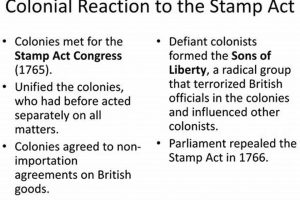
Colonists organized widespread boycotts of British goods, refusing to purchase imported products as a form of economic protest against the Stamp Act. These boycotts significantly impacted British merchants and served as a powerful demonstration of colonial unity and resistance.
- Protests and Demonstrations:
Public protests and demonstrations erupted throughout the colonies, expressing popular discontent with the Stamp Act. These often involved large gatherings, speeches, and symbolic acts of defiance, further raising awareness and galvanizing opposition to the tax.
- Formation of Resistance Groups:
Groups like the Sons of Liberty emerged, organizing and coordinating resistance efforts. These groups played a key role in mobilizing colonists, disseminating information, and implementing strategies such as boycotts and protests.
- Petitions and Legal Challenges:
Colonists petitioned the British government, arguing against the legality and fairness of the Stamp Act. Legal challenges were also mounted, asserting colonial rights and questioning the authority of Parliament to impose such a tax.
These diverse forms of resistance underscore the colonists’ determination to oppose the Stamp Act. The boycotts demonstrated economic power, the protests and demonstrations showed popular discontent, the resistance groups provided organization and leadership, and the petitions and legal challenges articulated the colonists’ arguments against the act. By exploring these facets of colonial resistance, young learners can gain a deeper understanding of the complexities of the era and the events that ultimately led to American independence. The Stamp Act served not merely as a tax dispute but as a catalyst for colonial unity and a crucial step on the path toward revolution.
4. Boycotts and Protests

Boycotts and protests formed a crucial element of colonial resistance against the 1765 Stamp Act. Understanding these actions is essential for young learners to grasp the act’s impact and its role in escalating tensions between Great Britain and the American colonies. Examining these forms of resistance provides insights into the colonists’ determination to oppose what they perceived as unjust taxation without representation.
- Non-Importation Agreements:
Colonists organized non-importation agreements, pledging to boycott British goods. These agreements, signed by merchants and community members, aimed to exert economic pressure on British businesses and demonstrate colonial unity against the Stamp Act. The agreements targeted a wide range of goods, impacting British trade and demonstrating the colonists’ commitment to their cause.
- Public Demonstrations and Rallies:
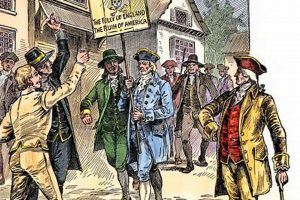
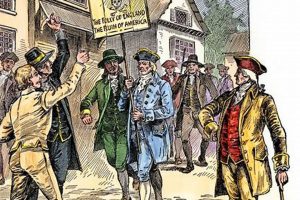
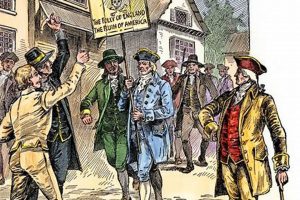
Public demonstrations and rallies took place throughout the colonies, providing a platform for expressing discontent and mobilizing opposition to the Stamp Act. These gatherings often involved speeches, marches, and symbolic acts of defiance, raising public awareness and fostering a sense of collective resistance. Examples include public burnings of stamped paper and effigies of British officials.
- Targeting Stamp Distributors:
Stamp distributors, appointed to enforce the act, became targets of protests and intimidation. Some were forced to resign, hindering the implementation of the tax and demonstrating the effectiveness of colonial resistance tactics. These actions highlighted the personal risks faced by those associated with the Stamp Act and further disrupted its enforcement.
- The Role of Women:
Women played a significant role in the boycotts, forming groups like the Daughters of Liberty to promote homespun goods and reduce reliance on British imports. This active participation demonstrated the widespread nature of resistance and highlighted the contributions of women to the broader movement against the Stamp Act.
By exploring these facets of boycotts and protests, young learners can gain a deeper understanding of the Stamp Act’s significance and its contribution to the events leading up to the American Revolution. The colonists’ willingness to engage in these forms of resistance underscores the depth of their opposition to the act and their commitment to principles of self-governance and representation. These actions ultimately played a crucial role in the eventual repeal of the Stamp Act and laid the groundwork for future resistance against British policies.
5. Sons of Liberty

The Sons of Liberty, a clandestine organization formed in the American colonies, played a pivotal role in resisting the Stamp Act of 1765. This organization, composed of merchants, lawyers, and tradesmen, employed various tactics to oppose the act, which they viewed as an unjust form of taxation without representation. Understanding their role is crucial for comprehending the broader context of colonial resistance and the escalating tensions that led to the American Revolution. The Sons of Liberty served as a catalyst, mobilizing popular opposition and contributing significantly to the eventual repeal of the Stamp Act.
One of their primary methods of resistance involved organizing and coordinating boycotts of British goods. These boycotts, enforced through social pressure and sometimes intimidation, significantly impacted British merchants and applied economic pressure on Parliament. Furthermore, the Sons of Liberty orchestrated public demonstrations and protests, often involving symbolic acts of defiance, such as burning effigies of British officials and stamped paper. These public displays of discontent served to galvanize colonial opposition and raise awareness of the perceived injustices of the Stamp Act. Notable examples include the protests in Boston, where members of the Sons of Liberty played a prominent role in organizing resistance and challenging British authority. These actions demonstrated the organization’s effectiveness in mobilizing popular support and challenging the implementation of the Stamp Act.
The Sons of Liberty’s actions represent a significant component of colonial resistance to the Stamp Act. Their organized efforts, combining economic pressure through boycotts with public demonstrations of discontent, contributed significantly to the growing movement against British policies. By understanding the role of the Sons of Liberty, one gains a deeper appreciation for the complexities of colonial resistance and the factors that ultimately led to the American Revolution. The legacy of the Sons of Liberty serves as a reminder of the power of organized resistance and the importance of citizen action in challenging perceived injustices. Their contribution to the repeal of the Stamp Act underscores the potential for collective action to effect political change.
6. Precursor to Revolution

The Stamp Act of 1765 serves as a crucial example of a “precursor to revolution” in the context of American history. Understanding its significance requires exploring how this seemingly isolated tax act contributed to the growing discontent and ultimately fueled the movement toward independence. Examining the specific facets of the Stamp Act and its aftermath reveals its role as a catalyst for revolutionary sentiment.
- Principle of “No Taxation Without Representation”:
The Stamp Act embodied the core colonial grievance of “no taxation without representation.” Colonists argued that being taxed by a Parliament in which they lacked direct representation violated their fundamental rights as Englishmen. This principle became a rallying cry, fueling resistance and laying the groundwork for future revolutionary arguments. The Stamp Act Congress, formed in response to the act, exemplified this growing sense of colonial unity and shared grievances.
- Economic Hardship and Colonial Boycotts:
The Stamp Act imposed a financial burden on colonists, impacting businesses, printers, and ordinary citizens. The resulting economic hardship, combined with the perceived injustice of the tax, fueled widespread boycotts of British goods. These boycotts demonstrated the colonists’ willingness to engage in collective action and exert economic pressure on Great Britain, further escalating tensions and contributing to the growing sense of resistance.
- Rise of Colonial Resistance Groups:
The Stamp Act fostered the growth of organized resistance groups like the Sons of Liberty. These groups played a crucial role in coordinating boycotts, organizing protests, and disseminating information critical of British policies. The emergence of these groups signified a growing sense of colonial identity and a willingness to challenge British authority openly. The Sons of Liberty, through their actions and rhetoric, contributed significantly to the escalating conflict.
- Shift in Colonial Attitudes towards Great Britain:
The Stamp Act marked a turning point in colonial attitudes toward Great Britain. The perceived injustice of the act, combined with the heavy-handed response of the British government, eroded colonial loyalty and fostered a growing sense of resentment and distrust. This shift in sentiment laid the psychological groundwork for future revolutionary ideas and contributed to the increasing momentum toward independence. The act’s aftermath saw a rise in anti-British sentiment and a strengthening of colonial identity.
By exploring these facets, the connection between the Stamp Act and its role as a “precursor to revolution” becomes clear. The act’s impact extended beyond mere taxation, contributing to the development of revolutionary principles, fostering economic resistance, and fueling the growth of organized opposition. These combined factors significantly escalated tensions between the colonies and Great Britain, ultimately paving the way for the American Revolution. Understanding this connection is essential for young learners to grasp the historical significance of the Stamp Act and its lasting impact on the development of the United States.
7. 1765 Enactment
The year 1765 holds significant weight in understanding the Stamp Act’s impact on colonial America. The act’s enactment in 1765 marked a turning point in relations between Great Britain and its American colonies. This specific date provides a concrete anchor for understanding the timeline of events leading up to the American Revolution. Prior to 1765, tensions existed, but the Stamp Act’s implementation ignited widespread resistance, transforming simmering discontent into open defiance. This escalation stemmed directly from the act’s perceived injusticetaxation without representationand its tangible impact on colonists’ daily lives through the taxation of printed materials. Understanding 1765 as the year of enactment allows one to grasp the cause-and-effect relationship between the act and the subsequent colonial response.
Consider the example of a colonial printer in 1765. Before the act, they operated freely. Post-enactment, their livelihood became directly tied to purchasing and affixing stamps, increasing costs and administrative burdens. This tangible impact resonated throughout colonial society, impacting legal transactions, commercial activities, and the dissemination of information. Newspapers, vital for public discourse, faced increased costs, potentially hindering the free flow of information. These direct consequences, tied explicitly to the 1765 enactment, fueled resentment and spurred collective action, including boycotts, protests, and the formation of resistance groups like the Sons of Liberty. Such examples illustrate the practical significance of understanding 1765 as the pivotal year of the Stamp Act’s implementation.
In summary, 1765 represents a crucial turning point in American history. The Stamp Act’s enactment that year directly led to widespread colonial resistance, transforming existing tensions into open defiance. Understanding this date provides a critical anchor for comprehending the timeline of events leading to the American Revolution. Recognizing the act’s tangible impact on various aspects of colonial life, as exemplified by the challenges faced by printers and the restrictions on newspapers, underscores the importance of 1765 as a key component in understanding the Stamp Act’s historical significance. This knowledge provides a foundation for exploring the broader themes of self-governance, individual liberties, and the struggle for independence that shaped the American nation.
Frequently Asked Questions about the Stamp Act
This FAQ section addresses common inquiries regarding the 1765 Stamp Act, providing concise and informative responses to enhance understanding of its historical significance.
Question 1: What was the primary purpose of the Stamp Act?
The primary purpose was to raise revenue for the British government, intended to offset the costs of stationing troops in the American colonies following the French and Indian War.
Question 2: Why did the colonists object so strongly to the Stamp Act?
The colonists viewed the act as a violation of their fundamental rights as Englishmen, primarily due to the principle of “no taxation without representation.” They argued that being taxed by a Parliament in which they lacked direct representation was unjust and unacceptable.
Question 3: What types of items were subject to the stamp tax?
A wide range of printed materials were taxed, including legal documents, newspapers, pamphlets, playing cards, and even dice. This broad scope impacted various aspects of colonial life, from commercial activities to leisure pursuits.
Question 4: How did the colonists respond to the Stamp Act?
Colonists responded with a variety of resistance tactics, including boycotts of British goods, public protests and demonstrations, the formation of resistance groups like the Sons of Liberty, and petitions and legal challenges to the British government.
Question 5: What was the ultimate outcome of the Stamp Act?
Facing mounting pressure from colonial resistance and British merchants affected by the boycotts, the British Parliament repealed the Stamp Act in 1766. However, the underlying tensions remained, and the act’s legacy continued to fuel the movement toward independence.
Question 6: How did the Stamp Act contribute to the American Revolution?
The Stamp Act served as a pivotal event in the lead-up to the American Revolution. It crystallized colonial grievances regarding taxation and representation, fostered a sense of unity among the colonies, and contributed to the escalating tensions that ultimately led to the outbreak of war.
The Stamp Act, though repealed, left an enduring impact on the relationship between Great Britain and the American colonies. Its legacy serves as a reminder of the importance of representation, individual liberties, and the power of collective action in challenging perceived injustices.
Further exploration of the events surrounding the Stamp Act can provide a deeper understanding of the complexities of this crucial period in American history.
Conclusion
Exploration of the Stamp Act demonstrates its profound impact on colonial America and its role as a catalyst for the American Revolution. The act’s core issuetaxation without representationresonated deeply within colonial society, fueling widespread resistance through boycotts, protests, and the formation of groups like the Sons of Liberty. The tax on printed materials, impacting everyday life from legal documents to newspapers, further exacerbated tensions. The British government’s eventual repeal, though a victory for the colonists, did not resolve the underlying issues of representation and self-governance. The Stamp Act’s legacy extends beyond its immediate impact, serving as a crucial lesson on the importance of civic engagement, individual liberties, and the power of collective action in challenging perceived injustice.
The Stamp Act remains a significant historical event, offering valuable insights into the origins of the American Revolution and the development of American national identity. Continued examination of this period encourages critical thinking about the principles of representative government, the complexities of historical causation, and the enduring struggle for liberty and self-determination. Understanding the Stamp Act provides a foundation for appreciating the ongoing relevance of these principles in shaping modern political discourse and inspiring continued civic engagement.