This concise overview of the 1765 legislation enacted by the British Parliament details its core mandate: requiring all legal documents, permits, commercial contracts, newspapers, pamphlets, and playing cards in the American colonies to carry a tax stamp. This meant colonists had to pay a tax on essentially all printed materials. An example would be a colonist purchasing a tax stamp to affix to a deed for land.
This levy, intended to raise revenue for British military expenses following the French and Indian War, ignited widespread colonial resistance. It represented a significant shift in British policy, marking the first direct internal tax imposed on the colonies rather than regulating trade. The acts implications resonated deeply within colonial society, fueling arguments about representation, self-governance, and the very nature of the British Empire. This period became a crucible for the development of American identity and contributed significantly to the growing tensions that ultimately led to the American Revolution.
Further exploration can delve into specific aspects of the Act, including the colonial response, key figures involved in the resistance movement, the economic and political ramifications, and the eventual repeal of the legislation. Understanding this historical event provides crucial context for analyzing the origins and development of the United States.
Understanding the Stamp Act of 1765
Gaining a deeper understanding of the Stamp Act requires exploring its various facets. The following tips offer avenues for further research and analysis:
Tip 1: Explore primary source documents. Examining original texts, such as letters, pamphlets, and legal documents from the period, provides invaluable insight into the diverse perspectives and reactions to the Act.
Tip 2: Research key figures. Investigating the roles of individuals like Samuel Adams, James Otis, and Benjamin Franklin illuminates the complexities of the resistance movement.
Tip 3: Analyze the economic impact. Consider the Act’s effect on colonial commerce, trade relationships, and the overall financial stability of the colonies.
Tip 4: Study the political ramifications. Explore how the Stamp Act contributed to the evolving relationship between Great Britain and the American colonies, focusing on the development of colonial assemblies and the emergence of concepts like “no taxation without representation.”
Tip 5: Compare and contrast with other British policies. Placing the Stamp Act within the broader context of British mercantilist policies, such as the Navigation Acts, provides a more comprehensive understanding of the growing tensions.
Tip 6: Consider the Act’s eventual repeal. Examining the factors that led to the repeal, including colonial protests and British economic considerations, helps to understand the political dynamics at play.
Tip 7: Explore the legacy of the Stamp Act. Reflect on how this historical event shaped the future of American governance, particularly concerning issues of taxation, representation, and individual liberties.
By exploring these aspects, one can gain a comprehensive appreciation of the Stamp Acts significance in shaping the course of American history.
These insights offer a foundation for further investigation into this pivotal period, leading to a richer understanding of the American Revolution’s origins.
1. Revenue for British military

The Stamp Act of 1765 is inextricably linked to the British crown’s need to generate revenue for its military. Following the French and Indian War (Seven Years’ War), the British Empire faced substantial war debts and ongoing costs associated with maintaining a military presence in North America, ostensibly to protect the colonies. The Stamp Act represented a new approach to raising funds for this purpose, shifting from indirect taxes on trade to direct taxation on the colonists themselves. Understanding this financial motivation is critical to comprehending the context, implementation, and eventual consequences of the Act.
- Defense of the Colonies:
The British government argued that the increased military presence in North America, necessitated by ongoing conflicts and territorial disputes with France and Native American tribes, required financial support from the colonies themselves. The Stamp Act was presented as a means to cover the costs of stationing troops, building fortifications, and maintaining supply lines. However, many colonists disputed the ongoing need for such a large military presence after the French defeat.
- Direct Taxation vs. Indirect Taxation:
Previous revenue-generating measures, such as the Sugar Act, primarily focused on regulating trade through tariffs and duties. The Stamp Act marked a significant departure by imposing a direct tax on goods and services within the colonies. This distinction was crucial, as it challenged established colonial practices of self-taxation through local assemblies and fueled arguments about representation and consent.
- Colonial Opposition and the Cry of “No Taxation Without Representation”:
The imposition of direct taxation without colonial representation in Parliament became a rallying cry against the Stamp Act. Colonists argued that they should not be subjected to taxes levied by a body in which they had no voice. This principle of “no taxation without representation” became a cornerstone of colonial resistance and contributed significantly to the escalating tensions with Great Britain.
- Financial Burden on the Colonies:
The Stamp Act placed a financial burden on colonists across various social and economic strata. The tax applied to a wide range of printed materials, including legal documents, newspapers, and even playing cards. This broad scope meant the financial impact was felt widely, further fueling discontent and contributing to the organized resistance movement.
The British government’s need to fund its military, and its decision to do so through direct taxation of the American colonies, ignited a chain of events that ultimately led to the American Revolution. The Stamp Act, while eventually repealed, became a symbol of British overreach and a catalyst for colonial unity in opposition to what was perceived as unjust and tyrannical rule. Examining the Act’s financial motivations provides critical context for understanding this pivotal period in American history.
2. Tax on Printed Materials

The tax on printed materials stands as a central feature of the Stamp Act of 1765. This tax required colonists to purchase and affix stamps to a wide array of documents, including legal papers (such as contracts, wills, and licenses), newspapers, pamphlets, almanacs, and even playing cards. This impacted nearly every aspect of colonial life, from commercial transactions and legal proceedings to the dissemination of news and information. The tax was not a flat rate but varied depending on the type of document. For example, newspapers carried a lower tax than legal documents. This broad application made the tax pervasive and burdensome, contributing significantly to colonial discontent. The tax’s direct impact on the everyday lives of colonists, coupled with its perceived infringement on their rights, transformed the tax on printed materials from a mere fiscal measure into a symbol of British oppression.
Examples of the tax’s practical application illustrate its pervasive nature. A merchant importing goods would have needed stamps for bills of lading and customs documents. A printer publishing a newspaper would have needed to purchase stamps for each issue. An individual drafting a will or purchasing a land deed would likewise have required a stamp. This ubiquitous presence of the tax ensured that its effects were felt across colonial society, impacting not only the wealthy but also those of modest means. This broad reach fueled resentment and galvanized opposition, as colonists from various social and economic backgrounds felt the direct consequences of the tax. The tax on printed materials thus became a powerful unifying force in the burgeoning resistance movement.
Understanding the tax on printed materials as a core component of the Stamp Act is crucial for comprehending the events leading up to the American Revolution. The tax represented a significant departure from previous British revenue policies, marking the first instance of direct internal taxation imposed upon the colonies. This shift in policy ignited widespread protests, boycotts, and acts of civil disobedience, solidifying colonial resistance and contributing to the development of a shared American identity. The tax on printed materials served as a catalyst, transforming simmering discontent into open defiance and paving the way for the revolutionary struggle that would follow.
3. Colonial resistance ignited

The Stamp Act of 1765 proved a pivotal moment in colonial history, igniting widespread resistance that fundamentally altered the relationship between Great Britain and its American colonies. The Act, viewed as an unjust and oppressive measure due to the lack of colonial representation in Parliament, sparked a wave of protests, boycotts, and acts of civil disobedience. This colonial resistance, while diverse in its expressions, shared a common thread: the assertion of colonial rights and the rejection of external authority deemed illegitimate. The cry of “No taxation without representation” encapsulated the core grievance, highlighting the colonists’ belief that they should not be subjected to taxes levied by a body in which they had no voice. This principle became a cornerstone of the resistance movement, uniting colonists from various backgrounds in opposition to British policies.
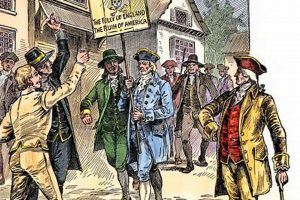
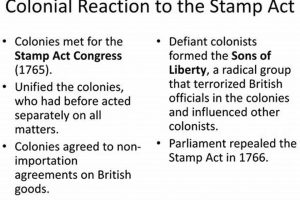
Examples of colonial resistance to the Stamp Act are numerous and varied. Organized groups like the Sons of Liberty emerged, engaging in public demonstrations, intimidating stamp distributors, and enforcing boycotts of British goods. Colonial legislatures passed resolutions condemning the Act and asserting their right to self-governance. Pamphlets and newspapers circulated widely, disseminating arguments against the Act and fostering a sense of shared grievance. These actions demonstrated a growing colonial unity and a willingness to challenge British authority. The Stamp Act Congress, convened in 1765, represented a significant step towards intercolonial cooperation, as representatives from nine colonies met to coordinate their resistance efforts. This collective action signaled a growing sense of shared identity and purpose among the colonies, laying the groundwork for future collaboration in the struggle for independence.
Understanding the connection between the Stamp Act and the eruption of colonial resistance is crucial for comprehending the origins of the American Revolution. The Act served as a catalyst, transforming simmering discontent into open defiance. The resistance movement, while initially focused on the Stamp Act itself, broadened into a larger struggle against British imperial policies. This period of resistance fostered a sense of colonial unity and solidified the colonists’ resolve to defend their rights. The lessons learned during this period, particularly regarding the importance of collective action and the assertion of self-governance, proved invaluable in the years leading up to the American Revolution. The Stamp Act and the colonial response it provoked represent a turning point in American history, marking a decisive step towards independence.
4. "No taxation without representation"

The phrase “No taxation without representation” became a rallying cry during the period surrounding the Stamp Act of 1765, encapsulating the colonists’ core grievance against British policies. The Stamp Act, which imposed a direct tax on printed materials in the American colonies, was viewed as unjust because the colonies lacked direct representation in the British Parliament. Colonists argued that they should not be subjected to taxes levied by a body in which they had no voice, as this violated fundamental principles of self-governance and consent. The slogan effectively articulated this central complaint, resonating with colonists from diverse backgrounds and uniting them in opposition to the Stamp Act.
The practical significance of “No taxation without representation” extended beyond mere rhetoric. The phrase fueled resistance efforts, inspiring boycotts of British goods, protests, and acts of civil disobedience. For example, merchants refused to import goods subject to the stamp tax, printers published newspapers without the required stamps, and organized groups like the Sons of Liberty actively intimidated stamp distributors. The concept also played a crucial role in the convening of the Stamp Act Congress, where representatives from nine colonies met to coordinate their resistance. The phrase thus served as both a philosophical justification for resistance and a practical tool for mobilizing opposition. The widespread adoption of this slogan demonstrates its power in galvanizing public opinion and shaping the course of events.
The connection between “No taxation without representation” and the Stamp Act is essential for understanding the origins of the American Revolution. The Stamp Act served as a catalyst, bringing the issue of colonial representation to the forefront of political debate. While the tax itself was eventually repealed due to colonial pressure and British economic considerations, the underlying issue of representation remained unresolved. The phrase continued to resonate in the years leading up to the Revolution, becoming a core principle underpinning the colonists’ arguments for independence. Understanding the historical context of this phrase provides crucial insights into the ideological and political forces that shaped the American Revolution. The legacy of “No taxation without representation” continues to influence political discourse today, underscoring the importance of citizen participation and government accountability.
5. Precursor to Revolution

The Stamp Act of 1765 serves as a critical precursor to the American Revolution, marking a significant escalation in tensions between Great Britain and its American colonies. While not the sole cause of the revolution, the Act’s implementation and the subsequent colonial reaction played a crucial role in setting the stage for the eventual break from British rule. The Act, which imposed a direct tax on printed materials, ignited widespread resistance throughout the colonies. This resistance stemmed not only from the financial burden imposed by the tax but also, more importantly, from the perceived violation of colonial rights and the principle of “no taxation without representation.” The Act crystallized existing grievances and fostered a sense of shared identity and purpose among the colonies, laying the groundwork for future unified action against British policies. The Stamp Act’s significance lies not just in its immediate impact but also in its long-term consequences, which ultimately contributed to the outbreak of the American Revolution.
The colonial response to the Stamp Act demonstrated the growing divide between Great Britain and the American colonies. Organized protests, boycotts of British goods, and the formation of groups like the Sons of Liberty signaled a willingness to challenge British authority directly. The convening of the Stamp Act Congress in 1765 further solidified colonial unity, as representatives from nine colonies met to coordinate their resistance efforts. This collective action represented a significant step toward intercolonial cooperation and foreshadowed the unified front that would later characterize the revolutionary movement. The harsh British response to these protests, including the deployment of troops and the imposition of further restrictive measures, only served to exacerbate tensions and deepen the colonists’ resolve to resist British rule. These events, triggered by the Stamp Act, created a climate of distrust and animosity that ultimately made reconciliation impossible.
The Stamp Act’s role as a precursor to the American Revolution highlights the importance of understanding the historical context surrounding the conflict. The Act was not an isolated incident but rather a part of a larger pattern of British policies that increasingly infringed upon colonial autonomy. The events surrounding the Stamp Act demonstrated that the colonies were no longer willing to passively accept British rule without representation. The experience of resisting the Stamp Act provided valuable lessons in organizing, mobilizing, and coordinating collective action. These lessons proved essential in the years leading up to the Revolution, shaping the strategies and tactics employed by the colonists in their fight for independence. The Stamp Act thus serves as a crucial turning point in American history, marking a decisive step towards the creation of a new nation.
6. Repealed in 1766

The repeal of the Stamp Act in 1766 represents a crucial turning point in the escalating tensions between Great Britain and its American colonies. While the Act itself lasted just over a year, its impact resonated deeply within colonial society, shaping future resistance efforts and contributing significantly to the growing movement for independence. Understanding the context, causes, and consequences of the repeal is essential for a comprehensive understanding of the Stamp Act’s significance and its role as a precursor to the American Revolution.
- Colonial Resistance:
Widespread colonial resistance, including boycotts of British goods, protests, and acts of civil disobedience, played a significant role in pressuring the British government to repeal the Stamp Act. Organized groups like the Sons of Liberty effectively disrupted the Act’s implementation, while colonial legislatures passed resolutions condemning the tax. The economic impact of the boycotts, particularly on British merchants, added further pressure for repeal.
- British Economic Considerations:
The boycotts initiated by the colonies had a significant impact on British trade and commerce. Merchants and manufacturers in Britain, facing declining sales and mounting pressure from their colonial counterparts, lobbied Parliament for repeal. The British government recognized the potential for further economic damage if the boycotts continued, making repeal an economically pragmatic decision.
- Political Maneuvering in Parliament:
The debate over the Stamp Act and its eventual repeal exposed deep divisions within the British government. While some members of Parliament supported the colonists’ grievances, others argued for maintaining firm control over the colonies. The repeal was ultimately achieved through a complex interplay of political factions and interests within Parliament.
- Declaratory Act:
Simultaneous with the repeal of the Stamp Act, the British Parliament passed the Declaratory Act, asserting its right to legislate for the colonies “in all cases whatsoever.” This act aimed to reassert British authority while addressing colonial economic concerns. However, the Declaratory Act ultimately failed to resolve the underlying issue of colonial representation and served as a continued source of tension between the colonies and Great Britain.
The repeal of the Stamp Act, while offering temporary relief from the contentious tax, did not resolve the fundamental issues of colonial representation and self-governance. The Declaratory Act, passed alongside the repeal, underscored Britain’s continued claim of authority over the colonies. This unresolved tension, combined with the lessons learned during the period of resistance to the Stamp Act, laid the foundation for future conflicts and ultimately contributed to the outbreak of the American Revolution. The repeal, therefore, represents not a resolution but rather a crucial turning point in the increasingly strained relationship between Great Britain and its American colonies.
7. Direct taxation

The Stamp Act of 1765 stands as a pivotal moment in American history largely due to its implementation of direct taxation. Previously, British revenue policies affecting the colonies primarily focused on indirect taxation, such as tariffs and duties on imported goods. The Stamp Act marked a significant departure by imposing a direct tax on goods and services within the colonies themselves. This tax, applied to various printed materials like legal documents, newspapers, and playing cards, required colonists to purchase and affix stamps to these items. This direct taxation was a novel approach to colonial revenue generation, and its implementation ignited widespread resistance, transforming the political landscape and contributing significantly to the growing movement for independence. The shift from indirect to direct taxation challenged established colonial practices of self-taxation through local assemblies and sparked debate about the nature of representation and consent.
Examples illustrate the practical significance of direct taxation under the Stamp Act. A merchant involved in intercolonial trade would have faced increased costs due to the tax on bills of lading and other commercial documents. Legal professionals and individuals involved in land transactions would have encountered the tax when processing deeds and other legal papers. Printers and publishers faced additional expenses for each newspaper or pamphlet printed. This broad application of the tax ensured that its impact resonated throughout colonial society, affecting diverse economic and social groups. This pervasive nature of direct taxation fueled resentment and contributed to the organized resistance movement that emerged in response to the Stamp Act. This resistance manifested in various forms, including boycotts of British goods, public protests, and acts of civil disobedience, underscoring the deep-seated opposition to direct taxation without representation.
Understanding the significance of direct taxation within the context of the Stamp Act is crucial for comprehending the origins of the American Revolution. The shift to direct taxation represented not merely a change in fiscal policy but a challenge to established colonial practices and principles of self-governance. The imposition of direct taxes without colonial representation in Parliament became a rallying cry, fueling the growing movement for independence. The Stamp Act’s legacy extends beyond its eventual repeal, as it established a precedent for future conflicts over taxation and representation. The debate over direct taxation and the principle of “no taxation without representation” continued to resonate in the years leading up to the Revolution, shaping the ideological and political arguments that ultimately led to the colonies’ break from British rule. The Stamp Act’s introduction of direct taxation thus marks a critical turning point in American history, highlighting the complex relationship between fiscal policy, political representation, and the pursuit of self-determination.
Frequently Asked Questions about the Stamp Act of 1765
This section addresses common inquiries regarding the Stamp Act of 1765, providing concise and informative responses.
Question 1: What specific items were subject to the Stamp Act?
The Stamp Act mandated the use of tax stamps on legal documents (contracts, wills, licenses), newspapers, pamphlets, almanacs, playing cards, and other printed materials.
Question 2: Why did the British government implement the Stamp Act?
The primary motivation was to generate revenue to cover the costs of maintaining a military presence in North America following the French and Indian War.
Question 3: How did the colonists react to the Stamp Act?
The Act sparked widespread resistance, including boycotts of British goods, protests, formation of groups like the Sons of Liberty, and the convening of the Stamp Act Congress.
Question 4: What does “No taxation without representation” mean?
This slogan encapsulated the colonists’ central grievance, arguing against taxation by a Parliament in which they lacked direct representation.
Question 5: When was the Stamp Act repealed?
The Stamp Act was repealed in 1766 due to colonial resistance and British economic concerns arising from colonial boycotts.
Question 6: Did the repeal of the Stamp Act resolve the tensions between Great Britain and the colonies?
While the repeal addressed the immediate issue of the tax, the underlying tensions regarding representation and colonial autonomy remained unresolved, contributing to the eventual American Revolution.
The Stamp Act, though short-lived, significantly impacted the relationship between Great Britain and the American colonies. It served as a catalyst for colonial resistance, highlighting fundamental disagreements over representation and governance, and ultimately contributing to the events that led to the American Revolution.
Further exploration of primary source documents and scholarly analyses can offer deeper insights into this pivotal period in American history.
The Stamp Act of 1765
This exploration of the 1765 Stamp Act has provided a concise overview of its core components, from the taxation of printed materials to the widespread colonial resistance it ignited. The financial motivations of the British Crown, the colonists’ fervent cries of “No taxation without representation,” and the eventual repeal of the Act in 1766 have been examined. The Act’s role as a precursor to the American Revolution, highlighting the escalating tensions between Great Britain and its American colonies, has been underscored. The shift to direct taxation and its implications for colonial autonomy have been analyzed, emphasizing the lasting impact of this pivotal legislation on the development of American identity and the pursuit of self-governance.
The Stamp Act, though repealed, remains a potent symbol of the struggle for liberty and self-determination. Its legacy continues to resonate, reminding us of the importance of vigilance in protecting fundamental rights and the enduring power of collective action in the face of perceived injustice. Further investigation into this pivotal era offers invaluable insights into the complex forces that shaped the course of American history and the ongoing pursuit of a more just and equitable society.