The Stamp Act of 1765 imposed a tax on all printed materials in the British colonies in America, including legal documents, newspapers, pamphlets, and playing cards. These materials were required to bear a physical embossed revenue stamp, signifying the tax had been paid. This act serves as a prime example of direct taxation levied by the British Parliament upon the colonies without colonial representation.
This levy’s significance lies in its contribution to the growing discontent among colonists. It fueled arguments against taxation without representation, a core grievance that escalated tensions and ultimately contributed to the American Revolution. Understanding this historical context is crucial for comprehending the political and social climate of the era, illuminating the colonists’ motivations and the events leading to the war for independence. The tax served as a catalyst for organized resistance, including boycotts of British goods and the formation of groups like the Sons of Liberty.
Exploring the broader implications of this specific tax provides a valuable lens for examining themes of colonial governance, economic control, and the evolving concept of individual liberty. Further investigation into related topics such as the Townshend Acts, the Boston Tea Party, and the First Continental Congress can offer a deeper understanding of the road to revolution.
Understanding the Stamp Act
Gaining a deeper understanding of the Stamp Act requires examining it from multiple perspectives. The following tips provide avenues for further exploration.
Tip 1: Research Primary Sources: Explore original documents from the period, such as letters, diaries, and pamphlets, to gain firsthand insights into colonial reactions to the tax.
Tip 2: Analyze the Legal Arguments: Examine the legal basis for the Stamp Act from both the British and colonial perspectives to understand the core disagreements about parliamentary authority and colonial representation.
Tip 3: Consider the Economic Impact: Investigate the economic consequences of the tax on different colonial groups, including merchants, printers, and ordinary citizens.
Tip 4: Study the Forms of Resistance: Research the various methods of protest employed by colonists, including boycotts, demonstrations, and the formation of political organizations.
Tip 5: Explore the Role of Propaganda: Analyze the ways in which both British authorities and colonial leaders used propaganda to sway public opinion.
Tip 6: Connect to Broader Historical Context: Consider the Stamp Act within the larger framework of British imperial policy and the growing tensions between Great Britain and its American colonies.
By exploring these facets, one can develop a more nuanced understanding of the Stamp Act’s significance as a pivotal event in the lead-up to the American Revolution.
This exploration provides a foundation for further investigation of the American Revolution’s core issues and its lasting legacy.
1. Tax on Printed Materials

The tax on printed materials forms a central component of the Stamp Act’s definition. This tax encompassed a wide range of items, including newspapers, legal documents, pamphlets, playing cards, and even dice. The British government intended this levy as a means to raise revenue to cover the costs of administering and defending the American colonies. However, the tax’s implementation without colonial consent ignited widespread resistance, directly contributing to the escalating tensions between Great Britain and its American colonies. The mandated purchase of embossed revenue stamps served as a tangible symbol of British authority and control, further fueling colonial discontent.
The practical significance of this tax extended beyond its financial implications. By targeting printed materials, the Stamp Act directly impacted the dissemination of information and ideas within the colonies. Newspapers, a vital medium for public discourse and political debate, faced increased production costs, potentially limiting their reach and influence. This restriction on the free flow of information became a focal point of colonial grievances, solidifying the argument for freedom of the press as a cornerstone of liberty. For example, prominent colonial newspapers like the Boston Gazette and the Pennsylvania Journal published articles and editorials denouncing the tax and advocating for colonial rights.
Understanding the tax on printed materials as a core element of the Stamp Act illuminates the multifaceted nature of colonial resistance. The act’s economic implications, combined with its impact on freedom of expression, galvanized opposition across various segments of colonial society. This multifaceted resistance ultimately laid the groundwork for the American Revolution, underscoring the profound impact of a seemingly simple tax on printed materials. The Stamp Act’s legacy serves as a reminder of the power of information and the importance of representative government.
2. Enacted by British Parliament

The Stamp Act’s enactment by the British Parliament is central to its definition and the ensuing colonial unrest. Parliament’s authority to levy taxes on the colonies was a long-standing point of contention. While the British government viewed this authority as inherent, colonists argued that taxation without representation in Parliament violated their fundamental rights. This core disagreement fueled resistance to the Stamp Act and contributed significantly to the escalating tensions that ultimately led to the American Revolution. The act served as a stark example of the perceived imbalance of power between the colonies and the mother country. The decision to bypass colonial legislatures and impose direct taxation from London underscored the growing divide and fueled colonial anxieties about British overreach.
The practical significance of Parliament’s enactment lies in the precedent it set. The Stamp Act represented a shift in British imperial policy, marking a departure from previous, less direct forms of taxation. This change in approach ignited widespread protests and boycotts throughout the colonies, demonstrating the colonists’ resolve to resist what they considered unjust taxation. Organizations like the Sons of Liberty emerged in response, mobilizing opposition and taking direct action against the implementation of the act. These organized resistance efforts, born from the act’s enactment by Parliament, further solidified colonial unity and laid the groundwork for future revolutionary action. For instance, the Stamp Act Congress, convened in 1765, represented a collective response from nine colonies, demonstrating a growing sense of shared grievance and intercolonial cooperation.
Understanding the Stamp Act’s enactment by the British Parliament offers crucial insights into the political and ideological landscape of the pre-revolutionary era. The act exposed deep-seated tensions over representation, autonomy, and the very nature of the relationship between Great Britain and its American colonies. This pivotal piece of legislation serves as a crucial turning point in the narrative leading to the American Revolution, highlighting the consequences of unchecked authority and the power of collective resistance. The acts legacy continues to resonate in discussions surrounding governance, representation, and the delicate balance between centralized power and individual liberties.
3. Imposed on American colonies

The Stamp Act’s imposition specifically on the American colonies is integral to its definition and the ensuing historical consequences. While Great Britain also levied taxes on its other territories, the application of the Stamp Act to the American colonies held unique significance due to the evolving political and social climate. The colonies, experiencing a growing sense of autonomy and self-governance, increasingly resented direct taxation by Parliament without commensurate representation. This imposition fueled perceptions of British tyranny and sparked widespread resistance, directly contributing to the escalating tensions that culminated in the American Revolution. For instance, the Virginia Resolves, passed by the Virginia House of Burgesses, directly challenged the legitimacy of the Stamp Act, asserting the colonists’ right to self-taxation. This act of defiance exemplified the growing colonial resistance to external imposition and highlighted the widening rift between the colonies and Great Britain.
The practical significance of the act’s imposition on the American colonies lies in the catalyst it provided for organized resistance. The perceived injustice of taxation without representation galvanized diverse segments of colonial society, uniting merchants, printers, lawyers, and ordinary citizens in opposition. The formation of groups like the Sons of Liberty and the Daughters of Liberty demonstrated a collective response to the imposed tax. These groups organized boycotts of British goods, staged protests, and intimidated stamp distributors, effectively undermining the act’s implementation. The Stamp Act Congress, convened in 1765, further solidified intercolonial cooperation, laying the groundwork for future unified action against British policies. This collective action, fueled by the act’s targeted imposition, significantly accelerated the movement toward independence.
The Stamp Act’s imposition on the American colonies serves as a pivotal point in the narrative of the American Revolution. The act’s impact transcended its purely financial implications, crystallizing colonial grievances about representation and self-governance. The widespread resistance it provoked, manifested in boycotts, protests, and political organizing, fundamentally altered the relationship between Great Britain and its American colonies, setting the stage for the inevitable conflict. Understanding this targeted imposition is therefore crucial for comprehending the broader historical context of the American Revolution and the enduring principles of self-determination and representative government that emerged from this period of conflict.
4. Required Physical Stamp
The requirement of a physical stamp is integral to the definition of the Stamp Act and its impact on colonial America. This mandated visual representation of the tax, affixed to printed materials, served as a constant reminder of British authority and control. The physical stamp, more than just proof of payment, became a symbol of colonial subjugation, fueling resentment and resistance. This tangible manifestation of the tax transformed an abstract political issue into a concrete daily grievance, directly impacting colonists’ lives and fostering a sense of shared opposition. For instance, newspapers bearing the stamp served as a daily reminder of the contested tax, contributing to the growing discontent and fostering a sense of collective grievance.
The practical significance of the required physical stamp extended beyond its symbolic value. The process of acquiring and affixing the stamps created logistical challenges and added costs for printers, merchants, and legal professionals. This added burden further exacerbated colonial discontent and fueled arguments about the economic injustices imposed by the act. Moreover, the limited availability of stamps, often controlled by British-appointed officials, created bottlenecks and delays, disrupting colonial commerce and communication. This disruption amplified the act’s negative economic impact and further solidified opposition to British policies. The physical act of affixing the stamp, a daily ritual of compliance, served as a constant irritant, fueling resentment and resistance.
The required physical stamp, a seemingly minor detail, played a crucial role in shaping colonial perceptions of the Stamp Act. The stamp’s visibility and the associated logistical challenges transformed it into a powerful symbol of British overreach and a tangible representation of colonial grievances. This seemingly mundane requirement contributed significantly to the escalating tensions that ultimately led to the American Revolution, underscoring the importance of seemingly small details in shaping historical events. Understanding the significance of the physical stamp provides crucial insight into the complexities of the Stamp Act and its profound impact on the road to American independence. This tangible element of the act serves as a crucial link between abstract political principles and the lived experiences of colonial Americans, providing a deeper understanding of the motivations and actions that shaped this pivotal period in history.
5. Funded British Administration
The Stamp Act’s purpose of funding British administration in the American colonies is central to its definition and the ensuing colonial resistance. Enacted by the British Parliament in 1765, the act aimed to generate revenue to cover the costs of stationing British troops in North America following the French and Indian War. While the British government viewed this as a reasonable measure to offset the expenses of colonial defense, colonists argued that they should not bear the financial burden without proper representation in Parliament. This core disagreement over taxation without representation fueled opposition to the act and contributed significantly to the escalating tensions that ultimately led to the American Revolution.
- Defense and Administration Costs
The primary rationale behind the Stamp Act was to cover the costs associated with maintaining British military presence and administrative operations in the colonies. These costs included troop salaries, supplies, fortifications, and the salaries of colonial officials. The British government argued that the colonies benefited directly from this military presence and administrative oversight and should therefore contribute to their upkeep. However, colonists disputed this justification, arguing that the British army’s presence was primarily to protect British interests, not solely for colonial defense. This divergence of perspectives on the purpose of British troops in the colonies fueled resistance to the tax. For instance, many colonists believed the British army was more concerned with enforcing unpopular trade restrictions than defending against Native American attacks.
- Financial Burden on Colonists
The Stamp Act placed a direct financial burden on colonists, requiring them to purchase stamps for a wide range of printed materials, including newspapers, legal documents, and commercial contracts. This tax impacted various segments of colonial society, from merchants and printers to ordinary citizens. The added expense, combined with the perceived injustice of taxation without representation, fueled resentment and contributed to widespread boycotts of British goods. The economic strain caused by the act further solidified colonial opposition and fostered a sense of shared grievance. For example, merchants, burdened by the added costs of stamps, joined forces with other colonists in protesting the act, demonstrating the unifying effect of the financial burden.
- Principle of “No Taxation Without Representation”
The Stamp Act became a focal point for the principle of “No Taxation Without Representation,” a central tenet of colonial resistance. Colonists argued that they should not be subjected to taxes levied by a Parliament in which they had no elected representatives. This fundamental disagreement over political representation underscored the growing divide between the colonies and Great Britain. The cry of “No Taxation Without Representation” became a rallying cry for colonial opposition, encapsulating the core grievance against British policies. The Stamp Act Congress, formed in 1765, formally articulated this principle, demonstrating the unifying power of the concept and its centrality to the growing movement for greater autonomy.
- Escalation of Tensions and Colonial Unity
The Stamp Act’s role in funding British administration ultimately escalated tensions between Great Britain and the American colonies. The act’s perceived injustice and the widespread resistance it provoked fueled colonial anxieties about British overreach and contributed to a growing sense of colonial identity and unity. The Stamp Act became a catalyst for the formation of intercolonial organizations and alliances, laying the groundwork for future collective action against British policies. The act’s legacy extends far beyond its immediate financial implications, serving as a pivotal point in the narrative leading to the American Revolution. The coalescing of colonial resistance against the Stamp Act foreshadowed the unified resistance that would characterize the American Revolution.
The Stamp Act’s intent to fund British administration, while seemingly a practical measure, ignited a firestorm of protest and resistance in the American colonies. The act’s financial implications, combined with the underlying issue of taxation without representation, fueled colonial discontent and strengthened the movement for greater autonomy. The Stamp Act’s legacy resonates far beyond its immediate financial objective, serving as a crucial turning point in the relationship between Great Britain and the American colonies and a key catalyst in the march toward revolution.
6. Sparked Colonial Resistance

The Stamp Act’s role in sparking colonial resistance is inextricably linked to its definition as a tax levied by the British Parliament without colonial representation. This act, intended to raise revenue for British administration in the colonies, ignited a firestorm of protest and laid the groundwork for the American Revolution. Understanding this connection requires examining the multifaceted nature of colonial resistance, from boycotts and protests to the formation of political organizations and the articulation of core grievances.
- Boycotts and Economic Pressure
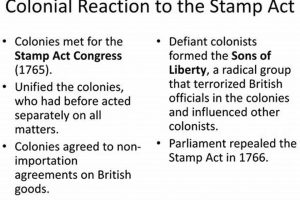
Colonial merchants and consumers organized widespread boycotts of British goods in response to the Stamp Act. These boycotts, targeting British imports, aimed to exert economic pressure on British merchants and Parliament. The boycotts demonstrated colonial unity and resolve, effectively disrupting transatlantic trade and demonstrating the potential for collective action. For example, the Sons of Liberty organized non-importation agreements, effectively halting the flow of British goods into colonial ports. This economic pressure played a significant role in Parliament’s eventual repeal of the Stamp Act.
- Protests and Demonstrations
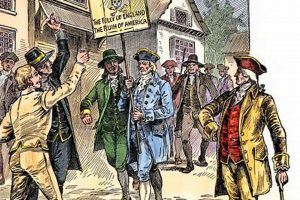
Public protests and demonstrations erupted throughout the colonies, expressing popular opposition to the Stamp Act. These demonstrations, often organized by groups like the Sons of Liberty, involved public speeches, bonfires, and effigy burnings of British officials. These public displays of resistance served as a powerful expression of colonial discontent and contributed to a growing sense of shared grievance. The burning of stamp distributor Andrew Oliver’s effigy in Boston serves as a vivid example of these public demonstrations and the intensity of colonial opposition.
- Formation of Political Organizations
The Stamp Act spurred the formation of political organizations, such as the Sons of Liberty and the Daughters of Liberty, which played a crucial role in coordinating resistance efforts. These organizations provided a framework for collective action, facilitating communication and mobilizing support for boycotts, protests, and other forms of resistance. The emergence of these organized groups demonstrated a growing sense of colonial unity and laid the groundwork for future revolutionary movements. The Sons of Liberty, for example, established networks across the colonies, enabling coordinated resistance efforts and the dissemination of revolutionary ideas.
- Articulation of Grievances
The Stamp Act prompted colonists to articulate their core grievances against British policies, particularly the principle of “No Taxation Without Representation.” Pamphlets, newspaper articles, and public speeches forcefully argued against the perceived injustice of taxation without representation and asserted colonial rights to self-governance. This articulation of core principles laid the intellectual foundation for the American Revolution and shaped the political discourse of the era. Pamphlets like “Considerations on the Propriety of Imposing Taxes in the British Colonies” by Daniel Dulany eloquently articulated colonial objections to the Stamp Act, influencing public opinion and shaping the debate over colonial rights.
These diverse forms of resistance, sparked by the Stamp Act, demonstrate the act’s profound impact on the relationship between Great Britain and its American colonies. The Stamp Act, in its definition as a tax levied without representation, became a catalyst for colonial unity and a symbol of British oppression. The colonial response to the Stamp Act laid the groundwork for the American Revolution, establishing a precedent for organized resistance and articulating the core principles that would ultimately lead to independence. The legacy of the Stamp Act extends far beyond its repeal, shaping the course of American history and the development of democratic ideals.
7. Catalyst for Revolution

The Stamp Act’s definition as a tax levied by the British Parliament without colonial representation inherently links it to its role as a catalyst for the American Revolution. The act, while intended to raise revenue, ignited widespread colonial resistance that escalated tensions with Great Britain and ultimately contributed to the outbreak of war. This catalytic effect stems from the act’s embodiment of core colonial grievances concerning taxation without representation, restrictions on colonial autonomy, and perceived British overreach. The act’s significance lies not solely in its financial implications, but in its symbolic representation of British oppression and its galvanizing effect on colonial resistance.
The Stamp Act’s implementation triggered a cascade of events that propelled the colonies toward revolution. The boycotts organized by colonial merchants disrupted transatlantic trade, demonstrating the potential for collective action and applying economic pressure on Great Britain. Simultaneously, public protests and demonstrations, often spearheaded by groups like the Sons of Liberty, provided a visible manifestation of colonial discontent. The formation of political organizations, such as the Stamp Act Congress, facilitated intercolonial communication and coordination, laying the groundwork for future unified resistance. These collective actions, fueled by the Stamp Act, fostered a growing sense of shared identity and purpose among the colonies, solidifying opposition to British rule and contributing to the momentum for independence. The Daughters of Liberty, for example, actively participated in boycotts, producing homespun cloth as an alternative to British textiles, demonstrating the broad-based nature of colonial resistance.
The Stamp Act’s catalytic role underscores its significance as a turning point in the relationship between Great Britain and the American colonies. While the act itself was eventually repealed, the resistance it ignited had lasting consequences. The articulation of core grievances, such as “No Taxation Without Representation,” during the Stamp Act crisis shaped the political discourse of the era and laid the intellectual foundation for the American Revolution. The experience of unified resistance during the Stamp Act crisis fostered a sense of collective identity and purpose among the colonies, strengthening the resolve for self-governance and ultimately paving the way for the Declaration of Independence. The Stamp Act’s legacy, therefore, extends far beyond its immediate financial implications, serving as a pivotal moment in the struggle for American independence and a testament to the power of collective action in challenging unjust authority.
Frequently Asked Questions about the Stamp Act
The following addresses common inquiries regarding the Stamp Act, providing further clarity on its historical context and significance.
Question 1: What specific items were subject to the Stamp Act?
The Stamp Act mandated the use of embossed revenue stamps on a wide range of printed materials, including newspapers, pamphlets, legal documents, licenses, commercial contracts, playing cards, and even dice. This broad application ensured the tax touched nearly every aspect of colonial life, maximizing revenue generation while simultaneously fueling widespread discontent.
Question 2: Why did the British Parliament enact the Stamp Act?
The primary motivation behind the Stamp Act was to raise revenue to cover the costs of administering and defending the American colonies, particularly following the French and Indian War. The British government believed the colonies should contribute to their defense and administration, while colonists argued against taxation without representation.
Question 3: How did the colonists react to the Stamp Act?
Colonial reaction to the Stamp Act was swift and vehement, ranging from organized boycotts of British goods to public protests, demonstrations, and the formation of resistance groups like the Sons of Liberty. The act galvanized opposition across various segments of colonial society, uniting merchants, printers, lawyers, and ordinary citizens in a shared grievance.
Question 4: What was the “No Taxation Without Representation” argument?
The “No Taxation Without Representation” argument asserted that colonists should not be subjected to taxes levied by the British Parliament, as they lacked elected representation in that body. This principle became a central tenet of colonial resistance, highlighting the perceived injustice of British policies and fueling the movement for greater colonial autonomy.
Question 5: Was the Stamp Act successful in raising revenue?
The Stamp Act ultimately proved largely unsuccessful in raising revenue due to widespread colonial resistance, including boycotts and the intimidation of stamp distributors. The act’s implementation faced significant challenges, and the cost of enforcing it, coupled with the decline in trade revenue, arguably negated any financial gains.
Question 6: What was the ultimate fate of the Stamp Act?
Facing mounting pressure from colonial resistance and British merchants affected by the colonial boycotts, the British Parliament repealed the Stamp Act in 1766. However, the repeal did not resolve the underlying tensions over representation and colonial autonomy, and further conflicts, such as those surrounding the Townshend Acts, continued to escalate the path toward revolution.
Understanding these key aspects of the Stamp Act provides crucial context for comprehending its historical significance and its role as a catalyst for the American Revolution. The act’s legacy continues to resonate in discussions surrounding governance, representation, and the delicate balance between centralized authority and individual liberties.
Further exploration of related topics, such as the Townshend Acts, the Boston Tea Party, and the First Continental Congress, can provide a deeper understanding of the road to American independence.
Conclusion
Exploration of the 1765 Stamp Act reveals its multifaceted nature. Imposed on the American colonies by the British Parliament, this tax on printed materials aimed to fund colonial administration and defense. However, its implementation without colonial representation ignited widespread resistance. Boycotts, protests, and the formation of organizations like the Sons of Liberty demonstrated colonial discontent, crystallizing the principle of “No Taxation Without Representation.” The act’s tangible impact, through the required physical stamp, further fueled resentment. Though ultimately repealed, the Stamp Act’s legacy proved profound, serving as a catalyst for the American Revolution and shaping future discussions of governance and individual liberties.
The Stamp Act stands as a critical juncture in the narrative of American independence. Its examination offers valuable insights into the dynamics of power, representation, and the consequences of unchecked authority. Continued study of this era remains crucial for understanding the foundations of American democracy and the enduring relevance of these historical struggles in contemporary society.