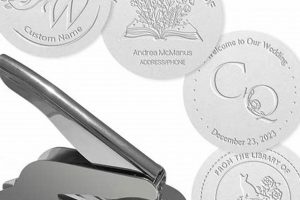
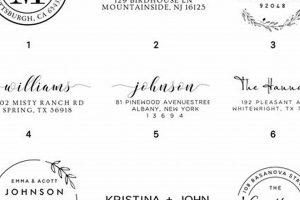
Personalized marking of leather goods through embossing or debossing creates distinctive, often bespoke, items. This process can range from simple initials on a wallet to intricate designs on saddles or other leathercrafts. For instance, a company logo can be imprinted onto leather promotional items, or an artisan might create a unique design for a hand-tooled bag.
The ability to individualize leather products adds significant value. It allows for brand recognition for businesses and offers a touch of personal expression for individual consumers. Historically, such markings have signified craftsmanship, ownership, and even social status. From the branding of livestock to the elaborate tooling of medieval book bindings, the practice reflects a long and rich tradition of human artistry and the desire for personalized goods.
This article will explore various aspects of personalized leather marking, encompassing the tools, techniques, and materials involved. Further discussion will delve into the diverse applications of this craft, ranging from commercial production to individual hobbyists.
Tips for Effective Leather Marking
Achieving high-quality, lasting impressions on leather requires attention to detail and proper technique. The following tips offer guidance for successful leather marking projects.
Tip 1: Select Appropriate Leather: Vegetable-tanned leather is ideal for tooling and stamping due to its higher moisture content. Other leather types may require different techniques or preparation.
Tip 2: Prepare the Leather: Casing the leather to the correct moisture level ensures optimal imprint depth and clarity. Over-casing can lead to blurry impressions, while under-casing may result in shallow or incomplete marks.
Tip 3: Choose the Right Tools: Different stamps produce various effects. Consider the desired outcome when selecting between single-line, patterned, or alphabet stamps. Invest in quality tools for consistent results.
Tip 4: Practice Consistent Pressure: Even pressure across the stamp is crucial for a uniform impression. Mallet weight and striking technique contribute significantly to this aspect.
Tip 5: Secure the Leather: A sturdy work surface and proper clamping prevent the leather from shifting during the stamping process, ensuring clean and precise impressions.
Tip 6: Consider Finishing Techniques: Post-stamping treatments, such as edge finishing, painting, or sealing, can enhance the aesthetic and durability of the marked leather.
Tip 7: Plan Your Design: Careful layout and design planning, especially for complex patterns, help avoid errors and ensure a cohesive final product.
By adhering to these guidelines, one can achieve professional-looking results, maximizing both the visual appeal and longevity of personalized leather items.
These tips offer a solid foundation for successful leather marking endeavors. The following sections will delve deeper into specific techniques and applications for further exploration.
1. Design
Design plays a pivotal role in personalized leather stamping, influencing the final aesthetic and overall impact. A well-considered design elevates a simple leather good into a personalized statement piece or a powerful branding tool. This section explores key facets of design within the context of customized leather stamping.
- Concept Development
Initial brainstorming and conceptualization are crucial. This phase involves determining the purpose of the stamp, target audience, and desired message. A logo for a corporate gift requires a different design approach than a personalized monogram for a journal cover. Considering the size and shape of the leather item is also essential during this stage.
- Visual Elements
Typography, imagery, and overall composition contribute significantly to the design’s effectiveness. Font selection should complement the leather item’s style. Imagery, whether a simple icon or a complex illustration, must be carefully crafted for optimal reproduction on leather. Balance and visual hierarchy within the design ensure clarity and readability, particularly important for smaller stamps.
- Technical Considerations
Design must account for the limitations and possibilities of the stamping process. Intricate details might not translate well onto certain leather types or with specific stamping methods. Line thickness, spacing, and overall complexity influence the final result. Understanding these technical constraints ensures the design’s feasibility and successful execution.
- Practicality and Durability
The design’s longevity is a crucial factor. A stamp intended for frequent use requires a robust design that withstands repeated impressions. Sharp corners or delicate elements might degrade over time. Considering the long-term use of the stamp ensures a lasting, high-quality impression.
These design considerations are integral to the success of any leather stamping project. By carefully addressing each facet, one can ensure a final product that is not only aesthetically pleasing but also functional and durable, effectively communicating the intended message or personal expression.
2. Leather Type
Leather type significantly influences the outcome of customized stamping. The inherent properties of different leathers affect the depth, clarity, and longevity of the impression. Vegetable-tanned leather, known for its firm yet pliable nature and higher tannin content, is generally preferred for stamping. Its responsiveness to moisture allows for deep, well-defined impressions. Conversely, chrome-tanned leather, often used in garments and furniture due to its softness and flexibility, presents challenges for stamping. Its tighter grain structure and lower absorbency can result in shallower, less distinct impressions. Tooling leather, a specific type of vegetable-tanned leather with a higher density, provides exceptional results for detailed and intricate designs, making it ideal for elaborate tooling and stamping projects. Selecting the appropriate leather is therefore paramount for successful customization.
The choice of leather type should align with the intended purpose and design. For instance, a thick, sturdy vegetable-tanned leather is suitable for belts or saddles where deep, lasting impressions are desired. A thinner, more flexible leather may be appropriate for items like wallets or book covers where suppleness is prioritized, even if it means compromising slightly on impression depth. Understanding the characteristics of various leather types empowers informed decision-making, ensuring the final product meets the desired aesthetic and functional requirements. Consider a company logo stamped onto a promotional key fob; the small surface area and need for durability necessitate a firm, fine-grained leather like vegetable-tanned goat or calfskin. Conversely, a large, decorative design on a wall hanging might benefit from the textured surface of full-grain cowhide, even if it presents challenges for fine details.
Successful leather stamping relies on a fundamental understanding of leather properties. Selecting the correct leather type is not merely a matter of aesthetics but a crucial technical consideration that directly impacts the final outcome. By carefully matching leather type to design and application, one ensures optimal results, enhancing both the visual appeal and longevity of the customized piece. Failure to consider leather type can lead to unsatisfactory results, ranging from shallow impressions to surface cracking. This highlights the practical significance of understanding the relationship between leather type and customized stamping techniques.
3. Tools
Specialized tools are essential for achieving professional-grade results in personalized leather stamping. The quality and suitability of the tools directly impact the precision, depth, and overall aesthetic of the final impression. Selecting the appropriate tools is crucial for efficient workflow and achieving the desired outcome.
- Stamps
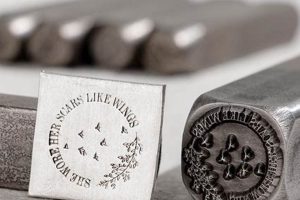
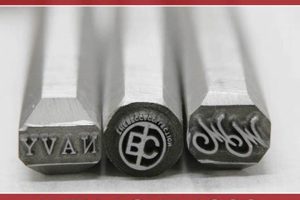
Stamps, available in various materials like metal and acrylic, are the primary tools for transferring designs onto leather. Metal stamps offer durability and intricate detail reproduction, suitable for repeated use and complex designs. Acrylic stamps are lightweight and less expensive, often preferred for simpler designs or occasional use. Stamp selection depends on factors such as design complexity, leather type, and desired impression depth. For example, a logo with fine lines requires a precisely etched metal stamp, while a larger, bolder design might be effectively applied with an acrylic stamp.
- Mallets
Mallets provide the controlled force needed to imprint the stamp onto the leather. Rawhide, poly, or brass mallets offer varying degrees of hardness and weight, influencing the impact and control over the stamping process. A heavier mallet delivers more force, suitable for thicker leather or deeper impressions, while a lighter mallet offers finer control for delicate work. The choice of mallet depends on the leather’s thickness and the desired impression depth. A rawhide mallet is commonly preferred for its balanced weight and impact absorption, minimizing damage to the leather and stamp.
- Swivel Knife
Swivel knives are essential for intricate leatherwork, allowing for precise cutting and outlining of designs before stamping. Their sharp, rotating blades enable controlled cuts, creating clean lines and bevels. This tool is particularly useful for decorative leatherwork and preparing leather for more complex stamping patterns. Skillful use of a swivel knife enhances the overall aesthetic and precision of the finished piece. For custom designs or detailed artwork, a swivel knife is indispensable for achieving clean lines and preparing the leather for precise stamping.
- Other Essential Tools
Several ancillary tools contribute to the overall process. A sturdy work surface provides a stable base for stamping. Leather cement secures layered pieces and reinforces edges. Edge bevelers create smooth, finished edges. These supporting tools, while not directly involved in the stamping process, are essential for achieving professional-looking results. Clean, sharp edges, for example, enhance the finished piece’s overall quality, showcasing attention to detail.
The careful selection and proper use of these tools are fundamental to successful leather stamping. Each tool plays a specific role in achieving the desired outcome, from the initial design transfer to the final finishing touches. The interplay between these tools allows artisans and craftspeople to create personalized leather goods with precision and artistry, transforming ordinary leather items into unique, customized pieces. Mastery of these tools, combined with skilled technique, unlocks the full potential of personalized leather stamping, allowing for a wide range of creative expression and customization options.
4. Technique
Technique in leather stamping encompasses the methods and procedures employed to achieve precise, aesthetically pleasing, and durable impressions. Proper technique is paramount for maximizing the impact of customized designs and ensuring the longevity of the finished piece. This section explores the key technical facets of leather stamping.
- Leather Preparation
Preparing the leather is crucial for successful stamping. This involves cleaning the leather surface to remove any debris or coatings that could interfere with the stamping process. Casing the leather, a process of adding controlled moisture, makes it more pliable and receptive to impressions. The degree of casing varies depending on the leather type and the desired stamping depth. Under-casing can result in shallow impressions, while over-casing can lead to blurry or distorted designs. Consistent moisture throughout the leather ensures uniform impression depth across the entire piece, crucial for achieving professional-looking results. For example, when stamping a large design on a belt, even casing ensures a uniform impression across the entire length, preventing inconsistencies in the final appearance.
- Stamp Alignment and Placement
Accurate stamp placement is fundamental for achieving a clean, professional look. This requires careful alignment, especially with multi-stage designs or when creating repeating patterns. Guiding marks or templates can be used to ensure precise positioning. For curved surfaces, careful consideration of stamp angle and pressure is essential for maintaining consistent impression depth. For example, when stamping initials on a wallet, precise alignment ensures a balanced and aesthetically pleasing final product. Misalignment, even slight, can detract from the overall quality and professionalism of the finished piece. This is especially critical when working with logos or complex designs where symmetry and precision are essential.
- Impact and Pressure
The force applied during stamping dictates the impression’s depth and clarity. Consistent pressure across the entire stamp is crucial for a uniform impression. Using a mallet of appropriate weight and employing a controlled striking technique ensures even force distribution. Excessive force can damage the leather or distort the design, while insufficient pressure results in shallow or incomplete impressions. Practicing on scrap leather allows for calibration of mallet strikes and pressure, ensuring optimal results on the final piece. For example, when stamping a detailed design onto a book cover, consistent pressure across the stamp face ensures all elements of the design are imprinted with equal clarity, preserving the integrity of the overall artwork.
- Post-Stamping Techniques
After stamping, various techniques can enhance the finished product’s appearance and durability. Edge finishing, using tools like edge bevelers and burnishers, creates smooth, polished edges, enhancing the overall professionalism. Applying dyes or paints can accentuate the stamped design and add visual interest. Sealants protect the leather and the stamped impression, ensuring longevity and resistance to wear and tear. For instance, applying a sealant after stamping a company logo onto a leather portfolio protects the imprint from fading or abrasion, preserving the brand identity over extended use. These post-stamping treatments add a layer of refinement and contribute to the overall quality and durability of the final product.
Mastering these techniques is essential for creating high-quality, customized leather goods. From initial leather preparation to post-stamping treatments, each step contributes to the final product’s aesthetic appeal and longevity. The skillful application of these techniques transforms ordinary leather items into personalized statements or branded products, showcasing the power of combining craftsmanship with creative design. By understanding and implementing these techniques, one can elevate leather stamping from a simple craft to a sophisticated form of artistic expression, adding value and individuality to leather goods. The precision and attention to detail evident in well-executed leather stamping reflect the artisan’s skill and dedication, adding a tangible dimension of quality and craftsmanship to the finished product.
5. Finishing
Finishing in the context of customized leather stamping refers to the processes applied after the impression is made, enhancing the final product’s aesthetic appeal, durability, and overall quality. These finishing techniques play a crucial role in transforming a stamped piece from a simple craft project to a refined, professional-looking item. They protect the leather, enhance the design’s visibility, and contribute to the longevity of the customized piece.
- Edge Finishing
Edge finishing involves techniques like beveling, sanding, and burnishing the edges of the leather. This creates smooth, polished edges, preventing fraying and enhancing the overall professional appearance. For a stamped leather wallet, edge finishing elevates the perceived quality and adds a touch of refinement. Properly finished edges also contribute to the wallet’s durability, reducing wear and tear over time.
- Coloring and Dyeing
Applying dyes, paints, or stains can enhance the visibility and contrast of the stamped design. Antique finishes can create a vintage look, while vibrant colors add a modern touch. For instance, dyeing the edges of a stamped leather belt a contrasting color highlights the design and adds a stylistic element. Careful color selection complements the leather’s natural tones and enhances the overall aesthetic of the finished piece.
- Sealing and Protecting
Applying sealants or protective finishes safeguards the leather and the stamped design from moisture, dirt, and abrasion. This is particularly important for items frequently handled or exposed to the elements. A sealant applied to a stamped leather journal cover protects it from spills and scratches, preserving its appearance and extending its lifespan. Different sealants offer varying levels of protection and can also affect the leather’s final sheen, from matte to glossy.
- Burnishing and Conditioning
Burnishing, often done with specialized tools or even a smooth cloth, compresses and polishes the leather’s surface, creating a smooth, lustrous finish. Conditioning replenishes the leather’s natural oils, maintaining its suppleness and preventing cracking. These steps are essential for preserving the leather’s quality and ensuring the longevity of the stamped design. For example, regular conditioning of a stamped leather bag maintains its flexibility and prevents the leather from drying out and cracking, preserving the stamped design’s integrity over time.
These finishing techniques, though often subtle, significantly impact the final quality and perceived value of customized leather goods. They represent the final steps in the process, elevating the stamped piece from a functional item to a refined, durable, and aesthetically pleasing creation. Choosing the right finishing techniques depends on the item’s intended use, the desired aesthetic, and the type of leather. The careful execution of these final steps ensures the stamped design’s longevity and contributes to the overall quality and artistry of the finished piece, reflecting the maker’s attention to detail and commitment to craftsmanship.
6. Application

The application of customized leather stamping spans a diverse range of products and purposes, demonstrating its versatility and enduring appeal. Understanding the intended application is crucial for determining appropriate design choices, leather selection, and stamping techniques. The relationship between application and customization is symbiotic; the application dictates the practical considerations, while customization adds value and individuality.
Consider the example of corporate branding. A company logo embossed on leather goods, such as portfolios, wallets, or keychains, serves as a subtle yet powerful marketing tool. The application, in this case, dictates the need for a clear, legible design and durable leather capable of withstanding regular handling. Similarly, personalized gifts, like monogrammed journals or embossed luggage tags, benefit from customized stamping. Here, the application emphasizes individual expression, allowing for more intricate designs and the use of softer, more supple leathers. In the realm of bespoke leather crafting, such as hand-tooled saddles or intricately designed bags, the application demands a high level of artistry and precision. The stamping process becomes integral to the overall design, requiring specialized tools and meticulous technique.
The practical implications of understanding the application are significant. An ill-suited design or incorrectly chosen leather type can compromise the functionality and aesthetic appeal of the final product. A delicate design stamped onto a frequently used item might wear off quickly, while a large, bold design might be inappropriate for a small, delicate item. By carefully considering the intended application, one ensures the customized stamping enhances, rather than detracts from, the overall quality and purpose of the leather good. This understanding underscores the interconnectedness of design, material, technique, and application in the realm of customized leather stamping, highlighting the importance of a holistic approach to achieve optimal results.
Frequently Asked Questions
This section addresses common inquiries regarding personalized leather stamping, providing concise and informative answers to clarify potential uncertainties.
Question 1: What type of leather is best suited for custom stamping?
Vegetable-tanned leather is generally preferred for its ability to take deep, clear impressions. Its higher tannin content and responsiveness to moisture make it ideal for tooling and stamping.
Question 2: What tools are necessary for leather stamping?
Essential tools include stamps, a mallet, and a sturdy work surface. Additional tools like a swivel knife, edge beveler, and various finishing implements can enhance the process and final product.
Question 3: How does one ensure a consistent impression depth?
Consistent pressure and proper leather casing are key. Practicing on scrap leather helps calibrate mallet strikes and ensures uniform pressure across the stamp.
Question 4: Can custom stamps be created from existing designs or logos?
Yes, custom stamps can be fabricated from provided artwork or logos. Various vendors specialize in creating custom stamps from digital files or physical artwork.
Question 5: How durable are custom leather stamps?
Metal stamps, particularly those made from steel or brass, offer excellent durability and can withstand repeated use. Proper care and storage further extend their lifespan.
Question 6: What post-stamping treatments are recommended?
Edge finishing, dyeing or painting, and applying a sealant protect the leather and enhance the stamped design’s longevity and aesthetic appeal.
These responses provide fundamental information regarding personalized leather stamping. Further research and practice are encouraged for those pursuing advanced techniques and applications. Consulting experienced leatherworkers or exploring specialized resources can provide additional insights.
The subsequent section provides a glossary of terms commonly used in leather stamping, further expanding one’s understanding of this versatile craft.
Personalized Leather Stamping
Personalized marking of leather offers a unique blend of functionality and artistic expression. From the selection of appropriate leather types and specialized tools to the mastery of stamping techniques and finishing processes, each element contributes to the creation of distinctive, high-quality leather goods. The exploration of design principles, coupled with an understanding of diverse applications, further expands the potential of this versatile craft. Careful consideration of these facets ensures successful customization, resulting in products that embody both craftsmanship and personal expression.
The enduring appeal of personalized leather stamping lies in its ability to transform ordinary objects into cherished possessions or powerful branding tools. As techniques evolve and applications diversify, the potential for creative expression through personalized leather marking remains boundless. Continued exploration and refinement of these techniques promise a future rich with innovative applications and enduring craftsmanship.