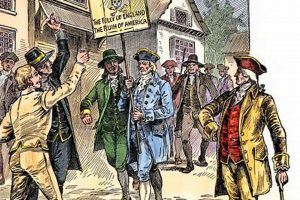
The delegates assembled in New York City in October 1765 aimed to formulate a unified colonial response to the recently enacted British legislation requiring the purchase of embossed revenue stamps for various printed materials, including legal documents, newspapers, and pamphlets. This gathering represented the first significant collective action by the American colonies in opposition to British policies they deemed unjust.
This coordinated effort provided a critical platform for colonists to articulate their grievances against taxation without representation. It fostered a sense of shared identity and purpose among the diverse colonies, laying the groundwork for future collaborative resistance and significantly contributing to the growing movement toward independence. The petitions and resolutions drafted during the congress articulated the colonists’ arguments against the acts constitutionality and helped galvanize public opinion both in the colonies and in Great Britain.
Understanding the historical context and motivations behind this assembly is essential to grasp the escalating tensions between Great Britain and the American colonies. It provides crucial insight into the events leading up to the American Revolution and the development of American political thought. Further examination of individual colonies’ reactions, the British response to colonial resistance, and the eventual repeal of the act offer a more complete understanding of this pivotal period.
Tips for Researching the Stamp Act Congress
Delving into the history of the Stamp Act Congress requires a focused approach. These tips offer guidance for effective research, ensuring a comprehensive understanding of this pivotal event.
Tip 1: Primary Sources are Essential: Explore original documents from the period, such as letters, diaries, newspapers, and the official records of the Congress. These offer direct insights into colonial perspectives and reactions.
Tip 2: Consider Multiple Perspectives: Examine viewpoints from both the colonists and the British government to understand the differing motivations and justifications surrounding the Stamp Act and the colonial response.
Tip 3: Contextualize within the Larger British Empire: The Stamp Act was not an isolated incident. Research the broader context of British imperial policy and the financial pressures influencing its decisions.
Tip 4: Explore the Aftermath: The Congress had lasting implications. Trace its impact on intercolonial unity, the development of revolutionary thought, and the eventual repeal of the Stamp Act.
Tip 5: Utilize Reputable Historical Resources: Rely on scholarly books, journal articles, and established archives for accurate and well-researched information. Avoid unsubstantiated claims or interpretations.
Tip 6: Analyze the Language of Protest: Pay close attention to the specific wording used in petitions, resolutions, and pamphlets to understand the colonists’ legal and philosophical arguments against the Stamp Act.
Tip 7: Connect to Broader Themes: The Stamp Act Congress relates to larger themes of representation, taxation, and self-governance. Explore how these themes resonate throughout American history.
By following these research strategies, one can gain a deeper appreciation for the complexities and significance of the Stamp Act Congress within the broader narrative of American history. It offers a compelling case study in colonial resistance and the evolving relationship between Great Britain and its American colonies.
This understanding provides a solid foundation for further exploration of the American Revolution and the principles upon which the United States was founded.
1. Formal Protest

Formal protest served as a cornerstone of the Stamp Act Congress. Understanding its various facets reveals how colonists leveraged structured dissent to challenge British policies and assert their rights. This examination clarifies the Congress’s purpose and its contribution to the growing discontent leading up to the American Revolution.
- Petitions to the Crown and Parliament:
The Congress drafted petitions outlining colonial grievances against the Stamp Act, emphasizing the principle of “no taxation without representation.” These formal documents, addressed directly to the King and British legislature, represented a concerted effort to appeal to established authority within the existing political framework. The petitions meticulously articulated legal and philosophical arguments against the Act’s perceived unconstitutionality, serving as a powerful tool of formal protest.
- Resolutions and Declarations:
Beyond petitions, the Congress passed resolutions and declarations outlining colonial rights and opposition to the Stamp Act. These pronouncements served to solidify the colonists’ collective stance and publicize their grievances to a wider audience, both within the colonies and in Great Britain. The Stamp Act Congresss resolutions clearly delineated the boundaries of acceptable governance from the colonial perspective and set the stage for future acts of resistance.
- Boycotts and Non-Importation Agreements:
While not strictly formal protest within governmental channels, organized boycotts of British goods complemented the Congress’s formal actions. These agreements, facilitated by the Congress, exerted economic pressure on British merchants and manufacturers, demonstrating the colonists’ resolve and offering a tangible consequence for the Stamp Act. This economic pressure amplified the message conveyed through petitions and resolutions.
- Dissemination of Information:
The Congress understood the importance of disseminating its message. Printed pamphlets, newspaper articles, and public speeches spread awareness about the Congress’s actions and arguments against the Stamp Act throughout the colonies. This coordinated communication strategy ensured that the protest reached a broad audience, fostering colonial unity and bolstering public support for resistance.
These interconnected forms of formal protest employed by the Stamp Act Congress underscore its significance as a turning point in colonial resistance. By combining appeals to authority with public demonstrations of discontent, the Congress effectively challenged British policies while laying the groundwork for future revolutionary action. The emphasis on formal processes demonstrates a commitment to working within established structures while simultaneously pushing the boundaries of colonial autonomy and self-governance.
2. Unified Colonial Action

The Stamp Act Congress stands as a pivotal moment in colonial history, largely due to its demonstration of unified colonial action. Before the Congress, colonial responses to British policies remained largely localized. The Congress provided a crucial platform for colonies to coalesce around shared grievances, thereby amplifying their collective voice and significantly impacting the course of events leading to the American Revolution. Examining the facets of this unified action reveals its profound implications.
- Intercolonial Communication and Coordination:
The Congress facilitated unprecedented communication and coordination between colonies. Representatives from nine colonies convened, fostering dialogue and enabling the development of shared strategies for resistance. This exchange of ideas and perspectives fostered a sense of collective identity and purpose, transcending regional differences and solidifying opposition to the Stamp Act. Prior to this, such broad-based intercolonial collaboration remained limited.
- Collective Grievances and Shared Purpose:
The Congress provided a forum to articulate and consolidate colonial grievances. While individual colonies harbored specific concerns, the shared opposition to taxation without representation provided a unifying theme. By collectively voicing this grievance, colonists presented a united front against what they perceived as an unjust and oppressive policy. This shared sense of purpose amplified their message and strengthened their resolve.
- Joint Action through Petitions and Resolutions:
The Congress formalized its unified stance through jointly drafted petitions and resolutions. These documents, endorsed by representatives from multiple colonies, carried significantly more weight than individual protests. The collective nature of these actions demonstrated a commitment to shared goals and exerted greater pressure on the British government. This coordinated approach marked a departure from previous, more fragmented, forms of resistance.
- Foundation for Future Collaboration:
The Congress established a precedent for future intercolonial cooperation. The networks and relationships forged during the Congress laid the groundwork for subsequent collaborative efforts, including the Continental Congresses. The experience of working together to address the Stamp Act proved invaluable in the years leading up to the Revolution, enabling colonists to more effectively coordinate their actions and present a united front against British policies.
The unified colonial action demonstrated during the Stamp Act Congress fundamentally altered the relationship between the colonies and Great Britain. By coalescing around shared grievances and adopting a coordinated approach to resistance, the colonies significantly increased their political leverage and laid the foundation for the more radical actions that would follow. The Congress stands as a testament to the power of collective action and its crucial role in shaping the course of American history. It transformed disparate colonial concerns into a unified voice, signaling the emergence of a powerful force for change within the British Empire.
3. Petition the Crown
Petitioning the Crown served as a central component of the Stamp Act Congress’s strategy. It represented a calculated effort to appeal to established authority while simultaneously asserting colonial grievances and challenging perceived unjust policies. Understanding the nuances of this approach illuminates the Congress’s broader aims and its significance within the evolving relationship between Great Britain and the American colonies.
- Formal Appeal to Authority:
Petitioning the Crown represented a formal appeal to the highest authority within the British Empire. This approach adhered to established protocols and demonstrated a willingness to work within existing political structures. By framing their protest within the context of a respectful petition, colonists aimed to legitimize their grievances and underscore their loyalty to the Crown while simultaneously challenging specific policies they deemed unacceptable.
- Articulation of Grievances:
The petitions provided a platform to articulate colonial grievances against the Stamp Act in a structured and comprehensive manner. They detailed the perceived injustices of taxation without representation, emphasized the economic burdens imposed by the Act, and articulated the colonists’ belief in their rights as British subjects. This meticulous documentation of grievances served to formalize colonial opposition and provide concrete examples of the Act’s negative impact.
- Assertion of Colonial Rights:
While framed as a respectful appeal, the petitions implicitly asserted colonial rights and challenged the authority of Parliament to impose taxes without colonial consent. This subtle yet significant assertion represented a crucial step in the colonists’ evolving understanding of their political identity and their relationship with Great Britain. It laid the groundwork for future, more explicit challenges to British authority.
- Strategic Use of Legal and Philosophical Arguments:
The petitions strategically employed legal and philosophical arguments to bolster colonial claims. Drawing upon Enlightenment ideals and established legal principles, colonists argued that the Stamp Act violated their fundamental rights as British subjects. This sophisticated approach to argumentation aimed to sway public opinion both in the colonies and in Great Britain, and to demonstrate the intellectual basis for colonial resistance.
The decision to petition the Crown reflects the complex dynamics at play during the Stamp Act crisis. It demonstrated a commitment to established political processes while simultaneously pushing the boundaries of colonial autonomy. The petitions served not only as a formal protest but also as a crucial step in the colonists’ journey toward self-governance and eventual independence. The act of petitioning itself, while seemingly deferential, contained the seeds of future resistance by clearly articulating colonial grievances and asserting fundamental rights.
4. Assert colonial rights
The Stamp Act Congress served as a crucial platform for asserting colonial rights, a central component of its overall purpose. By challenging the Stamp Act, colonists explicitly articulated their understanding of their rights as British subjects and the limitations of Parliament’s authority. This assertion represented a significant escalation in colonial resistance and laid the intellectual groundwork for future revolutionary arguments. Examining the specific ways in which the Congress asserted these rights reveals the depth of colonial discontent and the evolving relationship between Great Britain and the American colonies.
- No Taxation Without Representation:
This core principle formed the bedrock of colonial resistance to the Stamp Act. The Congress argued that Parliament lacked the authority to impose taxes on colonies without their consent, as they were not represented in the British legislature. This assertion directly challenged Parliament’s sovereignty and laid the foundation for future arguments for self-governance. The cry of “No Taxation Without Representation” resonated throughout the colonies, galvanizing public opinion and providing a rallying cry for resistance.
- Rights of Englishmen:
Colonists argued that the Stamp Act infringed upon their inherent rights as Englishmen, including the right to trial by jury and protection from arbitrary taxation. By invoking these established rights, the Congress connected colonial grievances to a broader legal and philosophical framework. This appeal to shared principles aimed to garner support within Great Britain and to emphasize the colonists’ status as loyal subjects deserving of the same protections afforded to those residing in the mother country.
- Right to Property:
The Stamp Act imposed a financial burden on colonists, directly impacting their property and economic well-being. The Congress argued that this taxation represented an unjust seizure of property without due process. This focus on property rights resonated with colonial elites and merchants, who held significant economic power and played a key role in shaping public opinion and organizing resistance efforts.
- Right to Petition:
The Congress exercised its right to petition the Crown and Parliament, demonstrating a commitment to working within established political channels while simultaneously challenging British policies. This act of petitioning itself represented an assertion of colonial rights and underscored the importance of open communication and redress of grievances within the British Empire. It reinforced the idea that colonists possessed the right to voice their concerns and seek solutions through established political processes.
The assertion of colonial rights during the Stamp Act Congress marked a critical turning point in the relationship between Great Britain and the American colonies. By articulating their grievances within a framework of rights and established legal principles, colonists legitimized their resistance and laid the intellectual groundwork for future arguments for greater autonomy and, ultimately, independence. The Congress’s focus on these rights transformed the debate from a simple disagreement over taxation into a fundamental question of political power and self-determination.
5. Address taxation without representation

The phrase “taxation without representation” encapsulates the central grievance driving the Stamp Act Congress. The Stamp Act, imposed by the British Parliament without colonial consent, ignited widespread opposition in the American colonies. The Congress aimed to address this perceived injustice directly. The lack of colonial representation in Parliament meant that colonists had no voice in the decisions made about their taxation, a situation deemed fundamentally unfair and a violation of their rights as British subjects. This principle, a cornerstone of the Congress’s purpose, fueled colonial resistance and contributed significantly to the growing tensions with Great Britain. Real-life examples, such as the boycotts of British goods and the widespread protests against the Stamp Act, illustrate the practical impact of this principle on colonial society.
The Congress’s focus on “taxation without representation” had profound implications. It provided a unifying rallying cry for colonists from diverse backgrounds and geographic locations. Merchants, landowners, and ordinary citizens found common ground in their opposition to this perceived injustice. The principle also served as a powerful argument in the colonists’ petitions and resolutions, framing their resistance within the context of established legal and political principles. This emphasis on rights and representation laid the groundwork for future arguments for greater autonomy and self-governance, ultimately contributing to the movement toward independence. The Stamp Act Congress effectively channeled colonial discontent into a focused political movement, demonstrating the power of shared grievances and unified action.
The connection between “taxation without representation” and the purpose of the Stamp Act Congress is inextricably linked. By addressing this core grievance, the Congress galvanized colonial resistance, fostered intercolonial unity, and articulated fundamental principles that would shape the course of American history. The Congress’s actions demonstrated the power of collective action in challenging perceived injustices and asserting fundamental rights. Understanding this connection provides critical insight into the origins of the American Revolution and the enduring importance of representation and self-governance in American political thought.
6. Seek Repeal of the Stamp Act
Seeking repeal of the Stamp Act formed the central objective of the Stamp Act Congress. While asserting colonial rights and articulating grievances played a crucial role, the ultimate aim remained the removal of the perceived unjust taxation. This focus provided a clear and actionable goal, uniting the diverse colonies around a shared purpose. Understanding this central objective provides crucial insight into the Congress’s actions and its significance within the broader context of growing tensions between Great Britain and the American colonies. The boycotts enacted in response to the Stamp Act, significantly impacting British trade, serve as a tangible example of the practical application of this objective. These boycotts, coordinated through networks established during the Congress, exerted considerable economic pressure on British merchants and manufacturers, demonstrating the colonists’ resolve and providing a concrete measure of their commitment to repeal.
The Congress employed multiple strategies to achieve this objective. Formal petitions to the Crown and Parliament, drafted and endorsed by representatives from nine colonies, directly addressed the issue of the Stamp Act and respectfully requested its repeal. Simultaneously, the Congress encouraged colonial assemblies to pass resolutions condemning the Act and asserting colonial rights. This multifaceted approach combined formal appeals within established political structures with more assertive actions aimed at demonstrating colonial unity and resolve. The widespread dissemination of the Congress’s resolutions and declarations, facilitated by burgeoning colonial newspapers and pamphlets, further amplified the call for repeal and galvanized public opinion both in the colonies and in Great Britain. The success of this strategy is evident in the eventual repeal of the Stamp Act, a testament to the effectiveness of the Congress’s coordinated efforts and the power of colonial resistance.
The connection between the Stamp Act Congress and the eventual repeal of the Stamp Act demonstrates the power of collective action and the significance of asserting colonial rights within the context of established political processes. The Congress provided a crucial platform for colonies to unite around a shared grievance, coordinate their actions, and effectively challenge British policies deemed unjust. While the repeal itself resulted from a complex interplay of factors, including pressure from British merchants and shifting political winds within Great Britain, the Stamp Act Congress played a pivotal role in creating the conditions that led to repeal. Understanding this connection provides a deeper understanding of the origins of the American Revolution and the enduring importance of representation and self-governance in American political thought. It highlights the power of collective action to effect political change and underscores the crucial role of organized resistance in shaping the course of history.
7. Foster Intercolonial Solidarity
Fostering intercolonial solidarity represented a crucial, albeit less explicit, purpose of the Stamp Act Congress. While the immediate objective focused on repealing the Stamp Act, the Congress inadvertently laid the groundwork for greater cooperation and unity amongst the colonies. Prior to the Congress, colonial responses to British policies tended to be localized and fragmented. The shared experience of resisting the Stamp Act fostered a sense of collective identity and purpose, bridging regional differences and establishing networks of communication that would prove invaluable in the years leading up to the American Revolution. The Committees of Correspondence, formed in the aftermath of the Stamp Act crisis, exemplify this burgeoning intercolonial solidarity. These committees facilitated communication between colonies, sharing information and coordinating strategies for resistance, effectively creating a unified front against British policies. This development marked a significant shift in colonial relations, transforming disparate colonies into a more cohesive political force.
The Congress’s role in fostering intercolonial solidarity extended beyond mere communication. The shared experience of crafting petitions, debating strategies, and agreeing upon shared resolutions fostered mutual respect and understanding between colonial representatives. This newfound sense of unity transcended regional and economic differences, creating a foundation for future collaborative efforts. The First Continental Congress, convened in 1774, stands as a testament to the enduring legacy of the Stamp Act Congress in promoting intercolonial cooperation. The ability of colonies to swiftly unite and coordinate their response to the Coercive Acts demonstrates the strength of the bonds forged during the earlier crisis. This unity, born from the shared struggle against the Stamp Act, proved crucial in the colonists’ ability to effectively challenge British authority and eventually declare independence.
Understanding the connection between fostering intercolonial solidarity and the purpose of the Stamp Act Congress provides crucial insight into the origins of the American Revolution. While the Congress explicitly aimed to repeal the Stamp Act, its unintended consequence of fostering colonial unity proved equally significant. The Congress served as a catalyst, transforming disparate colonies into a cohesive political force capable of challenging British authority. This newfound solidarity, born from shared grievances and collaborative action, laid the foundation for the revolutionary movement that would ultimately transform the political landscape of North America. The ability of the colonies to unite against a common enemy proved to be a powerful force, underscoring the importance of intercolonial solidarity in achieving political change and shaping the course of history.
Frequently Asked Questions about the Stamp Act Congress
The following addresses common inquiries regarding the Stamp Act Congress, providing concise yet informative responses to enhance understanding of this pivotal historical event.
Question 1: Why was the Stamp Act Congress considered a significant event?
The Stamp Act Congress marked the first significant collective action by the American colonies in opposition to British policy. It demonstrated a growing sense of colonial unity and laid the groundwork for future resistance.
Question 2: How did the Stamp Act Congress contribute to the American Revolution?
The Congress fostered intercolonial communication and coordination, establishing networks and precedents for future collaborative action. It also solidified colonial opposition to taxation without representation, a key grievance that fueled the revolution.
Question 3: What were the key outcomes of the Stamp Act Congress?
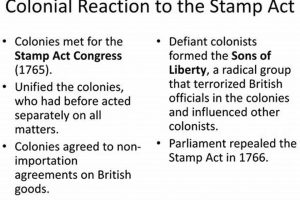
The Congress produced a Declaration of Rights and Grievances, petitions to the King and Parliament, and facilitated non-importation agreements, all of which exerted pressure on the British government and contributed to the eventual repeal of the Stamp Act.
Question 4: Was the Stamp Act Congress successful in achieving its goals?
While the Stamp Act was ultimately repealed, attributing this solely to the Congress oversimplifies a complex historical process. However, the Congress played a crucial role in unifying colonial opposition and applying pressure on Great Britain, contributing significantly to the repeal’s eventual success.
Question 5: How did the British government respond to the Stamp Act Congress?
Initially, the British government largely dismissed the Congress and its resolutions. However, growing colonial resistance, coupled with pressure from British merchants affected by colonial boycotts, ultimately led to reconsideration and the eventual repeal of the Act.
Question 6: What is the lasting legacy of the Stamp Act Congress?
The Stamp Act Congress established a precedent for intercolonial cooperation, solidified the principle of “no taxation without representation,” and contributed significantly to the growing movement toward American independence. It serves as a crucial example of collective action and resistance in the face of perceived injustice.
Understanding the context and significance of the Stamp Act Congress provides valuable insights into the forces that shaped the American Revolution and the development of American political thought. It remains a pivotal event in American history, demonstrating the power of collective action and the enduring importance of representation and self-governance.
Further exploration of this period might include examining individual colonies’ responses to the Stamp Act, analyzing the British government’s decision-making process, and exploring the broader context of British imperial policy in the eighteenth century.
The Purpose and Legacy of the Stamp Act Congress
Examination reveals the Stamp Act Congress’s multifaceted purpose. Beyond simply seeking repeal of the Stamp Act, the Congress served as a crucial platform for asserting colonial rights, fostering intercolonial solidarity, and challenging the principle of taxation without representation. The Congress’s actions, including formal petitions, declarations of rights, and the facilitation of non-importation agreements, demonstrated a commitment to working within established political structures while simultaneously pushing the boundaries of colonial autonomy. This delicate balance between respectful appeal and assertive resistance underscores the complex political landscape of the time and the colonists’ evolving relationship with Great Britain. The Congress’s success in unifying diverse colonies around a shared grievance proved pivotal in shaping the course of events leading to the American Revolution.
The legacy of the Stamp Act Congress extends far beyond the immediate crisis. It established a precedent for intercolonial cooperation, solidified the principle of “no taxation without representation” as a cornerstone of American political thought, and contributed significantly to the growing movement toward independence. The Congress’s actions serve as a powerful reminder of the importance of collective action in challenging perceived injustices and asserting fundamental rights. Continued exploration of this period remains essential for understanding the complexities of the American Revolution and the enduring principles upon which the United States was founded. The echoes of the Stamp Act Congress resonate throughout American history, reminding us of the power of unified voices in shaping a more just and equitable future.