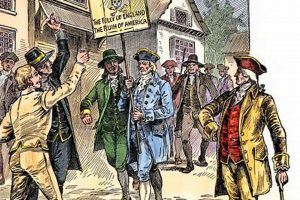
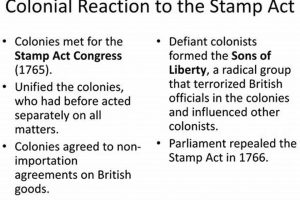
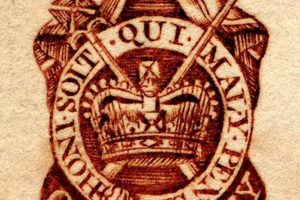
Colonial reaction to the 1765 Stamp Act was swift and multifaceted, ranging from boycotts and protests to intellectual arguments and organized political resistance. The Act, which imposed a tax on all printed materials, including legal documents, newspapers, and even playing cards, was seen by colonists as an infringement on their rights as Englishmen, particularly the right to be taxed only by their own elected representatives. This sparked outrage across the colonies, uniting diverse groups against a common enemy. For example, merchants organized boycotts of British goods, impacting transatlantic trade and applying economic pressure on British merchants and manufacturers. Public demonstrations, often involving effigies of tax collectors, became common spectacles.
Understanding the colonial response to the Stamp Act is critical for comprehending the growing tensions between Great Britain and its American colonies. The widespread resistance represented a turning point in the relationship, solidifying colonial identity and contributing significantly to the escalating march toward revolution. The Stamp Act crisis demonstrated the effectiveness of collective action and highlighted the colonists’ commitment to principles of self-governance. The arguments and strategies developed during this period laid the groundwork for future resistance efforts and ultimately shaped the political philosophy of the American Revolution.
This examination will further explore the various facets of colonial resistance, from the intellectual arguments against taxation without representation championed by figures like James Otis to the practical strategies employed by groups like the Sons of Liberty. It will also delve into the social and economic impact of the Stamp Act and its subsequent repeal, highlighting the pivotal role this event played in the broader narrative of American history.
Understanding Colonial Reactions to the Stamp Act
Gaining a deeper understanding of the colonial response to the Stamp Act requires examining various primary and secondary sources, considering diverse perspectives, and analyzing the historical context. The following tips offer guidance for navigating this complex historical event.
Tip 1: Explore Primary Sources: Examine original documents from the period, such as letters, diaries, pamphlets, and newspaper articles. These sources offer direct insights into the thoughts, feelings, and actions of those who lived through the Stamp Act crisis.
Tip 2: Consider Multiple Perspectives: Recognize that reactions to the Stamp Act varied among different colonial groups. Explore the perspectives of merchants, laborers, women, enslaved people, and Indigenous populations to understand the diverse impact of this legislation.
Tip 3: Analyze the Intellectual Arguments: Study the writings of key figures like James Otis, John Adams, and Patrick Henry to grasp the intellectual underpinnings of colonial resistance and the arguments against taxation without representation.
Tip 4: Investigate the Role of Organized Resistance: Research the activities of groups like the Sons of Liberty and the Stamp Act Congress to understand how colonists mobilized and coordinated their resistance efforts.
Tip 5: Examine the Economic Impact: Analyze the effects of boycotts and non-importation agreements on transatlantic trade and the British economy. Consider how these economic pressures influenced the eventual repeal of the Stamp Act.
Tip 6: Place the Stamp Act in Context: Understand the Stamp Act within the larger context of British imperial policy and growing tensions between Great Britain and its American colonies. Recognize it as a pivotal step toward the American Revolution.
By considering these tips, one can develop a more nuanced and comprehensive understanding of the Stamp Act crisis and its profound impact on American history. These insights provide crucial context for understanding the events leading to the American Revolution.
This exploration of colonial resistance to the Stamp Act serves as a foundation for further investigation into the development of American political thought and the struggle for independence.
1. Boycotts

Boycotts played a crucial role in colonial resistance to the Stamp Act. Faced with taxation deemed unjust, colonists organized widespread boycotts of British goods. This collective action aimed to inflict economic pressure on British merchants and manufacturers, forcing them to lobby Parliament for the Act’s repeal. The boycotts demonstrated colonial unity and resolve, effectively weaponizing their economic power against the perceived tyranny of the British government. Merchants signed non-importation agreements, pledging to cease importing British goods. Consumers, in turn, embraced homespun clothing and locally produced goods, further impacting British trade. This collective economic resistance proved surprisingly effective. The decline in trade significantly impacted the British economy, creating pressure on Parliament from affected merchants.
Examples of successful boycotts during this period highlight their impact. The Sons of Liberty, a key organization in the resistance movement, actively promoted and enforced boycotts in various colonies. In Boston, merchants successfully adhered to non-importation agreements, significantly reducing the volume of British goods entering the port. Similar actions in other colonial ports compounded the economic pressure on Britain. The success of these boycotts demonstrated the potential for collective action to achieve political goals, inspiring future resistance movements. Furthermore, the economic disruption caused by the boycotts underscored the interconnectedness of the colonial and British economies, revealing a vulnerability in the imperial system.
The boycotts employed during the Stamp Act crisis represent a pivotal moment in the development of American resistance. They not only contributed directly to the Act’s repeal but also established a powerful precedent for future collective action against perceived injustice. The economic impact of the boycotts demonstrated the colonies’ potential to disrupt the imperial system and exert political influence. This experience provided valuable lessons for the colonists, solidifying their understanding of collective power and laying the groundwork for the more extensive resistance movements that would characterize the years leading up to the American Revolution.
2. Protests

Public protests formed a vital component of colonial resistance to the Stamp Act. These demonstrations, often large and impassioned, visibly expressed colonial discontent and served as a powerful tool for mobilizing public opinion against British policies. Protests varied in form and intensity, ranging from organized marches and demonstrations to more spontaneous acts of defiance. Understanding the nature and impact of these protests is crucial for comprehending the broader colonial response to the Stamp Act.
- Public Demonstrations and Marches:
Organized marches and public gatherings provided a platform for colonists to collectively express their grievances. These demonstrations often involved large crowds and featured speeches, banners, and effigies symbolizing British officials. For example, protests against the Stamp Act frequently involved the hanging and burning of effigies representing tax collectors and other figures of authority. These public displays of defiance served not only to vent popular anger but also to intimidate British officials and demonstrate the strength of colonial opposition.
- Acts of Violence and Intimidation:
While many protests remained peaceful, some escalated into acts of violence and intimidation. The Sons of Liberty, known for their radical stance, sometimes engaged in tactics such as tarring and feathering tax collectors and destroying stamped paper. These actions, while controversial, aimed to directly obstruct the implementation of the Stamp Act and further pressure British authorities. Such acts underscored the intensity of colonial resistance and the lengths to which some colonists were willing to go to defend their perceived rights.
- Symbolic Acts of Resistance:
Beyond organized demonstrations and acts of violence, colonists engaged in various symbolic acts of resistance. These included wearing homespun clothing to reject British textiles, refusing to use stamped paper, and organizing mock funerals for liberty. These symbolic actions, often undertaken by ordinary citizens, broadened participation in the resistance movement and served as constant reminders of colonial opposition to the Stamp Act. They reflected a growing sense of colonial identity and a shared commitment to resisting British policies.
- The Role of Women in Protests:
Women played a significant, albeit often overlooked, role in the protests against the Stamp Act. They participated in boycotts by refusing to purchase British goods and spinning homespun cloth. They also organized public demonstrations and participated in symbolic acts of resistance. Their contributions to the resistance movement demonstrated the broad base of opposition to the Stamp Act and highlighted the role of women in colonial political life.
These various forms of protest, ranging from peaceful demonstrations to more radical actions, collectively contributed to the pressure on British authorities to repeal the Stamp Act. The protests underscored the depth and breadth of colonial opposition, demonstrating the power of collective action and shaping the course of events leading to the American Revolution. They highlighted the colonists’ commitment to principles of self-governance and their growing sense of a distinct American identity.
3. Pamphlets

Pamphlets proved an essential tool for disseminating information and shaping public opinion during the Stamp Act crisis. These readily accessible publications became a primary means of articulating colonial grievances, disseminating legal arguments against the Act, and mobilizing resistance. Understanding the role of pamphlets is critical to comprehending the intellectual and political landscape of the period.
- Dissemination of Legal Arguments:
Pamphlets played a crucial role in disseminating complex legal arguments against the Stamp Act to a wider audience. Works like James Otis’s “Rights of the British Colonies Asserted and Proved” articulated the colonists’ understanding of their rights as Englishmen and challenged the legality of taxation without representation. These publications provided intellectual ammunition for the resistance movement, fueling public discourse and providing a framework for legal challenges to the Act. Otis’s pamphlet, for example, became a widely circulated and influential text, shaping colonial thought and contributing to the growing sense of colonial identity.
- Mobilizing Public Opinion:
Beyond legal arguments, pamphlets served to mobilize public opinion against the Stamp Act. These publications often employed emotionally charged language and vivid imagery to stir popular indignation and inspire resistance. Pamphlets detailing the perceived injustices of the Act and the potential consequences for colonial liberties circulated widely, fostering a sense of shared grievance and encouraging collective action. They effectively transformed abstract legal principles into tangible concerns for ordinary colonists.
- Intercolonial Communication:
Pamphlets facilitated communication and the exchange of ideas among the colonies. The circulation of these publications across colonial borders helped to create a sense of shared purpose and fostered a unified response to the Stamp Act. News, arguments, and calls to action disseminated through pamphlets helped to coordinate resistance efforts across geographically dispersed communities, contributing to the development of a collective colonial identity. This intercolonial communication proved crucial in organizing collective resistance like boycotts and the Stamp Act Congress.
- Accessibility and Affordability:
The relative affordability and accessibility of pamphlets compared to books made them an ideal medium for reaching a broad audience. This widespread dissemination ensured that the arguments against the Stamp Act reached not only the educated elite but also ordinary colonists, broadening participation in the political discourse. Pamphlets became a powerful tool for democratizing information and engaging a wider public in the debate surrounding the Act, contributing to a more unified and widespread resistance movement.
The proliferation of pamphlets during the Stamp Act crisis demonstrates their significance in shaping colonial resistance. By disseminating legal arguments, mobilizing public opinion, and facilitating intercolonial communication, pamphlets played a vital role in fostering a unified response to the Act and laying the groundwork for future resistance movements. They served as a key instrument in the growing struggle for colonial self-determination, ultimately contributing to the events that led to the American Revolution.
4. Petitions

Petitions played a significant role in the colonial response to the Stamp Act, serving as a formal mechanism for expressing grievances and asserting colonial rights. Through petitions, colonists directly addressed both British authorities and colonial legislatures, articulating their objections to the Act and demanding its repeal. Examining the various facets of petitioning reveals its importance as a tool of resistance and its contribution to the broader movement against British policies.
- Direct Appeals to the Crown and Parliament:
Colonists directed petitions to King George III and the British Parliament, seeking redress for their grievances. These petitions often emphasized the colonists’ loyalty to the Crown while simultaneously asserting their rights as Englishmen. The petitions challenged the legitimacy of the Stamp Act, arguing that it violated their right to be taxed only by their own elected representatives. For example, the Stamp Act Congress drafted a petition to the King and Parliament outlining colonial objections to the Act and requesting its repeal. These direct appeals demonstrated the colonists’ willingness to engage with British authorities through established political channels.
- Petitions to Colonial Legislatures:
In addition to petitioning British authorities, colonists also addressed their concerns to colonial legislatures. These petitions sought to mobilize colonial governments to take action against the Stamp Act. They urged legislatures to pass resolutions condemning the Act and to pressure Parliament for its repeal. These petitions served to galvanize colonial political action and foster a sense of unity among the colonies in their opposition to the Stamp Act. They demonstrated the colonists’ commitment to utilizing existing political structures to resist British policies.
- Content and Arguments of Petitions:
The content of colonial petitions varied, but they generally focused on key arguments against the Stamp Act. These included assertions of the colonists’ rights as Englishmen, particularly the right to representation in matters of taxation. Petitions also emphasized the economic burdens imposed by the Act and its potential negative impact on colonial trade and prosperity. Some petitions also invoked broader principles of liberty and self-government, foreshadowing the arguments that would later be central to the American Revolution. The carefully crafted arguments presented in these petitions demonstrate the intellectual underpinnings of colonial resistance.
- Collective Action and Mobilization through Petitions:
The act of petitioning itself often involved collective action and community mobilization. Gathering signatures and organizing the presentation of petitions required coordination and cooperation among colonists. This process fostered a sense of shared purpose and strengthened community bonds in opposition to the Stamp Act. The collective nature of petitioning served to amplify colonial voices and demonstrate the widespread nature of resistance to British policies.
The use of petitions during the Stamp Act crisis reveals the colonists’ multifaceted approach to resistance. By combining direct appeals to British authorities with actions within colonial legislatures, colonists employed established political processes to assert their rights and challenge British policies. The petitions themselves, with their carefully constructed arguments and emphasis on colonial rights, provided a powerful articulation of colonial grievances and laid the groundwork for future resistance movements. The collective nature of petitioning further strengthened colonial unity and resolve, ultimately contributing to the growing movement toward independence.
5. Legal Challenges
Legal challenges constituted a crucial aspect of colonial resistance to the Stamp Act. Colonists recognized the potential of the legal system to contest the Act’s validity and assert their rights. These challenges, though ultimately less successful than other forms of resistance like boycotts, played a significant role in shaping colonial arguments and contributing to the broader intellectual and political discourse surrounding the Act. They represent a critical component of understanding the multifaceted colonial response.
- Arguments Based on English Common Law and Colonial Charters:
Colonial lawyers grounded their arguments in English common law and colonial charters, asserting that the Stamp Act violated established legal principles and colonial rights. They argued that the Act infringed upon the principle of “no taxation without representation,” a cornerstone of English law, as colonists lacked representation in the British Parliament. Furthermore, they contended that the Act contravened the provisions of colonial charters, which guaranteed colonists the same rights as Englishmen. These legal arguments provided a framework for challenging the Act’s legitimacy and resonated with broader colonial concerns about self-governance.
- Test Cases and Court Proceedings:
Several test cases were brought before colonial courts challenging the legality of the Stamp Act. While these cases rarely resulted in outright victories for the colonists, they provided a platform for disseminating legal arguments and raising public awareness. For instance, some merchants refused to use stamped paper for legal documents, leading to court proceedings that debated the Act’s validity. These cases, though often unsuccessful in overturning the Act, served to publicize colonial grievances and contribute to the growing movement for its repeal. They also helped to clarify and refine colonial legal arguments against British policies.
- Influence of Legal Arguments on Public Opinion:
The legal arguments advanced in court cases and pamphlets significantly influenced public opinion regarding the Stamp Act. By framing colonial resistance in legal terms, these arguments provided intellectual justification for opposing the Act. They helped to legitimize resistance in the eyes of many colonists and contributed to the growing sense of shared grievance. The dissemination of these legal arguments through pamphlets and public discussions broadened the base of opposition to the Act and fueled popular resistance movements.
- Limitations and Eventual Impact:
Despite the colonists’ efforts, legal challenges proved largely ineffective in directly overturning the Stamp Act. British authorities maintained the Act’s legality, and colonial courts generally upheld its provisions. However, the legal arguments developed during this period had a lasting impact. They helped to solidify colonial opposition to British policies, strengthened the colonists’ understanding of their rights, and provided a foundation for future legal and political challenges to British rule. Though not immediately successful, these legal challenges played a crucial role in the long-term development of American political thought and the movement toward independence.
While less immediately effective than boycotts and protests, legal challenges played a significant role in the colonial response to the Stamp Act. By articulating legal arguments, raising public awareness, and establishing a framework for future resistance, these challenges contributed to the broader movement against British policies. Though they did not achieve their immediate objective of overturning the Act, they laid important groundwork for the future struggles that would ultimately lead to American independence. The legal arguments developed during this period resonated with core colonial values and contributed to the evolving sense of American identity.
6. Formation of Groups (Sons of Liberty)
The formation of groups like the Sons of Liberty represents a crucial aspect of colonial reaction to the Stamp Act. These organizations provided a structure for collective action, enabling colonists to coordinate resistance efforts and amplify their voices in opposition to British policies. Examining the Sons of Liberty reveals crucial insights into how colonists organized and mobilized against perceived injustices, contributing significantly to the escalating tensions between the colonies and Great Britain.
- Organization and Coordination of Resistance:
The Sons of Liberty played a pivotal role in organizing and coordinating resistance efforts against the Stamp Act. They facilitated communication among colonists, disseminated information about the Act and its implications, and planned and executed various forms of protest, including boycotts, demonstrations, and acts of intimidation against British officials. Their organized efforts magnified the impact of individual actions, transforming isolated grievances into a cohesive resistance movement. The Sons of Liberty provided a framework for collective action, channeling colonial anger into effective opposition.
- Popular Mobilization and Public Pressure:
The Sons of Liberty effectively mobilized popular support against the Stamp Act, exerting considerable public pressure on both colonial and British authorities. Their public demonstrations and acts of defiance, often theatrical and highly visible, served to rally public opinion against the Act and intimidate those tasked with its enforcement. Through their actions, they broadened participation in the resistance movement, drawing in individuals who might not have otherwise engaged in political action. This widespread public pressure became a significant factor influencing the eventual repeal of the Act.
- Enforcement of Boycotts and Non-Importation Agreements:
The Sons of Liberty played a key role in enforcing boycotts of British goods, a central tactic in colonial resistance to the Stamp Act. They applied social pressure on merchants and consumers who failed to comply with non-importation agreements, further amplifying the economic impact of the boycotts. This active enforcement significantly strengthened the effectiveness of the boycotts as a tool of resistance, demonstrating the power of collective action and contributing to the economic pressures that ultimately forced Parliament to reconsider the Act.
- Radicalization of Resistance and Intercolonial Connections:
The Sons of Liberty, through their often radical actions and rhetoric, contributed to the escalating tension between the colonies and Great Britain. Their willingness to engage in more confrontational tactics, while controversial, energized the resistance movement and pushed colonial opposition further toward outright defiance. Furthermore, the Sons of Liberty established connections with similar groups in other colonies, facilitating intercolonial communication and coordination of resistance efforts. This growing network of resistance organizations laid the groundwork for future intercolonial cooperation and contributed to the development of a unified American identity in opposition to British rule.
The emergence of groups like the Sons of Liberty significantly shaped colonial reaction to the Stamp Act. Their ability to organize and coordinate resistance, mobilize public opinion, enforce boycotts, and foster intercolonial connections transformed individual acts of defiance into a powerful collective movement. Their actions not only contributed directly to the repeal of the Stamp Act but also laid the groundwork for future resistance movements, playing a crucial role in the escalating tensions that ultimately led to the American Revolution. The Sons of Liberty exemplify the power of organized resistance in challenging established authority and shaping the course of history.
7. Stamp Act Congress

The Stamp Act Congress stands as a pivotal development within the larger narrative of colonial resistance to the Stamp Act. Convening in New York City in October 1765, the Congress represented a significant step toward intercolonial unity and provided a formalized platform for collective action. This gathering of delegates from nine colonies demonstrated a growing sense of shared identity and purpose among the colonies, marking a crucial turning point in the relationship between Great Britain and its American colonies. The Congress’s actions, particularly the drafting of petitions to the King and Parliament, directly addressed the grievances caused by the Stamp Act and played a significant role in shaping the course of resistance. This unified response, demonstrating the colonists’ resolve and commitment to coordinated action, exerted considerable pressure on British authorities and contributed to the eventual repeal of the Act. The Stamp Act Congress, therefore, exemplifies a critical component of how the colonists reacted to the Stamp Act, showcasing the evolution of colonial resistance from isolated protests to organized, intercolonial political action.
The delegates to the Stamp Act Congress, representing a diverse range of colonial interests, engaged in intense debate and deliberation. Their discussions centered on the legality and implications of the Stamp Act, focusing on the core issue of taxation without representation. The Congress ultimately drafted three key documents: a Declaration of Rights and Grievances, a Petition to the King, and a Memorial to the House of Lords. These documents articulated the colonists’ objections to the Stamp Act, emphasizing their rights as Englishmen and the economic burdens imposed by the Act. The Declaration of Rights and Grievances asserted the colonists’ right to trial by jury and their exclusive right to be taxed by their own elected representatives. The Petition to the King expressed loyalty to the Crown while firmly requesting the repeal of the Stamp Act. The Memorial to the House of Lords similarly outlined colonial grievances and sought the support of the British aristocracy. These carefully crafted documents, representing the collective voice of the colonies, provided a powerful statement of colonial opposition to the Stamp Act. The Congress’s actions demonstrated the colonists’ commitment to reasoned discourse and legal arguments as tools of resistance. This measured approach, combined with the unified front presented by the colonies, amplified the impact of their protests and contributed significantly to the pressure on Parliament to repeal the Act.
The Stamp Act Congress represents a landmark event in the growing resistance to British policies. Its significance extends beyond the immediate impact on the Stamp Act, laying crucial groundwork for future intercolonial cooperation and contributing to the development of a unified American identity. The Congress demonstrated the potential for collective action among the colonies, providing a model for future collaborative efforts in resisting British policies. The experience of working together during the Stamp Act crisis fostered a sense of shared purpose and solidified intercolonial bonds, paving the way for the First Continental Congress and the eventual coordination of the American Revolution. Understanding the role of the Stamp Act Congress is therefore essential for comprehending the broader historical context of the American Revolution and the evolution of American political thought. The Congress’s actions stand as a testament to the power of unified resistance and the importance of collective action in shaping the course of history. It showcases a critical moment of transition, marking a shift from isolated protests to coordinated, intercolonial political action that would ultimately lead to the birth of a nation.
Frequently Asked Questions
This section addresses common inquiries regarding colonial reactions to the 1765 Stamp Act, aiming to clarify key aspects of this pivotal historical period.
Question 1: Why did the colonists react so strongly to the Stamp Act?
The Stamp Act was perceived as a violation of fundamental rights, particularly the principle of “no taxation without representation.” Colonists argued that they should not be subjected to taxes imposed by a Parliament in which they lacked representation. This perceived injustice fueled widespread outrage and resistance.
Question 2: Were all colonists united in their opposition to the Stamp Act?
While opposition was widespread, variations existed. Some colonists, particularly those with close ties to the British government, initially supported or remained neutral towards the Act. However, the overwhelming majority actively opposed the Act through various means.
Question 3: How effective were boycotts in achieving the repeal of the Stamp Act?
Boycotts significantly impacted British merchants and manufacturers, applying substantial economic pressure on Parliament. This economic disruption played a crucial role in the eventual repeal of the Act, demonstrating the power of collective economic action.
Question 4: What role did violence play in colonial resistance to the Stamp Act?
While some protests escalated into violence, particularly those involving the Sons of Liberty, the majority of resistance efforts focused on non-violent methods such as boycotts, petitions, and legal challenges. However, the threat of violence and acts of intimidation contributed to the overall pressure on British authorities.
Question 5: Beyond the repeal of the Stamp Act, what were the long-term consequences of colonial resistance?
The Stamp Act crisis solidified colonial identity and fostered a sense of unity among the colonies. The arguments and strategies developed during this period laid the groundwork for future resistance movements and ultimately contributed to the American Revolution.
Question 6: How did the British government respond to the colonial resistance?
Initially, the British government responded with a mixture of defiance and attempts to enforce the Act. However, the combination of colonial resistance, pressure from British merchants, and political changes within the British government eventually led to the Act’s repeal in 1766.
Understanding the diverse forms of colonial resistance and the underlying motivations provides crucial insight into the events leading up to the American Revolution. The Stamp Act crisis serves as a powerful example of how collective action can challenge established authority and shape the course of history.
Further exploration of this period requires examination of primary source documents and scholarly analyses to fully grasp the complexities and nuances of this pivotal era in American history.
Conclusion
Colonial reaction to the Stamp Act encompassed a diverse range of actions, reflecting widespread opposition to taxation without representation. From intellectual arguments challenging the Act’s legality to economic boycotts disrupting transatlantic trade, colonists demonstrated a unified front against British policies perceived as unjust. Organized groups like the Sons of Liberty facilitated protests and enforced boycotts, while the Stamp Act Congress fostered intercolonial cooperation and articulated shared grievances through formal petitions. This multifaceted resistance, combining economic pressure, legal challenges, and popular mobilization, ultimately forced the British government to repeal the Act in 1766. The effectiveness of collective action during the Stamp Act crisis proved a pivotal lesson for the colonists, shaping future resistance movements and laying crucial groundwork for the American Revolution.
The legacy of colonial resistance to the Stamp Act extends far beyond its immediate impact. It solidified core principles of self-governance and representation that would shape the future of American political thought. The crisis underscored the power of collective action and demonstrated the potential for ordinary citizens to challenge established authority. Examining this period remains crucial for understanding the origins of the American Revolution and the enduring significance of civic engagement in defending fundamental rights and liberties. Further exploration of this pivotal era invites reflection on the ongoing relevance of these historical struggles in contemporary society.