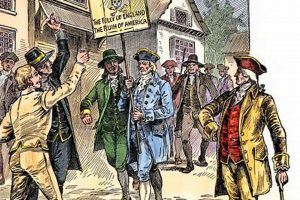
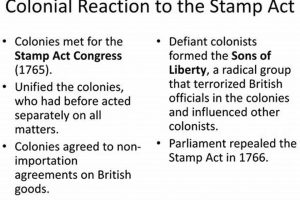
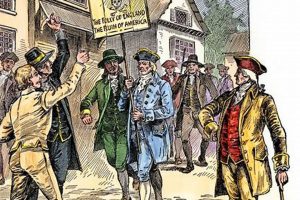
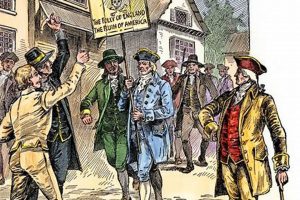
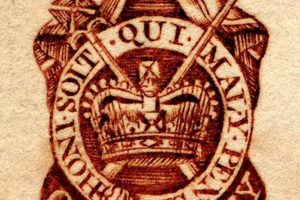
Colonists in British America responded to the 1765 levy on printed materials with widespread resistance. This encompassed boycotts of British goods, organized protests like the formation of the Sons of Liberty, and acts of defiance such as the burning of effigies representing tax collectors. Colonial assemblies passed resolutions challenging Parliament’s authority to tax them without representation, and prominent figures like James Otis and Patrick Henry articulated arguments against the tax, galvanizing public opinion.
This colonial resistance significantly escalated tensions between Great Britain and its American colonies. The organized opposition, coupled with the economic pressure of the boycotts, forced the British government to repeal the Stamp Act in 1766. However, the underlying issue of parliamentary authority over the colonies remained unresolved, contributing to the growing unrest that ultimately culminated in the American Revolution. The events surrounding this particular tax serve as a crucial case study in understanding the origins of the revolution and the development of American political thought.
Further examination of this historical period reveals deeper insights into the political, economic, and social forces at play. Examining the specific arguments used against the tax, the role of different social groups in the resistance, and the British government’s response offers a richer understanding of this pivotal era in American history. Exploring these areas will provide a more complete picture of the road to revolution.
Understanding the Reaction to the Stamp Act
Gaining a deeper understanding of the colonial response to the Stamp Act requires examining specific aspects of the resistance movement and its broader historical context. The following tips offer avenues for further exploration:
Tip 1: Explore the philosophical arguments against the tax. Delve into the writings and speeches of figures like John Dickinson and James Otis to understand the intellectual basis of colonial objections, focusing on concepts like representation, natural rights, and the limits of parliamentary authority.
Tip 2: Analyze the role of boycotts. Research the mechanics of the colonial boycotts, including the organizations involved, the effectiveness of their strategies, and the impact on British merchants and manufacturers.
Tip 3: Investigate the Sons of Liberty and other resistance groups. Examine the formation, activities, and influence of these organizations, considering their role in mobilizing popular opposition and shaping public opinion.
Tip 4: Consider the diverse colonial perspectives. Recognize that not all colonists opposed the Stamp Act. Research Loyalist viewpoints and explore the reasons behind their support for British policies.
Tip 5: Study the British government’s response. Analyze the debates in Parliament, the repeal of the Stamp Act, and the passage of the Declaratory Act to understand the British perspective and the evolving relationship between Britain and the colonies.
Tip 6: Connect the Stamp Act resistance to broader historical trends. Consider the Stamp Act crisis within the context of the Enlightenment, rising colonial autonomy, and growing Anglo-American tensions.
By exploring these facets, one gains a more nuanced understanding of the colonial reaction, its significance in the escalating conflict with Britain, and its lasting impact on American political thought.
These insights pave the way for a more complete and informed analysis of the American Revolution’s origins and the development of American identity.
1. Boycotts
Boycotts constituted a crucial element of colonial resistance to the Stamp Act. Refusal to purchase British goods aimed to exert economic pressure on British merchants and manufacturers, compelling them to lobby Parliament for repeal. This collective action demonstrated colonial unity and resolve, significantly impacting the political landscape and contributing to the eventual repeal of the Act.
- Non-Importation Agreements
Colonists organized formal agreements to abstain from importing British goods. These agreements, enforced through social pressure and sometimes intimidation, significantly reduced colonial consumption of British products, impacting transatlantic trade and applying pressure on British businesses reliant on the colonial market.
- Homespun Movement
The boycotts spurred the production and consumption of locally made goods, particularly homespun cloth. This movement not only reduced reliance on British textiles but also fostered a sense of self-sufficiency and colonial identity, further strengthening the resistance movement.
- Economic Impact on Britain
The decreased demand for British goods created economic hardship for British merchants and manufacturers. Their petitions to Parliament, highlighting the negative impact of the Stamp Act on their businesses, contributed to the political pressure that ultimately led to the Act’s repeal. This demonstrated the effectiveness of colonial economic resistance as a political tool.
- Role of Women
Women played a crucial role in the boycotts, both by adhering to non-importation agreements and by actively participating in the homespun movement. Their involvement broadened the base of resistance and challenged traditional gender roles, demonstrating the widespread impact of the Stamp Act controversy on colonial society.
The boycotts associated with the Stamp Act resistance proved a potent tool of colonial resistance. The economic pressure they exerted, combined with other forms of protest, contributed significantly to the repeal of the Act and laid the groundwork for future resistance movements. Furthermore, the boycotts fostered a sense of colonial unity and self-reliance, contributing to the growing divide between Great Britain and its American colonies.
2. Protests and Demonstrations

Protests and demonstrations constituted a significant component of the colonial reaction to the Stamp Act. These public displays of resistance served as a vital platform for expressing popular discontent and applying direct pressure on both colonial authorities and British officials. From organized marches and rallies to more symbolic acts like the hanging and burning of effigies representing tax collectors, these demonstrations vividly illustrated the depth of colonial opposition and contributed to a climate of unrest that compelled the British government to reconsider its policies.
Several key examples highlight the role of protests and demonstrations in shaping the response to the Stamp Act. The burning of stamped paper in public squares served as a powerful symbol of defiance, while organized mobs targeted the homes and businesses of stamp distributors, forcing many to resign their commissions. These actions effectively halted the implementation of the Act in many areas and demonstrated the colonists’ willingness to engage in direct action. Furthermore, these public displays of resistance fostered a sense of collective identity and solidarity among colonists, strengthening the movement against British policies.
Understanding the role of protests and demonstrations in the Stamp Act crisis provides crucial insights into the dynamics of resistance and the power of popular mobilization. These events highlight the effectiveness of public pressure in challenging authority and shaping political outcomes. The legacy of these protests extended beyond the repeal of the Stamp Act, influencing subsequent resistance movements and contributing to the growing momentum towards revolution. The willingness of colonists to engage in increasingly confrontational tactics underscored the deep-seated resentment against British policies and foreshadowed the escalating conflict that would ultimately lead to the American Revolution.
3. Formation of the Sons of Liberty

The formation of the Sons of Liberty is inextricably linked to the colonial reaction against the Stamp Act. Emerging as a direct response to the tax, the organization played a crucial role in orchestrating and amplifying resistance efforts throughout the colonies. Understanding their origins, activities, and influence provides critical insight into the broader colonial response and the escalating tensions between Great Britain and its American colonies.
- Organization and Mobilization
The Sons of Liberty provided a crucial organizational structure for colonial resistance. Through networks of local chapters spanning multiple colonies, they coordinated boycotts, disseminated information, and mobilized popular support for protests and demonstrations. This intercolonial coordination amplified the impact of resistance efforts, demonstrating a unified front against British policies.
- Direct Action and Protests
The Sons of Liberty spearheaded direct action against the Stamp Act, often employing public demonstrations and targeted acts of intimidation. These actions, ranging from public burning of stamped paper to protests targeting stamp distributors and colonial officials, placed direct pressure on British authorities and contributed significantly to the disruption of the Act’s implementation. Their willingness to engage in confrontational tactics escalated tensions and signaled the depth of colonial opposition.
- Shaping Public Opinion
The Sons of Liberty played a crucial role in shaping public opinion through propaganda and public pronouncements. They effectively disseminated information about the perceived injustices of the Stamp Act, rallying support for resistance and fostering a sense of shared grievance among colonists. This ability to mobilize public sentiment further amplified the pressure on British authorities and contributed to the growing movement against British policies.
- Legacy of Resistance
The Sons of Liberty left an enduring legacy of resistance. Though initially formed in response to the Stamp Act, the organization and its tactics became a model for future resistance movements against British policies. Their actions contributed significantly to the growing colonial unity and the escalating tensions that ultimately led to the American Revolution. The Sons of Liberty, therefore, occupy a critical position in understanding the origins of American independence.
By examining the Sons of Liberty within the context of the Stamp Act crisis, we gain a deeper understanding of how colonial resistance evolved from disparate protests into a more organized and unified movement. Their activities highlight the effectiveness of coordinated action, public demonstrations, and the mobilization of public opinion in challenging authority and shaping political outcomes. The Sons of Libertys role in the Stamp Act resistance laid the groundwork for future resistance movements and contributed significantly to the escalating conflict that culminated in the American Revolution.
4. Legislative Resistance

Legislative resistance constituted a critical component of the colonial reaction to the Stamp Act. Colonial assemblies, representing the interests of their respective colonies, formally challenged the Act’s legitimacy and asserted their rights. This organized, institutional opposition provided a powerful counterpoint to the British Parliament’s authority and significantly shaped the course of events leading up to the American Revolution. Understanding this legislative response is crucial for comprehending the broader colonial reaction and the escalating tensions between Great Britain and its American colonies. Resolutions, declarations, and petitions issued by these assemblies provided a legal and political framework for challenging the Stamp Act’s validity and asserting colonial rights. The Virginia Resolves, spearheaded by Patrick Henry, exemplified this form of resistance, sparking debate and inspiring similar actions in other colonial legislatures. These legislative pronouncements solidified colonial opposition and fueled the growing movement for greater autonomy. This organized resistance within established political bodies provided a powerful platform for challenging British authority and galvanizing public opinion against the Stamp Act.
The Stamp Act Congress, convened in October 1765, exemplified the power of legislative resistance on an intercolonial scale. Representatives from nine colonies met to discuss and coordinate their response to the Act. The Congress issued a Declaration of Rights and Grievances, asserting the colonists’ rights as British subjects and challenging Parliament’s authority to tax them without representation. This collective action represented a significant escalation in colonial resistance, demonstrating unity and resolve across colonial boundaries. The Congress’s declarations provided a framework for future resistance movements and laid the groundwork for the intercolonial cooperation that would characterize the American Revolution. This unified legislative response sent a powerful message to the British government, demonstrating the depth and breadth of colonial opposition to the Stamp Act and foreshadowing the escalating conflict to come.
Legislative resistance played a pivotal role in shaping the colonial response to the Stamp Act. By formally challenging Parliament’s authority and asserting colonial rights, colonial assemblies provided a legal and political framework for resistance, fueling the growing movement against British policies. The Stamp Act Congress, representing a unified front of colonial legislatures, amplified this resistance, demonstrating the power of collective action and laying the groundwork for future intercolonial cooperation. Understanding this dimension of the colonial reaction is essential for grasping the complexities of the escalating tensions between Great Britain and its American colonies and the eventual outbreak of the American Revolution. The legacy of this legislative resistance extended far beyond the repeal of the Stamp Act, shaping the course of American political thought and contributing to the development of American identity.
5. Intellectual Arguments
Intellectual arguments formed a cornerstone of the colonial reaction to the Stamp Act, providing a philosophical and legal framework for resistance. These arguments, rooted in Enlightenment ideals and British legal tradition, challenged Parliament’s authority to tax the colonies without representation. Thinkers like John Locke, whose theories on natural rights and limited government resonated deeply within colonial society, provided the intellectual ammunition for challenging the Act’s legitimacy. Colonial leaders, drawing on Locke’s ideas and other philosophical and legal precedents, articulated arguments that resonated with a broad colonial audience, fueling resistance and shaping public opinion. Pamphlets, newspaper articles, and public speeches disseminated these ideas, fostering a climate of intellectual ferment and contributing to the growing movement against British policies. A key example lies in the concept of “virtual representation,” a British principle arguing that Parliament represented all British subjects, regardless of their location or ability to vote. Colonial thinkers countered this notion by asserting that true representation required direct election by those being taxed, solidifying the argument against taxation without representation as a central grievance. This intellectual discourse elevated the debate beyond mere economic considerations, transforming it into a fundamental clash over principles of governance and individual liberty.
The practical significance of these intellectual arguments lay in their ability to mobilize popular support for resistance. By articulating clear, reasoned justifications for opposing the Stamp Act, colonial leaders legitimized resistance efforts and provided a common cause for colonists from diverse backgrounds to unite against British policies. The arguments regarding representation, natural rights, and the limits of parliamentary authority resonated deeply within colonial society, transforming individual grievances into a collective movement for political change. These ideas transcended social and economic divisions, uniting merchants, artisans, and landowners in a shared struggle against perceived injustice. Moreover, these intellectual arguments laid the groundwork for future resistance movements, providing a framework for challenging British authority and asserting colonial autonomy. The emphasis on natural rights and self-government would continue to shape colonial political thought, ultimately contributing to the philosophical underpinnings of the American Revolution.
In summary, intellectual arguments played a crucial role in shaping the colonial reaction to the Stamp Act. By providing a philosophical and legal basis for resistance, these arguments fueled popular discontent, legitimized opposition movements, and fostered a sense of shared grievance amongst colonists. This intellectual ferment laid the groundwork for future challenges to British authority, contributing significantly to the escalating tensions that culminated in the American Revolution. The legacy of these arguments extends beyond the Stamp Act crisis, shaping the course of American political thought and contributing to the development of American identity.
Frequently Asked Questions about the Reaction to the Stamp Act
The following addresses common inquiries regarding colonial responses to the 1765 Stamp Act, aiming to clarify misconceptions and provide further historical context.
Question 1: Was the reaction to the Stamp Act uniform across all colonies?
While widespread opposition existed, responses varied. Some colonies demonstrated more fervent resistance than others, influenced by factors like local political structures, economic conditions, and the presence of active Sons of Liberty chapters. Loyalist sentiment also varied across regions.
Question 2: How effective were the colonial boycotts?
Boycotts proved highly effective. The economic pressure exerted on British merchants and manufacturers contributed significantly to Parliament’s decision to repeal the Act. The boycotts also fostered colonial unity and self-sufficiency.
Question 3: Did all colonists oppose the Stamp Act?
No. Loyalists supported the British government and believed Parliament had the right to tax the colonies. Their presence, though a minority, adds complexity to understanding colonial reactions.
Question 4: How did the British government respond to the colonial resistance?
The British government initially responded with a combination of surprise and dismissal. However, the escalating resistance, coupled with pressure from British merchants, ultimately forced the repeal of the Stamp Act in 1766. The Declaratory Act, passed alongside the repeal, asserted Parliament’s continued authority over the colonies, failing to resolve the underlying tensions.
Question 5: Why was the Stamp Act so significant, even though it was repealed?
The Stamp Act crisis became a pivotal moment in the relationship between Great Britain and its American colonies. The resistance movement solidified colonial identity, established methods of resistance, and heightened tensions over issues of representation and parliamentary authority. It laid critical groundwork for the American Revolution.
Question 6: How did the Stamp Act crisis influence the development of American political thought?
The crisis fueled the development of key American political ideas. Arguments against the Stamp Act centered on concepts like natural rights, representation, and the limits of government power, all of which significantly influenced the Declaration of Independence and the subsequent development of American political philosophy.
Understanding the multifaceted colonial reaction to the Stamp Act offers crucial insight into the origins of the American Revolution and the development of American political identity. Further exploration of primary sources and scholarly works provides a deeper appreciation for this pivotal era in American history.
Exploring primary source documents, such as pamphlets, letters, and official records, offers valuable firsthand perspectives on the events of this period and enriches ones understanding of the varied reactions to the Stamp Act. This deeper exploration illuminates the complexities of colonial resistance and provides further context for understanding the American Revolution.
The Reaction to the Stamp Act
Colonial reaction to the Stamp Act proved multifaceted, encompassing boycotts, protests, legislative challenges, and intellectual arguments. These diverse forms of resistance, orchestrated by groups like the Sons of Liberty and fueled by philosophical ideals of representation and natural rights, effectively pressured the British government to repeal the Act. However, the underlying tensions regarding parliamentary authority remained unresolved, solidifying colonial resistance and setting the stage for future conflict.
The Stamp Act crisis serves as a pivotal moment in the trajectory towards the American Revolution. It demonstrated the power of unified colonial action, the effectiveness of diverse resistance strategies, and the enduring influence of Enlightenment ideals on American political thought. Further examination of this period remains crucial for understanding the complexities of the American Revolution’s origins and the development of American national identity. The echoes of this resistance continue to resonate within contemporary discussions of political representation and the balance between individual liberties and governmental authority.