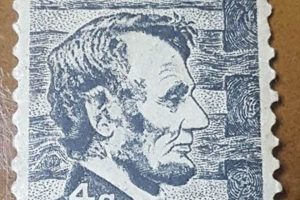
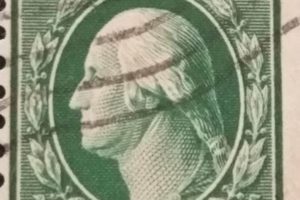
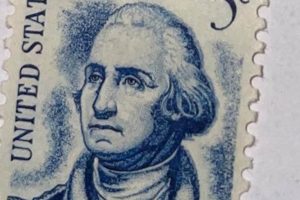
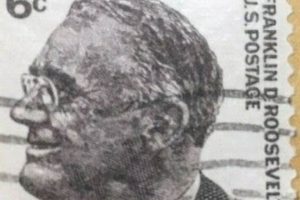
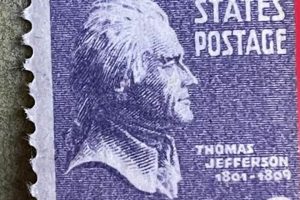
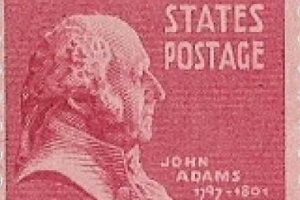
The one-cent stamp featuring George Washington represents a foundational piece of American philately. Issued in numerous designs across decades, these stamps provided an affordable means of postage for everyday correspondence and remain a common find for collectors. Early examples, like the 1851 imperforate issue, illustrate the evolution of stamp production and design. These small, engraved portraits of the first president served as a ubiquitous symbol of the nation and facilitated communication during pivotal periods in its history.
Low-denomination postage played a vital role in the expansion of written communication, enabling widespread dissemination of news, personal letters, and business documents. The affordability of the one-cent Washington stamps democratized mail access and contributed significantly to the growth of literacy and social connections throughout the 19th and 20th centuries. Their enduring presence in collections offers valuable insight into printing techniques, postal history, and the changing iconography of American identity.
This exploration will delve further into specific issues, design variations, and the historical context surrounding these significant stamps. Examining these minute engravings unveils a larger narrative of American history, technology, and communication.
Tips for Collecting and Understanding One-Cent Washington Stamps
Careful consideration of several factors can significantly enhance one’s appreciation and understanding of one-cent Washington stamps. These tips offer guidance for both novice and experienced collectors.
Tip 1: Condition is paramount. Stamp condition significantly impacts value. Factors such as centering, gum condition (if applicable), and the presence of faults like tears or thin spots should be carefully assessed.
Tip 2: Recognize design variations. Numerous design changes occurred throughout the years. Learning to identify specific issues, perforations, and watermarks is crucial for accurate classification.
Tip 3: Utilize specialized catalogs. Reputable philatelic catalogs provide detailed information regarding different issues, including values and identification tips.
Tip 4: Join a philatelic society or club. Connecting with other collectors offers opportunities for learning, trading, and sharing knowledge.
Tip 5: Handle stamps with care. Always use stamp tongs to avoid damaging the stamp’s surface or gum. Store stamps in protective sleeves or albums.
Tip 6: Research historical context. Understanding the historical period in which a stamp was issued enhances appreciation of its significance.
Tip 7: Focus on a specific area. Specializing in a particular period, design type, or printing method can provide a more focused collecting experience.
By following these guidelines, collectors can gain a deeper understanding of these seemingly small but historically rich artifacts. Their careful study unlocks insights into printing techniques, postal history, and the evolving imagery of American identity.
This foundational knowledge provides a springboard for further exploration of specific issues and the broader narrative of American philately.
1. George Washington Image

The image of George Washington on the one-cent stamp is not merely decorative; it represents a powerful symbol of American identity and nationhood, inextricably linked to the stamp’s function and historical context. This enduring presence on a ubiquitous postal item cemented Washington’s image in the public consciousness.
- Symbol of National Unity:
Washington’s image served as a unifying symbol across a geographically and culturally diverse nation. Appearing on millions of stamps, his likeness fostered a shared sense of national identity and purpose, particularly during periods of social or political upheaval. This visual reminder of the nation’s founding father reinforced common values and aspirations.
- Icon of Authority and Trust:
The use of Washington’s portrait on official postage imbued the stamp with an implicit sense of authority and trustworthiness. This association with the first president lent credibility to the postal service and reinforced public confidence in the mail system as a reliable means of communication.
- Evolution of Portraiture and Printing:
The various depictions of Washington on one-cent stamps throughout history offer a visual record of evolving artistic styles, engraving techniques, and printing technologies. From early, rudimentary engravings to later, more refined portraits, these stamps reflect advancements in graphic arts and printing processes.
- Accessibility and Familiarity:
The widespread use of the one-cent Washington stamp ensured its accessibility to all citizens, regardless of social or economic standing. This constant presence in daily life fostered familiarity with Washington’s image, further solidifying his place in the collective American memory.
These facets demonstrate how the seemingly simple image of Washington on the one-cent stamp transcends mere portraiture. It embodies complex layers of historical, cultural, and technological significance, contributing to the stamp’s enduring value as a historical artifact and collectible item. Further exploration of specific stamp issues and their historical contexts reveals the ongoing evolution and adaptation of this iconic image.
2. One-Cent Denomination

The one-cent denomination played a crucial role in the widespread adoption and utility of the Washington stamp. This affordability directly impacted communication practices and access to postal services across socioeconomic strata. The low cost facilitated high-volume mailings, including newspapers, circulars, and business correspondence, thereby fueling economic activity and information dissemination. Unlike higher denominations reserved for larger packages or specialized mail, the one-cent stamp served the everyday communication needs of the general public. This accessibility fostered broader participation in written correspondence, promoting literacy and social connectivity across geographical distances. For example, during the 19th and early 20th centuries, sending postcards and letters using one-cent stamps became a commonplace practice for maintaining personal and familial ties, particularly during periods of migration and westward expansion.
The significance of the one-cent denomination extends beyond mere affordability. It reflects the evolving postal system’s adaptation to the growing demands of a rapidly developing nation. As mail volume surged, the need for a low-cost postage option became paramount. The one-cent Washington stamp fulfilled this requirement, enabling the postal service to handle an increasing flow of communication. Moreover, the widespread availability of one-cent stamps facilitated the growth of businesses reliant on direct mail marketing and advertising. Catalogs, brochures, and promotional materials could be distributed efficiently and affordably, reaching a wider consumer base and stimulating economic growth.
In summary, the one-cent denomination of the Washington stamp significantly influenced communication practices, fostered widespread access to postal services, and supported economic development. This seemingly minor detail played a crucial role in shaping the social and commercial landscape of the United States. Understanding this connection provides valuable insight into the interplay between postal policy, technological advancements in printing, and the broader historical context of communication in America. Further research into specific usage patterns and postal rates can provide a more granular understanding of this impact.
3. U.S. Postal History

The one-cent Washington stamp offers a tangible link to crucial developments in U.S. postal history. Its evolution reflects changing postal rates, printing technologies, and graphic design trends within the postal service. The initial 1851 issue, for instance, featured an imperforate design, necessitating separation by scissors. Later issues incorporated perforations, demonstrating technological advancements that improved efficiency. Changes in printing methods, from engraved to lithographic and eventually photogravure, are also evident in different stamp issues. Examining these variations provides insight into the postal service’s ongoing efforts to enhance operations and meet increasing mail volume demands. Moreover, the one-cent denomination itself reveals shifting postal rate structures over time. Its continued use underscores its crucial role in facilitating affordable communication for a growing nation.
The one-cent Washington stamp further reflects broader historical trends impacting the postal service. The Civil War era, for example, necessitated changes in stamp production and distribution, exemplified by the Continental Bank Note Company issues. Later, the introduction of rural free delivery significantly impacted mail volume and, consequently, the demand for one-cent stamps. Studying these stamps in conjunction with historical events illuminates the postal service’s responsiveness to changing social and political landscapes. Furthermore, the proliferation of one-cent Washington stamps served as a driver for philately’s emergence as a popular hobby. The abundance and variety of these stamps provided ample material for collectors, contributing to the development of philatelic societies and specialized catalogs. These stamps thereby offer not only a glimpse into postal operations but also the cultural history surrounding stamp collecting.
Understanding the interplay between one-cent Washington stamps and U.S. postal history offers valuable insights. These stamps serve as historical markers, reflecting technological advancements, changing postal policies, and broader social trends. Analyzing their features within their historical contexts provides a nuanced perspective on the postal service’s evolution and its role in facilitating communication and connecting communities. This understanding deepens appreciation for these seemingly small artifacts as significant windows into the past, highlighting the interconnectedness of postal operations and the broader narrative of American history.
4. Engraving and printing
The production of one-cent Washington stamps provides a fascinating case study in the evolution of engraving and printing techniques within security printing. Early examples utilized intricate hand-engraved dies, a meticulous process requiring skilled artisans. This method, while producing highly detailed and secure designs, limited production capacity. The shift towards mechanically engraved dies, particularly with the advent of the rotary press, significantly increased production speed, necessary to meet the burgeoning demand for affordable postage. This transition, however, presented challenges in maintaining consistent quality and security. The choice of specific printing methods, including intaglio, lithography, and later photogravure, directly impacted the stamps’ appearance, durability, and susceptibility to counterfeiting. Examining these techniques reveals not only technological advancements but also the constant tension between production efficiency and maintaining security.
Specific examples illustrate this interplay. The 1851 one-cent Franklin stamp, a precursor to the Washington series, exemplifies early hand-engraving techniques. Its detailed portraiture and crisp lines contrast sharply with later issues produced by rotary presses, which sometimes exhibit variations in ink coverage and sharpness. The introduction of perforations, initially achieved through rouletting, later replaced by more efficient perforating machines, further demonstrates the impact of technological innovation on stamp production. Analyzing these changes allows philatelists to distinguish between different issues and appreciate the nuances of each printing method. Furthermore, understanding the historical context of these production methods illuminates the challenges faced by the Bureau of Engraving and Printing in balancing security, cost-effectiveness, and the ever-increasing demand for postage.
In conclusion, the study of engraving and printing techniques employed in the production of one-cent Washington stamps offers valuable insights into the history of security printing. Analyzing the progression from hand-engraving to mechanized production and the adoption of various printing methods reveals a continuous drive for efficiency and innovation. This understanding allows for more accurate identification and appreciation of different stamp issues, highlighting the intricate connections between technology, artistry, and the practical demands of a nationwide postal system. Further research into specific printing processes and their historical contexts can enrich this understanding, offering a nuanced perspective on the evolution of postage stamp production and its impact on communication and commerce.
5. Variety of Issues
The sheer variety of one-cent Washington stamps issued throughout history presents a rich area of study for philatelists. These variations, arising from changes in printing methods, designs, paper types, and other factors, provide a detailed record of evolving postal practices and technological advancements. Understanding these distinctions is crucial for accurate identification, valuation, and appreciation of these stamps.
- Design Changes:
The portrait of Washington underwent subtle alterations throughout the years, reflecting changing artistic styles and engraving techniques. Early issues, like the 1851 design, differ markedly from later depictions, such as the 1908-1922 series. Recognizing these variations is essential for accurate identification and dating of individual stamps. These design changes often coincided with anniversaries, new printing technologies, or shifts in aesthetic preferences within the Bureau of Engraving and Printing.
- Printing Methods:
Different printing techniques, including engraved, lithographic, and photogravure processes, were employed throughout the production of one-cent Washington stamps. Each method imparted unique characteristics to the final product, affecting the stamp’s appearance, texture, and even its value. For instance, engraved stamps possess a distinctive tactile quality, while photogravure stamps exhibit a smoother surface. Discerning these differences is crucial for accurate identification and authentication.
- Perforations:
The introduction and evolution of perforations, which facilitated stamp separation, offer another key area of differentiation. Variations in gauge (the number of perforations per two centimeters) and perforation type (such as line, comb, or rotary) help distinguish between various issues. The transition from imperforate stamps to those with perforations reflects a significant shift in stamp production technology and postal efficiency.
- Watermarks:
Certain issues of one-cent Washington stamps feature watermarks, embedded designs visible when held up to light. These security features aid in identifying genuine stamps and distinguishing between different printings. The presence, absence, or type of watermark provides valuable information for collectors and researchers alike. Understanding these variations adds another layer of complexity to the study of these stamps.
These facets demonstrate that the “variety of issues” associated with the one-cent Washington stamp extends far beyond superficial differences. Each variation offers a glimpse into the evolution of printing technology, postal practices, and design aesthetics. This diversity provides collectors and researchers with a rich tapestry of information, connecting these seemingly simple objects to broader historical trends and technological advancements. Further exploration of individual stamp issues and their specific characteristics enriches understanding and appreciation for the complexities embedded within this ubiquitous postal artifact.
6. Collectible Item
The one-cent Washington stamp’s status as a collectible item stems from several interconnected factors. Its ubiquity ensured widespread availability, while the numerous design variations across its long production history provide ample material for specialized collecting. The affordability of these stamps further broadened their appeal to collectors of diverse means. These factors, combined with the inherent historical significance associated with George Washington’s image, solidified the one-cent stamp’s position as a foundational piece within American philately. The earliest issues, such as the 1851 imperforate stamp, are particularly prized due to their rarity and historical context. Later issues, while more common, offer opportunities for specialized collections focused on specific printing methods, perforation varieties, or design changes. The 1908-1922 series, for example, offers a range of design subtypes that appeal to collectors seeking completeness within a specific period.
The collectibility of one-cent Washington stamps extends beyond mere accumulation. Serious philatelists meticulously catalog and analyze their collections, contributing to a deeper understanding of printing techniques, postal history, and the evolving iconography of American identity. Specialized catalogs and philatelic societies facilitate research and exchange of information, further enhancing the intellectual pursuit associated with stamp collecting. Condition significantly impacts a stamp’s value, emphasizing the importance of careful handling and storage. The presence of faults, such as tears or thin spots, diminishes value, while well-centered stamps with original gum command higher prices. This focus on condition necessitates specialized tools, such as stamp tongs and magnifying glasses, further contributing to the dedicated nature of stamp collecting.
In summary, the one-cent Washington stamp’s collectibility derives from its historical significance, affordability, and the wide array of design variations available. This status has fueled a dedicated community of philatelists who contribute to the preservation and study of these seemingly small but historically rich artifacts. The meticulous cataloging, analysis, and preservation efforts undertaken by collectors underscore the importance of these stamps as tangible links to American history and the evolution of printing and postal practices. The ongoing study and appreciation of one-cent Washington stamps contribute significantly to our understanding of broader historical, technological, and cultural trends.
Frequently Asked Questions
This section addresses common inquiries regarding one-cent Washington stamps, providing concise yet informative responses for both novice collectors and seasoned philatelists.
Question 1: What distinguishes the different types of one-cent Washington stamps?
Numerous factors differentiate these stamps, including design variations (e.g., portrait style, frame ornamentation), printing methods (e.g., engraved, lithographic, photogravure), perforation types, and the presence or absence of watermarks. Specialized catalogs offer comprehensive details for identification.
Question 2: How can one determine the value of a one-cent Washington stamp?
Value depends on factors like condition (centering, gum, faults), rarity, and demand. Consulting reputable stamp catalogs and seeking expert opinions from philatelic societies or appraisers provide reliable valuation guidance.
Question 3: Where can one acquire one-cent Washington stamps for a collection?
Potential sources include stamp dealers, online marketplaces, auctions, stamp shows, and inherited collections. Exercising due diligence regarding authenticity and condition is crucial, especially when purchasing online.
Question 4: What are the best practices for storing and preserving one-cent Washington stamps?
Storing stamps in acid-free albums or protective sleeves safeguards them from environmental damage. Utilizing stamp tongs prevents handling damage. Maintaining a stable environment, avoiding extremes in temperature and humidity, further ensures long-term preservation.
Question 5: How does one begin a specialized collection of one-cent Washington stamps?
Focusing on a specific period, design type, or printing method provides a manageable starting point. Joining philatelic societies offers access to expertise and resources. Gradually expanding knowledge and refining collecting focus contribute to a rewarding experience.
Question 6: Why are one-cent Washington stamps considered significant within philately?
Their historical significance, reflecting evolving printing techniques and postal history, coupled with their affordability and diverse variations, contribute to their enduring appeal. They offer a tangible link to American history and visual culture.
Careful consideration of these frequently asked questions provides a solid foundation for understanding and appreciating one-cent Washington stamps. Continued research and engagement with the philatelic community enhance collecting knowledge and enjoyment.
This concludes the FAQ section. Further exploration may focus on specialized collecting areas, in-depth analyses of specific stamp issues, or broader research into the history of American postage.
Conclusion
Exploration of the one-cent Washington stamp reveals a multifaceted artifact reflecting American history, technological innovation, and communication evolution. From the earliest imperforate issues to later design variations, these stamps document changing printing techniques, postal practices, and graphic design trends. Their affordability democratized access to postal services, facilitating widespread communication and fostering social connectivity. The enduring presence of George Washington’s image on these ubiquitous postal items further solidified his role as a central figure in American identity. The sheer variety of one-cent Washington stamps provides a rich field of study for philatelists, offering opportunities for specialized collecting and in-depth research into specific issues, printing methods, and historical contexts.
These seemingly small engravings offer a tangible connection to the past, encapsulating significant historical narratives within their intricate designs. Continued study and appreciation of one-cent Washington stamps promise deeper insights into the interwoven threads of American history, technology, and communication. Further research into specific areas, such as postal rate history, printing technology evolution, or the cultural impact of stamp collecting, offers avenues for expanding this understanding and contributing to the ongoing preservation of these important historical artifacts.