The Stamp Act of 1765, a tax levied by the British Parliament on the American colonies, required all printed materials, including legal documents, newspapers, pamphlets, and even playing cards, to carry a tax stamp purchased from authorized agents. This act impacted a wide range of colonial society, from merchants and printers to lawyers, journalists, and ordinary citizens.
This legislation aimed to raise revenue for the British crown to offset the costs of stationing troops in North America following the French and Indian War. However, it sparked widespread resistance in the colonies, largely because it was seen as a form of taxation without representation in Parliament. The cry of “No taxation without representation” became a rallying point for colonists who argued that they should not be subjected to taxes imposed by a body in which they lacked a voice. The act played a critical role in escalating tensions between Great Britain and the American colonies, contributing significantly to the events leading up to the American Revolution.
Understanding the breadth of those affected by this legislation, from government officials who implemented it to colonists who bore its financial and symbolic burden, is crucial to grasping its historical significance. Exploring the perspectives of various groups involvedincluding British officials, colonial merchants, printers, lawyers, and ordinary citizensoffers a more nuanced understanding of the act and its repercussions.
Researching Those Involved in the Stamp Act
Gaining a deeper understanding of the Stamp Act requires exploring the various individuals and groups impacted by this pivotal piece of legislation. The following research tips provide guidance for navigating the historical complexities surrounding the act’s implementation and the diverse responses it elicited.
Tip 1: Explore primary sources. Examine original documents from the period, such as letters, diaries, newspapers, pamphlets, and legal records. These sources offer firsthand accounts and insights into the perspectives of those directly affected by the Stamp Act.
Tip 2: Consider the different roles. Investigate the roles played by various individuals and groups, including members of Parliament, colonial governors, tax collectors, merchants, printers, lawyers, and ordinary citizens. Analyzing their motivations and actions can provide a more nuanced understanding of the historical context.
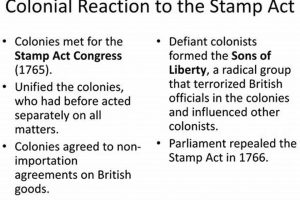
Tip 3: Research the resistance movement. The Stamp Act spurred widespread resistance in the colonies. Explore the activities of groups like the Sons of Liberty and the Daughters of Liberty to understand how they organized protests, boycotts, and other forms of opposition.
Tip 4: Examine the legal challenges. The Stamp Act faced legal challenges in colonial courts. Researching these cases offers insights into the legal arguments used to contest the act’s constitutionality and the role of lawyers in the resistance movement.
Tip 5: Study the British perspective. Understanding the British government’s rationale for imposing the Stamp Act and their responses to colonial resistance is essential for a comprehensive historical analysis.
Tip 6: Investigate the act’s repeal. The Stamp Act was eventually repealed due to colonial resistance and economic pressure. Researching the factors that led to its repeal offers valuable insights into the political dynamics of the period.
By following these research strategies, one can develop a deeper and more informed understanding of the individuals and groups involved in the Stamp Act, the motivations behind their actions, and the broader historical significance of this pivotal piece of legislation. This exploration provides crucial context for understanding the escalating tensions that ultimately led to the American Revolution.
With a clearer understanding of the various perspectives surrounding the Stamp Act, it becomes possible to fully appreciate its lasting impact on the course of American history.
1. British Parliament

The British Parliament played a crucial role in the Stamp Act, serving as the legislative body that conceived, debated, and ultimately enacted the legislation in 1765. Driven by the need to raise revenue to offset the costs of the French and Indian War and the ongoing defense of the American colonies, Parliament viewed the Stamp Act as a necessary measure. The act mandated a tax on all printed materials in the colonies, requiring the purchase of embossed revenue stamps. This decision, made without colonial representation in Parliament, ignited widespread resentment and resistance in America. The absence of colonial voices in the legislative process fueled arguments of “taxation without representation,” a central grievance that galvanized colonial opposition and contributed significantly to the escalating tensions with Great Britain. Understanding Parliament’s role is essential to comprehending the origins and implications of the Stamp Act.
The Stamp Act exemplified the growing disconnect between British imperial policy and colonial realities. While Parliament viewed the tax as a reasonable measure for imperial administration, colonists saw it as an infringement on their rights and autonomy. The act’s passage sparked protests, boycotts of British goods, and the formation of groups like the Sons of Liberty, demonstrating the depth of colonial resistance. The Stamp Act crisis underscored the fundamental differences in perspective between the British government and its American colonies, differences that would ultimately escalate into revolution. Examining Parliament’s role highlights the political and economic factors driving British policy, and the unintended consequences of those policies on the relationship with the colonies.
The Stamp Act’s ultimate failure and repeal in 1766, largely due to colonial resistance, underscore the limits of British power and the growing strength of colonial identity. While intended to raise revenue, the act served to radicalize colonial opinion and solidify opposition to British rule. This episode stands as a critical turning point in the relationship between Great Britain and the American colonies, highlighting the importance of understanding the role of the British Parliament in shaping the events that led to the American Revolution. The legacy of the Stamp Act underscores the complexities of imperial governance and the crucial role of representation in maintaining political stability.
2. Colonial Merchants

Colonial merchants occupied a central position in the resistance to the Stamp Act. Their commercial activities were directly impacted by the tax on printed materials, which affected everything from bills of lading and contracts to newspapers and pamphlets vital for conducting business. This placed them at the forefront of the opposition movement, leveraging their economic influence and social standing to challenge British authority.
- Economic Impact
The Stamp Act imposed a significant financial burden on colonial merchants. Required to purchase stamps for a wide range of commercial documents, they faced increased operating costs, reducing profits and hindering trade. This direct economic impact fueled their resentment and motivated them to take action against the tax.
- Leadership in Resistance
Merchants played a crucial leadership role in organizing resistance to the Stamp Act. They formed influential groups, such as non-importation associations, which boycotted British goods to pressure Parliament for repeal. Their established networks of communication and trade facilitated the spread of protest and coordinated resistance efforts across the colonies. Prominent merchants often held positions of authority within colonial society, allowing them to mobilize public opinion and exert political pressure.
- Dissemination of Information
Merchants facilitated the dissemination of information critical of the Stamp Act. They leveraged their access to printing presses and distribution networks to circulate pamphlets, newspapers, and broadsides that articulated colonial grievances and fueled public opposition. This control over information channels allowed them to shape public discourse and galvanize support for the resistance movement.
- Political Activism
Beyond economic boycotts, colonial merchants engaged in various forms of political activism to challenge the Stamp Act. They petitioned the British government, organized public demonstrations, and participated in colonial assemblies that debated and condemned the tax. Their active involvement in the political arena underscored their commitment to defending colonial rights and resisting perceived injustices.
The multifaceted involvement of colonial merchants in resisting the Stamp Act demonstrates their crucial role in shaping the events that led to the American Revolution. Their economic influence, leadership in organizing resistance, control over information dissemination, and active political engagement significantly contributed to the growing tensions between Great Britain and its American colonies. The Stamp Act crisis served as a catalyst for colonial merchants to assert their political and economic autonomy, ultimately playing a pivotal role in the movement toward independence.
3. Printers

Printers held a unique and influential position during the Stamp Act crisis. As the producers of newspapers, pamphlets, legal documents, and other printed materials, they were directly and profoundly affected by the tax. This central role placed them at the heart of the resistance movement, transforming their printing shops into hubs of dissent and their publications into powerful tools for mobilizing public opinion against British policies. The act mandated that all printed matter carry a tax stamp, increasing production costs and threatening their livelihoods. This direct economic burden spurred printers to become active participants in resisting the act, using their presses to disseminate information and fuel opposition.
The practical impact of the Stamp Act on printers is exemplified by prominent figures like Benjamin Franklin and the Boston Gazette publishers. Franklin, a leading printer and publisher, actively lobbied against the act in London, highlighting its negative consequences for colonial commerce and freedom of the press. The Boston Gazette, a widely circulated newspaper, became a prominent voice of dissent, publishing articles and editorials critical of the Stamp Act and promoting colonial resistance. These examples illustrate how printers leveraged their skills and resources to challenge the act’s legitimacy and mobilize public support for its repeal. Moreover, printers often served as key members of resistance organizations, such as the Sons of Liberty, further solidifying their role in the broader movement against British policies.
Understanding the printers’ involvement in the Stamp Act crisis provides crucial insights into the dynamics of colonial resistance. Their position within the information ecosystem of the time allowed them to shape public discourse and disseminate revolutionary ideas. The act’s impact on printers underscores the importance of a free press in challenging unjust laws and mobilizing public opinion. The resistance fostered by printers during this period contributed significantly to the growing tensions between Great Britain and the American colonies, ultimately paving the way for the American Revolution. Their actions highlight the vital role of printers in defending freedom of expression and shaping the course of American history.
4. Lawyers

Lawyers played a critical role in the Stamp Act crisis, utilizing their legal expertise to challenge the act’s constitutionality and articulate colonial grievances. Their involvement extended beyond courtroom arguments, shaping public discourse and contributing significantly to the broader resistance movement. Examining their multifaceted contributions provides essential insights into the legal and political dimensions of the opposition to British policies.
- Legal Arguments Against the Stamp Act
Lawyers formulated sophisticated legal arguments against the Stamp Act, focusing on the principle of “no taxation without representation.” They argued that colonists, lacking representation in the British Parliament, should not be subjected to taxes imposed by that body. This argument resonated deeply within colonial society and became a central rallying cry for the resistance movement. Lawyers presented these arguments in colonial courts, challenging the act’s legality and seeking to obstruct its enforcement. Their legal challenges, while not always successful in overturning the act, played a vital role in shaping public opinion and galvanizing opposition.
- Representation and Colonial Rights
Lawyers played a crucial role in articulating and defending colonial rights. They emphasized the principles of self-governance and the rights of Englishmen, arguing that the Stamp Act violated these fundamental principles. Their arguments resonated with colonists who cherished their traditional liberties and viewed the act as an infringement on their autonomy. Lawyers’ advocacy for colonial rights contributed significantly to the growing sense of colonial identity and the movement towards greater self-determination.
- Public Discourse and Shaping Opinion
Beyond legal arguments presented in court, lawyers actively participated in shaping public discourse surrounding the Stamp Act. They wrote pamphlets, articles, and letters to newspapers, articulating colonial grievances and disseminating legal arguments against the act. Their public pronouncements helped to educate colonists about their rights and fueled public opposition to British policies. Lawyers often served as leaders within their communities, lending their voices and influence to the growing resistance movement.
- Collaboration with Other Resistance Leaders
Lawyers collaborated with other leaders of the resistance movement, such as merchants, printers, and political activists. They provided legal counsel to resistance organizations, drafted resolutions and petitions, and participated in boycotts and other forms of protest. This collaborative effort demonstrated a unified front against British policies and strengthened the collective voice of colonial opposition. The combined efforts of lawyers, merchants, and other leaders proved essential in mobilizing public support and ultimately achieving the repeal of the Stamp Act.
The contributions of lawyers during the Stamp Act crisis extended far beyond the courtroom. Their legal arguments, advocacy for colonial rights, influence on public discourse, and collaboration with other resistance leaders played a crucial role in shaping the course of events. Their actions highlight the importance of legal expertise in challenging unjust laws and defending fundamental rights, contributing significantly to the growing movement toward American independence.
5. American Colonists
American colonists bore the brunt of the Stamp Act’s impact, experiencing its consequences directly and fueling widespread resistance. Their diverse reactions, ranging from peaceful protests to acts of defiance, underscore the act’s profound impact on colonial society and its role as a catalyst for the American Revolution. Examining the colonists’ experiences provides crucial insights into the social, economic, and political climate of the time and illuminates the growing rift between Great Britain and its American colonies.
- Daily Life Disruptions
The Stamp Act disrupted the daily lives of American colonists across all social strata. The tax affected a wide range of printed materials, including newspapers, legal documents, pamphlets, and even playing cards. This pervasive impact touched nearly every aspect of colonial life, from commercial transactions and legal proceedings to access to information and leisure activities. The resulting inconveniences and added expenses fueled resentment and fostered a sense of shared grievance among colonists.
- Economic Hardships
The Stamp Act imposed significant economic hardships on many colonists. The tax added to the cost of essential goods and services, placing an additional burden on already strained household budgets. Merchants and traders faced increased operating costs, hindering commerce and contributing to economic instability. These economic pressures exacerbated existing tensions with Great Britain and further motivated colonists to resist British policies.
- Grassroots Resistance Movements
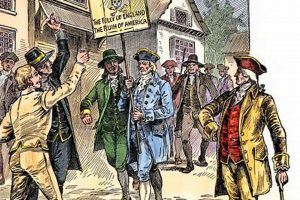
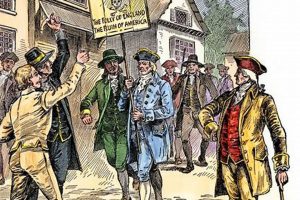
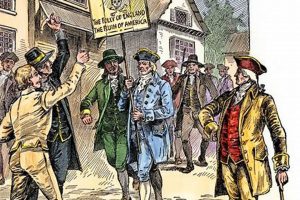
The Stamp Act ignited widespread grassroots resistance movements across the colonies. Colonists organized protests, boycotts of British goods, and acts of civil disobedience to express their opposition to the tax. Groups like the Sons of Liberty and the Daughters of Liberty emerged as prominent forces in the resistance, mobilizing popular support and challenging British authority. These grassroots movements played a crucial role in coordinating resistance efforts and shaping public opinion against the Stamp Act.
- Development of Colonial Identity
The shared experience of resisting the Stamp Act contributed significantly to the development of a distinct American colonial identity. As colonists from different backgrounds and regions united in opposition to British policies, a sense of collective purpose and shared grievance emerged. The act’s perceived injustice fostered a growing sense of autonomy and self-reliance, laying the groundwork for the eventual movement toward independence.
The American colonists’ experiences during the Stamp Act crisis were diverse and far-reaching. The act’s disruption of daily life, economic hardships, the rise of grassroots resistance, and the development of a shared colonial identity collectively demonstrate its profound impact on colonial society. The Stamp Act served as a pivotal moment in the relationship between Great Britain and the American colonies, marking a significant escalation in tensions and setting the stage for the American Revolution. Examining the colonists’ perspectives reveals the human cost of British policies and the complex social and political dynamics that fueled the movement for independence.
Frequently Asked Questions
This section addresses common inquiries regarding the individuals and groups involved in the Stamp Act of 1765, aiming to provide clear and concise answers.
Question 1: Who enacted the Stamp Act?
The British Parliament enacted the Stamp Act.
Question 2: Why did colonial merchants oppose the Stamp Act?
Colonial merchants opposed the act due to its direct negative impact on their businesses. The tax on printed materials increased operating costs and hindered trade.
Question 3: How did printers contribute to the resistance movement?
Printers played a key role by utilizing their presses to produce and disseminate anti-Stamp Act pamphlets, newspapers, and other materials, fueling public dissent.
Question 4: What were the primary legal arguments against the Stamp Act?
Legal arguments centered on the principle of “no taxation without representation,” asserting that colonists lacked representation in Parliament and therefore should not be subjected to its taxes.
Question 5: How did the Stamp Act affect ordinary colonists?
The act disrupted daily life by increasing the cost of various printed materials, including newspapers, legal documents, and even playing cards. These added expenses and inconveniences fueled resentment and contributed to economic hardship.
Question 6: What was the role of organizations like the Sons of Liberty?
Groups like the Sons of Liberty organized protests, boycotts, and other forms of resistance, playing a crucial role in mobilizing public opposition and challenging British authority.
Understanding the diverse roles played by various individuals and groups during the Stamp Act crisis is crucial for comprehending the act’s significance in the broader context of the American Revolution. The collective resistance to this legislation laid the groundwork for future challenges to British rule and ultimately contributed to the colonies’ fight for independence.
Further exploration of the Stamp Act’s impact can be found in subsequent sections.
Conclusion
Examination of the Stamp Act necessitates understanding the diverse array of individuals and groups entangled in its web. From the British Parliament imposing the tax to the colonial merchants bearing its economic brunt, the printers disseminating dissent, the lawyers crafting legal challenges, and the ordinary colonists experiencing its daily impact, the act touched numerous facets of colonial society. Each group played a distinct yet interconnected role in shaping the events that unfolded, highlighting the complexities of the crisis and its far-reaching consequences. Understanding the motivations, actions, and perspectives of these key players offers crucial insight into the escalating tensions between Great Britain and the American colonies.
The legacy of the Stamp Act extends far beyond its eventual repeal. It serves as a potent reminder of the importance of representation, the power of collective action, and the enduring struggle for liberty. Further research into the individuals and groups involved in this pivotal moment in history offers a deeper understanding of the forces that shaped the American Revolution and the enduring principles upon which the nation was founded. This exploration remains critical for comprehending not only the past but also the enduring relevance of these historical events in shaping contemporary political and social landscapes.