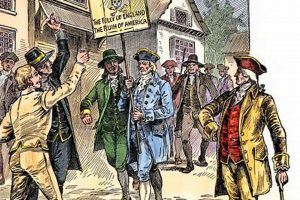
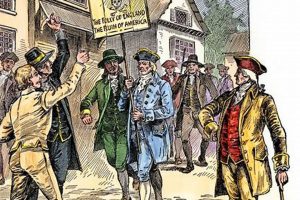
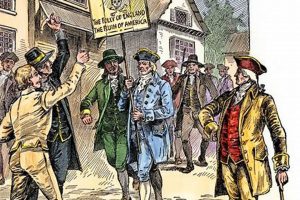
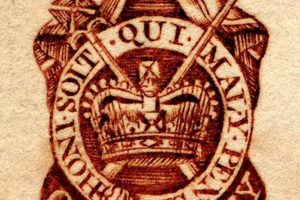
The Stamp Act of 1765, requiring a tax on all printed materials in the American colonies, ignited a firestorm of opposition across the Atlantic. From pamphlets and petitions to boycotts and organized protests, colonial responses demonstrated a growing sense of discontent with British rule. These actions ranged from formal legal challenges and economic pressure to public demonstrations of defiance, foreshadowing the revolutionary fervor to come. For example, the Sons of Liberty, a prominent group formed during this period, organized boycotts of British goods and staged public protests, often targeting tax collectors.
This period of unrest proved crucial in shaping the course of American history. The widespread outrage over taxation without representation solidified colonial unity and fostered a sense of shared identity in opposition to British policies. It demonstrated the power of collective action and laid the groundwork for the future arguments for independence. Understanding this historical context is essential for comprehending the escalating tensions that ultimately led to the American Revolution.
Exploring the diverse forms of resistance employed, the key figures who emerged as leaders, and the long-term consequences of these actions provides valuable insight into the origins of the American Revolution. This examination will delve into the specific strategies employed, the political and social climate of the time, and the lasting impact of this pivotal moment in history.
Understanding Colonial Resistance to the Stamp Act
Gaining a deeper understanding of the colonial response to the Stamp Act requires examining specific approaches taken by colonists and analyzing their effectiveness. The following tips offer guidance on navigating this complex historical period.
Tip 1: Explore the variety of protest methods. Colonial resistance encompassed a wide spectrum of actions, from formal petitions and legal challenges to boycotts, public demonstrations, and even acts of violence. Examining this range provides a comprehensive view of the colonial response.
Tip 2: Consider the role of key figures. Individuals like Samuel Adams, Patrick Henry, and James Otis played crucial roles in organizing and leading resistance efforts. Understanding their motivations and actions is essential.
Tip 3: Analyze the impact of economic boycotts. The boycotts of British goods significantly impacted the British economy, putting pressure on Parliament to reconsider the Stamp Act. Investigating the economic consequences of these boycotts reveals their effectiveness as a tool of resistance.
Tip 4: Investigate the formation of groups like the Sons of Liberty. These groups played a crucial role in organizing protests and disseminating information about the Stamp Act. Examining their activities sheds light on the development of organized resistance.
Tip 5: Examine the legal arguments against the Stamp Act. Colonists argued that taxation without representation violated their rights as Englishmen. Exploring these legal arguments provides insight into the intellectual underpinnings of the resistance.
Tip 6: Consider the role of printed materials. Pamphlets, newspapers, and broadsides played a vital role in spreading information and shaping public opinion. Analyzing these sources offers valuable insight into the rhetoric and arguments used to mobilize resistance.
By examining these various aspects of the colonial response, one gains a comprehensive understanding of the events that led to the repeal of the Stamp Act and the escalating tensions between Great Britain and the American colonies.
This exploration of colonial resistance ultimately provides a crucial foundation for understanding the broader context of the American Revolution.
1. Boycotts
Boycotts constituted a significant component of colonial resistance to the Stamp Act. Faced with taxation deemed unjust, colonists organized widespread boycotts of British goods. This collective action aimed to exert economic pressure on British merchants, compelling them to lobby Parliament for repeal. The boycotts demonstrated colonial unity and resolve, effectively disrupting transatlantic trade. For instance, colonial merchants signed non-importation agreements, pledging to refuse shipments of British goods. Consumers, in turn, embraced homespun clothing and locally produced goods, further impacting British trade. These actions underscored the colonists’ willingness to endure economic hardship to defend their principles. The effectiveness of the boycotts highlighted the power of collective economic action as a tool of political resistance.
The impact of the boycotts extended beyond economics. They fostered a sense of community and shared purpose among colonists, strengthening intercolonial ties and contributing to a burgeoning sense of American identity. Moreover, the boycotts demonstrated the potential for organized resistance, providing a practical model for future actions against British policies. The success in achieving the Stamp Act’s repeal validated this approach, solidifying its place within the broader repertoire of resistance tactics. This experience laid the foundation for more extensive boycotts employed later during the escalating tensions leading up to the American Revolution.
In summary, boycotts played a pivotal role in the colonial response to the Stamp Act. They demonstrated the effectiveness of collective economic pressure in achieving political goals, fostered intercolonial unity, and provided a powerful model for future resistance efforts. Analyzing this aspect of colonial resistance provides crucial insights into the growing discontent with British rule and the development of strategies that ultimately shaped the American Revolution.
2. Protests
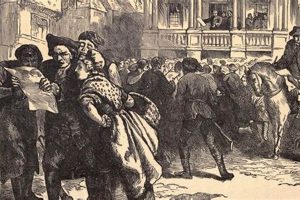
Public protests formed a crucial element of the colonial response to the Stamp Act, serving as a visible and vocal manifestation of widespread discontent. These demonstrations, ranging from organized marches and rallies to more spontaneous acts of defiance, played a vital role in mobilizing public opinion and applying pressure on British authorities. Examining the various forms and targets of these protests reveals crucial insights into the escalating tensions between the colonies and Great Britain.
- Organized Demonstrations:
Groups like the Sons of Liberty orchestrated large-scale demonstrations, often involving symbolic acts of resistance, such as burning effigies of tax collectors and staging mock funerals for liberty. These organized events served to galvanize public support and demonstrate the extent of colonial opposition to the Stamp Act. These public displays of defiance fostered a sense of collective identity and empowered colonists to actively participate in the resistance movement.
- Targeting Symbols of British Authority:
Protests frequently focused on symbols of British authority, such as the homes and offices of tax collectors, customs houses, and even the residences of colonial governors. These targeted actions aimed to directly challenge British power and disrupt the implementation of the Stamp Act. For example, the ransacking of Lieutenant Governor Thomas Hutchinson’s house in Boston demonstrated the intensity of popular anger and the willingness to resort to more radical forms of protest.
- Mob Action and Violence:
While many protests remained peaceful, some escalated into mob action and violence. These incidents, though less common, underscore the escalating tensions and the potential for unrest to spiral out of control. The destruction of property and intimidation of officials served as a stark warning to British authorities about the depth of colonial resistance.
- The Role of Women in Protests:
Women also played a crucial, albeit often overlooked, role in the protests. They participated in boycotts by refusing to purchase British goods and actively produced homespun cloth as an alternative. Some women even joined public demonstrations, expanding the scope of resistance beyond the traditional male-dominated political sphere.
These diverse forms of protest highlight the widespread nature of colonial resistance to the Stamp Act. From organized demonstrations and targeted actions to more spontaneous outbursts of anger, these collective acts of defiance played a significant role in shaping public opinion, pressuring British authorities, and ultimately contributing to the Stamp Acts repeal. Furthermore, the experience gained through these protests proved invaluable in the years leading up to the American Revolution, providing a foundation for future resistance efforts and solidifying the colonists’ resolve to defend their liberties.
3. Petitions
Petitions represented a crucial element of the colonial response to the Stamp Act, providing a formal mechanism for colonists to articulate their grievances and assert their rights. Unlike more disruptive forms of protest, petitions offered a channel for reasoned discourse and legal argumentation, directly addressing both colonial legislatures and the British Parliament. Examining the content and impact of these petitions reveals crucial insights into the colonists’ evolving political thought and strategies for resisting perceived unjust legislation.
- Direct Appeals to Authority:
Petitions served as direct appeals to authority, outlining the colonists’ objections to the Stamp Act and requesting its repeal. These formal documents, often drafted by prominent colonial leaders and signed by numerous citizens, aimed to persuade those in power through reasoned argument and legal justification. They frequently invoked principles of natural rights, English common law, and the concept of representation, highlighting the perceived illegitimacy of taxation without consent. The petitions demonstrated the colonists’ commitment to engaging with the political process and seeking redress through established channels.
- Articulation of Grievances:
Beyond simply requesting repeal, petitions provided a platform for colonists to articulate their broader grievances against British policies. They detailed the economic hardships imposed by the Stamp Act, the perceived violation of colonial liberties, and the growing sense of frustration with British rule. This detailed articulation of colonial concerns provided a valuable record of the specific issues fueling the resistance movement. For example, petitions from merchants detailed the negative impact of the Stamp Act on trade, while those from legal professionals challenged its constitutional validity.
- Demonstration of Colonial Unity:
The widespread circulation and signing of petitions served as a powerful demonstration of colonial unity. Individuals from diverse backgrounds and social classes joined together in signing these documents, showcasing the broad base of opposition to the Stamp Act. This collective action sent a strong message to British authorities about the extent of colonial discontent and the potential for further resistance if their grievances remained unaddressed.
- Legal and Philosophical Arguments:
Petitions frequently incorporated sophisticated legal and philosophical arguments to support the colonists’ claims. They drew upon established legal precedents, Enlightenment ideals, and principles of natural rights to challenge the legitimacy of the Stamp Act. These arguments, often articulated by prominent lawyers and intellectuals, laid the intellectual groundwork for the colonists’ growing sense of autonomy and their eventual arguments for independence.
In summary, petitions played a vital role in the colonial response to the Stamp Act. They provided a formal channel for expressing grievances, articulating legal and philosophical arguments, and demonstrating colonial unity. Examining these petitions offers valuable insights into the political and intellectual climate of the time, the development of colonial resistance strategies, and the growing tensions that ultimately led to the American Revolution.
4. Legal Challenges
Legal challenges constituted a critical component of the colonial response to the Stamp Act, providing a formal arena for contesting its legality and asserting colonial rights. These challenges, mounted in colonial courts and through appeals to British authorities, centered on arguments about taxation without representation, the violation of established legal precedents, and the limits of British parliamentary authority over the colonies. This approach, distinct from more direct forms of protest, aimed to dismantle the Stamp Act through legal and constitutional means. For example, prominent lawyers like James Otis argued that the Stamp Act violated the colonists’ rights as Englishmen, as they were not represented in Parliament. This argument, rooted in British common law and political theory, resonated deeply within the colonies and provided a powerful intellectual framework for resistance.
The legal challenges to the Stamp Act had several significant consequences. First, they raised public awareness of the constitutional issues at stake, fueling broader discussions about colonial rights and the nature of British rule. The arguments presented in courtrooms and legal documents circulated widely, influencing public opinion and shaping the evolving political discourse. Second, these challenges provided a legitimate and respected avenue for expressing opposition to the Stamp Act, attracting the support of colonists who may have been hesitant to participate in more radical forms of protest. This broadened the base of resistance, encompassing a wider range of social and economic groups. Finally, the legal arguments developed during this period laid the groundwork for future legal and political challenges to British authority, contributing to the intellectual and ideological foundations of the American Revolution. The assertion of colonial rights and the questioning of parliamentary authority established precedents that would be invoked again in later struggles against British policies.
In conclusion, the legal challenges mounted against the Stamp Act represent a crucial dimension of colonial resistance. By challenging the Act’s legality and asserting colonial rights within established legal frameworks, these actions broadened the scope of resistance, shaped public discourse, and laid the groundwork for future legal and political battles against British authority. Understanding the role of legal challenges provides critical insight into the complex interplay of legal, political, and ideological factors that ultimately propelled the colonies toward revolution.
5. Formation of Groups (Sons of Liberty)
The formation of groups like the Sons of Liberty represents a crucial development in the colonial response to the Stamp Act. These organizations provided a structure for collective action, facilitated communication and coordination among colonists, and played a vital role in escalating resistance efforts. Examining the functions and impact of these groups reveals crucial insights into the evolving dynamics of colonial resistance and the growing tensions between the colonies and Great Britain. These groups transformed individual grievances into a cohesive movement, significantly amplifying the impact of colonial resistance.
- Organization and Mobilization:
The Sons of Liberty and similar groups provided a framework for organizing and mobilizing colonial resistance. They established networks of communication across different colonies, facilitating the dissemination of information about the Stamp Act and coordinating protest activities. Through meetings, committees, and correspondence, these groups transformed disparate individual grievances into a cohesive and coordinated movement. For instance, the Sons of Liberty organized boycotts of British goods, planned and executed public demonstrations, and disseminated pamphlets and other propaganda to raise public awareness and garner support for their cause.
- Popularizing Resistance:
These groups played a crucial role in popularizing resistance to the Stamp Act. They employed various tactics, including public demonstrations, speeches, pamphlets, and newspapers, to spread awareness of the perceived injustices of the Act and mobilize public opinion against it. They effectively framed the Stamp Act as a violation of colonial liberties and a threat to American freedom, galvanizing support for resistance across a broad spectrum of colonial society. The Sons of Liberty, in particular, became known for their dramatic and often symbolic acts of protest, which captured public attention and further fueled opposition to British policies.
- Enforcement of Boycotts:
Groups like the Sons of Liberty played a crucial role in enforcing boycotts of British goods. They pressured merchants and consumers to comply with non-importation agreements and often resorted to intimidation tactics against those who refused to participate. This enforcement mechanism proved crucial to the effectiveness of the boycotts, as it ensured widespread compliance and maximized the economic pressure on British merchants and manufacturers. This active enforcement significantly contributed to the eventual repeal of the Stamp Act by demonstrating the colonists’ resolve and the potential for sustained economic disruption.
- Radicalization of Resistance:
While not all members or actions endorsed violence, the presence of groups like the Sons of Liberty contributed to a radicalization of resistance efforts. Their public demonstrations and rhetoric often escalated tensions with British authorities and, in some cases, led to acts of violence and intimidation against tax collectors and other representatives of the Crown. This escalation, while controversial, underscored the growing intensity of colonial opposition to British policies and foreshadowed the potential for future conflict. The Sons of Liberty’s willingness to employ more confrontational tactics pushed the boundaries of acceptable resistance, contributing to the increasingly polarized political climate.
The formation and activities of groups like the Sons of Liberty significantly shaped the colonial response to the Stamp Act. By providing organizational structure, mobilizing public opinion, enforcing boycotts, and contributing to a radicalization of resistance tactics, these groups amplified the impact of colonial opposition and played a crucial role in the eventual repeal of the Act. Furthermore, the experience gained through these organized efforts proved invaluable in the years leading up to the American Revolution, providing a foundation for future resistance movements and solidifying the colonists’ resolve to defend their liberties against perceived British overreach. The emergence of these groups represents a pivotal step in the development of American political consciousness and the growing movement towards independence.
Frequently Asked Questions about Colonial Reaction to the Stamp Act
This section addresses common inquiries regarding colonial responses to the Stamp Act of 1765, providing concise and informative answers.
Question 1: Why did the Stamp Act provoke such a strong reaction from the colonists?
The Stamp Act was perceived as a violation of fundamental rights, particularly the principle of “no taxation without representation.” Colonists argued that they should not be subjected to taxes imposed by a Parliament in which they had no elected representatives.
Question 2: How did colonial responses differ across various social and economic groups?
While united in opposition to the Stamp Act, responses varied. Merchants led economic boycotts, while lawyers and intellectuals framed legal and philosophical arguments against the Act. Ordinary citizens participated in protests and demonstrations, showcasing a broad spectrum of resistance.
Question 3: What role did the Sons of Liberty play in the resistance movement?
The Sons of Liberty played a pivotal role in organizing and escalating resistance efforts. They coordinated boycotts, staged public demonstrations, and disseminated information about the Stamp Act, effectively mobilizing public opinion against British policies.
Question 4: How effective were colonial boycotts in achieving the repeal of the Stamp Act?
The boycotts significantly impacted British merchants and manufacturers, disrupting transatlantic trade and applying economic pressure on Parliament. This economic pressure played a crucial role in persuading Parliament to repeal the Stamp Act in 1766.
Question 5: What were the long-term consequences of colonial resistance to the Stamp Act?
The resistance solidified colonial unity, fostered a sense of shared American identity, and established precedents for future resistance efforts. It laid the groundwork for the escalating tensions that ultimately culminated in the American Revolution.
Question 6: Beyond the Stamp Act’s repeal, what other outcomes resulted from colonial resistance?
The resistance movement developed effective strategies for collective action, including boycotts, petitions, and legal challenges. These strategies, honed during the Stamp Act crisis, proved invaluable in subsequent struggles against British policies and contributed to the growing movement towards independence.
Understanding the varied facets of colonial resistance to the Stamp Act provides crucial insights into the political, economic, and social climate of the time and the events that shaped the course of American history.
Further exploration of specific aspects of colonial resistance can provide a deeper understanding of this pivotal period.
The Legacy of Resistance
Examination of the colonial response to the 1765 Stamp Act reveals a multifaceted resistance movement employing diverse strategies. From economic boycotts spearheaded by merchants to legal challenges crafted by prominent lawyers, colonists demonstrated a unified front against perceived unjust taxation without representation. Public protests, organized by groups like the Sons of Liberty, amplified colonial discontent, while petitions provided a formal platform for articulating grievances. This collective action, encompassing economic pressure, legal arguments, and popular mobilization, ultimately forced the Stamp Acts repeal in 1766. The diversity of these responses underscores the breadth and depth of colonial opposition, highlighting the colonists’ commitment to defending their rights and liberties.
The significance of this period extends far beyond the repeal of a single tax. Colonial resistance to the Stamp Act forged a sense of collective identity, established effective strategies for future resistance, and laid the groundwork for the escalating tensions that ultimately culminated in the American Revolution. This pivotal moment in history serves as a testament to the power of unified action against perceived injustice and offers enduring lessons about the importance of civic engagement in defending fundamental rights. Studying this era provides invaluable insights into the origins of American independence and the enduring struggle for liberty and self-governance.