The 1765 legislation requiring all printed materials in the American colonies, including newspapers, legal documents, and playing cards, to carry a tax stamp purchased from British authorities aimed to raise revenue to support British troops stationed in North America after the French and Indian War. This duty, levied without colonial consent, was seen as a direct threat to colonial autonomy and a violation of their rights as Englishmen.
This levy played a pivotal role in escalating tensions between Great Britain and its American colonies. Colonial resistance, manifested through boycotts, protests, and the formation of groups like the Sons of Liberty, demonstrated the growing dissatisfaction with British policies. The tax became a powerful symbol of oppression, galvanizing colonial unity and contributing significantly to the burgeoning movement for independence. While repealed in 1766 due to colonial pressure, the resentment it fostered laid crucial groundwork for the American Revolution.
This pivotal period in American history warrants further exploration. Examination of related topics such as colonial responses, the role of key figures, and the broader context of British imperial policy offers a more nuanced understanding of the events that shaped the nations founding.
Understanding the 1765 Stamp Act
Gaining a deeper understanding of the 1765 Stamp Act requires exploring various facets of this pivotal legislation. The following tips offer avenues for further investigation.
Tip 1: Explore primary sources. Examining original documents from the period, such as pamphlets, letters, and newspaper articles, offers direct insight into colonial reactions and the political climate of the time.
Tip 2: Research the Sons of Liberty. This influential group played a key role in organizing resistance to the tax through boycotts and public demonstrations. Understanding their methods and impact is crucial.
Tip 3: Investigate the economic impact. The tax affected various colonial industries and businesses. Analyzing its economic consequences provides a clearer picture of its widespread impact.
Tip 4: Consider the British perspective. Examining the rationale behind the tax from the British government’s standpoint offers valuable context and a more balanced understanding.
Tip 5: Study the repeal process. The eventual repeal of the Stamp Act demonstrates the power of colonial resistance. Understanding the political maneuvering and pressures that led to repeal offers valuable historical lessons.
Tip 6: Connect it to broader imperial policy. The Stamp Act was not an isolated incident. Viewing it within the larger context of British imperial policy helps illuminate the growing tensions between Britain and its American colonies.
Delving into these areas provides a comprehensive understanding of the Stamp Act’s significance in the events leading up to the American Revolution. Its legacy extends beyond simple taxation, highlighting the importance of representation and the fight for autonomy.
This exploration offers a foundation for further investigation of the American Revolution and its enduring impact on the political landscape.
1. Taxation without representation
The cry of “Taxation without representation” encapsulated the core grievance of American colonists against British rule in the years leading up to the American Revolution. The Stamp Act of 1765 became a focal point for this discontent, crystallizing colonial opposition and propelling the colonies toward open rebellion. This exploration delves into the multifaceted relationship between this rallying cry and the Stamp Act.
- Violation of Rights
Colonists argued that being taxed by the British Parliament, where they had no elected representatives, violated their fundamental rights as Englishmen. This principle, rooted in British common law and tradition, held that individuals could not be subjected to taxes imposed without the consent of their representatives. The Stamp Act, levied directly by Parliament without colonial consent, was seen as a blatant transgression of this right, fueling outrage and resistance.
- Economic Grievances
Beyond the philosophical objections, the Stamp Act presented tangible economic hardships for colonists. The tax burden, imposed on essential printed materials like legal documents and newspapers, affected a wide range of businesses and individuals. The economic strain further exacerbated existing tensions and contributed to the growing resentment toward British rule, providing a practical dimension to the “Taxation without representation” argument.
- Catalyst for Collective Action
The imposition of the Stamp Act galvanized colonial unity. Faced with a shared threat, colonists from diverse backgrounds and social classes found common ground in their opposition to the tax. This shared grievance fostered a sense of collective identity and spurred organized resistance movements, including boycotts of British goods and the formation of groups like the Sons of Liberty. The shared experience of “Taxation without representation” laid the foundation for future coordinated action.
- Symbolic Importance
The Stamp Act transcended its immediate financial implications, becoming a powerful symbol of British oppression. The phrase “Taxation without representation” served as a rallying cry, encapsulating colonial grievances and mobilizing resistance. The Act’s symbolic weight contributed significantly to the escalating tensions and helped shape public opinion in favor of independence. This symbolic importance outweighed the actual revenue generated by the tax itself.
The Stamp Act and the principle of “Taxation without representation” are inextricably linked in the narrative of the American Revolution. The Acts implementation provided concrete evidence of British disregard for colonial rights, transforming abstract political ideals into a tangible grievance. This pivotal moment solidified colonial resistance and set the stage for the escalating conflict that would ultimately lead to American independence. The legacy of “Taxation without representation” continues to resonate in discussions about political representation and the importance of citizen participation in government.
2. Colonial Resistance
Colonial resistance to British policies, particularly the 1765 Stamp Act, proved pivotal in the trajectory toward the American Revolution. The Stamp Act, requiring a tax on all printed materials, ignited widespread opposition in the colonies, serving as a catalyst for organized resistance movements and solidifying colonial unity against perceived British tyranny. Examining the various facets of this resistance illuminates its crucial role in shaping the course of American history.
- Boycotts of British Goods
One of the most effective forms of colonial resistance was the widespread boycott of British goods. Merchants and consumers alike refused to purchase imported products, applying significant economic pressure on British businesses and Parliament. These boycotts, organized through non-importation agreements, demonstrated colonial unity and resolve, forcing British merchants to lobby for the repeal of the Stamp Act. The success of these boycotts emboldened colonists and demonstrated the power of collective action.
- Formation of Protest Groups
Groups like the Sons of Liberty emerged as key players in organizing and enacting resistance. These organizations mobilized colonists, disseminated information about British policies, and orchestrated public demonstrations and acts of defiance. The Sons of Liberty, known for their public protests and sometimes violent actions against tax collectors, played a crucial role in escalating resistance beyond mere economic pressure and fostering a sense of shared identity among colonists.
- Legal and Political Challenges
Colonial legislatures and assemblies formally protested the Stamp Act, arguing it violated their rights as Englishmen. Petitions and declarations asserting colonial autonomy and challenging the authority of Parliament to tax them without representation were sent to the British government. These legal and political challenges laid the groundwork for future arguments for independence and established the principle of self-governance as a central tenet of colonial resistance.
- Popular Protests and Demonstrations
Public demonstrations, often organized by groups like the Sons of Liberty, became a visible manifestation of colonial resistance. These protests, ranging from public speeches and rallies to acts of civil disobedience, brought the issue of the Stamp Act into the public sphere and mobilized popular support for the resistance movement. These visible displays of defiance further pressured British authorities and demonstrated the depth of colonial opposition.
These interconnected forms of colonial resistance collectively created significant pressure on the British government, ultimately leading to the repeal of the Stamp Act in 1766. While a temporary victory for the colonies, the resistance movement sparked by the Stamp Act laid the foundation for future conflicts and solidified colonial opposition to British policies. This period of resistance proved crucial in shaping the American identity and setting the stage for the American Revolution, underscoring the power of collective action in challenging oppressive authority.
3. Economic Impact
The Stamp Act of 1765 had a profound and multifaceted economic impact on the American colonies, significantly contributing to the growing tensions with Great Britain. The Act, which mandated a tax on all printed materials, disrupted colonial commerce and fueled resentment, ultimately acting as a catalyst for the revolution. Understanding this economic impact is crucial to comprehending the broader historical context of the period.
The direct financial burden of the tax fell heavily on colonial businesses, particularly printers, publishers, lawyers, and merchants. These groups relied heavily on printed materials for their daily operations, and the added cost of the stamp duty cut into their profits and hindered economic growth. Furthermore, the Act disrupted trade within the colonies and with other nations. The requirement for stamped paper added complexity and expense to commercial transactions, slowing down trade and creating economic instability. The Act also led to widespread unemployment, particularly in the printing and publishing industries. As businesses struggled to cope with the increased costs, they were forced to reduce their workforce, contributing to economic hardship and social unrest.
Beyond the immediate financial consequences, the Stamp Act had a significant symbolic impact. The Act represented a direct challenge to colonial autonomy and the principle of self-governance. Colonists viewed the tax as an unjust imposition by the British Parliament, where they lacked representation. This perceived violation of their rights fueled anger and resentment, further exacerbating the economic grievances. The economic hardship caused by the Stamp Act, coupled with the symbolic significance of taxation without representation, galvanized colonial resistance. Boycotts of British goods, organized protests, and the formation of groups like the Sons of Liberty demonstrated the growing opposition to British policies. The economic impact of the Stamp Act, therefore, played a crucial role in pushing the colonies toward revolution.
4. Boycotts and Protests
Boycotts and protests formed a crucial element of colonial resistance to the 1765 Stamp Act, directly contributing to its eventual repeal and laying significant groundwork for the American Revolution. The Act, which imposed a tax on all printed materials, ignited widespread public anger, prompting organized collective action that demonstrated colonial unity and resolve. These boycotts and protests transcended mere expressions of discontent; they represented a calculated strategy to exert economic and political pressure on Great Britain.
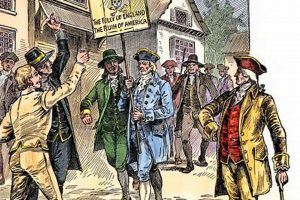
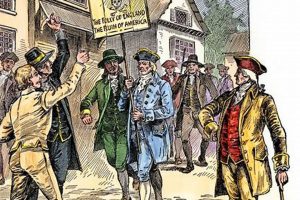
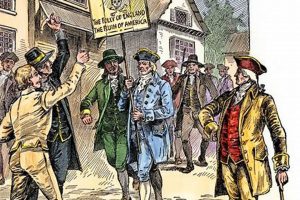
The boycotts targeted British goods, impacting merchants and manufacturers in Britain who relied on the colonial market. Non-importation agreements, signed by merchants and widely adopted by consumers, significantly reduced the demand for British products. This economic pressure forced British businesses to lobby Parliament for the repeal of the Stamp Act, demonstrating the tangible power of colonial collective action. Simultaneously, public protests and demonstrations, often organized by groups like the Sons of Liberty, provided a visible manifestation of colonial resistance. These events, ranging from public burnings of stamped paper to acts of intimidation against tax collectors, served to rally public support and maintain pressure on British authorities. The burning of effigies representing tax collectors and the ransacking of government officials’ homes exemplified the intensity of public sentiment.
The effectiveness of the boycotts and protests in achieving the repeal of the Stamp Act validated their power as tools of resistance. This experience provided colonists with a tangible example of their collective ability to influence British policy and fostered a growing sense of autonomy. The lessons learned during this period, particularly the effectiveness of organized resistance, proved invaluable in the subsequent years leading up to the American Revolution. The Stamp Act boycotts and protests not only contributed to the repeal of the Act itself but also instilled a sense of unity and purpose among the colonists, ultimately strengthening their resolve in the fight for independence.
5. Repeal in 1766
The repeal of the Stamp Act in 1766 represents a pivotal moment in the escalating tensions between Great Britain and its American colonies. While the repeal temporarily eased the immediate crisis, its long-term consequences significantly shaped the path toward the American Revolution. The Stamp Act, enacted in 1765, imposed a tax on all printed materials in the colonies, sparking widespread resistance through boycotts, protests, and legal challenges. The colonial outcry, coupled with pressure from British merchants suffering from the colonial boycotts, forced Parliament to reconsider the tax. The repeal, however, was accompanied by the Declaratory Act, which asserted Parliament’s right to legislate for the colonies “in all cases whatsoever.” This seemingly contradictory move underscored the fundamental disagreement over the principle of parliamentary authority versus colonial autonomy, a tension that continued to escalate in the following years. The repeal demonstrated the potential effectiveness of colonial resistance, emboldening colonists and solidifying their opposition to British policies perceived as unjust.
The repeal’s significance lies not only in its immediate impact but also in its broader historical context. The events surrounding the Stamp Act, from its initial imposition to its eventual repeal, laid bare the fundamental differences in political ideology between Great Britain and its American colonies. The experience solidified colonial resistance to external authority perceived as oppressive and contributed to the growing sense of a distinct American identity. The repeal’s impact resonated far beyond the immediate economic relief it provided. It served as a critical turning point in the relationship between Great Britain and the American colonies, highlighting the unresolved issues of representation and self-governance. For instance, while colonists celebrated the repeal as a victory, the accompanying Declaratory Act served as a constant reminder of Parliament’s claim to ultimate authority. This underlying tension continued to fuel discontent and contributed to the escalating series of events that culminated in the American Revolution.
The repeal of the Stamp Act offers valuable insights into the dynamics of power, resistance, and political ideology that shaped the American Revolution. While the repeal provided temporary respite, it ultimately failed to address the fundamental issues dividing Great Britain and its American colonies. The legacy of the Stamp Act and its repeal underscores the importance of understanding historical context and the complex interplay of various factors in shaping major historical events. The challenges of balancing imperial authority with colonial autonomy remained a central theme in the years leading up to the revolution, highlighting the lasting impact of the Stamp Act crisis and the significance of its repeal in shaping the course of American history. This period solidified the colonists’ resolve and laid the foundation for the future struggle for independence.
6. Precursor to Revolution
The Stamp Act of 1765 serves as a pivotal precursor to the American Revolution, demonstrating the escalating tensions between Great Britain and its American colonies. While seemingly an isolated tax on printed materials, the Stamp Act ignited a firestorm of resistance that exposed fundamental disagreements over representation, autonomy, and the very nature of the relationship between the colonies and the British crown. Examining its role as a precursor reveals key insights into the underlying causes of the revolution.
- Crystallizing Colonial Grievances
The Stamp Act crystallized existing colonial grievances related to taxation without representation. Colonists argued that being taxed by the British Parliament, where they lacked elected representatives, violated their fundamental rights as Englishmen. This resonated deeply within the colonies, transforming abstract political ideals into a tangible and unifying grievance. The widespread opposition to the Stamp Act demonstrated the depth of colonial discontent and laid bare the fundamental ideological divide between the colonies and Great Britain.
- Fostering Colonial Unity
Resistance to the Stamp Act fostered a sense of unity among the disparate colonies. Faced with a common threat, colonists from diverse backgrounds and regions joined forces to oppose the tax through boycotts, protests, and legal challenges. This collective action demonstrated the potential for intercolonial cooperation and laid the foundation for future coordinated resistance against British policies. The Stamp Act, therefore, inadvertently contributed to the development of a shared American identity.
- Testing Resistance Strategies
The Stamp Act crisis served as a testing ground for various resistance strategies that would later be employed during the revolution. The boycotts of British goods proved particularly effective, demonstrating the economic power of colonial consumers and forcing British merchants to lobby for repeal. These successful boycotts provided a blueprint for future economic resistance and demonstrated the potential impact of collective action. The experience gained during the Stamp Act crisis proved invaluable in the subsequent struggle for independence.
- Escalating Tensions with Great Britain
The Stamp Act and the subsequent colonial resistance significantly escalated tensions with Great Britain. The British government’s response, including the deployment of troops and the passage of the Declaratory Act asserting Parliament’s right to legislate for the colonies “in all cases whatsoever,” further fueled colonial resentment. This escalating cycle of resistance and repression deepened the divide between the colonies and Great Britain, setting the stage for the eventual outbreak of armed conflict. The Stamp Act crisis served as a critical turning point in the relationship, marking a clear shift toward confrontation.
The Stamp Act’s significance as a precursor to the American Revolution lies in its multifaceted impact. It not only exposed existing grievances but also fostered colonial unity, provided a testing ground for resistance strategies, and significantly escalated tensions with Great Britain. Understanding the Stamp Act’s role in this broader context is crucial for comprehending the complex interplay of factors that led to the American Revolution. The lessons learned and the precedents set during this period profoundly shaped the course of American history and continue to resonate in discussions of political representation, self-governance, and the power of collective action.
Frequently Asked Questions about the Stamp Act
The Stamp Act of 1765 remains a critical topic in understanding the American Revolution. This FAQ section addresses common questions about the Act, its impact, and its significance in the broader historical context.
Question 1: What specific items were taxed under the Stamp Act?
The Stamp Act mandated a tax on all printed materials, including legal documents, newspapers, pamphlets, playing cards, and even dice. This broad scope ensured the Act touched nearly every aspect of colonial life, maximizing its revenue potential while simultaneously fueling widespread resentment.
Question 2: Why did the British government implement the Stamp Act?
The primary motivation behind the Stamp Act was to raise revenue to cover the costs of maintaining a British military presence in North America following the French and Indian War. The British government believed the colonies should contribute to their own defense and saw the Stamp Act as a means to achieve this financial goal.
Question 3: How did the colonists react to the Stamp Act?
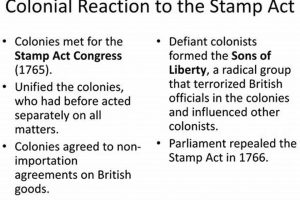
Colonial reaction to the Stamp Act was swift and vehement. Resistance manifested in various forms, including boycotts of British goods, organized protests led by groups like the Sons of Liberty, and formal legal challenges through colonial legislatures. The widespread opposition demonstrated the depth of colonial resentment toward taxation without representation.
Question 4: What role did the Stamp Act play in the lead-up to the American Revolution?
The Stamp Act crisis proved pivotal in escalating tensions between Great Britain and its American colonies. The Act not only fueled resentment over taxation without representation but also fostered colonial unity and provided a testing ground for resistance strategies. The experience solidified colonial opposition to British policies and laid crucial groundwork for the revolution.
Question 5: What was the Declaratory Act, and how did it relate to the Stamp Act?
Passed alongside the repeal of the Stamp Act, the Declaratory Act asserted the British Parliament’s right to legislate for the colonies “in all cases whatsoever.” While seemingly conciliatory by repealing the Stamp Act, the Declaratory Act reinforced British claims to ultimate authority, ensuring the underlying tension over colonial autonomy remained unresolved. This contradiction further fueled colonial discontent.
Question 6: What lessons can be learned from the Stamp Act crisis?
The Stamp Act crisis offers valuable lessons about the importance of political representation, the power of collective action, and the dangers of unchecked authority. The events surrounding the Stamp Act serve as a reminder of the delicate balance between government power and individual liberties, a theme that continues to resonate in contemporary political discourse.
Understanding the Stamp Act and its ramifications is essential for a comprehensive understanding of the American Revolution and its enduring legacy. Further exploration of related topics can provide a richer understanding of this critical period in history.
For a more in-depth understanding, please continue to the next section.
The Stamp Act’s Enduring Legacy
The 1765 Stamp Act’s significance extends far beyond its immediate fiscal aims. Its implementation ignited a firestorm of colonial resistance, revealing deep-seated tensions regarding representation and autonomy. From boycotts and protests to legal challenges and the formation of influential groups like the Sons of Liberty, colonial actions demonstrated a unified front against perceived British oppression. The repeal of the Stamp Act in 1766, though a temporary victory for the colonies, failed to quell the underlying discontent. The accompanying Declaratory Act, asserting Parliament’s ultimate authority, underscored the unresolved issues that would continue to escalate toward revolution. The economic disruption caused by the Act, coupled with the symbolic weight of taxation without representation, galvanized colonial resistance and fueled the growing movement for independence.
The Stamp Act serves as a crucial lens through which to understand the American Revolution’s origins. It demonstrates the power of collective action in challenging unjust authority and highlights the importance of safeguarding fundamental rights and liberties. The legacy of the Stamp Act continues to resonate, offering valuable lessons about political representation, self-governance, and the enduring pursuit of a more just and equitable society. Further exploration of this pivotal era remains essential for understanding the foundations of American democracy and the ongoing struggle for freedom and self-determination.