



Argentina stamp collecting albums do more than keep colorful postage in order: they turn a collection into a visual history of a country shaped by independence, immigration, changing currencies, aviation, and political transformation. From early provincial issues to modern commemoratives, Argentine stamps reward collectors who pay attention to both the design and the details. The right album makes those details easier to study while protecting fragile paper for years to come.
Whether you have inherited a handful of Argentine stamps or are building a specialist collection, your best album depends on what you collect, how you organize it, and whether you prefer printed spaces or flexible pages. This guide covers practical album choices, identification, safe storage, and ways to develop an Argentina collection without buying supplies you do not need.
What Is an Argentina Stamp Collecting Album?
An Argentina stamp collecting album is a binder or book used to organize and protect stamps issued by Argentina and, in some collections, its historical provinces. A dedicated album may contain printed spaces labeled by year, denomination, or catalog number. A general-purpose album lets you create your own layout using blank pages, stock sheets, or mounts.
Collectors often distinguish between national issues, used across Argentina after postal administration became more centralized, and earlier or separate provincial issues. Buenos Aires, Corrientes, and Córdoba are particularly important names when exploring this earlier material. Do not assume that every stamp from the region belongs in a single chronological national sequence.
Choosing the Best Album for Argentine Stamps
There is no single best Argentina stamp album for everyone. A collector seeking one example of each major design has different needs from someone studying printings, cancellations, or complete postal history.
| Album type | Best for | Main consideration |
| Preprinted country album | Collectors who want an established chronological framework | Check which years, varieties, and catalog system are covered |
| Blank album pages | Customized collections, thematic displays, and specialist research | Requires more planning, labeling, and mounting supplies |
| Stockbook | Beginners, sorting, duplicates, and a growing collection | Less suited to a carefully annotated permanent display |
| Interleaving stock sheets in a binder | Flexible organization and easy rearrangement | Choose stable materials and avoid overfilling pockets |
| Cover album or archival sleeves | Envelopes, postal stationery, and larger items | Requires more shelf space than an album for loose stamps |
Preprinted pages: structure with limitations
Preprinted Argentina album pages are useful if you enjoy filling identifiable spaces and want a ready-made sequence. Before purchasing, confirm the publication date and the final year included. Some albums emphasize major postage issues but omit many varieties, souvenir sheets, officials, or other back-of-the-book material. Supplements may be available separately, but availability and pricing vary by publisher.
Blank pages: flexibility for specialists
Blank pages are a better fit if you collect multiple copies, plate varieties, postal markings, or issues from a particular era. You can leave room for a short explanation beside each stamp and add pages as your research develops. For an inherited collection that has not yet been identified, a stockbook is usually the less expensive first step.
How to Organize an Argentina Stamp Album
A good organization system should make stamps easy to find without forcing you to remount the entire collection whenever you discover a new item. Start broadly, then subdivide as your holdings and knowledge grow.
- Separate loose stamps from covers. Keep stamps on original envelopes intact until you understand whether the postmark, rate, route, or sender adds historical interest.
- Sort by issuing authority. Place Argentine national issues apart from provincial material and stamps of neighboring countries.
- Arrange national stamps by date or catalog order. A recognized catalog gives you a consistent sequence for identification and album placement.
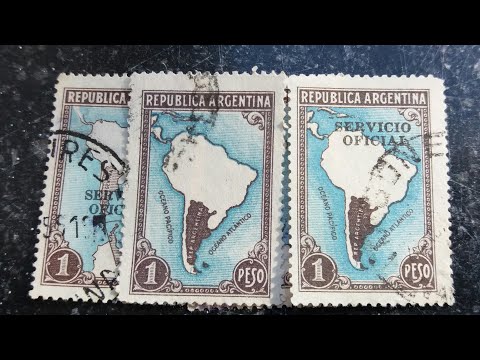
- Group related material. Create sections for airmails, official stamps, postage dues, souvenir sheets, or postal stationery when appropriate.
- Record useful details. Note denomination, issue date, catalog reference, condition, and any meaningful variety. Record purchase price separately if you prefer a cleaner display.
- Leave expansion space. Extra pages or gaps prevent crowding when you acquire missing issues or better examples.
If you use catalog numbers, write down the catalog name and edition as well. Scott, Stanley Gibbons, and other publishers may use different numbering systems, and listings can be revised. A catalog value is a reference point, not a guaranteed selling price.
Important Argentine Issues to Include
Early national and provincial stamps
Argentina’s early postal history provides a rewarding starting point for a historical album. The Confederación Argentina issued stamps in the 1850s, while Buenos Aires, Corrientes, and Córdoba also produced notable provincial issues. These stamps can be challenging: paper, printing, condition, reprints, and forgeries may affect identification and value.
Give early material generous space on the page rather than squeezing it into a modern chronological run. A short note explaining the issuing authority and approximate period can make a complex section much easier to understand.
Definitives, commemoratives, and changing currency
Argentine definitive stamps provide an extended view of everyday postal use. Portraits, national symbols, denominations, and production methods changed over time, giving collectors opportunities to compare related designs. Commemoratives add subjects such as independence, national anniversaries, notable Argentines, sports, art, and natural heritage.
Currency changes are especially important when reading older stamps. Do not treat a denomination as a direct indicator of modern purchasing power. For a useful album annotation, identify the currency and period rather than simply copying the numeral.
Airmails and postal history
Argentina’s airmail stamps and flown covers connect the collection to the development of South American aviation and international routes. A used airmail stamp can be attractive on its own, but an intact envelope may also show a date, destination, postal rate, transit markings, and evidence of the journey.
Store covers in appropriately sized archival sleeves rather than trimming them to fit standard stamp pages. Keep letters with their original envelopes when possible; their contents can supply context, although private information should be handled respectfully.
How to Mount Argentine Stamps Safely

For long-term storage, use album pages and sleeves sold for archival or philatelic use. Handle stamps with stamp tongs, not household tweezers with sharp points. Clean hands are helpful when handling pages, but avoid touching stamp surfaces and gum unnecessarily.
- Stamp mounts: Clear mounts hold stamps without attaching adhesive directly to them. They are especially useful for mint stamps with original gum and for valuable or delicate items.
- Stamp hinges: These small folded pieces of gummed paper are a traditional, economical option for many used stamps. Hinges can disturb gum or leave traces, so they are generally a poor choice for mint stamps you want to preserve unhinged.
- Stockbook strips: These allow stamps to be moved without mounting, making them practical during identification and sorting. Insert stamps carefully and avoid crowding.
- Large-format sleeves: Use suitable sleeves for souvenir sheets, blocks, covers, and postal stationery. Support the entire item rather than letting its edges bend.
Avoid office tape, self-adhesive photo corners of uncertain composition, rubber bands, and ordinary sticky labels on stamps. Do not laminate philatelic items. If you are unsure about an old envelope or a valuable-looking stamp, leave it intact and seek informed advice before attempting any treatment.
Identifying Varieties and Assessing Condition
Two Argentine stamps that look identical at first glance may differ in perforation, watermark, paper, shade, printing method, or overprint. These distinctions can matter, but not every minor color difference is a cataloged variety. Lighting, aging, washing, and exposure can alter appearance.
A basic toolkit can include a magnifier, perforation gauge, tongs, and a current catalog with illustrations. Use specialized watermark-detection equipment or methods only after learning how to do so safely. Compare measurements and features with reliable references rather than relying on an online image alone.
Condition deserves equal attention. Check for thins, tears, creases, missing perforations, stains, repairs, and regumming. Centering and cancellation quality can also influence desirability. A scarce stamp with faults may still be collectible, but its condition should be described honestly. For costly or frequently forged material, consider an independent certificate from a reputable philatelic expertizing organization before purchase.
Where to Find Argentina Album Pages and Stamps
Dedicated pages, stockbooks, and binders can be found through philatelic dealers, auction houses, stamp shows, collecting societies, and online marketplaces. Availability of a particular Argentina album edition may be uneven, so compare the actual page contents rather than judging solely by a product title.
When buying stamps online, look for clear images of both sides, a specific condition description, and a return policy. Be cautious of listings that claim an extraordinary rarity without explaining the identification. For larger purchases, ask whether the item has a certificate and whether the certificate matches the stamp shown.
- Check binder dimensions and ring spacing before buying replacement pages.
- Confirm whether mounts are included; they are often an additional expense.
- Ask whether a used album has loose bindings, stained pages, or stamps attached with tape.
- Compare recent realized prices for genuinely comparable items, not just asking prices.
- Budget for safe storage and reference material, not only for new stamps.
Building a More Valuable Collection
Value can mean historical depth and personal enjoyment as well as resale potential. A focused album with accurately identified material often tells a stronger story than an accumulation of unrelated stamps. Consider a defined project, such as Argentine commemoratives from a selected decade, airmail routes, provincial issues, or a study of a single definitive series.
Keep a simple inventory with images, catalog references, acquisition dates, costs, and any certificates. Store a backup separately from the collection. This record helps with insurance discussions, future sales, and identifying what you already own. Market prices change, so revisit valuations periodically and consult a qualified dealer or appraiser when the stakes justify it.
Finally, store albums upright in a stable, clean environment away from direct sunlight, excessive heat, and damp. Do not pack binders so tightly that pages buckle. Periodically check for moisture damage, insects, and sticking, especially if the collection has been stored in an attic, basement, or closed cupboard.
Conclusion
The best Argentina stamp collecting album is one that supports both protection and discovery. Start with a stockbook or a clear preprinted framework, use mounts and pages suited to the material, and expand into custom sections as your interests become more specific. With careful identification and sensible storage, an album can grow from a beginner’s assortment into a meaningful record of Argentine postal history.
Frequently Asked Questions About Argentina Stamp Collecting Albums
What is the best Argentina stamp album for a beginner?
A good-quality stockbook is a practical first choice because stamps can be sorted and rearranged without permanent mounting. If you prefer a structured checklist, choose a preprinted Argentina album after checking its date range and coverage. Either option works well with a reliable stamp catalog.
Are old Argentine stamps in an inherited album valuable?
Some are valuable, but age alone does not establish rarity or price. Identification, authenticity, condition, and demand all matter. Keep stamps in their existing album until you understand what you have, and consult a reputable dealer or specialist for promising early issues or intact covers.
Should I collect Argentine stamps by year or by theme?
Chronological order makes changes in design, currency, and postal history easy to follow. Themes such as aviation, wildlife, or famous Argentines create a more personal narrative. You can also combine both approaches by arranging each thematic section by date.
How do I store mint Argentina stamps without damaging the gum?
Use appropriately sized stamp mounts or a suitable stockbook, handle stamps with tongs, and avoid hinges if preserving unhinged gum is important. Keep the album in a stable, dry environment and inspect it periodically for signs of moisture or sticking.
Do Argentina stamp albums include provincial and airmail issues?
Some do, but coverage differs by publisher and edition. Review the table of contents or sample pages for Buenos Aires, Corrientes, Córdoba, airmails, and other specialist sections before buying. Blank supplementary pages can accommodate material the printed album omits.
