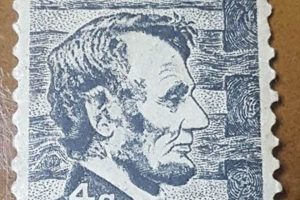
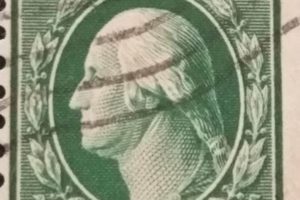
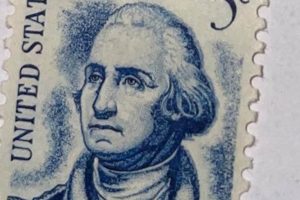
A stamp depicting George Washington and originally costing two cents represents a specific area of philatelic study. Factors such as the stamp’s issue date, condition (mint or used), printing variations, and any notable features like plate blocks or cancellations significantly influence its current worth. For example, a well-preserved, unused two-cent Washington stamp from the 1894 series can be considerably more valuable than a later, more common issue.
Understanding the historical context of these stamps provides insight into their value. Different designs were released throughout several decades, reflecting evolving printing techniques and artistic styles. These stamps serve as historical artifacts, offering a glimpse into the past and documenting changing postal rates and design aesthetics. Their collectible nature stems from this historical significance, combined with the relative scarcity of certain issues. Preserving these pieces of postal history contributes to a deeper understanding of American history and graphic design evolution.
This discussion will further explore specific examples of two-cent Washington stamps, examining factors that influence their price and offering guidance for collectors interested in acquiring or appraising these historical artifacts. Key topics will include identifying different series, understanding condition grading, and recognizing common forgeries.
Tips for Evaluating Early American Postage
Careful consideration of several factors is crucial when assessing early American postage featuring George Washington.
Tip 1: Identify the Issue Date. Pinpointing the exact year of issue is paramount. Earlier issues generally command higher prices due to scarcity. Consulting a specialized catalog is recommended.
Tip 2: Assess the Condition. Condition significantly impacts value. Examine the stamp for any imperfections, such as tears, creases, thin spots, or fading. Unused stamps in pristine condition are the most desirable.
Tip 3: Examine the Centering. The placement of the design within the perforated border affects value. Well-centered stamps are preferred.
Tip 4: Verify the Gum. For unused stamps, the presence and quality of the original gum are important. Undisturbed, original gum adds to the value.
Tip 5: Recognize Color Variations. Different shades or variations in ink color can exist within the same issue. Some color varieties are rarer and more valuable.
Tip 6: Beware of Counterfeits. Reproductions and forgeries exist. Careful scrutiny and authentication by a reputable expert are advisable, especially for high-value stamps.
Tip 7: Consult Expert Resources. Utilizing specialized catalogs, online databases, and philatelic societies can provide valuable information for accurate identification and valuation.
By considering these factors, one can gain a more accurate understanding of a stamp’s potential worth and make informed decisions regarding acquisition or sale. Diligent research and attention to detail are essential for navigating the complexities of historical postage evaluation.
These tips provide a foundation for evaluating these historical artifacts. Further research and consultation with experts are encouraged for more in-depth understanding.
1. Issue Date

The issue date of a two-cent George Washington stamp is a primary determinant of its value. Scarcity, driven by the number of stamps printed and surviving, is directly linked to the year of issue. Earlier issues tend to be rarer and, therefore, more valuable. Understanding the historical context of different issue dates provides crucial insights for collectors.
- 1890-1894: The Bureau Issues
These early issues, recognizable by their small size and simpler designs, are highly sought after by collectors. The 1894 issue, particularly those with the distinctive “Bureau precancel,” can command substantial premiums due to their relative rarity.
- 1895-1908: The First Series
This series introduced larger stamp formats and more elaborate designs. While generally more common than the Bureau issues, certain varieties within this series, such as the 1898 $2 Columbian with inverted center, hold significant value due to printing errors.
- 1909-1922: The Second Series
Characterized by design modifications and the introduction of new colors, this series offers a range of values. Certain shades, like the deep violet of the 1917 issue, are rarer and more collectible.
- Later Issues (Post-1922)
While generally more common, some later issues with specific plate number varieties or errors can be of interest to collectors. Condition and centering become increasingly important factors in determining value for these later stamps.
The issue date, combined with an assessment of condition, centering, and any existing varieties or errors, provides a foundation for determining the value of a two-cent George Washington stamp. Specialized catalogs and expert opinions are valuable resources for collectors seeking a precise valuation.
2. Condition

Condition profoundly influences the value of a two-cent George Washington stamp. The degree of preservation directly correlates with market desirability and price. A stamp’s condition encompasses several aspects, including centering, gum status (for unused examples), and the presence or absence of flaws such as tears, creases, thin spots, stains, or fading. The combined impact of these factors determines the overall grade assigned to a stamp, which, in turn, dictates its value. For instance, a mint, never-hinged stamp with perfect centering and vibrant color commands a significantly higher price than an example with disturbed gum, poor centering, or noticeable imperfections, even if both stamps share the same issue date.
Consider two hypothetical examples of the 1894 two-cent Washington stamp. One example, graded as “Superb,” exhibits flawless centering, pristine original gum, and vibrant, unfaded color. Another example, graded as “Good,” suffers from significantly off-center design, disturbed and re-glued gum, and noticeable fading. The “Superb” example would likely command a price several times higher than the “Good” example, demonstrating the dramatic impact of condition on value. This difference arises from the relative scarcity of high-grade examples and the inherent collector preference for well-preserved artifacts.
Understanding the nuances of condition grading is essential for accurately assessing a stamp’s value. Utilizing recognized grading standards and consulting expert opinions are highly recommended, particularly for high-value stamps. Recognizing the impact of various flaws and their influence on grade allows collectors to make informed decisions regarding acquisition and sale. This knowledge also underscores the importance of proper stamp storage and handling techniques to preserve condition and maintain value over time.
3. Centering

Centering significantly impacts the value of a two-cent George Washington stamp. A well-centered stamp, where the design is positioned equidistantly from the perforations on all sides, is highly desirable among collectors. Conversely, off-center examples, where the design is too close to one or more sides of the perforations, are considered less desirable and consequently less valuable. This preference for balanced aesthetics stems from the perceived quality and visual appeal of a well-centered stamp. The degree of off-centering directly correlates with the reduction in value; a slightly off-center stamp experiences a minor price decrease, while severely off-center examples can suffer substantial devaluation.
Consider a hypothetical comparison between two 1909 two-cent Washington stamps. One example exhibits perfect centering, with the design ideally placed within the perforated margins. Another example displays noticeable off-centering, with the design significantly closer to the bottom and right perforations. Assuming both stamps share identical condition in other aspects (e.g., no tears, creases, or fading), the perfectly centered example would command a notably higher price. This price difference arises from the collector’s preference for balanced aesthetics and the relative scarcity of perfectly centered examples. The off-center example, being less visually appealing, commands a lower premium in the philatelic market.
Centering assessment requires careful examination and often involves the use of specialized tools and gauges. Understanding the nuances of centering and its impact on value allows collectors to make informed decisions regarding acquisition and pricing. This knowledge highlights the importance of detailed examination when evaluating stamps and emphasizes the role of aesthetic considerations within philately. The interplay between centering and value further demonstrates the complexity of stamp valuation and the need for careful consideration of multiple factors.
4. Gum (if unused)

The presence and condition of original gum significantly influence unused two-cent George Washington stamp value. “Original gum” refers to the adhesive applied to the back of the stamp during the manufacturing process. For unused stamps, original gum, undisturbed and free from any re-gumming or other alterations, is a crucial factor affecting value. Collectors prize original gum as a mark of authenticity and a testament to the stamp’s pristine, untouched state. The gum’s conditionwhether it remains intact, exhibits hinging disturbances, or shows signs of re-gummingdirectly impacts a stamp’s grade and, consequently, its price. Hinging, a common practice involving small, removable hinges to mount stamps in albums, leaves traces that diminish the value of original gum. Re-gumming, an attempt to replace missing or damaged gum, significantly devalues a stamp.
Consider two unused examples of the 1895 two-cent Washington stamp. One retains its full, undisturbed original gum, exhibiting a smooth, unblemished surface. The other, while unused, shows evidence of hinging, with remnants of hinge marks and disturbed gum at the corners. The stamp with intact original gum would command a substantially higher price due to its superior condition and desirability among collectors. The hinged example, despite being unused, suffers a price reduction because the original gum has been compromised. This illustrates the importance collectors place on originality and preservation. Even minor disturbances to the gum can significantly impact value, underscoring the need for careful handling and storage of unused stamps.
Evaluating original gum requires careful scrutiny and, in some cases, expert authentication. Understanding the nuances of gum conditionfrom fully intact to heavily hinged or re-gummedis essential for accurate stamp appraisal. This knowledge allows collectors to make informed purchasing decisions and emphasizes the importance of preserving original gum to maintain a stamp’s value. The connection between gum condition and price reflects the broader philatelic emphasis on originality and the preservation of historical artifacts in their purest form. Maintaining original gum contributes directly to a stamp’s desirability and market value within the collecting community.
5. Color variations

Color variations significantly influence two-cent George Washington stamp value. Inks used in stamp production varied over time, resulting in subtle or sometimes dramatic color differences within the same issue. These variations, arising from inconsistencies in ink mixing, paper quality, or printing processes, create distinct varieties sought after by collectors. Certain shades, due to their rarity or unique visual appeal, command significant premiums. The 1917 two-cent Washington stamp, for example, exists in shades ranging from a common rose-carmine to a much rarer deep violet. This deep violet variety, due to its scarcity, commands a substantially higher price than the more common rose-carmine shade. Understanding these color nuances is crucial for accurate valuation.
Distinguishing between normal color variations and those resulting from environmental factors like fading or chemical exposure is essential. Genuine color varieties are inherent to the stamp’s production, while fading or discoloration diminishes value. Specialized philatelic literature and color guides aid collectors in identifying true color variations. Expert authentication can be crucial, especially for high-value stamps. For instance, the 1894 two-cent Washington stamp exists in shades ranging from a light brown to a deep chocolate. Discerning a genuine chocolate shade from an example darkened by environmental factors requires careful examination and potentially expert consultation. This distinction directly impacts value, as only genuine color varieties command premium prices.
Recognizing color variations adds a layer of complexity to stamp valuation. This specialized knowledge allows collectors to identify potentially valuable varieties and understand the factors driving price differences within the same issue. Careful consideration of color, alongside other factors like condition and centering, enables informed collecting decisions. The interplay between color variations and value underscores the meticulous attention to detail required within philately and highlights the importance of specialized knowledge in navigating the complexities of stamp appraisal.
6. Printing Errors

Printing errors significantly impact two-cent George Washington stamp value. These errors, arising from imperfections during the printing process, create unique varieties highly sought after by collectors. Such errors range from minor misalignments to major flaws like inverted centers or missing colors. The scarcity of these errors, combined with their historical significance as artifacts of printing technology, drives their desirability and value. An example is the 1917 two-cent Washington stamp with an inverted center, a rare error that commands a substantial premium compared to correctly printed examples. The cause-and-effect relationship is clear: the printing error creates scarcity, and scarcity, in turn, drives value.
Several types of printing errors exist, each affecting value differently. Inverted centers, where the central design is printed upside down, are among the most prized errors. Double transfers, where the design is printed twice, and missing colors, where one or more ink colors are absent, also add significant value. The severity of the error directly correlates with its impact on value. Minor misalignments, while still considered errors, command smaller premiums than major flaws like inverted centers. For example, a slightly off-center 1890 two-cent Washington stamp might command a modest premium, while an example with a missing color from the same issue would be significantly more valuable. Understanding the types of printing errors and their relative rarity is crucial for accurate valuation.
Recognizing and authenticating printing errors is crucial for collectors. Expert authentication helps distinguish genuine errors from alterations or damage that might mimic printing mistakes. Specialized philatelic literature and expert opinions are invaluable resources for identifying and verifying genuine printing errors. This authentication process ensures accurate valuation and protects collectors from inadvertently purchasing forgeries or damaged stamps misrepresented as error varieties. Ultimately, the presence of printing errors transforms a common two-cent George Washington stamp into a rare and valuable piece of philatelic history. The understanding of these errors, their causes, and their impact on value is fundamental to navigating the complexities of stamp collecting and appreciating the historical and technical significance of these unique artifacts.
7. Market Demand

Market demand significantly influences two-cent George Washington stamp value. This dynamic interplay between collector interest and availability dictates price fluctuations. Strong demand coupled with limited supply drives prices upward, while weak demand can lead to stagnation or decline in value, even for rare stamps. This principle underscores the importance of understanding market trends and collector preferences when assessing stamp values. A surge in popularity for a particular issue, driven by factors like new research or prominent auction sales, can create increased demand and escalate prices. Conversely, a decline in collector interest can depress values, even for historically significant stamps. The current market appetite for specific two-cent Washington stamps, whether driven by rarity, condition, or historical context, ultimately determines their worth.
Real-life examples illustrate the impact of market demand. A sudden surge in interest in the 1894 Bureau issue, perhaps fueled by a major exhibition featuring these stamps, could significantly increase their market value. Conversely, a decline in interest in the more common 1920s issues might lead to price stagnation or decline, even for well-preserved examples. These fluctuations demonstrate the dynamic nature of stamp values and the responsiveness of the market to shifts in collector interest. Factors influencing demand include overall economic conditions, trends within the philatelic market, and broader cultural shifts impacting collecting hobbies. Understanding these trends provides collectors with valuable insights for making informed decisions regarding acquisition and sale.
Accurately assessing market demand requires continuous engagement with the philatelic community. Monitoring auction results, tracking price trends in dealer catalogs, and participating in philatelic societies provide valuable insights into current market dynamics. This ongoing engagement allows collectors to gauge the relative strength of demand for different two-cent Washington stamp varieties and adjust valuations accordingly. Recognizing the influence of market demand allows for a more nuanced and realistic understanding of stamp values, moving beyond a purely intrinsic assessment based on rarity and condition to incorporate the dynamic forces shaping the philatelic marketplace. This understanding highlights the interconnectedness of historical artifacts, collector preferences, and market dynamics in determining the ultimate worth of these small pieces of postal history.
Frequently Asked Questions
This section addresses common inquiries regarding the valuation of two-cent George Washington stamps. Understanding these key aspects is crucial for accurate appraisal and informed collecting decisions.
Question 1: How is the value of a two-cent George Washington stamp determined?
Multiple factors contribute to a stamp’s value, including issue date, condition, centering, gum status (if unused), color variations, printing errors, and current market demand. A confluence of these elements determines a stamp’s ultimate worth.
Question 2: Are all two-cent George Washington stamps valuable?
Not all two-cent George Washington stamps are equally valuable. Later issues, particularly those in poor condition, might have minimal monetary value. Rarity, driven by factors like issue date and printing errors, significantly impacts value.
Question 3: How can one distinguish between genuine color varieties and fading or discoloration?
Genuine color varieties are inherent to the stamp’s production, while fading or discoloration results from environmental factors. Specialized philatelic literature, color guides, and expert authentication assist in differentiating these characteristics.
Question 4: What role does condition play in determining a stamp’s value?
Condition is paramount. Factors like centering, gum status (for unused stamps), and the absence of flaws such as tears or creases significantly impact value. A well-preserved stamp commands a higher price than a damaged example, even if they share the same issue date.
Question 5: Where can one find reliable information on stamp values and market trends?
Reputable stamp catalogs, online databases, auction records, and established philatelic dealers provide valuable resources for researching stamp values and understanding market trends. Engaging with philatelic societies offers further insights.
Question 6: How can forgeries or reproductions be identified?
Careful examination under magnification, comparing the stamp to genuine examples, and consulting expert authenticators are crucial for identifying forgeries. Reputable dealers and auction houses provide authentication services for valuable stamps.
Accurate valuation requires diligent research and careful consideration of multiple factors. Consulting expert resources and engaging with the philatelic community provides further guidance for informed collecting decisions.
This information provides a foundational understanding. Further exploration of specific issues, varieties, and market trends is encouraged for more in-depth knowledge.
Two Cent George Washington Stamp Value
Careful consideration of factors such as issue date, condition, centering, gum status, color variations, printing errors, and market demand reveals the complexities inherent in assessing two-cent George Washington stamp value. Rarity, driven by limited production numbers or unique features, significantly influences market desirability. Preservation status, encompassing aspects like centering and gum condition, further differentiates values within the same issue. Color variations and printing errors introduce additional nuances, transforming ordinary stamps into potentially valuable collectibles.
The dynamic nature of market demand underscores the importance of continuous research and engagement with the philatelic community. Accurate valuation requires diligent examination, consultation with expert resources, and a nuanced understanding of historical context and market trends. These seemingly small pieces of postal history offer a tangible connection to the past, their value reflecting not only their physical attributes but also their historical and cultural significance.