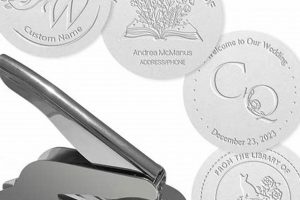
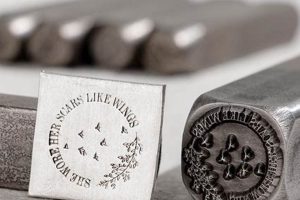
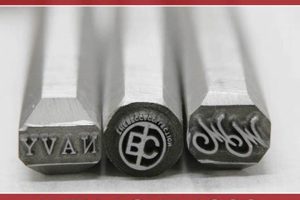
A personalized marking device creates a raised, three-dimensional design on book covers and pages. This elegant impression can feature a name, monogram, insignia, or other unique design, transforming ordinary books into cherished possessions or personalized gifts. A simple motif can distinguish a personal library, while a more complex design can be used for official or professional purposes, such as notary seals or corporate branding on company documents.
Adding this type of personalized touch elevates the perceived value and aesthetic appeal of books. It signifies ownership, adds a touch of sophistication, and can even deter theft. Historically, embossed markings served as symbols of authenticity and authority, often used by institutions and prominent individuals to identify their property. Today, the technique continues to resonate with a sense of timeless elegance and bespoke craftsmanship. It offers a unique way to connect with the tangible nature of books in an increasingly digital world.
This exploration delves further into the practical aspects of creating and utilizing these personalized marking devices. Subsequent sections will cover topics such as design options, material selection, and the embossing process itself.
Tips for Effective Embosser Usage
Achieving optimal results with a personalized book embosser requires attention to detail and an understanding of the process. The following tips offer guidance for creating crisp, professional-looking impressions.
Tip 1: Choose the Right Embosser Size: Consider the size of the books and the desired impact of the embossed design. Smaller embossers are suitable for pocket books or discreet markings, while larger embossers create a bolder statement on larger volumes.
Tip 2: Select Appropriate Paper Stock: Thicker paper stock generally yields better embossing results. Avoid overly textured or coated papers, which can obscure the embossed design.
Tip 3: Test Before Embossing: Practice on scrap paper before applying the embosser to the intended book. This allows one to refine the pressure and placement, ensuring a clean and centered impression.
Tip 4: Maintain Consistent Pressure: Apply firm, even pressure when embossing. Inconsistent pressure can result in a weak or uneven impression. A sturdy, flat surface beneath the book provides optimal support.
Tip 5: Consider Design Complexity: Intricate designs may require greater pressure and precision. Simpler designs are often easier to emboss clearly and consistently.
Tip 6: Proper Storage and Care: Protect the embosser from dust and damage by storing it in a protective case or pouch. This helps maintain the integrity of the design and ensures long-lasting performance.
Tip 7: Explore Different Ink Options: While traditional embossing does not utilize ink, some embossers offer the option to incorporate ink for a more pronounced effect. Experiment with different ink colors to complement the book and the embossed design.
By following these guidelines, one can ensure professional-looking results and maximize the lifespan of the embosser, allowing for years of personalized book enhancements.
This detailed guidance provides a strong foundation for anyone looking to incorporate personalized embossing into their book collection or gifting practices. The next section will offer concluding remarks and summarize the key benefits.
1. Personalization

Personalization lies at the heart of the custom book embosser. It transforms a generic object into a unique item, reflecting individual taste and ownership. This intimate connection is fostered through the choice of design, be it a simple monogram, a family crest, a meaningful quote, or a custom-created logo. The embosser, therefore, acts as a tangible expression of one’s identity, imbuing books with a distinct personal signature. For example, a collector might choose an embosser featuring a specific literary symbol, while a professional might opt for one displaying their business logo. The effect transcends mere aesthetics, solidifying the relationship between the owner and the book.
This personalized touch extends beyond individual use. Custom embossers offer unique branding opportunities for organizations, institutions, and businesses. A library, for instance, can utilize a customized embosser to mark its collection, adding a touch of formality and discouraging theft. Similarly, corporations can emboss official documents and certificates, enhancing their perceived value and authenticity. The ability to create a distinct, recognizable mark contributes to brand recognition and reinforces professional identity. Embossing also serves a practical purpose by clearly identifying ownership, whether for personal or professional applications.
In conclusion, personalization achieved through custom embossing elevates the significance of books and documents. It offers a means of self-expression, strengthens the bond between owner and object, and provides a tangible link to one’s identity or brand. While design choices are subjective and cater to individual preferences, the underlying principle remains consistent: transforming the ordinary into something uniquely personal. The careful consideration of design, size, and application ensures the embossed impression accurately represents the individual or organization it signifies.
2. Material Quality
Material quality significantly impacts the longevity, functionality, and aesthetic appeal of a custom book embosser. Embossers crafted from durable materials like solid brass or stainless steel offer superior performance and resistance to wear and tear compared to those made from cheaper, less robust materials such as plastic. A robust material ensures the embosser maintains its structural integrity over extended use, producing crisp, consistent impressions even after numerous applications. Conversely, embossers made from inferior materials may warp, crack, or lose their definition, resulting in blurred or incomplete impressions. This directly affects the quality of the embossed mark, potentially diminishing the perceived value of the personalized books or documents.
The choice of material also influences the embosser’s ability to withstand pressure. Harder metals like steel can handle greater force, making them suitable for embossing thicker materials or creating deeper impressions. This resilience proves crucial for achieving clean, well-defined marks on challenging surfaces. Softer materials, while potentially less expensive, may deform under pressure, leading to inconsistent results and a shorter lifespan. For example, an embosser intended for regular use in a library or office environment would benefit from the durability of steel, whereas occasional personal use might suffice with a less robust, but potentially more affordable, material.
In summary, selecting high-quality materials for a custom book embosser represents a worthwhile investment. Durability translates to a longer lifespan and consistent performance, ensuring the embossed impression remains sharp and clear over time. The choice of material directly influences the embosser’s ability to handle pressure and maintain its structural integrity, which are critical factors in producing professional-looking results. While the initial cost of superior materials may be higher, the long-term benefits in terms of performance, longevity, and the quality of the final product justify the investment. Ultimately, material quality represents a crucial element in the creation of a truly effective and lasting custom book embosser.
3. Design Intricacy
Design intricacy plays a crucial role in the effectiveness and aesthetic impact of a custom book embosser. The level of detail within a design directly influences the clarity and precision of the embossed impression. Simpler designs, characterized by clean lines and minimal detail, often emboss cleanly and consistently, even on less robust paper stocks. Conversely, highly intricate designs, featuring fine lines, complex patterns, or small text, demand greater precision during the embossing process and may require higher-quality materials and more consistent pressure to achieve a satisfactory result. The interplay between design intricacy and the embossing process necessitates careful consideration during the design phase.
Consider a simple monogram consisting of two or three large letters. Such a design translates well to embossing, requiring less pressure and producing a clear, legible mark. However, a complex design featuring a detailed illustration with fine lines and shading presents a greater challenge. The embosser must capture the nuances of the design without losing detail or clarity. This highlights the importance of balancing aesthetic ambition with practical limitations. A highly detailed design may appear visually appealing on paper but prove difficult to reproduce effectively through embossing. Therefore, collaborating with experienced embosser manufacturers or designers proves invaluable in ensuring the chosen design translates successfully into a tangible embossed impression. Such collaboration can involve refining the design to optimize it for the embossing process, potentially simplifying elements or adjusting line thicknesses to achieve the desired outcome.
Successfully navigating the complexities of design intricacy contributes significantly to the overall impact of a custom book embosser. Understanding the relationship between design detail and the embossing process allows for informed decisions regarding design choices, material selection, and application techniques. This awareness ultimately ensures the embossed impression accurately reflects the intended design, enhancing the aesthetic appeal and perceived value of the books or documents it marks. Failing to account for design intricacy can result in a disappointing final product, where fine details are lost or the overall impression appears muddled. Therefore, a thoughtful approach to design intricacy represents a critical element in the creation of a truly effective and visually appealing custom book embosser.
4. Application Method

The application method significantly influences the final result when using a custom book embosser. Proper technique ensures a clear, well-defined impression, while incorrect application can lead to a faint, uneven, or misaligned mark. Several factors contribute to successful application, including the surface stability, pressure consistency, and precise placement of the embosser. For example, embossing on a stable, hard surface yields better results than attempting to emboss on a soft or uneven surface. Consistent, firm pressure applied evenly across the embosser ensures a uniform impression depth, avoiding partial or distorted marks. Careful alignment of the embosser before applying pressure prevents crooked or off-center impressions, maintaining the intended aesthetic and legibility of the design.
Different types of embossers may also require specific application techniques. Handheld embossers typically require manual pressure, demanding consistent force and precise positioning. Desktop embossers, often lever-operated, offer greater control and leverage, facilitating consistent pressure application. Understanding the specific requirements of the chosen embosser type is crucial for achieving optimal results. For instance, some embossers require preheating, while others function best at room temperature. Consulting manufacturer instructions or seeking guidance from experienced users can provide valuable insights into best practices for specific embosser models. Additionally, certain materials, such as leather or thicker paper stocks, may require specialized application techniques or adjustments to pressure settings to achieve a satisfactory embossing result.
Mastering the appropriate application method elevates the effectiveness and aesthetic impact of a custom book embosser. Careful consideration of surface stability, pressure consistency, and precise placement ensures a clean, well-defined impression. Understanding the nuances of different embosser types and materials allows for informed adjustments to technique, maximizing the quality and longevity of the embossed mark. This attention to detail transforms a simple act of personalization into a mark of distinction, enhancing the value and visual appeal of embossed books and documents. Ultimately, the application method represents a critical factor in achieving professional-looking results and maximizing the potential of a custom book embosser.
5. Intended Use
Intended use significantly influences design choices, material selection, and size considerations when creating a custom book embosser. A clear understanding of the embosser’s purpose is paramount for achieving optimal results and maximizing its effectiveness. Whether intended for personalizing a home library, marking official documents in a professional setting, or creating unique gifts, the intended use dictates specific design parameters. For example, an embosser intended for a personal library might feature a family crest or a literary quote, requiring a smaller size and perhaps a more ornate design. Conversely, an embosser designed for a legal office might require a larger size, a more formal font, and a design incorporating official seals or logos. The connection between intended use and design ensures the final product aligns seamlessly with its designated purpose.
The intended use also impacts material selection. An embosser intended for frequent, heavy-duty use in a professional environment benefits from durable materials like stainless steel, ensuring longevity and consistent performance. However, an embosser intended for occasional personal use might suffice with a less robust, but potentially more cost-effective, material. Furthermore, the intended use dictates the embosser’s size and scale. Embossing large volumes requires a larger embosser capable of covering a greater surface area, whereas marking smaller items or creating subtle impressions necessitates a smaller, more precise tool. Understanding the relationship between intended use and these practical considerations ensures the chosen embosser effectively fulfills its designated function. For instance, a small, delicate embosser proves inadequate for embossing large legal documents, while a large, heavy-duty embosser might be impractical for personalizing small pocket notebooks.
In conclusion, considering the intended use is fundamental to the effective design and utilization of a custom book embosser. A clear understanding of the embosser’s purpose guides decisions regarding design elements, material selection, and size considerations. This thoughtful approach ensures the final product aligns seamlessly with its intended application, maximizing its functionality and aesthetic impact. Ignoring the intended use can lead to an ineffective or inappropriate tool, diminishing the quality of the embossed impression and compromising the overall user experience. Therefore, establishing a clear understanding of the intended use represents a crucial first step in the creation and application of a successful custom book embosser.
Frequently Asked Questions
This section addresses common inquiries regarding custom book embossers, providing concise and informative responses to facilitate informed decision-making.
Question 1: What types of designs can be embossed?
Designs range from simple text and monograms to intricate logos and illustrations. Clarity and embossing feasibility depend on design complexity and the chosen embosser type.
Question 2: What materials are best suited for embossing?
Thicker paper stocks, leather, and some fabrics yield optimal results. Excessively thin or textured materials may not emboss clearly. Testing on a sample material is recommended.
Question 3: How durable are custom embossers?
Durability depends on the construction material. Metal embossers, particularly those made from brass or steel, offer greater longevity compared to plastic alternatives.
Question 4: Can embossers be used on other materials besides books?
Yes, depending on the embosser type and material compatibility. Some embossers are suitable for paper, cardstock, leather, and even wood. Manufacturer specifications offer guidance on material suitability.
Question 5: What is the typical turnaround time for a custom embosser order?
Turnaround time varies depending on the manufacturer and design complexity. Consulting with the manufacturer provides accurate delivery estimates.
Question 6: How does one care for a custom embosser?
Keeping the embosser clean and storing it in a protective case prevents damage and ensures optimal performance over time. Avoid exposing the embosser to extreme temperatures or humidity.
Understanding these key aspects of custom book embossers facilitates informed choices and ensures successful personalization. The following section explores practical applications and examples of embossed projects.
This concludes the FAQ section. The next section will provide practical examples of how custom book embossers can be used.
Custom Book Embosser Stamps
This exploration has delved into the multifaceted nature of custom book embosser stamps, examining their historical context, practical applications, and the nuanced considerations involved in their creation and use. From material selection and design intricacy to application methods and intended use, each aspect contributes to the final product’s effectiveness and aesthetic impact. The importance of personalization, the durability afforded by high-quality materials, and the interplay between design and embossing technique have been highlighted as crucial factors in achieving a successful outcome. Understanding these elements empowers informed decisions, ensuring the embossed impression accurately reflects the desired aesthetic and functional objectives.
Custom book embosser stamps represent more than mere tools; they offer a tangible connection to the enduring power of personalization. They transform ordinary books and documents into cherished possessions, imbued with individual significance or organizational identity. As the digital age continues to reshape our relationship with physical objects, the tactile and visual appeal of an embossed mark offers a timeless connection to tradition and craftsmanship. The ability to create a personalized mark, a symbol of ownership and distinction, remains a powerful expression of individual or collective identity in an increasingly homogenized world.