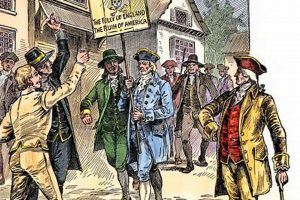
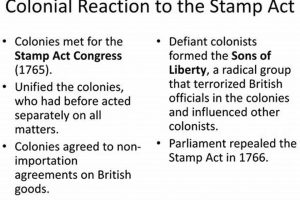
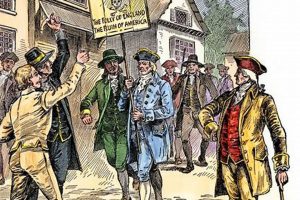
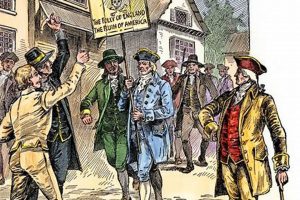
The Stamp Act of 1765, requiring affixed stamps to certify payment of taxes on printed materials such as legal documents, newspapers, pamphlets, and playing cards in the American colonies, had profound consequences. Colonists saw the act not just as a financial burden but as a direct assault on their rights as Englishmen, given that they lacked representation in the British Parliament. This sparked widespread outrage and resistance, exemplified by boycotts of British goods and the formation of protest groups like the Sons of Liberty.
This levied tax heightened tensions between Great Britain and its American colonies. The cry of “No taxation without representation” encapsulated the colonists’ frustration with British policies they perceived as unjust. These protests demonstrated an increasing colonial unity and laid the groundwork for more organized resistance efforts that would culminate in the American Revolution. The Stamp Act became a critical turning point in the relationship between the colonies and the British Crown, highlighting fundamental disagreements about governance and representation. It served as a catalyst for future revolutionary sentiments and actions.
Understanding this historical context allows for a deeper appreciation of the events that followed, including escalating protests, further legislative actions by the British government, and the eventual outbreak of armed conflict. Exploring these subsequent developments provides valuable insight into the dynamics that shaped the birth of the United States of America.
Tips for Understanding the Stamp Act’s Impact
Gaining a deeper understanding of the Stamp Act’s impact requires examining various facets of its influence on colonial society and the burgeoning revolution. These tips offer different avenues for exploration.
Tip 1: Research primary sources. Examining documents from the period, such as letters, diaries, and pamphlets, offers direct insight into colonial perspectives on the act.
Tip 2: Explore the economic consequences. Investigate how boycotts of British goods affected both colonial and British economies.
Tip 3: Analyze the political ramifications. Study the formation of protest groups and the development of colonial political thought in response to the act.
Tip 4: Consider the legal arguments. Research the legal basis for the Stamp Act and the colonists’ arguments against its constitutionality.
Tip 5: Investigate the social impact. Explore how the Stamp Act affected different social classes and groups within the colonies.
Tip 6: Study the act’s repeal. Understanding the reasons behind the repeal provides insight into the British government’s perspective and evolving policies towards the colonies.
Tip 7: Connect the Stamp Act to broader events. Place the Stamp Act within the larger context of growing tensions between Britain and the colonies, leading up to the American Revolution.
By exploring these areas, one can gain a comprehensive understanding of the Stamp Act’s significance and lasting impact on the course of American history.
This exploration of the Stamp Acts consequences provides a crucial foundation for understanding the broader context of the American Revolution.
1. Colonial Resistance

Colonial resistance stands as a pivotal consequence of the Stamp Act of 1765. The Act, which imposed a tax on printed materials in the American colonies, ignited widespread opposition that significantly shaped the relationship between Great Britain and its colonies, ultimately contributing to the outbreak of the American Revolution. Understanding the forms and impact of this resistance is crucial to grasping the full effects of the Stamp Act.
- Boycotts of British Goods
Colonists organized widespread boycotts of British goods, impacting merchants and manufacturers in Britain. These boycotts, often enforced through social pressure and intimidation by groups like the Sons of Liberty, demonstrated colonial economic power and the potential for collective action. The economic consequences pressured British merchants to lobby Parliament for repeal of the Act, highlighting the interconnectedness of economic and political spheres.
- Formation of Protest Groups
Groups like the Sons of Liberty emerged as key organizers of resistance. They facilitated communication between colonies, disseminated information, and mobilized protests. These groups provided a framework for collective action and represented a growing sense of colonial unity against British policies. Their activities heightened tensions and contributed to a sense of shared identity among colonists.
- Legal Challenges
Colonists challenged the legality of the Stamp Act through legal arguments and petitions, asserting their rights as Englishmen and questioning the authority of Parliament to tax them without representation. These legal challenges, though ultimately unsuccessful in preventing the Act’s implementation, laid the groundwork for future arguments against British authority and contributed to the development of revolutionary ideology.
- Popular Protests and Demonstrations
Public demonstrations, often involving effigies of tax collectors and other symbols of British authority, became a common form of protest. These acts of defiance, while sometimes violent, served as a visible expression of colonial discontent and contributed to a climate of unrest and resistance. They demonstrated the depth of popular opposition to the Stamp Act and the willingness of colonists to engage in public acts of defiance.
These diverse forms of colonial resistance collectively demonstrate the profound impact of the Stamp Act. By examining these responses, one gains a clearer understanding of the Act’s role in galvanizing colonial opposition, fostering intercolonial unity, and escalating tensions that ultimately led to the American Revolution. The Stamp Act, intended to raise revenue, instead became a catalyst for revolutionary sentiment, showcasing the unintended consequences of imperial policy.
2. Economic Disruption

Economic disruption proved a significant consequence of the Stamp Act of 1765. The act, intended to generate revenue for the British Crown, instead triggered a series of economic repercussions that ultimately exacerbated tensions between Great Britain and its American colonies. The colonists’ response, primarily through boycotts of British goods, directly impacted transatlantic trade and contributed to growing unrest in the colonies. This disruption highlights the unintended consequences of the Stamp Act and its role as a catalyst for the American Revolution.
The boycotts, organized by groups like the Sons of Liberty, targeted a wide range of British imports. Colonial merchants pledged not to import goods from Britain, and consumers abstained from purchasing them. This collective action significantly reduced the demand for British manufactured goods, causing economic hardship for British merchants and manufacturers. The decline in trade further strained the already tense relationship between the colonies and Great Britain, as British businesses pressured Parliament to address the colonial resistance. For example, the British textile industry experienced a downturn due to the decreased demand from the colonies. This economic pressure played a crucial role in the eventual repeal of the Stamp Act, demonstrating the effectiveness of colonial economic resistance. The boycotts also fostered a sense of unity and collective action among the colonists, further solidifying their opposition to British policies.
The economic disruption caused by the Stamp Act serves as a powerful illustration of the interconnectedness of economic and political factors in the escalating tensions between Great Britain and its American colonies. The act, designed to address British financial needs, inadvertently fueled colonial resistance and ultimately contributed to the outbreak of revolution. This understanding underscores the importance of considering economic factors when analyzing historical events and their long-term consequences. The Stamp Act’s economic repercussions provide a crucial lens through which to examine the growing divide between the colonies and Great Britain, ultimately leading to the American Revolution. The economic hardship experienced by both British merchants and American colonists underscores the complexity of this historical period and the multifaceted nature of the Stamp Act’s impact.
3. Political Radicalization

The Stamp Act of 1765 proved a catalyst for political radicalization within the American colonies. While previous grievances against British policies existed, the Stamp Act, with its direct taxation and perceived infringement on colonial rights, ignited a new level of political fervor. This radicalization manifested in several ways, solidifying colonial resistance and shaping the trajectory toward revolution. The act’s broad scope, affecting everyone from merchants to printers, fostered a shared sense of grievance. This widespread discontent provided fertile ground for the dissemination of radical ideas challenging the legitimacy of British rule. Pamphlets and public speeches became powerful tools for disseminating these radical viewpoints, further amplifying calls for resistance and independence.
The Stamp Act fueled the growth of radical political groups like the Sons of Liberty, who organized protests, boycotts, and other forms of resistance. These groups played a key role in mobilizing popular opposition to British policies, often employing public demonstrations and acts of civil disobedience. The Sons of Liberty, for example, orchestrated the Boston Tea Party, a dramatic escalation of resistance against British taxation policies. Furthermore, the Stamp Act fostered the development of radical political ideologies, including arguments for greater colonial autonomy and even outright independence. These ideas, initially confined to a minority, gained increasing traction as colonial frustration with British rule intensified. The act’s impact on political discourse contributed significantly to the intellectual climate that eventually led to the Declaration of Independence.
Understanding the link between the Stamp Act and political radicalization is crucial for comprehending the trajectory of the American Revolution. The act did not merely generate opposition; it fostered a fundamental shift in colonial political thought, pushing previously moderate voices toward more radical positions. This escalating radicalization laid the groundwork for the organized resistance and eventual armed conflict that defined the American Revolution. The Stamp Act serves as a case study in how seemingly minor legislative actions can have profound and unintended consequences, sparking widespread social and political upheaval. By examining this process of radicalization, one gains a deeper understanding of the complex dynamics that drive historical change and the enduring power of ideas in shaping human events.
4. Unifying the colonies

The Stamp Act of 1765, while intended to increase revenue for the British Crown, inadvertently played a crucial role in unifying the American colonies. Before the act, intercolonial cooperation was limited, with regional identities and interests often overshadowing any sense of collective American identity. The Stamp Act, however, by imposing a shared grievance, fostered communication, collaboration, and a growing sense of shared purpose among the colonies. This newfound unity proved essential in the subsequent resistance efforts and ultimately laid the foundation for the coordinated movement toward independence.
- Shared Grievance and Common Cause
The Stamp Act, impacting all colonies equally, created a shared grievance against British policy. This common experience transcended regional differences and fostered a sense of collective identity as “Americans” facing an external threat. Colonists recognized that their individual struggles against the Stamp Act were part of a larger issue affecting all of them, encouraging collaborative action and mutual support.
- Intercolonial Communication and Organization
The need to coordinate resistance against the Stamp Act spurred intercolonial communication and organization. Committees of Correspondence were established, facilitating the exchange of information and strategies between colonies. These communication networks played a vital role in disseminating news about the Act’s impact, organizing protests, and fostering a sense of shared purpose among geographically dispersed communities.
- Development of a Collective Identity
The shared experience of resisting the Stamp Act contributed significantly to the development of a collective American identity. Prior to the act, colonists primarily identified with their individual colonies. The Stamp Act, however, forced them to recognize their shared interests and common goals, fostering a sense of unity and solidarity that transcended regional boundaries. This collective identity provided a powerful foundation for future coordinated action against British policies.
- Foundation for Future Cooperation
The collaborative efforts in resisting the Stamp Act established a precedent for future cooperation among the colonies. The networks, strategies, and shared sense of purpose developed during this period proved invaluable in subsequent resistance movements, culminating in the unified effort for independence. The Stamp Act, therefore, served as a crucial training ground for the American Revolution, forging the bonds of unity that would enable the colonies to effectively challenge British rule.
The unifying effect of the Stamp Act stands as one of its most significant unintended consequences. By creating a common enemy and fostering collaboration, the act inadvertently laid the groundwork for the American Revolution. Understanding this process of unification is crucial for appreciating the complexity of the American Revolution’s origins and the enduring power of shared grievances in shaping historical events. The Stamp Act’s legacy extends far beyond its immediate economic and political implications; it fundamentally reshaped the relationship between the colonies and fostered a sense of collective identity that proved essential for the birth of a new nation.
5. Heightened Tensions
The Stamp Act of 1765 significantly heightened tensions between Great Britain and its American colonies. The act, which imposed a tax on printed materials, was perceived by colonists as a violation of their rights as Englishmen, specifically the right to be taxed only by their own elected representatives. This perceived injustice fueled resentment and distrust towards the British government, escalating the already existing tensions stemming from earlier restrictive measures like the Sugar Act. The Stamp Act served as a catalyst, pushing the colonies and Great Britain closer to open conflict. For instance, the Sons of Liberty, a prominent protest group, organized demonstrations and boycotts, further exacerbating the strained relationship. These actions, a direct consequence of the Stamp Act, created a climate of unrest and defiance in the colonies.
The heightened tensions resulting from the Stamp Act manifested in various forms. Colonial legislatures passed resolutions condemning the act, asserting their right to self-governance. Individuals expressed their outrage through pamphlets, speeches, and petitions, contributing to a growing sense of collective resistance. Moreover, the acts enforcement, often carried out by unpopular tax collectors, led to clashes between colonists and British authorities. The Boston Massacre, while occurring several years later, can be viewed as a culmination of the escalating tensions ignited by the Stamp Act and subsequent British policies. This incident further solidified colonial resistance and radicalized many colonists against British rule. The act’s impact on the political landscape was profound, transforming moderate dissent into fervent calls for greater autonomy and, eventually, independence.
Understanding the connection between the Stamp Act and heightened tensions is crucial for comprehending the trajectory toward the American Revolution. The act’s implementation marked a turning point in the relationship between Great Britain and its American colonies. The resulting tensions, fueled by perceptions of injustice and British overreach, created an environment ripe for rebellion. The Stamp Act, while eventually repealed, left a lasting legacy of distrust and resentment. This legacy ultimately contributed to the outbreak of the American Revolutionary War, demonstrating the significant impact of legislative actions on political and social stability. Examining this period reveals the complex interplay between policy decisions, popular resistance, and the escalation of conflict, offering valuable insights into the dynamics of historical change.
6. Parliamentary Debate
Parliamentary debate played a crucial role in shaping the course of events surrounding the Stamp Act of 1765. The act, which levied a tax on printed materials in the American colonies, sparked intense debate within the British Parliament. This debate reflected the complex and often conflicting perspectives on colonial governance, taxation, and representation. Understanding the parliamentary discussions surrounding the Stamp Act provides valuable insight into the political climate of the time and the factors that contributed to the escalating tensions between Great Britain and its American colonies. For example, prominent figures like William Pitt the Elder argued against the act, emphasizing the importance of colonial consent in matters of taxation. Conversely, supporters of the act, such as Prime Minister George Grenville, viewed it as a necessary measure to raise revenue for the defense of the colonies. These contrasting viewpoints reveal the deep divisions within British political circles regarding colonial policy.
The parliamentary debate surrounding the Stamp Act was not merely a theoretical exercise; it had tangible consequences. The arguments presented in Parliament influenced public opinion both in Great Britain and the colonies. News of the debates reached colonial newspapers, fueling colonial resistance and bolstering arguments against taxation without representation. The debates also exposed divisions within British society regarding colonial policy. Some merchants and manufacturers, recognizing the economic consequences of colonial boycotts, lobbied Parliament for the act’s repeal. The repeal of the Stamp Act in 1766, a direct outcome of parliamentary debate and pressure from various interest groups, demonstrates the practical significance of these discussions. However, the Declaratory Act, passed alongside the repeal, asserted Parliament’s authority to legislate for the colonies “in all cases whatsoever,” further complicating the relationship and laying the groundwork for future conflict.
The parliamentary debates surrounding the Stamp Act offer a crucial lens through which to analyze the political and economic dynamics of the period. They highlight the complexities of imperial governance, the challenges of balancing competing interests, and the unintended consequences of policy decisions. Examining these debates provides essential context for understanding the escalating tensions that ultimately led to the American Revolution. The debates reveal not only the specific arguments for and against the Stamp Act, but also the broader philosophical and political principles at stake. By analyzing these discussions, one gains a deeper appreciation of the historical context surrounding the American Revolution and the factors that shaped the course of events. Moreover, the debates underscore the importance of considering diverse perspectives and the potential consequences of legislative actions on both domestic and international affairs. This understanding remains relevant today, reminding us of the need for careful deliberation and consideration of the potential impacts of policy decisions on all stakeholders.
Frequently Asked Questions about the Stamp Act’s Impact
This section addresses common inquiries regarding the consequences of the 1765 Stamp Act, aiming to provide clear and concise answers.
Question 1: Why did the Stamp Act cause such a strong reaction in the colonies?
The Stamp Act generated intense opposition due to its perceived violation of colonial rights, particularly the principle of “no taxation without representation.” Colonists argued that they should not be subjected to taxes imposed by a Parliament in which they lacked direct representation.
Question 2: How did the Stamp Act contribute to the American Revolution?
The Stamp Act fueled colonial resistance, fostered intercolonial unity, and radicalized political thought, contributing significantly to the growing movement for independence. It served as a catalyst for future revolutionary sentiments and actions.
Question 3: What were the primary forms of colonial resistance to the Stamp Act?
Colonial resistance manifested in various forms, including boycotts of British goods, formation of protest groups like the Sons of Liberty, legal challenges, and public demonstrations.
Question 4: What was the economic impact of the Stamp Act?
The Stamp Act resulted in significant economic disruption, primarily through boycotts of British goods. These boycotts impacted British merchants and manufacturers, contributing to pressure on Parliament to repeal the act.
Question 5: Was the Stamp Act the sole cause of the American Revolution?
While a significant catalyst, the Stamp Act was not the sole cause of the American Revolution. It represented one of a series of British policies that escalated tensions and fueled colonial resistance, ultimately culminating in revolution.
Question 6: Why was the Stamp Act eventually repealed?
The Stamp Act was repealed in 1766 due to combined pressures from colonial resistance, including boycotts, and lobbying by British merchants affected by the economic downturn resulting from these boycotts.
Understanding the multifaceted impact of the Stamp Act offers essential context for comprehending the American Revolution’s origins and the complex dynamics of historical change.
This FAQ section provides a concise overview of the Stamp Act’s impact. Further exploration of specific aspects, such as the political and social ramifications, can offer a more comprehensive understanding of this pivotal historical event.
The Enduring Legacy of the Stamp Act
Exploration of the Stamp Act’s consequences reveals its profound impact on the relationship between Great Britain and its American colonies. The act’s economic disruption, through boycotts and trade imbalances, combined with its political ramifications, including heightened tensions and radicalization, ultimately propelled the colonies toward revolution. The Stamp Act served not merely as a tax measure, but as a catalyst for colonial unity, fostering a shared sense of grievance and purpose that proved essential in the fight for independence. From the formation of protest groups like the Sons of Liberty to the impassioned parliamentary debates, the Stamp Act’s effects reverberated across the Atlantic, shaping the political and social landscape on both sides of the ocean.
The Stamp Act’s legacy serves as a potent reminder of the unintended consequences of policy decisions and the power of collective action. Its study offers valuable insights into the dynamics of historical change, the complexities of imperial governance, and the enduring human struggle for liberty and self-determination. Further exploration of this period enriches understanding of the American Revolution’s origins and provides crucial lessons for navigating contemporary political and social challenges. The echoes of “No taxation without representation” continue to resonate, underscoring the enduring importance of civic engagement and the ongoing pursuit of just and equitable governance.