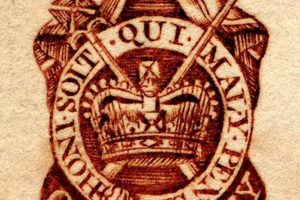
This specific legislation, enacted by the British Parliament in 1765, imposed a tax on all printed materials in the American colonies, including newspapers, legal documents, pamphlets, and playing cards. These materials were required to bear an embossed revenue stamp as proof of payment. This act serves as a key example for students of Advanced Placement United States History (APUSH) when studying the escalating tensions between Great Britain and its North American colonies.
The tax was intended to raise revenue to help offset the cost of maintaining a British military presence in the colonies following the French and Indian War. However, it was met with widespread resistance in the colonies, where it was viewed as an unjust and oppressive measure enacted without colonial representation in Parliament. This sparked protests, boycotts of British goods, and the formation of groups like the Sons of Liberty, ultimately contributing to the growing movement for independence. It serves as a crucial historical example of the principle of “no taxation without representation.”
Further exploration of this period often includes topics such as the colonial response to the tax, the development of colonial unity, the role of key figures like Samuel Adams and Patrick Henry, and the eventual repeal of the act in 1766. Analyzing the broader implications of this legislation offers valuable insight into the political, economic, and social climate of the era and its direct impact on the path to the American Revolution.
Understanding the Stamp Act of 1765
The following tips offer guidance for effectively analyzing and understanding the historical significance of the 1765 Stamp Act within the context of pre-Revolutionary America.
Tip 1: Focus on Colonial Grievances: Examine the specific reasons why colonists viewed the act as unjust. Consider the arguments made regarding taxation without representation and the perceived violation of colonial rights.
Tip 2: Explore the Economic Impact: Analyze how the tax affected different colonial groups, such as merchants, printers, and ordinary citizens. Consider the economic consequences of boycotts and the disruption of trade.
Tip 3: Consider the Role of Propaganda: Investigate how pamphlets, newspapers, and other forms of communication were used to shape public opinion and mobilize resistance against the act.
Tip 4: Analyze the British Perspective: Understand the British rationale for imposing the tax, including the financial pressures following the French and Indian War and the perceived need for greater colonial contribution to imperial defense.
Tip 5: Connect to Broader Themes: Consider how the Stamp Act relates to larger themes in APUSH, such as the development of colonial identity, the growth of resistance to British rule, and the eventual outbreak of the American Revolution.
Tip 6: Examine the Repeal: Study the factors that led to the repeal of the Stamp Act in 1766, including colonial resistance and pressure from British merchants. Note that the repeal did not resolve the underlying tensions between Britain and the colonies.
Tip 7: Use Primary Sources: Consulting primary sources, such as letters, diaries, and official documents from the period, can provide valuable firsthand accounts and deeper insights into the events surrounding the Stamp Act.
By examining these aspects, one can gain a more nuanced understanding of the Stamp Act’s significance as a catalyst for the American Revolution.
This exploration of the Stamp Act provides a foundation for understanding the broader context of the American Revolution and the complex relationship between Great Britain and its American colonies. Further research might include investigating subsequent acts passed by Parliament and the escalating tensions that ultimately led to war.
1. Revenue Generation

The primary motivation behind the Stamp Act of 1765 was revenue generation for the British Crown. Following the costly French and Indian War, the British government faced substantial debt and increased expenses related to maintaining a military presence in North America. The act aimed to directly tax the American colonies to offset these costs. It mandated the purchase of stamps for various printed materials, including legal documents, newspapers, and playing cards, effectively imposing a direct tax on colonial economic activity. This direct taxation differed significantly from previous forms of imperial revenue collection, such as the Sugar Act, which focused primarily on regulating trade.
The anticipated revenue from the Stamp Act was intended to fund the ongoing costs of defending the colonies. British officials argued that the colonists benefited from this protection and therefore should contribute financially. However, the colonists disputed this rationale, arguing that they had already contributed significantly to the war effort and that the new tax represented an unjust burden imposed without colonial consent or representation in Parliament. The failure of the act to generate substantial revenue, due largely to widespread colonial resistance and boycotts, underscored the miscalculation of British policy and further inflamed tensions between the colonies and the Crown.
The Stamp Act’s focus on revenue generation represented a critical turning point in British-American relations. It highlighted fundamental disagreements over the nature of imperial authority and colonial autonomy, serving as a key catalyst for the escalating conflict that culminated in the American Revolution. The act’s failure to achieve its financial objectives also demonstrated the growing power of colonial resistance and the limits of British control in North America. This historical example serves as a case study in the complexities of taxation and its potential to trigger social and political upheaval.
2. Colonial Resistance

Colonial resistance played a pivotal role in the response to the Stamp Act of 1765. The act, which imposed a tax on printed materials in the American colonies, sparked widespread opposition and became a focal point for the growing movement against British rule. Examining the multifaceted nature of this resistance reveals its significance in shaping the events leading up to the American Revolution.
- Boycotts of British Goods
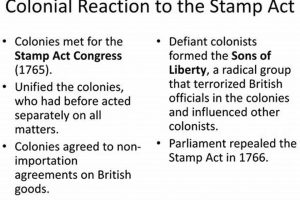
Colonists organized widespread boycotts of British goods, targeting merchants and manufacturers who supported the Stamp Act. These boycotts, often enforced by groups like the Sons of Liberty, significantly disrupted transatlantic trade and put economic pressure on British businesses. The effectiveness of these boycotts demonstrated the colonists’ collective power and their willingness to engage in economic warfare to defend their interests.
- Propaganda and Public Discourse
Pamphlets, newspapers, and speeches became powerful tools for disseminating information and shaping public opinion against the Stamp Act. Figures like Samuel Adams and Patrick Henry effectively articulated colonial grievances, emphasizing the principles of “no taxation without representation” and the perceived violation of colonial liberties. This propaganda campaign fueled popular resentment and mobilized support for resistance efforts.
- Formation of Protest Groups
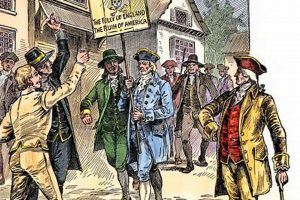
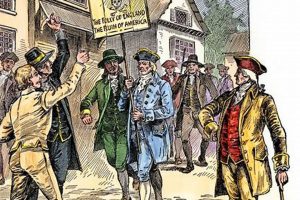
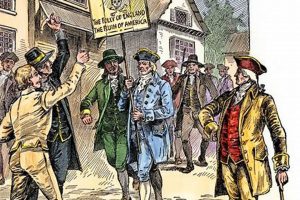
Groups like the Sons of Liberty emerged as key organizers of resistance activities. They coordinated boycotts, staged protests, and sometimes resorted to more forceful actions, such as intimidating stamp distributors and destroying stamped paper. These groups provided a framework for collective action and played a crucial role in unifying colonial opposition to British policies.
- Legal and Political Challenges
Colonial assemblies passed resolutions challenging the legality of the Stamp Act, asserting their right to self-governance. Legal arguments against the act focused on the lack of colonial representation in Parliament and the perceived violation of traditional British liberties. These legal and political challenges represented a formal expression of colonial resistance and laid the groundwork for future arguments for independence.
These interconnected forms of colonial resistance demonstrated a growing sense of unity and resolve among the American colonies. The Stamp Act crisis served as a crucial catalyst for the development of a shared colonial identity and solidified opposition to British policies. The lessons learned and the organizational structures developed during this period proved invaluable in the subsequent struggle for independence. The Stamp Act, therefore, stands as a significant turning point in the relationship between Great Britain and its American colonies, marking a critical step on the path to revolution.
3. Taxation without representation

The phrase “taxation without representation” encapsulates a core grievance of the American colonists leading up to the Revolution. The Stamp Act of 1765, a key event in APUSH curricula, provides a concrete example of this principle in action. The act, which imposed a tax on printed materials, became a flashpoint for colonial resistance because colonists lacked direct representation in the British Parliament that levied the tax. Exploring the facets of this concept illuminates its significance within the context of the Stamp Act and the broader movement towards independence.
- Violation of British Liberties
Colonists argued that the Stamp Act violated their traditional rights as Englishmen. They viewed the imposition of taxes without their consent, expressed through elected representatives, as a breach of established British legal principles. This argument drew upon historical precedents and legal traditions, emphasizing the perceived injustice of Parliament’s actions. The colonists believed they deserved the same rights and protections afforded to British citizens residing in England, including the right to be taxed only by their own elected representatives.
- Financial Burden
The Stamp Act placed a direct financial burden on the colonies. While the revenue generated was intended to support British military presence in North America, colonists argued that the tax was excessive and unfairly targeted their economic activities. This financial burden, coupled with the lack of representation, fueled resentment and contributed to the growing sense of colonial grievance. The economic impact of the tax became a tangible symbol of British oppression in the eyes of many colonists.
- Assertion of Colonial Autonomy
The cry of “taxation without representation” became a rallying point for asserting colonial autonomy. Colonists argued that they possessed the right to govern themselves and manage their own affairs, including taxation. This assertion of self-governance challenged the authority of the British Parliament and laid the groundwork for future claims of independence. The Stamp Act crisis became a crucible for the development of a distinct American identity, separate from British rule.
- Catalyst for Resistance
The principle of “taxation without representation” served as a powerful catalyst for colonial resistance. It provided a clear and concise justification for opposing the Stamp Act and other British policies perceived as unjust. This principle mobilized colonists across various social and economic classes, uniting them in a common cause. The widespread protests, boycotts, and acts of defiance that followed the Stamp Act’s passage demonstrated the potency of this unifying grievance.
The Stamp Act of 1765 brought the issue of “taxation without representation” to the forefront of colonial politics. It crystallized existing grievances and galvanized resistance movements, fundamentally altering the relationship between Great Britain and its American colonies. Understanding this central grievance provides critical context for analyzing the escalating tensions that ultimately led to the American Revolution. The legacy of this principle extends beyond the revolution, influencing subsequent discussions about political representation and individual liberties.
4. Precursor to Revolution
The Stamp Act of 1765 stands as a significant precursor to the American Revolution, marking a critical escalation in the tensions between Great Britain and its North American colonies. The act, which imposed a tax on printed materials, ignited widespread colonial resistance and crystallized grievances that would ultimately fuel the movement for independence. Understanding the Stamp Act’s role as a precursor requires examining the causal link between the act itself and the subsequent revolutionary events. The act’s significance lies not only in its direct consequences but also in its symbolic representation of British overreach and colonial defiance.
Several key factors solidify the Stamp Act’s status as a precursor to revolution. First, the act’s imposition of direct taxation without colonial representation in Parliament fueled the flames of discontent. The cry of “no taxation without representation” became a rallying point for colonists, articulating a fundamental principle of self-governance that directly challenged British authority. Second, the widespread colonial resistance to the act, manifested in boycotts, protests, and the formation of groups like the Sons of Liberty, demonstrated a growing willingness to challenge British rule. This resistance laid the groundwork for future organized opposition and provided a testing ground for revolutionary tactics. The Stamp Act crisis fostered a sense of unity among the colonies, as they recognized their shared grievances and the need for collective action. For example, the Stamp Act Congress, convened in 1765, represented a significant step towards intercolonial cooperation and laid the foundation for future collaborative efforts in resisting British policies.
The Stamp Act, while eventually repealed in 1766, left an enduring legacy. It highlighted the fundamental differences in perspective between Great Britain and its American colonies regarding issues of representation, autonomy, and imperial control. The act’s passage and the subsequent colonial response exposed the deep fissures in the relationship between the two entities, setting the stage for the escalating conflict that would culminate in the American Revolution. While the repeal of the Stamp Act temporarily eased tensions, it did not address the underlying issues that had fueled colonial resistance. The experience of the Stamp Act crisis served as a powerful lesson for the colonists, demonstrating the potential for collective action and solidifying their resolve to resist further infringements on their perceived liberties. The Stamp Act, therefore, represents a crucial turning point in the path towards revolution, serving as a powerful catalyst for the events that would ultimately transform the political landscape of North America.
5. Sons of Liberty Activism
The Sons of Liberty, a clandestine organization formed in response to escalating British policies, played a crucial role in colonial resistance to the Stamp Act of 1765. Their activism significantly shaped public opinion and contributed to the growing movement against British rule. Understanding their activities within the context of the Stamp Act provides valuable insight into the dynamics of colonial resistance and the escalating tensions leading up to the American Revolution.
- Organization and Mobilization
The Sons of Liberty effectively organized and mobilized colonial opposition to the Stamp Act. They established networks of communication and coordinated resistance efforts across different colonies. This organizational structure enabled them to disseminate information, mobilize protests, and enforce boycotts of British goods. Their ability to coordinate actions across geographical boundaries proved crucial in amplifying the impact of colonial resistance.
- Propaganda and Public Discourse
The Sons of Liberty skillfully utilized propaganda to shape public opinion and incite resistance. They published pamphlets, organized public speeches, and circulated information condemning the Stamp Act and British policies. Their rhetoric emphasized the principles of “no taxation without representation” and framed the act as a violation of colonial liberties. This effective propaganda campaign played a significant role in galvanizing public support for resistance efforts.
- Direct Action and Intimidation
In addition to propaganda and boycotts, the Sons of Liberty engaged in direct action and intimidation tactics. They targeted stamp distributors, often resorting to threats and violence to prevent the implementation of the act. They also destroyed stamped paper and publicly harassed British officials. While controversial, these actions demonstrated the group’s willingness to escalate resistance beyond peaceful protest and underscored the intensity of colonial opposition.
- Legacy and Long-Term Impact
The Sons of Liberty’s activism during the Stamp Act crisis laid the groundwork for future resistance movements. Their organizational structure, propaganda tactics, and willingness to engage in direct action established a model for colonial resistance that proved influential in the years leading up to the American Revolution. Their actions contributed to the growing sense of colonial unity and solidified opposition to British rule, ultimately playing a significant role in the path to independence.
The Sons of Liberty’s multifaceted activism during the Stamp Act crisis represents a pivotal moment in the development of colonial resistance. Their actions, ranging from organized boycotts to direct acts of intimidation, directly challenged British authority and contributed significantly to the escalating tensions that culminated in the American Revolution. Analyzing their role in this historical context provides valuable insight into the complex dynamics of the period and the factors that fueled the movement for independence.
6. Repealed in 1766

The repeal of the Stamp Act in 1766 represents a crucial turning point in the relationship between Great Britain and its American colonies. While the act itself, imposed in 1765, aimed to generate revenue for the British crown, it ignited fierce colonial resistance, centered on the principle of “no taxation without representation.” Understanding the repeal requires examining the multifaceted factors that led to this decision and its implications for the burgeoning revolutionary movement. The repeal, while seemingly a victory for the colonies, did not resolve the underlying tensions that fueled the resistance. This examination explores the complexities of the repeal and its significance within the context of APUSH (Advanced Placement United States History).
- Economic Pressure
Colonial boycotts of British goods, organized in response to the Stamp Act, significantly impacted British merchants and manufacturers. These boycotts disrupted transatlantic trade and exerted considerable economic pressure on British businesses, leading them to lobby Parliament for the act’s repeal. The economic consequences of colonial resistance played a substantial role in influencing British policy.
- Political Considerations
The British government faced growing political pressure to address the colonial crisis. The widespread resistance to the Stamp Act raised concerns about the stability of the colonies and the potential for further unrest. Political figures in Britain, including some sympathetic to colonial grievances, argued for the repeal as a means of restoring order and preventing further escalation of the conflict. The political calculus in Britain shifted as the potential costs of maintaining the Stamp Act outweighed the anticipated benefits.
- Colonial Resistance
The sustained and widespread colonial resistance to the Stamp Act, including protests, boycotts, and acts of defiance, demonstrated the colonists’ resolve and their capacity for collective action. This resistance played a critical role in persuading British authorities that enforcing the act would be difficult and potentially counterproductive. The strength of colonial opposition signaled the limitations of British control in North America.
- Declaratory Act
While repealing the Stamp Act, the British Parliament simultaneously passed the Declaratory Act, asserting its ultimate authority to legislate for the colonies “in all cases whatsoever.” This act aimed to reassert British sovereignty while simultaneously defusing the immediate crisis. The Declaratory Act, however, did little to address the underlying colonial grievances and foreshadowed future conflicts over the nature of imperial power. While offering a seeming concession to colonial demands, it underscored the continuing tension between British authority and colonial autonomy.
The repeal of the Stamp Act, while celebrated as a victory for the colonies, proved to be a temporary reprieve. The underlying issues of representation, autonomy, and imperial control remained unresolved. The passage of the Declaratory Act, alongside the repeal, underscored Britain’s continued assertion of dominance over the colonies. The Stamp Act crisis and its aftermath served as a critical turning point, demonstrating the power of colonial resistance and setting the stage for the escalating conflict that would culminate in the American Revolution. The events of 1766, therefore, represent a complex interplay of economic, political, and social forces that fundamentally reshaped the relationship between Great Britain and its American colonies. Examining these events provides crucial insight into the causes of the American Revolution and the ongoing struggle for self-governance in the colonies.
Frequently Asked Questions
The following addresses common inquiries regarding this pivotal piece of legislation, providing further context for its significance in the pre-revolutionary era.
Question 1: What specific items were taxed under the Stamp Act?
The Stamp Act mandated the purchase of embossed revenue stamps for a wide range of printed materials, including newspapers, pamphlets, legal documents (such as contracts and wills), playing cards, and even dice.
Question 2: Why did the British government implement the Stamp Act?
The primary motivation was to raise revenue to offset the costs of maintaining a British military presence in North America following the French and Indian War. The British government believed the colonies should contribute financially to their own defense.
Question 3: How did the colonists react to the Stamp Act?
The act sparked widespread resistance throughout the colonies. Colonists organized boycotts of British goods, formed protest groups like the Sons of Liberty, and engaged in public demonstrations and acts of defiance against British authority.
Question 4: What is the significance of “no taxation without representation”?
This phrase encapsulates the core colonial grievance against the Stamp Act. Colonists argued that being taxed by the British Parliament without having elected representatives to voice their interests violated their fundamental rights as Englishmen.
Question 5: What led to the repeal of the Stamp Act?
A combination of factors, including sustained colonial resistance (particularly the economic pressure from boycotts), pressure from British merchants affected by the boycotts, and growing political concerns within the British government, led to the act’s repeal in 1766.
Question 6: Did the repeal of the Stamp Act resolve the tensions between Great Britain and the colonies?
While the repeal provided temporary relief, it did not address the underlying issues of colonial autonomy and representation. The British Parliament simultaneously passed the Declaratory Act, asserting its right to legislate for the colonies “in all cases whatsoever,” which foreshadowed future conflicts.
Understanding these key aspects of the Stamp Act provides a foundational understanding of the escalating tensions that ultimately led to the American Revolution. Further examination should include exploring the subsequent acts passed by Parliament and the evolving colonial response.
Continuing exploration might consider the long-term consequences of the Stamp Act crisis and its contribution to the development of a distinct American identity.
The Stamp Act of 1765
This exploration of the 1765 Stamp Act has highlighted its multifaceted significance within the context of pre-revolutionary America. From its initial aim of revenue generation to its unintended consequence of igniting colonial resistance, the act serves as a pivotal case study in the escalating tensions between Great Britain and its American colonies. Key themes explored include the act’s economic impact, the principle of “no taxation without representation,” the role of groups like the Sons of Liberty, and the ultimate repeal of the act in 1766. The examination underscored how this specific legislation became a focal point for colonial grievances and contributed significantly to the growing movement for independence. Furthermore, analysis of the British perspective, alongside the colonial response, provided a nuanced understanding of the complex political and economic dynamics of the era.
The Stamp Act’s legacy extends far beyond its brief period of enforcement. It stands as a stark reminder of the power of collective action and the enduring importance of principles such as representation and self-governance. Further study of this period requires continuous examination of primary sources and a critical analysis of the interconnected events that ultimately led to the American Revolution. Only through such diligent exploration can one truly grasp the profound impact of the Stamp Act and its enduring relevance in shaping the course of American history.