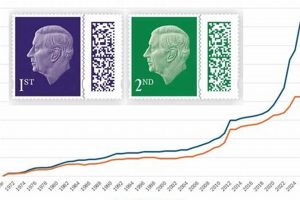
Visual representations of postage stamps, whether photographs, scans, or digital artwork, serve as valuable resources for collectors, historians, and graphic designers. These representations can depict the stamp’s design, denomination, and any unique features, such as perforations or watermarks. For example, a high-resolution scan might reveal intricate details in an engraved portrait or a subtle variation in ink color.
Such visuals play a crucial role in documenting postal history, facilitating the study of stamp design evolution, and enabling collectors to identify and catalog their collections. Historically, printed catalogs relied on simplified illustrations, but advancements in photography and digital imaging now allow for highly accurate and detailed representations. This accessibility has democratized philately, making information and expertise more readily available. Furthermore, these visuals can serve as inspiration for artistic endeavors, providing a rich source of imagery and historical context.
This exploration will delve deeper into specific aspects of picturing these small but significant artifacts, examining topics such as the techniques used to capture high-quality representations, the challenges in accurately portraying color and detail, and the role of digital archives in preserving and sharing these important historical documents.
Tips for Working with Visual Representations of Postage Stamps
Effective utilization of stamp visuals requires careful consideration of several factors. These tips offer guidance for achieving optimal results, whether for research, archiving, or design purposes.
Tip 1: Prioritize Resolution: High-resolution images are essential for capturing fine details, such as engravings, watermarks, and printing flaws. A minimum of 600 dpi is recommended for accurate representation and analysis.
Tip 2: Control Lighting: Consistent, diffuse lighting minimizes glare and shadows, ensuring accurate color reproduction and preventing washed-out details. Avoid direct or harsh lighting.
Tip 3: Calibrate Equipment: Regularly calibrate scanners and monitors to maintain color accuracy and consistency across different devices and platforms.
Tip 4: Consider File Format: Lossless formats like TIFF preserve image quality, especially important for archival purposes. JPEG is acceptable for web use but can introduce compression artifacts.
Tip 5: Document Metadata: Include relevant information, such as the stamp’s country of origin, issue date, denomination, and any known variations, in the image’s metadata for easier identification and organization.
Tip 6: Respect Copyright: Be mindful of copyright restrictions when using images from online sources or publications. Seek permission when necessary and cite sources appropriately.
Tip 7: Utilize Specialized Software: Image editing software can be used to enhance details, correct color imbalances, and remove unwanted artifacts, improving the overall quality and clarity of the visual representation.
Adherence to these guidelines will significantly enhance the quality and usability of stamp visuals, facilitating accurate research, effective communication, and informed decision-making.
By understanding the nuances of working with these visual resources, one can unlock a wealth of information and appreciate the intricate artistry found within these miniature works of art. This leads to a more comprehensive understanding of the subject as a whole.
1. Resolution

Resolution plays a critical role in the effective representation of postage stamps. It directly impacts the level of detail discernible within the image, influencing the ability to accurately assess the stamp’s condition, identify printing variations, and appreciate intricate design elements. A low-resolution image might obscure fine details like microprinting or subtle color shifts, while a high-resolution image allows for accurate examination of these features. For example, a researcher studying a stamp’s watermark would require a high-resolution scan to discern its intricate patterns, while a collector verifying a stamp’s authenticity might rely on high-resolution imagery to detect subtle flaws or forgeries.
The practical significance of resolution becomes particularly apparent when dealing with valuable or rare stamps. High-resolution images allow for detailed examination without requiring physical handling, minimizing the risk of damage. Furthermore, digital archives of high-resolution stamp images facilitate accessibility for researchers and collectors worldwide, enabling collaborative study and authentication efforts. Differences in perforation types, paper variations, and printing errors, often crucial for determining a stamp’s value and rarity, can be accurately documented and analyzed through high-resolution visuals. This ability to disseminate information broadly contributes to the ongoing scholarship and preservation of philatelic history.
In summary, the resolution of a postage stamp image is directly correlated with its informational value. Higher resolution facilitates more accurate analysis, authentication, and appreciation of these historical artifacts. While lower resolution might suffice for casual viewing, serious study and preservation efforts necessitate high-resolution imagery to capture the full spectrum of detail embedded within these miniature works of art. Addressing the challenges of acquiring and storing high-resolution images is crucial for ensuring the long-term accessibility and preservation of philatelic heritage.
2. Lighting
Proper illumination is paramount when capturing high-quality representations of postage stamps. Lighting directly influences color accuracy, detail visibility, and the overall aesthetic quality of the resulting image. Suboptimal lighting can obscure crucial details, distort colors, and introduce unwanted artifacts like glare and shadows, hindering accurate assessment and appreciation.
- Diffuse Lighting
Diffuse lighting, achieved through the use of light diffusers or indirect light sources, minimizes harsh shadows and glare. This even illumination ensures accurate color reproduction and reveals subtle details often obscured by direct light. For example, using a lightbox or placing the stamp under a shaded lamp provides diffuse illumination, revealing the true colors and intricate details of the stamp’s design.
- Color Temperature
The color temperature of the light source significantly impacts the perceived colors of the stamp. Different light sources emit light with varying color temperatures, measured in Kelvin. A lower color temperature (e.g., warm incandescent light) can introduce a yellowish cast, while a higher color temperature (e.g., cool fluorescent light) can result in a bluish tint. Using a neutral light source, ideally around 5000-6500K, or employing color correction techniques during post-processing, ensures accurate color representation.
- Angle of Incidence
The angle at which light strikes the stamp influences the visibility of surface textures and potential imperfections. Direct, perpendicular lighting can minimize shadows but might also obscure subtle embossed details. Angled lighting can highlight textures and potential flaws but might introduce unwanted shadows. Careful adjustment of the light source’s position is crucial for achieving optimal illumination and highlighting specific features.
- Light Intensity
The intensity of the light source affects the overall brightness and contrast of the image. Insufficient light can result in a dark, underexposed image, while excessive light can lead to overexposure, washing out details and distorting colors. Adjusting the light intensity or exposure settings during image capture ensures a balanced and well-lit representation.
Careful consideration of these lighting factors is essential for producing accurate and visually appealing representations of postage stamps. Proper lighting techniques enhance the visibility of crucial details, ensure faithful color reproduction, and facilitate informed analysis and appreciation. The interplay of diffuse lighting, appropriate color temperature, strategic angle of incidence, and controlled light intensity contributes to the creation of high-quality images suitable for archival, research, and aesthetic purposes. This meticulous approach to lighting preserves the historical integrity and visual richness of these miniature artifacts.
3. Color Accuracy

Accurate color representation is crucial for the effective study, cataloging, and appreciation of postage stamps. Color variations often distinguish different printings, identify forgeries, and contribute significantly to a stamp’s value and historical context. Inaccuracies in color can mislead collectors, hinder scholarly research, and misrepresent the artistic intent of the original design. For instance, a stamp issued in two distinct shades of blue, perhaps due to different printing runs, might hold significantly different values. Accurate color representation allows collectors to differentiate between these variations. Similarly, forgeries often exhibit subtle color discrepancies compared to genuine stamps, detectable through careful color analysis. Consider the “Penny Black,” the world’s first adhesive postage stamp. Variations in the black ink, sometimes appearing brownish or grayish due to ink composition or aging, can significantly impact its value.
Achieving color accuracy requires careful attention throughout the imaging process. Specialized equipment, such as color-calibrated scanners and monitors, plays a vital role. Controlled lighting conditions, employing standardized light sources and diffusers, minimize color distortions introduced by ambient light. Furthermore, employing color management systems and standardized color profiles ensures consistency across different devices and platforms. Digital image processing techniques offer tools for correcting color imbalances and restoring faded colors, enhancing the accuracy of the digital representation. However, these techniques require expertise and careful application to avoid introducing further inaccuracies. The use of archival-quality inks and papers for physical reproductions contributes to long-term color stability. These measures, though demanding, are essential for preserving the integrity of philatelic materials and facilitating accurate research and appreciation.
In conclusion, color accuracy is paramount in representing postage stamps. It underpins accurate identification, valuation, and historical contextualization. Achieving color fidelity necessitates specialized equipment, controlled lighting, and rigorous color management practices. The challenges of maintaining color accuracy across different media and over time highlight the importance of ongoing research and the adoption of best practices in philatelic imaging and preservation. This dedication to accurate color representation ensures that the rich history and artistic merit of postage stamps are preserved and appreciated for generations to come.
4. File Format

The selection of an appropriate file format is crucial for preserving the integrity and facilitating the effective utilization of postage stamp images. Different file formats offer varying levels of compression, color support, and metadata capabilities, directly impacting image quality, file size, and long-term preservation. Choosing the correct format ensures that valuable details are retained, accurate colors are preserved, and essential information is readily accessible.
- Uncompressed Formats (e.g., TIFF, BMP)
Uncompressed formats store image data without any loss of information, preserving the full range of color and detail captured during scanning or photography. TIFF (Tagged Image File Format), a widely supported uncompressed format, is particularly well-suited for archival purposes due to its ability to store metadata and support lossless compression. BMP (Bitmap), another uncompressed format, is known for its simplicity but results in larger file sizes. These formats are ideal for preserving master copies of stamp images where maintaining the highest possible quality is paramount, even at the expense of larger file sizes.
- Lossy Compressed Formats (e.g., JPEG)
Lossy compression reduces file size by discarding some image data. JPEG (Joint Photographic Experts Group) is a commonly used lossy format, offering a good balance between file size and image quality. However, high levels of JPEG compression can introduce visible artifacts, such as blurring and pixelation, potentially obscuring fine details crucial for accurate identification or research. JPEG is suitable for web use or situations where smaller file sizes are prioritized over absolute image fidelity. For example, JPEG might be acceptable for online stamp catalogs where storage space and download speeds are concerns, but TIFF would be preferred for archival purposes or detailed research.
- Lossless Compressed Formats (e.g., PNG, GIF)
Lossless compression reduces file size without discarding any image data, preserving image quality. PNG (Portable Network Graphics) offers superior lossless compression compared to GIF (Graphics Interchange Format) and supports a wider range of colors and transparency. PNG is well-suited for web graphics and situations where maintaining image integrity is crucial. GIF, limited to 256 colors, is more suitable for simple graphics and animations. For archiving high-quality stamp images destined for online viewing or sharing, PNG offers a good balance between file size and image quality.
- Vector Formats (e.g., SVG)
Vector formats, such as SVG (Scalable Vector Graphics), represent images using mathematical equations rather than pixels. This allows for infinite scaling without loss of quality, making them ideal for creating high-resolution graphics for print or web. While less common for archival purposes, vector formats can be useful for reproducing stamp designs for educational or illustrative purposes. For example, recreating a stamp design in SVG format allows for resizing without pixelation, suitable for creating large-format prints or high-resolution online displays.
Selecting the appropriate file format for postage stamp images depends on the intended use. Archival purposes necessitate uncompressed or lossless formats to preserve image integrity, while web use might favor lossy compression for reduced file sizes. Understanding the nuances of each format ensures effective preservation, dissemination, and utilization of these valuable philatelic resources. Choosing wisely ensures that the visual information embedded within these small artifacts remains accessible and accurately represented for future generations of researchers, collectors, and enthusiasts. The careful consideration of file format contributes significantly to the long-term preservation and accessibility of philatelic heritage.
5. Metadata

Metadata, descriptive information embedded within a digital file, plays a crucial role in organizing, identifying, and interpreting digital representations of postage stamps. This data provides context, facilitates searching and retrieval, and enhances the research value of these visual resources. Metadata associated with a stamp image might include details such as country of origin, issue date, denomination, printing method, designer, subject matter, and catalog numbers (e.g., Scott, Michel, Stanley Gibbons). This descriptive information transforms a simple image into a rich data point, enabling efficient management and analysis of large collections. For example, a researcher studying the evolution of a particular nation’s stamp designs could use metadata to quickly filter and retrieve all stamps issued within a specific timeframe or featuring a particular theme. Similarly, a collector could utilize metadata to identify gaps in their collection or track the provenance of individual stamps.
The practical significance of metadata becomes particularly apparent when managing extensive digital archives of postage stamp images. Imagine a museum digitizing its philatelic collection. Without comprehensive metadata, locating a specific stamp within thousands of digitized images would be a daunting task. However, with properly implemented metadata, researchers could easily locate and retrieve images based on specific criteria, significantly accelerating research and facilitating new discoveries. Furthermore, metadata contributes to the long-term preservation of philatelic knowledge. By embedding descriptive information within the digital file itself, the context and significance of the image are preserved even if the file is separated from its original database or catalog. Consider a scenario where a digital archive is lost or damaged. Images salvaged from the damaged archive, still containing their embedded metadata, retain their historical context and research value, mitigating the impact of data loss.
In summary, metadata is an essential component of managing and interpreting digital representations of postage stamps. It facilitates organization, retrieval, and analysis, enhancing the research value and contributing to the long-term preservation of philatelic knowledge. The effective utilization of metadata transforms individual images into interconnected data points, enabling new avenues of research and fostering a deeper understanding of postal history and the art of stamp design. Addressing the challenges of standardizing metadata schemas and ensuring consistent metadata application across different collections remains crucial for maximizing the interoperability and accessibility of these valuable resources. This collaborative effort strengthens the foundation for future philatelic research and ensures the preservation of this rich cultural heritage.
Frequently Asked Questions about Visual Representations of Postage Stamps
This section addresses common inquiries regarding the utilization and interpretation of postage stamp visuals.
Question 1: What resolution is recommended for digitizing postage stamps?
A minimum resolution of 600 dpi (dots per inch) is generally recommended, with higher resolutions, such as 1200 dpi or greater, preferred for capturing fine details and facilitating detailed analysis.
Question 2: What file formats are best suited for archiving digital images of stamps?
Uncompressed or losslessly compressed formats, such as TIFF (Tagged Image File Format) and PNG (Portable Network Graphics), are ideal for archival purposes. They preserve image quality without data loss.
Question 3: How can color accuracy be ensured when capturing stamp images?
Color accuracy requires calibrated equipment (scanners, cameras, monitors), controlled lighting conditions using standardized light sources and diffusers, and employing color management systems with appropriate color profiles. Post-processing color correction may also be necessary.
Question 4: What metadata should be included with digital stamp images?
Essential metadata includes country of origin, issue date, denomination, printing method, designer, subject matter, and relevant catalog numbers (e.g., Scott, Michel, Stanley Gibbons). Additional information regarding variations, condition, and provenance can also be valuable.
Question 5: What are the ethical considerations regarding the use of postage stamp images?
Respecting copyright restrictions is paramount. Images from copyrighted publications or online sources require permission for reproduction. Proper attribution and citation are essential when using images from any source.
Question 6: How can one differentiate between a genuine stamp image and a forgery based on visual representation?
Identifying forgeries requires careful examination of various factors, including printing methods, paper types, ink colors, and perforations. Comparing the image to authenticated examples and consulting expert resources is crucial for accurate authentication. Subtle discrepancies in design details, color variations, or paper texture can indicate a forgery. High-resolution images are essential for this process.
Understanding these aspects facilitates responsible and effective use of postage stamp images for research, collection management, and appreciation of philatelic history.
The subsequent sections delve deeper into specific techniques and resources for working with visual representations of postage stamps.
Conclusion
Visual representations of postage stamps offer a crucial window into history, art, and culture. This exploration has highlighted the multifaceted nature of working with these representations, emphasizing the importance of resolution, lighting, color accuracy, file formats, and metadata for accurate portrayal and effective utilization. From facilitating detailed scholarly research to enabling collectors to catalog and authenticate their collections, the effective use of these visual resources underpins a deeper understanding of philately and its broader historical context. The technical considerations discussed, such as achieving proper lighting and selecting appropriate file formats, directly impact the quality and longevity of these visual records, ensuring the preservation of valuable philatelic information for future generations.
The increasing digitization of philatelic collections worldwide presents both opportunities and challenges. Ensuring the long-term accessibility and integrity of these digital resources requires ongoing attention to best practices in image capture, processing, and archiving. Continued development of standardized metadata schemas and collaborative efforts to share these resources across institutions will further enhance the accessibility and research potential of postage stamp images, fostering a deeper appreciation for these miniature witnesses to history.