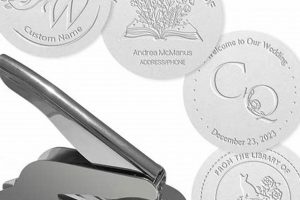
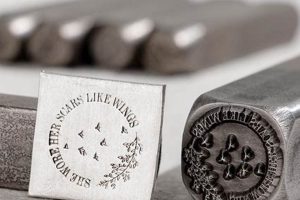
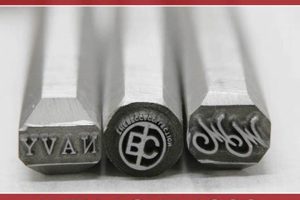
A branding iron fabricated from metal, often brass or steel, features a unique design, logo, or text etched into its surface. Heated in a fire or with a specialized tool, the iron is then applied to wood, leather, or other materials to create a permanent, distinctive mark. A personalized brand offers a level of craftsmanship and individual expression not found with mass-produced marking tools.
Personalized branding irons offer a sophisticated method for permanently marking creations or products. This technique provides a clear indication of ownership, authenticity, and adds an element of handcrafted quality. Historically, such instruments played a vital role in marking livestock and signifying ownership of tools and other possessions. Today, they are appreciated for their artistic value and ability to imbue projects with a unique, personalized touch, enhancing branding for businesses, artisans, and hobbyists alike.
This article explores the varied aspects of personalized branding iron creation and usage, covering topics from design and material selection to proper heating techniques and best practices for achieving optimal results on different surfaces. The information provided aims to equip readers with the knowledge and skills necessary to utilize these tools effectively and safely.
Tips for Effective Branding Iron Usage
Achieving professional-looking results with a personalized branding iron requires careful consideration of several factors. The following tips offer guidance for maximizing effectiveness and ensuring safety.
Tip 1: Design Simplicity: Intricate designs can be challenging to reproduce clearly. Opt for clean lines and bold shapes for optimal transfer onto the material.
Tip 2: Material Selection: Consider the target material. Hardwoods require higher temperatures and more pressure than softer woods. Leather requires specific temperature control to avoid scorching.
Tip 3: Proper Heating: Even heating is crucial. Use a consistent heat source, such as a forge or specialized heating tool, to avoid uneven branding.
Tip 4: Test Runs: Practice on scrap material identical to the final piece. This allows for temperature and pressure adjustments, ensuring the desired outcome.
Tip 5: Surface Preparation: A smooth, flat surface ensures consistent contact with the branding iron. Sand or plane the material as needed before branding.
Tip 6: Consistent Pressure: Apply even pressure across the entire branding iron surface for a uniform mark. Avoid rocking or tilting the iron during application.
Tip 7: Safety Precautions: Always use heat-resistant gloves and eye protection. Ensure adequate ventilation when working with heated tools and materials.
Following these guidelines allows for consistent, high-quality results and contributes to a safer working environment when utilizing personalized branding irons.
By implementing these strategies, artisans and craftspeople can elevate their work, adding a touch of professionalism and permanence to their creations. This article concludes with a summary of key considerations for selecting and utilizing personalized branding irons effectively.
1. Personalized Design

Personalized design forms the core principle of custom wood burning stamps. The ability to translate a unique visiona company logo, a personal signature, or a custom artworkinto a tangible marking tool imbues objects with individuality and lasting significance. This personalization transforms ordinary items into bespoke pieces, reflecting the creator’s or owner’s identity. Consider a small-batch coffee roaster using a custom stamp to brand their packaging; the personalized design not only identifies their product but also communicates their commitment to craftsmanship and quality. Similarly, an artisan crafting leather goods can utilize a custom stamp to mark their creations, signifying authenticity and adding a touch of personal artistry.
The impact of personalized design extends beyond mere aesthetics. It functions as a powerful branding element for businesses, fostering brand recognition and customer loyalty. For individual crafters, a personalized stamp adds a signature touch, enhancing the perceived value of handmade items. The process of designing a custom stamp also offers a creative outlet, allowing individuals and businesses to express their vision in a tangible form. This creative control ensures the final product resonates deeply with its intended purpose and audience. Practical applications range from branding wooden toys and furniture to personalizing leather journals and corporate gifts. The versatility of personalized designs within the context of custom wood burning stamps caters to diverse needs and creative expressions.
In conclusion, the integration of personalized design within custom wood burning stamps elevates the act of marking objects into an art form. It empowers creators, businesses, and individuals to imbue their work with unique identity and lasting value. This personalized touch, achieved through careful design considerations and precise execution, transforms ordinary objects into cherished possessions and reinforces brand identity in a competitive marketplace. While the design process requires careful planning and attention to detail, the resulting stamp offers a versatile and impactful tool for self-expression and brand building.
2. Material Selection (Wood, Metal)
Material selection significantly impacts the functionality and longevity of custom wood burning stamps. The stamp’s material dictates its ability to withstand high temperatures, transfer intricate designs effectively, and resist wear and tear. Metal, typically brass or steel, proves ideal for the stamp’s head due to its durability and heat conductivity. Brass offers intricate detail reproduction and even heating, while steel provides greater durability for frequent, high-temperature applications. Wood, often hardwoods like maple or cherry, serves as the handle material due to its heat resistance, comfortable grip, and aesthetic appeal. The interplay between these materials ensures optimal performance and user experience.
The choice of metal directly influences the stamp’s ability to render fine details. Brass, with its malleability, allows for intricate designs and delicate lines, making it suitable for complex logos or artistic renderings. Steel, while less malleable, offers superior durability, making it ideal for simpler, bolder designs subjected to repeated use. The wood handle’s role extends beyond mere ergonomics. Its heat-resistant properties protect the user from burns during prolonged use, while its comfortable grip ensures precise application. The choice of hardwood contributes to the stamp’s overall aesthetic, adding a touch of natural elegance. For instance, a stamp used for branding high-end leather goods might feature a rosewood handle to complement the product’s luxury appeal. Understanding these material properties allows for informed decisions tailored to specific branding needs, whether it’s intricate detailing or robust, repeated use.
Careful material selection ensures the creation of a robust, functional, and aesthetically pleasing tool. The synergy between the metal head and wooden handle contributes to the stamp’s overall effectiveness and longevity. Choosing the appropriate metal ensures the accurate reproduction of designs, ranging from intricate logos to bold typography, while the selected wood provides comfortable handling and heat protection. Ultimately, informed material selection empowers artisans and businesses to create custom wood burning stamps that meet their specific branding needs and withstand the rigors of repeated use, maximizing the tool’s value and ensuring a lasting mark.
3. Branding Temperature

Branding temperature represents a critical factor in achieving optimal results with custom wood burning stamps. Appropriate temperature control dictates the clarity, depth, and overall quality of the burned impression. Insufficient heat results in faint, incomplete marks, while excessive heat leads to scorching and undesirable charring. Understanding the interplay between temperature and material reaction is crucial for achieving professional-looking brands.
- Material-Specific Temperatures
Different materials necessitate specific temperature ranges for effective branding. Hardwoods, like oak or maple, require higher temperatures than softer woods, such as pine or cedar. Leather demands precise temperature regulation to achieve a clean brand without scorching or cracking. Understanding these material-specific requirements ensures consistent, high-quality results.
- Temperature Control Methods
Achieving consistent branding temperature requires appropriate heating methods and temperature monitoring tools. Temperature-controlled electric branding irons offer precise regulation, eliminating the guesswork associated with traditional heating methods like open flames. Thermometers or temperature-sensitive markers provide visual cues, ensuring the iron maintains the correct temperature throughout the branding process.
- Test Runs and Adjustments
Prior to branding the final piece, test runs on scrap material of the same type are essential. These trials allow for temperature adjustments and provide a preview of the final result. Observing the test brand’s clarity, depth, and overall appearance allows for fine-tuning the temperature, ensuring the desired outcome on the final piece. This practice minimizes the risk of ruining valuable materials due to incorrect temperature settings.
- Impact on Branding Depth and Appearance
Branding temperature directly impacts the depth and appearance of the final mark. Higher temperatures yield deeper, darker brands, while lower temperatures create lighter, more superficial impressions. Controlling the temperature allows for varying the brand’s visual impact, from subtle markings to bold, prominent designs. This control enables artisans to achieve specific aesthetic effects tailored to the project’s requirements.
Mastering branding temperature control elevates the custom wood burning process from a rudimentary technique to a precise art form. Careful consideration of material-specific temperatures, coupled with accurate temperature regulation and methodical test runs, ensures consistent, high-quality results. This precision empowers artisans and businesses to achieve the desired branding effect, whether a subtle mark or a bold statement, adding a touch of professionalism and permanence to their creations.
4. Surface Preparation
Surface preparation plays a vital role in achieving optimal results when using custom wood burning stamps. The quality of the burned impression directly correlates with the smoothness and cleanliness of the material’s surface. Proper preparation ensures consistent contact between the stamp and the material, preventing uneven burns and maximizing design clarity. A smooth surface allows for uniform heat transfer, resulting in a crisp, well-defined brand. Conversely, an uneven or dirty surface can lead to patchy burns, blurred details, and an overall unprofessional appearance. For example, branding a rough-sawn piece of lumber without sanding would likely yield an inconsistent brand, whereas a smoothly sanded surface ensures a clean, sharp impression. Similarly, any dust or debris on the surface can become embedded during the branding process, further detracting from the final result.
Practical applications of surface preparation techniques vary depending on the material being branded. Wood typically requires sanding to achieve a smooth, even surface. The grit of sandpaper used depends on the wood’s initial roughness; coarser grits are used for initial smoothing, followed by finer grits for a polished finish. Leather may require cleaning and conditioning to remove any oils or debris that could interfere with the branding process. In some cases, a light sanding may also be necessary to create a more receptive surface. Metals, while less common for branding, may require degreasing or polishing before applying a custom wood burning stamp. Regardless of the material, meticulous surface preparation contributes significantly to the success of the branding process. A well-prepared surface maximizes the stamp’s effectiveness, ensuring a professional, high-quality brand that reflects the intended design accurately.
In conclusion, effective surface preparation is an integral component of successful custom wood burning stamp projects. It ensures consistent contact, uniform heat transfer, and ultimately, a clean, crisp brand. The time invested in proper surface preparation directly translates to a higher quality final product, minimizing the risk of imperfections and maximizing the clarity and impact of the design. Understanding the importance of surface preparation, coupled with the application of appropriate techniques for various materials, empowers artisans and craftspeople to achieve professional-grade results with their custom wood burning stamps. Neglecting this crucial step compromises the integrity of the final brand, highlighting the critical connection between surface preparation and successful branding outcomes.
5. Application Technique
Application technique significantly influences the outcome when using a custom wood burning stamp. Proper technique ensures a clear, even brand, reflecting the design’s intricacies accurately. Factors such as pressure, contact time, and the angle of application directly impact the final result. Incorrect application can lead to uneven burns, blurred details, or an overall unprofessional appearance. For instance, applying uneven pressure can result in some areas of the design appearing darker than others, distorting the intended image. Similarly, insufficient contact time may produce a faint, incomplete burn, while excessive contact time risks scorching the material and obliterating fine details. Consider the example of a craftsman branding a leather-bound journal. Consistent pressure and precise contact time are crucial for achieving a clean, legible brand. A slight rocking motion or uneven pressure could distort the logo or text, diminishing the journal’s aesthetic appeal and perceived quality.
Different materials require specific adjustments to application technique. Hardwoods necessitate more pressure and longer contact times than softer woods due to their density. Leather requires controlled pressure and shorter contact times to prevent scorching and maintain its texture. Branding curved surfaces presents additional challenges, requiring careful alignment and potentially multiple applications to achieve a uniform burn. In cases of intricate designs, precise placement and steady pressure are paramount for preserving fine details. For example, a complex floral design on a wooden box requires meticulous attention to detail during application to ensure each petal and leaf is rendered clearly. Practical mastery of application techniques emerges through practice and careful observation, allowing for informed adjustments based on the specific material and design complexity. A clear understanding of these nuances is critical for achieving professional results that enhance the aesthetic and perceived value of the finished product.
In summary, effective application technique forms the cornerstone of successful custom wood burning stamp projects. It requires careful consideration of material properties, design complexity, and the interplay of pressure, contact time, and application angle. Consistent practice and attention to detail are crucial for mastering these techniques and achieving the desired branding outcome. Failure to execute proper application techniques can compromise the integrity of the design, resulting in an unprofessional and potentially unusable final product. The mastery of application, therefore, distinguishes the novice from the expert, demonstrating a comprehensive understanding of the process and a commitment to achieving high-quality results. This expertise translates into a finished product that showcases the full potential of custom wood burning stamps, enhancing the aesthetic appeal and value of the branded item.
6. Safety Precautions

Safety precautions are paramount when utilizing custom wood burning stamps due to the inherent risks associated with high temperatures and potentially flammable materials. Neglecting safety measures can lead to burns, fires, and material damage. Implementing appropriate precautions ensures a safe working environment and mitigates potential hazards. A comprehensive understanding of these safety protocols is crucial for anyone working with custom wood burning stamps, regardless of experience level.
- Heat Protection
Protecting oneself from high temperatures is crucial. Heat-resistant gloves shield hands from direct contact with the heated stamp and other hot surfaces. These gloves should be specifically designed for high-temperature applications and fit properly to ensure dexterity and prevent accidental contact. A heat-resistant apron or protective clothing provides an additional layer of safety, shielding the body from potential sparks or accidental contact with the heated tool. For example, a leather apron provides robust protection against heat and sparks, crucial when working with a forge or open flame.
- Fire Safety
Working with flammable materials necessitates stringent fire safety measures. A designated fire-safe work area, clear of flammable debris and equipped with a fire extinguisher, minimizes fire risks. Proper ventilation dissipates smoke and fumes produced during the branding process, preventing potential respiratory irritation and reducing the risk of fire. A metal or fire-resistant work surface provides a safe area for heating and using the stamp, reducing the chance of accidental ignition. Keeping a bucket of sand or a fire blanket readily available provides additional means of extinguishing small fires quickly and effectively.
- Material Handling
Safe material handling practices are essential to prevent injuries and ensure effective branding. Securely clamping or holding the material being branded prevents slippage during the stamping process, reducing the risk of burns or misaligned brands. Using appropriate clamps or vises tailored to the material’s size and shape ensures stability and control. For instance, when branding a small wooden plaque, using a small bench vise provides adequate stability and prevents movement during the branding process. Proper material handling ensures accurate brand placement and minimizes the risk of accidents caused by material shifting during application.
- Ventilation and Respiratory Protection
Wood burning produces smoke and fumes that can irritate the respiratory system. Adequate ventilation, such as working in a well-ventilated area or using a fume extractor, minimizes exposure to these irritants. In cases where adequate ventilation is not feasible, wearing a respirator specifically designed for particulate matter and organic vapors provides additional respiratory protection. This is particularly important when working with certain wood types that produce more potent fumes. For example, when branding exotic hardwoods, a respirator may be necessary to filter out potentially harmful particles and vapors.
Implementing these safety precautions transforms the custom wood burning process from a potentially hazardous activity into a safe and controlled creative endeavor. Prioritizing safety not only protects the individual but also ensures the longevity of the tools and the quality of the finished product. By adhering to these guidelines, artisans and craftspeople can focus on the creative aspects of custom branding, confident in their ability to work safely and effectively. A safe working environment fosters creativity and precision, resulting in high-quality branded products that reflect both artistry and a commitment to safe practices.
7. Maintenance and Care

Maintenance and care directly impact the lifespan and performance of custom wood burning stamps. Regular cleaning and proper storage preserve the stamp’s intricate design and ensure consistent branding results over time. Neglecting these practices can lead to residue buildup, corrosion, and ultimately, a diminished ability to produce clean, sharp brands. Residue from burned materials, if left uncleaned, can harden and obscure fine details within the stamp’s design. Corrosion, particularly in metal stamps, can compromise structural integrity and negatively affect the heat transfer process, leading to uneven burns. For example, a brass stamp used frequently for branding leather, if not cleaned after each use, can accumulate residue that hardens and obscures fine details. Over time, this buildup can make the stamp unusable. Similarly, a steel stamp stored in a humid environment without proper protection can rust, impacting its ability to transfer heat evenly and produce a clear brand.
Effective maintenance involves cleaning the stamp after each use. A stiff brush, preferably brass or nylon, removes residual material from the stamp’s surface without damaging the design. For stubborn residue, a specialized cleaning solution designed for metal or wood, depending on the stamp’s material, can be used. After cleaning, the stamp should be thoroughly dried to prevent rust or other forms of corrosion. Proper storage is equally crucial. Storing the stamp in a dry, cool environment, preferably in a protective case or pouch, prevents damage from humidity, dust, and accidental impacts. For example, storing a custom wood burning stamp in a felt-lined wooden box provides protection from environmental factors and prevents scratches or dents. These practices, while simple, significantly extend the stamp’s lifespan and maintain its ability to produce high-quality brands.
Investing time in proper maintenance and care preserves the investment in a custom wood burning stamp. Regular cleaning and appropriate storage not only maintain the stamp’s functionality but also preserve its aesthetic appeal. A well-maintained stamp consistently delivers crisp, clear brands, reflecting the care and attention invested in its upkeep. Furthermore, proper maintenance reduces the long-term costs associated with replacing damaged or unusable stamps. Understanding the importance of maintenance and care translates into a longer-lasting, higher-performing tool, maximizing its value and ensuring consistent branding results for years to come. Ultimately, the commitment to maintenance and care demonstrates a respect for the craftsmanship inherent in custom wood burning stamps and ensures the tool continues to serve its purpose effectively and efficiently.
Frequently Asked Questions
This section addresses common inquiries regarding custom wood burning stamps, providing concise and informative responses.
Question 1: What materials can be branded with a custom wood burning stamp?
Wood and leather are the most common materials. However, other materials like cork, cardboard, and certain fabrics can also be branded, though results may vary depending on material properties.
Question 2: How intricate can the design of a custom wood burning stamp be?
Design complexity depends on the chosen material for the stamp’s head. Brass allows for intricate details, while steel is better suited for simpler, bolder designs. The branding material also plays a role; finer details may not transfer effectively onto rough or uneven surfaces.
Question 3: How long does a custom wood burning stamp last?
With proper maintenance and care, a custom wood burning stamp can last for many years. Regular cleaning and appropriate storage are essential for preserving the stamp’s integrity and functionality.
Question 4: What are the primary safety concerns when using a custom wood burning stamp?
High temperatures and potential fire hazards pose the primary safety concerns. Utilizing appropriate heat protection, ensuring proper ventilation, and adhering to fire safety protocols are essential for safe operation.
Question 5: Can custom wood burning stamps be used for commercial purposes?
Absolutely. Custom wood burning stamps are frequently employed for commercial branding of products, packaging, and promotional materials. They provide a unique, handcrafted touch that enhances brand identity and product value.
Question 6: How does one choose the appropriate temperature for branding different materials?
Material properties dictate the appropriate branding temperature. Hardwoods require higher temperatures than softer woods or leather. Test runs on scrap material of the same type as the final piece allow for temperature adjustments and prevent damage to the final product.
Understanding these frequently asked questions equips individuals with the knowledge necessary for safe and effective utilization of custom wood burning stamps. Careful consideration of these aspects ensures successful branding outcomes and maximizes the lifespan of these valuable tools.
The following section delves further into the practical applications of custom wood burning stamps across various industries and creative endeavors.
Custom Wood Burning Stamp
Custom wood burning stamps offer a unique blend of artistry and functionality. This exploration has covered key aspects, from material selection and design considerations to application techniques, safety precautions, and maintenance. The versatility of custom wood burning stamps extends across various applications, from personal crafting projects to commercial branding endeavors. Proper material selection ensures both durability and the ability to render intricate designs, while mastering application techniques leads to consistent, high-quality results. Adherence to safety protocols ensures a secure working environment, and diligent maintenance preserves the stamp’s longevity and performance.
Custom wood burning stamps represent more than mere tools; they symbolize a commitment to craftsmanship, personalized expression, and lasting quality. As tools for branding and creative expression, they bridge the gap between traditional techniques and contemporary design. The enduring appeal of custom wood burning stamps lies in their ability to imbue objects with unique character and enduring value. Further exploration and experimentation with these versatile tools promise continued innovation and expanded applications within the realm of personalized design and branding.