



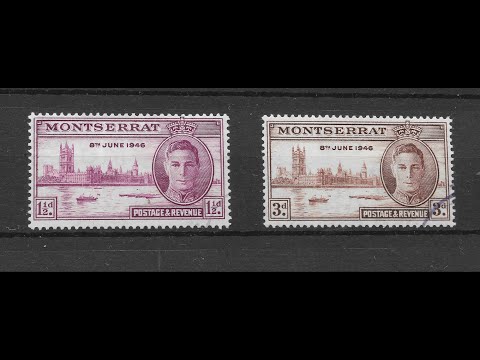
An average, off-center postage stamp can still hide an expensive problem: fake or altered gum. Regumming is the application of adhesive to a stamp after its original gum has been removed or damaged, often to make it appear more desirable to collectors. Detecting regummed fakes requires more than checking whether a stamp looks shiny. Paper, perforations, gum texture, stamp design, and the issue’s manufacturing history all provide evidence. Whether you are examining an inexpensive album filler or a valuable mint classic, understanding these clues can help you avoid paying a premium for a stamp that has been misrepresented.
What Does “Average Off-Center” Mean in Stamp Collecting?
An average or off-center stamp has a design that is not evenly positioned within its margins. On a perforated stamp, the perforations may come close to the design or cut into it. Centering is one component of condition grading, separate from gum status, authenticity, and overall soundness.
Grading terminology varies by country, expertizing organization, and period. In United States philately, “average” generally describes noticeably uneven centering, potentially with the perforations touching or cutting into the design. Consult the relevant grading standard rather than assuming every seller uses the term identically.
Importantly, an off-center stamp is not automatically fake, damaged, or regummed. Many genuine stamps were produced with irregular margins. Likewise, excellent centering does not guarantee original gum. An altered stamp can have attractive margins, while a perfectly genuine example can be poorly centered.
What Is Regumming, and Why Does It Matter?
Regumming means adding gum to a stamp after it has left the issuing authority’s production process. The added coating may cover a stamp that was originally unused without gum, had disturbed gum, or lost its gum through washing. The goal is often to imitate original gum and increase the apparent market value.
Not every regummed stamp is a counterfeit. The printed stamp itself may be genuine, but its adhesive has been altered. Accurate descriptions should distinguish a genuine stamp with added gum from a forged stamp or a forged overprint.
- Original gum: Adhesive applied during authorized production that remains on the stamp, subject to the conventions of the issue.
- Unused without gum: A stamp that has not been postally used but has no gum remaining.
- Regummed: A stamp with gum added after production, regardless of whether the underlying stamp is genuine.
- Disturbed gum: Original gum affected by handling, moisture, hinges, or other contact; it is not necessarily regummed.
- Mint never hinged: Generally, an unused stamp with original gum that has not been hinged, although issue-specific exceptions and market terminology matter.
Regumming matters most when the price difference between original-gum and no-gum examples is significant. Even a poorly centered stamp can be worth altering if the underlying issue is scarce enough. Conversely, the cost of expertizing a common stamp may exceed its market value.
How to Detect a Regummed Stamp: The Short Answer
To detect possible regumming, compare the stamp’s gum with authenticated examples of the same issue. Look for adhesive on perforation tips, gum bridging perforation holes, an unnatural coating across paper fibers, inconsistent texture, or gum covering a crease. Examine the stamp under good light and magnification, but treat each clue as an indication rather than proof. For a valuable stamp, obtain an opinion from a recognized philatelic expertizing service.
Common Signs of Regumming on Off-Center Stamps
Gum on perforation tips or inside holes
On many conventionally produced stamps, gum was applied to the sheet before perforation. When stamps were separated, the newly exposed paper fibers at the perforation tips would not ordinarily have the same continuous coating as the back. Gum that appears to coat broken tips, fill holes, or bridge the gaps between perforations can therefore be suspicious.
This test is not universal. Production methods differ, and moisture, handling, or later separation can change how perforations look. Some stamps were perforated before gumming, and naturally occurring gum can collect unevenly. Check the production sequence for the specific issue before drawing a conclusion.

Unusual shine, color, or texture
A regummed surface may look excessively glossy, uniformly smooth, streaky, or unnaturally thick. Brush marks, pools of adhesive, and abrupt changes in coating thickness are worth investigating. Under angled light, these features can be easier to see than under direct overhead illumination.

However, original gum varies enormously. Depending on the issue, genuine gum can be shiny, dull, yellowish, crackled, streaked, or uneven. Age and storage also change its appearance. A shiny back alone is not evidence of fakery.
Gum over existing damage
Examine creases, thins, tears, and scuffs carefully. If an adhesive layer appears to flow into an older crease or cover exposed fibers in a thin, the gum may have been applied after the damage occurred. The same principle applies to traces of hinge removal that seem sealed beneath a newer coating.
These relationships can be difficult to interpret. A crease may have formed before or after original gumming, and lighting can make layers appear misleading. High-value examples deserve professional examination rather than a confident verdict from a single visual clue.
Paper and gum that seem incompatible
Some regummed stamps show a coating that does not match the expected color, thickness, or texture of original gum for that printing. A useful comparison is an authenticated example from the same issue, preferably from the same printing or production period. Catalog notes and specialist literature may identify known gum types and legitimate variations.
Do not assume that all stamps of one design have identical gum. Different printings, papers, contractors, and storage conditions can create genuine differences. The better the comparison material, the more meaningful the observation.
Regummed vs. Original Gum: A Practical Comparison
| Feature | Possible original gum | Possible added gum |
| Perforation tips | May show exposed paper fibers consistent with production | May show adhesive coating broken tips or bridging holes |
| Surface texture | Consistent with known variations for the issue | May show unexpected brush marks, pools, or excessive uniformity |
| Existing damage | Damage may interrupt the gum layer | Coating may appear to cover older damage or exposed fibers |
| Comparison examples | Generally compatible with authenticated material | May differ markedly from appropriate reference examples |
| Expert conclusion | Determined from the complete examination | May be described as regummed, partially regummed, or inconclusive |
None of these visual differences is conclusive in isolation. The table is a screening guide, not a substitute for issue-specific research or an expert certificate.
A Step-by-Step Inspection Method for Collectors
- Identify the stamp accurately. Establish the country, denomination, design, printing, perforation gauge, and watermark where relevant. A wrong identification can lead to the wrong expectations about gum.
- Check the seller’s description. Note whether the stamp is offered as original gum, previously hinged, never hinged, unused without gum, or regummed. Ask for clarification if the language is vague.
- Inspect the front and edges. Look for repairs, creases, thin spots, and perforation irregularities. Off-center perforations can make altered edges harder to interpret, so examine every side.
- Study the back under angled light. Rotate the stamp gently to reveal coating patterns, sheen changes, adhesive buildup, and apparent brush strokes.
- Use magnification carefully. A clean 10x loupe can help you inspect perforation tips and surface texture. Avoid pressing the loupe against the stamp.
- Compare with reliable references. Consult specialized catalogs, documented examples, and established dealers familiar with the issue. A similar-looking stamp from another printing may not be a valid benchmark.
- Escalate when the value warrants it. Submit uncertain or expensive material to an appropriate expertizing organization before relying on its gum status for a major purchase or sale.
Handle stamps with stamp tongs over a clean surface. Do not lick, wash, scrape, or apply chemicals to test the gum. Such actions can damage the stamp, alter the evidence, and reduce its value.
Why Off-Center Stamps Need Careful Evaluation
Collectors sometimes assume that a stamp with poor centering is too ordinary to have been altered. That assumption can be costly. A rare stamp may remain valuable in average condition, and an original-gum premium can still create an incentive for regumming. Less valuable stamps can also appear in mixed lots where their condition is described inaccurately.
On an off-center stamp, perforations may cut into the printed design. This can complicate visual assessment because the edge already looks irregular. Distinguish centering from physical alteration: a design cut by normal perforations is a grading issue, while reperforating an edge to imitate better centering is a separate form of alteration.
Check the perforation gauge and compare the spacing and shape of holes along opposing sides. An unusual edge warrants closer investigation, but irregular perforations can also be genuine manufacturing characteristics. As with gum, the correct reference is the specific issue, not a general rule.
Advanced Clues: Partial Regumming, Hinges, and Repairs
Not all added gum covers the entire back. Partial regumming may be used to disguise a hinge mark, a thin, or an area of missing adhesive. Look for a localized patch that differs in gloss, color, or surface level from the surrounding gum. A sharp boundary can be informative, although legitimate gum disturbance can also create contrasting areas.
Some stamps have been both repaired and regummed. A filled thin, sealed tear, or added paper may be easier to overlook when covered by a uniform adhesive layer. Inspect the stamp from both sides under transmitted light when appropriate, without exposing it to heat or unnecessary handling. Suspected repairs on valuable items are another reason to seek expert review.
Be cautious with ultraviolet lamps and other specialized tools. They can reveal differences in paper, repairs, or coatings, but fluorescence varies by material and does not automatically prove regumming. Interpretation requires knowledge of the issue and the limits of the equipment.
Buying, Selling, and Expert Certificates
Buy from dealers or auction houses that provide clear condition descriptions, sharp images of both sides, and a reasonable return policy. For online listings, ask for additional angled photographs if the gum is important to the price. Photos can reveal obvious concerns, but they rarely replace an in-hand examination.
An expert certificate records an organization’s opinion about a particular stamp at the time of examination. Choose a service with expertise in the country and issue, and check that the certificate’s image and description match the stamp offered. Read the wording carefully: a certificate may confirm authenticity while noting altered gum, repairs, or other qualifications.
Before submitting, compare the stamp’s likely value with the examination fee, shipping, insurance, and potential delay. When selling, disclose known regumming or uncertainty plainly. A genuine, scarce stamp with added gum can still be collectible when accurately described and priced accordingly.
Conclusion
Detecting regummed fakes on average, off-center stamps comes down to separating three questions: Is the stamp genuine, how well is it centered, and what is the status of its gum? Examine perforations, coating, damage, and issue-specific production details together rather than relying on shine or appearance alone. When the financial difference is substantial, an expert opinion is often the most dependable protection for both buyer and seller.
Frequently Asked Questions
Can an off-center stamp still have original gum?
Yes. Centering and gum are independent characteristics. A stamp can be poorly centered and retain original gum, just as a beautifully centered stamp can be regummed or have no gum.
Does shiny gum always mean a stamp has been regummed?
No. Many stamps were issued with naturally shiny gum. Compare the coating with authenticated examples of the same issue and consider other evidence before reaching a conclusion.
How can I tell whether gum on perforations is suspicious?
Look for adhesive coating broken perforation tips or bridging holes, then research whether the issue was gummed before or after perforation. Production differences and later handling mean the observation is not conclusive by itself.
Is a regummed postage stamp worthless?
No. A genuine regummed stamp may retain value because of its rarity, design, or demand. Its market value is generally affected by the alteration, especially when compared with a sound example retaining original gum.
Should I get an inexpensive average stamp expertized?
Usually, compare the potential value with the full cost of expertizing first. Submission may still make sense for a scarce issue, a stamp with uncertain identification, or material with research significance.
