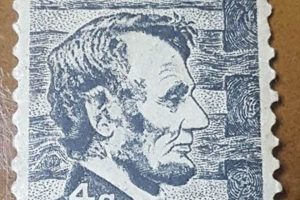
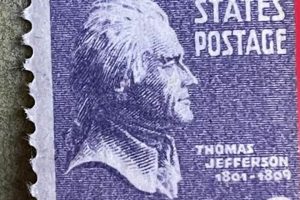
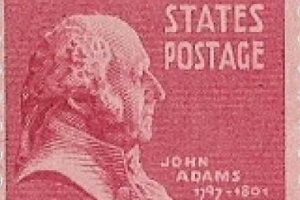
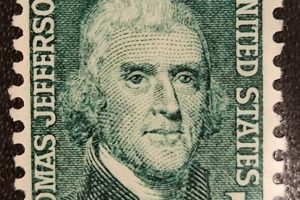
A one-cent postage stamp issued by the United States Postal Service represents the smallest denomination of postage. These stamps have existed since the earliest days of the national postal system, with the first one-cent stamp issued in 1851 featuring Benjamin Franklin. Throughout history, various designs and subjects have graced these small but essential pieces of postal history, including historical figures, national symbols, and commemorative events. An example would be the 1869 issue depicting a profile of Abraham Lincoln.
Low-denomination stamps, particularly the one-cent variety, played a vital role in making mail delivery affordable and accessible to the general public. They were essential for everyday correspondence, newspapers, and circulars, facilitating communication and the dissemination of information across the nation. Studying these stamps offers a glimpse into the evolving visual history of the nation and reflects changing printing techniques and design aesthetics over time. Their historical significance lies in their contribution to the growth and development of the U.S. postal system and their widespread use in daily life.
Further exploration of specific issues, design variations, and their philatelic value can provide a deeper understanding of the rich history and significance embodied within these seemingly small pieces of paper. Examination of printing methods, perforations, and watermarks, along with an overview of notable examples and their associated historical contexts, will offer a comprehensive perspective on these artifacts of American postal history.
Tips for Collecting and Understanding One-Cent U.S. Stamps
Careful consideration of several factors contributes to a more informed and rewarding experience when examining or collecting early United States postage.
Tip 1: Condition Assessment: Condition significantly impacts value. Look for stamps free from tears, creases, thin spots, or fading. Even minor imperfections can detract significantly.
Tip 2: Identifying Variations: Different printings, perforations, and shades exist even within a single issue. Specialized catalogs and online resources provide details on these variations, which can greatly affect a stamp’s value.
Tip 3: Understanding Watermarks: Some stamps possess watermarks, which are faint designs embedded in the paper. Identifying and classifying watermarks requires careful examination under specialized lighting and can be crucial for accurate identification.
Tip 4: Recognizing Cancellations: Postmarks and cancellations offer historical context. Studying these markings can reveal the stamp’s usage and geographic origin.
Tip 5: Proper Storage: Protect stamps from light, humidity, and pests. Archival-quality albums and mounts are recommended for long-term preservation.
Tip 6: Research and Authentication: Thorough research and, when necessary, authentication by reputable experts are crucial for valuable or rare stamps. Consulting philatelic literature or expert opinions ensures accurate identification and assessment.
Tip 7: Joining a Philatelic Society: Connecting with other collectors through philatelic societies offers valuable learning opportunities, access to expertise, and opportunities for trading or purchasing stamps.
By focusing on these key areas, collectors can gain a deeper appreciation for the historical significance and intricacies of one-cent U.S. postage and build a meaningful and potentially valuable collection.
Further exploration of specific examples and in-depth analysis of individual issues will enhance one’s understanding and provide a foundation for continued learning within the field of philately.
1. Denomination

The denomination of a postage stamp, specifically “one cent” in the context of U.S. stamps, is a fundamental aspect that directly relates to its intended purpose and historical context. Understanding the significance of this designation requires exploring its practical implications, historical evolution, and impact on postal communication.
- Postal Functionality
A one-cent denomination signifies the stamp’s value for postal services. It represents the cost required to send a specific weight of mail within a defined distance. Historically, one-cent stamps were primarily used for lightweight items like letters and printed materials. The affordability of this denomination was crucial for widespread postal communication.
- Historical Context
The presence of a one-cent denomination reflects the evolving postal rates and economic conditions of different eras. Changes in printing technology and postal regulations influenced the design and availability of these stamps. For instance, the introduction of pre-paid postage necessitated the creation of standardized denominations, including the one-cent stamp, revolutionizing mail delivery.
- Design and Production
The one-cent denomination often influenced the design choices and production methods of these stamps. Early one-cent stamps frequently featured simpler designs due to cost considerations. As printing techniques advanced, more intricate designs became feasible, even for lower denominations. These designs often reflected national symbols, historical figures, or commemorative events.
- Collectibility
The denomination plays a role in the collectibility of U.S. stamps. While one-cent stamps were produced in large quantities, certain issues or varieties are considered scarce or historically significant, impacting their value among collectors. Factors like condition, printing errors, and historical context contribute to the desirability and potential value of one-cent stamps.
In summary, the “one cent” denomination is more than a simple face value; it offers a window into the history of U.S. postal services, technological advancements, and evolving design aesthetics. Examining this seemingly small detail provides a deeper understanding of the significance and multifaceted nature of these historical artifacts.
2. Issuing Country

The designation “United States” as the issuing country for a one-cent stamp holds significant implications. It establishes the stamp’s legal validity for postage within the U.S. postal system and signifies its connection to American history and iconography. This connection is fundamental to understanding the stamp’s purpose, design, and historical context.
The U.S. government, through the Post Office Department (later the United States Postal Service), exercised exclusive authority over the production and distribution of postage stamps within its borders. This authority ensured the standardization and control of postal fees and facilitated the efficient operation of the national mail system. The “one cent” denomination, as part of a broader system of U.S. postage, reflects the nation’s economic and social landscape at various points in history. Design choices for these stamps, including national symbols, portraits of prominent figures, and depictions of historical events, directly relate to the cultural and political identity of the United States. For example, the 1869 issue featuring Abraham Lincoln reflects his enduring significance in American history. The use of specific production techniques, printing methods, and security measures also tie the stamp to the technological capabilities and administrative practices of the United States during its production period.
Understanding the relationship between the issuing country and the one-cent stamp is crucial for collectors, historians, and anyone interested in postal history. It provides a framework for analyzing the stamp’s authenticity, value, and historical significance. Recognizing the “United States” as the issuing authority allows for accurate identification and placement within the broader context of American philately. This understanding also facilitates informed interpretations of the stamp’s design elements and their connection to American culture and history. Further exploration of specific issues, printing variations, and historical context can enrich one’s appreciation of these small but significant artifacts of American history.
3. Postal Usage

Postal usage forms the core purpose of a one-cent U.S. stamp. Its function as pre-paid postage directly connects it to the mechanics of mail delivery and the evolution of communication networks. Understanding this fundamental role provides insights into the stamp’s historical significance and its place within the broader context of postal history. One-cent stamps facilitated the transmission of lightweight correspondence, newspapers, and periodicals. Their low denomination made them accessible for everyday communication, contributing significantly to the growth of written correspondence and the dissemination of information throughout the 19th and 20th centuries. The affordability of one-cent postage democratized access to mail services, enabling broader participation in social and economic activities. For instance, the widespread use of one-cent stamps supported the burgeoning mail-order catalog industry, connecting rural communities with access to goods and services. Changes in postal rates often necessitated adjustments in the usage of one-cent stamps, sometimes requiring their combination with other denominations to meet revised postage requirements.
The physical evidence of postal usage appears in the form of cancellations and postmarks. These markings document the date and location of a stamp’s use, offering valuable historical data. Studying cancellation types and their evolution provides insights into postal practices and routing systems. Philatelists often analyze cancellations to determine a stamp’s usage history and geographic origin, adding another layer of historical context to the artifact. The clarity and type of cancellation can also influence a stamp’s value within a collection, as pristine or unusual cancellations often command a premium. Furthermore, the study of postal usage can reveal trends in communication patterns and the flow of information during specific historical periods.
In summary, the postal usage of the one-cent U.S. stamp provides a crucial link to its historical function and impact on American society. Examining cancellation markings and understanding the evolving role of these stamps in facilitating communication offer valuable insights for collectors, historians, and anyone interested in the development of postal systems and their influence on communication networks. Research into specific usage patterns and the interplay of different denominations further enhances understanding of the complexities of postal history and the significant contribution of the one-cent stamp.
4. Historical Significance

One-cent United States postage stamps possess significant historical value, extending beyond their basic function as payment for postal services. These small artifacts offer glimpses into evolving printing techniques, design aesthetics, and broader historical narratives. Studying them reveals connections to economic conditions, political climates, and cultural shifts throughout American history. Cause and effect relationships are evident in how changes in postal rates, technological advancements, and national events influenced the design, production, and usage of these stamps. For example, the introduction of new printing methods allowed for more intricate and detailed designs, while wartime exigencies sometimes resulted in material shortages and simpler designs.
The historical significance of one-cent stamps is integral to their value and interest for collectors and historians. Specific examples, such as the 1851 issue featuring Benjamin Franklin, the first one-cent stamp, or the 1869 issue depicting Abraham Lincoln, illustrate their connection to key figures and periods in American history. Analyzing these stamps within their historical context provides insights into the nation’s evolving visual identity and the changing priorities reflected in its postage. Furthermore, the study of printing variations, watermarks, and cancellations provides a deeper understanding of production methods and postal practices throughout different eras.
Understanding the historical significance of these stamps allows for a richer appreciation of their role in American society. This knowledge enhances the value of collections, informs historical research, and contributes to a broader understanding of communication and commerce throughout history. While challenges exist in accurately dating and authenticating certain stamps, the ongoing research and cataloging efforts by philatelic organizations and experts continuously refine our understanding of these historical artifacts. This continuous exploration underscores the enduring value and relevance of one-cent U.S. stamps as windows into the past.
5. Collectible Item

The “collectible item” aspect of a one-cent U.S. stamp transforms this utilitarian object into a historical artifact and potential investment. Several factors contribute to its desirability among collectors. Rarity, driven by limited print runs, production errors, or unique varieties, significantly impacts a stamp’s collectible value. Condition, encompassing factors like centering, color vibrancy, and absence of damage, plays a crucial role in determining market worth. Historical significance, linked to specific events, prominent figures, or important periods, adds another layer of desirability. For example, the 1901 Pan-American Exposition issue, with its inverted center error, became a highly sought-after rarity. The interplay of these factors contributes to market fluctuations, creating a dynamic landscape for collectors. Cause and effect relationships are evident; a limited print run (cause) increases rarity (effect), directly impacting value. Understanding these dynamics is fundamental to navigating the philatelic market.
Practical implications for collectors include the need for careful authentication, proper storage techniques, and informed purchasing decisions. Reputable dealers, auction houses, and philatelic literature provide resources for verifying authenticity and assessing value. Archival-quality materials protect stamps from environmental damage, preserving their condition and value. Market analysis, including tracking auction results and consulting price guides, informs buying and selling strategies. Developing a focused collecting area, specializing in specific periods, designs, or varieties, can enhance the depth and value of a collection. The “collectible item” aspect also fosters a community of enthusiasts, with philatelic societies and online forums providing platforms for sharing knowledge and engaging in the hobby.
In summary, the “collectible item” dimension of the one-cent U.S. stamp adds layers of complexity and intrigue. While challenges exist in navigating market fluctuations and ensuring authenticity, the historical significance, inherent rarity, and tangible connection to the past contribute to the enduring appeal of these small but valuable artifacts. The ongoing research and documentation efforts by philatelic organizations ensure the continued appreciation and preservation of these pieces of American history.
Frequently Asked Questions about One-Cent United States Stamps
This section addresses common inquiries regarding one-cent U.S. postage stamps, providing concise and informative responses.
Question 1: What makes certain one-cent stamps more valuable than others?
Several factors influence value, including rarity (determined by factors like limited print runs or errors), condition (ranging from pristine examples to those with damage), and historical significance (associated with notable events or figures). A combination of these elements determines market value.
Question 2: How can one determine the authenticity of a one-cent stamp?
Authentication often requires expert examination. Reputable philatelic dealers and auction houses offer authentication services. Specialized literature, including stamp catalogs and expert publications, provides detailed information for identifying genuine stamps.
Question 3: What is the best way to store one-cent stamps to prevent damage?
Archival-quality materials are essential. Acid-free albums, stamp mounts, and protective sleeves shield stamps from humidity, light, and other environmental factors that can cause deterioration.
Question 4: Where can one find reliable information on the value of one-cent stamps?
Stamp catalogs, online databases, auction records, and reputable philatelic dealers offer valuable resources for researching current market values. Consulting multiple sources provides a well-rounded understanding of price fluctuations and trends.
Question 5: Are all one-cent stamps printed by the U.S. government considered valid for postage?
Generally, unused U.S. postage stamps remain valid indefinitely for their designated postal value, regardless of their age. However, stamps that have been altered, damaged, or previously used are no longer valid for postage.
Question 6: What are some key resources for learning more about one-cent U.S. stamps?
Philatelic societies, libraries with specialized collections, online forums, and reputable stamp dealers offer valuable resources for expanding knowledge. Engaging with these resources connects individuals with a community of enthusiasts and provides access to expert knowledge.
Careful consideration of these frequently asked questions provides a foundation for informed collecting and a deeper understanding of the historical and philatelic significance of one-cent United States postage stamps.
Further research and engagement with the philatelic community will enhance one’s understanding and appreciation of these fascinating artifacts.
Conclusion
Exploration of one-cent United States postage stamps reveals their multifaceted nature. From their functional role in facilitating affordable communication to their status as collectible items reflecting historical and cultural trends, these small artifacts offer valuable insights. Key aspects examined include the significance of the denomination, the role of the issuing country, the stamps’ postal usage, their historical context, and their appeal to collectors. Analysis of these elements underscores the importance of condition, rarity, and historical context in determining value and collectibility. The interplay of these factors creates a dynamic market for these historical artifacts.
Continued research and exploration promise to further illuminate the rich history and intricate details embedded within these seemingly simple pieces of paper. One-cent United States postage stamps remain a testament to the evolution of communication networks, printing technologies, and the enduring human fascination with history and collecting. Their study offers a tangible connection to the past, fostering an appreciation for the intricate details and historical narratives woven into the fabric of American postal history.