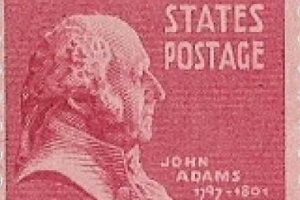
The stamp depicting James Monroe with a face value of five cents represents a specific period in United States postal history. Issued on several occasions with varying designs, these stamps served as a common denomination for everyday mail. A notable example is the 1954 issue featuring a portrait of Monroe based on the painting by Rembrandt Peale.
These stamps offer a glimpse into both philatelic and historical trends. Their changing designs reflect evolving printing techniques and artistic styles. Furthermore, they embody a tangible connection to the legacy of James Monroe, the fifth President of the United States, and his contributions to the nation. Studying these stamps provides insights into postal rate fluctuations and the practicalities of communication during their respective eras. Their presence on letters and packages documents the flow of information and commerce across time.
This exploration will delve into the specific issues, designs, and usage of the five-cent Monroe stamps, providing a detailed account of their place within the broader tapestry of American postal history. Further topics will cover printing methods, notable varieties, and the factors influencing their value to collectors.
Tips for Collecting and Understanding Five-Cent Monroe Stamps
Careful consideration of several factors contributes to a more informed approach to collecting and appreciating these historical artifacts.
Tip 1: Condition Assessment: Condition significantly impacts value. Examine stamps for tears, creases, thin spots, or fading. Prioritize well-centered examples with intact perforations.
Tip 2: Identifying Variations: Different printings and issues exist. Note variations in shades, perforation gauges, and paper types. Specialized catalogs offer detailed information for accurate identification.
Tip 3: Understanding Historical Context: Research the specific period of issue for each stamp. This knowledge adds depth to the appreciation of its design and usage.
Tip 4: Proper Storage: Protect stamps from humidity, light, and pests. Archival-quality albums and mounts are recommended for long-term preservation.
Tip 5: Consulting Experts: Seek advice from experienced philatelists or reputable stamp dealers for authentication and appraisal, particularly for potentially valuable specimens.
Tip 6: Building a Focused Collection: Concentrating on specific issues, such as a particular year or design variation, can provide a more structured and rewarding collecting experience.
Tip 7: Researching Market Value: Regularly consult stamp catalogs, auction records, and dealer listings to understand current market trends and potential investment value.
By following these guidelines, collectors can build a meaningful collection and gain a deeper appreciation for the historical significance embodied in these small pieces of postal history.
This careful examination of the nuances within these stamps provides a foundation for a comprehensive understanding of their place within American philately.
1. Denomination

The “five cents” denomination of the Monroe stamp represents a specific price point within the historical context of United States postal rates. Understanding this denomination provides insight into the intended use and relative value of these stamps during their circulation period. It connects the stamp to the broader economic and social forces influencing postal communication.
- Postal Rate Context
Five cents represented the cost of a standard first-class letter for a specific period. This cost fluctuated over time, influenced by factors like inflation, technological advancements, and changing postal regulations. Knowing the period during which five cents constituted the standard rate provides crucial context for understanding the prevalence and usage of these stamps.
- Relative Value and Purchasing Power
Analyzing the purchasing power of five cents during the stamp’s circulation offers insight into its affordability and accessibility. Comparing this cost to other goods and services of the period illuminates the relative value placed on postal communication. This perspective helps contextualize the volume of mail and the role of these stamps in facilitating correspondence and commerce.
- Relationship to Other Denominations
Examining the five-cent denomination in relation to other available stamp values reveals its specific role within the postal system. Were five-cent stamps primarily used for domestic letters, while higher denominations covered international postage or package delivery? This comparative analysis provides a deeper understanding of the stamp’s function within the broader postal rate structure.
- Impact on Stamp Design and Printing
The denomination sometimes influenced design choices and printing techniques. Higher value stamps often received more elaborate designs or security features to prevent counterfeiting. Analyzing potential correlations between the five-cent denomination and the stamp’s design and production offers insight into the practical considerations behind its creation.
By exploring the “five cents” denomination within these interconnected contexts, a richer understanding of the 5 cent Monroe stamp emerges. This analysis reveals the stamp as not just a postage payment method, but a reflection of broader economic, social, and technological influences shaping communication in its era.
2. Subject
The depiction of James Monroe on the five-cent stamp signifies more than just a portrait; it represents a deliberate choice to commemorate a specific historical figure and his contributions to the United States. Understanding Monroe’s legacy provides crucial context for appreciating the stamp’s significance beyond its postal function.
- Presidency and Political Career
Monroe’s two terms as president, from 1817 to 1825, were marked by significant events, including the acquisition of Florida, the Missouri Compromise, and the formulation of the Monroe Doctrine. The stamp serves as a reminder of his leadership during this era, often referred to as the “Era of Good Feelings,” characterized by national unity and economic prosperity.
- Founding Father and Diplomat
Beyond his presidency, Monroe played a crucial role in the nation’s founding. He served in the Continental Congress, participated in the Virginia Ratifying Convention, and held diplomatic posts in France and Great Britain. The stamp acknowledges his contributions to the early development of the United States and its foreign relations.
- Monroe Doctrine and Foreign Policy
The Monroe Doctrine, articulated in 1823, declared the Americas closed to further European colonization and intervention. This policy had a profound impact on the Western Hemisphere’s geopolitical landscape and continues to resonate in international relations. The stamp, by featuring Monroe, implicitly references this significant aspect of his legacy.
- Symbol of National Unity and Expansion
Monroe’s presidency coincided with a period of westward expansion and national growth. His image on the stamp can be interpreted as a symbol of this era, representing the burgeoning nation and its aspirations. The stamp’s circulation across the country further reinforced this message of national unity.
By featuring James Monroe, the five-cent stamp transcends its purely postal function and becomes a vehicle for commemorating a pivotal figure in American history. The stamp serves as a tangible reminder of Monroe’s contributions to the nation’s political development, foreign policy, and westward expansion, offering a glimpse into a formative period in the United States’ history. This connection between subject and stamp elevates the object from a simple postage marker to a miniature historical artifact.
3. Type
The classification “Postage stamp” designates the 5 cent Monroe stamp’s fundamental purpose and function within a postal system. This seemingly simple categorization carries significant implications for understanding the stamp’s historical context, production methods, and usage within communication networks.
Facilitating Postal Operations: Postage stamps, including the 5 cent Monroe stamp, represent prepayment for postal services. Their presence on a mailpiece signifies that the sender has covered the cost of delivery. This system streamlines postal operations by eliminating the need for individual cash transactions at each point of handling. The 5 cent denomination specifically covered a particular service level, likely a standard first-class letter within a defined weight limit and distance. Stamps enabled efficient processing and delivery of large mail volumes, crucial for a functioning society and economy.
Evidence of Communication Networks: The 5 cent Monroe stamp, as a postage stamp, serves as tangible evidence of communication networks during its period of use. Its presence on historical letters and documents provides insights into the flow of information, personal correspondence, and commercial transactions. The volume of mail bearing these stamps reflects the extent and reach of postal services during that era. Studying postal usage patterns through these stamps can reveal social and economic trends, such as literacy rates, business activity, and migration patterns. The stamp acts as a historical marker within these communication flows.
Subject to Postal Regulations: As a “Postage stamp,” the 5 cent Monroe issue adhered to specific postal regulations governing design, size, perforation, and gumming. These regulations ensured uniformity and facilitated automated processing. Deviations from these standards, whether intentional or accidental, create variations that are of interest to philatelists. Understanding these regulations aids in identifying genuine stamps and recognizing potentially valuable varieties. The stamp’s adherence to these rules reflects the standardization inherent within postal systems.
In summary, the classification “Postage stamp” provides crucial context for understanding the 5 cent Monroe stamp. It illuminates the stamp’s role in facilitating postal operations, its significance as evidence of communication networks, and its adherence to specific postal regulations. Recognizing these interconnected aspects enhances appreciation for the stamp’s historical and philatelic importance. Further exploration into specific printing methods, postal rates, and design variations deepens this understanding and provides a pathway for more specialized research.
4. Usage
The “5 cent Monroe stamp” played a defined role within the broader context of postal communication. Its usage reflects specific historical periods and the evolving practices of sending and receiving mail. Analyzing this usage provides valuable insights into communication patterns, social trends, and the stamp’s practical function within the postal system.
Period of Validity: Each issue of the 5 cent Monroe stamp possessed a specific period of validity during which it served as legitimate postage. Understanding these periods helps determine the timeframe of letters and documents bearing these stamps. This chronological context aids historical research and provides clues about the communication being conveyed. For instance, a letter with a 1954 5 cent Monroe stamp reveals its mailing date as post-1954. This seemingly simple detail contributes significantly to historical accuracy and contextualization.
Intended Purpose: The 5 cent denomination likely corresponded to a specific postal rate, typically for standard domestic letters. This intended purpose sheds light on the volume and type of mail conveyed using these stamps. Were they primarily employed for personal correspondence, business communications, or official documents? Examining the content of mail bearing these stamps reveals communication trends and the stamp’s role in facilitating various types of correspondence.
Geographic Reach: The 5 cent Monroe stamp, as part of the U.S. postal system, facilitated communication across the nation and internationally. Analyzing postal markings and addresses on mail bearing these stamps helps reconstruct communication routes and networks. Did letters primarily travel within local communities, between states, or across international borders? This geographical analysis adds another layer to understanding the stamp’s role in connecting individuals and communities.
In summary, the “Usage: Postal communication” aspect of the 5 cent Monroe stamp offers a window into historical communication practices. By analyzing the period of validity, intended purpose, and geographic reach, researchers and collectors gain valuable insights into the stamp’s practical function and its broader historical significance. This understanding enhances appreciation for the stamp as not merely a piece of paper but a tangible artifact representing communication networks and social interactions of its time. Further investigation into postal rates, cancellation markings, and mail volume provides a deeper understanding of the stamp’s role within the historical context of postal communication.
5. Variations

Variations in design and issue date significantly impact the collectibility and historical context of the 5 cent Monroe stamp. These variations, often subtle, provide a rich tapestry of information for philatelists and historians alike, offering insights into printing processes, postal regulations, and evolving aesthetic trends. Understanding these nuances is crucial for accurate identification and valuation.
- Design Modifications
Design modifications encompass alterations in the stamp’s artwork, typography, and overall layout. These changes may reflect updated printing techniques, commemorative events, or adjustments to postal regulations. For example, a shift from engraved printing to lithography might result in noticeable differences in line sharpness and detail. The portrait of Monroe itself may vary based on the source artwork used, with subtle differences in pose, expression, or framing. These design elements contribute significantly to a stamp’s visual appeal and historical context.
- Issue Date Distinctions
The issue date of a stamp pinpoints its entry into circulation and establishes its historical context. Different issue dates often correspond to distinct design variations, allowing collectors to categorize and identify specific versions. A 5 cent Monroe stamp issued in 1938 will differ from one issued in 1954, reflecting evolving design aesthetics and printing technologies. Knowing the issue date is crucial for understanding the stamp’s intended usage period and its relationship to contemporary historical events.
- Perforation Varieties
Perforations, the small holes surrounding the stamp, facilitate separation from a sheet. Variations in perforation gauge (the number of perforations per two centimeters) and pattern can distinguish different printings and impact a stamp’s value. Changes in perforation methods often correlate with specific issue dates and printing locations, providing valuable clues for identification. Collectors often scrutinize perforations carefully, as they can be a key factor in determining a stamp’s rarity and authenticity.
- Paper and Watermark Differences
The type of paper used and the presence or absence of a watermark further differentiate stamp variations. Paper characteristics, such as thickness, texture, and color, can change over time and between print runs. Watermarks, embedded designs visible when held against light, serve as security features and can vary between issues. These seemingly minor details provide crucial evidence for distinguishing between different printings and assessing a stamp’s value. Philatelists often employ specialized tools and techniques to analyze paper and watermark characteristics.
The interplay of design, issue date, perforation, and paper characteristics creates a complex and fascinating area of study within philately. These variations transform the 5 cent Monroe stamp from a simple postage item into a historical artifact reflecting evolving printing technologies, postal practices, and artistic trends. Careful attention to these details allows collectors and researchers to build a comprehensive understanding of the stamp’s historical context and appreciate its nuanced variations.
6. Collectibility
Collectibility significantly elevates the 5 cent Monroe stamp from a simple postage item to a sought-after historical artifact. Condition and rarity, intertwined factors, heavily influence a stamp’s desirability and market value. A pristine, well-centered stamp commands a higher price than a damaged or poorly centered example. Rarity, determined by factors like limited print runs, specific plate flaws, or unique postal markings, further amplifies value. The intersection of these elements dictates a stamp’s placement within the philatelic hierarchy.
Consider a 5 cent Monroe stamp issued in 1954. An example with a minor crease or tear might be relatively common and affordable. However, an impeccably preserved example from the same issue, particularly one with a rare perforation error or a unique cancellation mark, could be significantly more valuable. Another example lies in the various printings throughout history. Certain printings might have been smaller or exhibit distinct color variations due to ink inconsistencies, increasing their rarity and desirability among collectors. This inherent variability introduces an element of scarcity, driving demand within the philatelic market.
Understanding the interplay of condition and rarity is essential for collectors seeking to build valuable collections and for anyone interested in the historical significance of these stamps. Condition assessment requires careful examination for flaws, while rarity determination necessitates specialized knowledge of printing variations, postal history, and philatelic catalogs. This nuanced understanding transforms the act of collecting into a pursuit of historical knowledge and a potential investment strategy. The challenges lie in accurately assessing these factors and navigating a market influenced by both objective characteristics and subjective collector preferences. Ultimately, the collectibility of the 5 cent Monroe stamp, driven by its condition and rarity, solidifies its position as a tangible piece of American postal history.
Frequently Asked Questions
This section addresses common inquiries regarding the five-cent James Monroe postage stamps, providing concise and informative responses.
Question 1: How can one differentiate between the various printings and issues of the five-cent Monroe stamp?
Specialized stamp catalogs provide detailed information on design variations, perforation gauges, and paper types, enabling accurate identification. Consulting with experienced philatelists can also assist in distinguishing between different printings.
Question 2: What factors most significantly influence the value of a five-cent Monroe stamp?
Condition and rarity are primary determinants of value. Well-preserved, centered stamps with intact perforations command higher prices. Rarity stems from factors like limited print runs, specific plate flaws, or unique cancellations.
Question 3: Where can one find reliable resources for determining the current market value of these stamps?
Reputable stamp catalogs, auction records, and online dealer listings offer insights into current market trends and estimated values. Consulting with established stamp dealers can provide professional appraisals.
Question 4: What are the recommended methods for preserving five-cent Monroe stamps in optimal condition?
Archival-quality albums and mounts protect stamps from humidity, light, and pests. Avoid handling stamps directly; use stamp tongs to minimize the risk of damage.
Question 5: Are there any notable errors or varieties associated with the five-cent Monroe stamp that collectors particularly seek?
Specific perforation shifts, color variations, and double prints are among the sought-after errors and varieties. Specialized philatelic literature documents these variations, guiding collectors in their identification.
Question 6: Beyond their face value, what historical significance do these stamps hold?
These stamps provide tangible connections to James Monroe’s presidency and the historical period they represent. They offer insights into postal rates, printing technologies, and communication practices of their respective eras.
Understanding these aspects contributes to a more informed appreciation of five-cent Monroe stamps within philatelic pursuits and historical research.
This FAQ section provides a foundation for further exploration of specialized areas within stamp collecting and postal history.
Conclusion
The five-cent Monroe stamp, seemingly a small, utilitarian object, embodies a wealth of historical and cultural significance. This exploration has delved into its various facets, from its denomination reflecting postal rates to the historical context surrounding James Monroe’s presidency. Design variations, issue dates, and the nuances of collectibility based on condition and rarity further enrich the stamp’s story. Understanding these elements transforms the stamp from a mere postage marker to a tangible artifact representing a specific period in American history.
Further research into specific printing processes, postal routes, and the societal impact of communication during the relevant periods can provide a deeper appreciation for the five-cent Monroe stamp’s place within the broader narrative of American history. This exploration serves as a starting point for continued investigation and encourages a renewed perspective on the historical value embedded within these seemingly unassuming pieces of postal history. Their continued study offers valuable insights into the past and underscores the importance of preserving these small yet significant remnants of communication and commerce.