



The 1847usa Identifier Country Volume Index is a practical starting point for stamp collectors who need to connect an unfamiliar country name with the appropriate volume of a worldwide stamp catalog. Instead of guessing where an issuer belongs, collectors can use a country-volume index to narrow the search, then examine the stamp’s inscription, design, date, denomination, and other identifying features. That distinction matters: the index helps you find the right catalog location; it does not, by itself, authenticate a stamp or establish its market value.
Whether you have inherited an album, purchased a mixed box of stamps, or are organizing a worldwide collection, understanding how this reference fits into the identification process can save considerable time. This guide explains how to use the index, interpret challenging country names, cross-check catalog entries, and avoid common mistakes.
What Is the 1847usa Identifier Country Volume Index?
The 1847usa Identifier Country Volume Index is associated with the stamp-identification resources on 1847usa, a website focused on postage stamps and collecting. In practical terms, a country-volume index functions as a navigation aid: it points collectors toward the catalog volume or section where a country or issuing entity is listed.
Worldwide stamp catalogs divide thousands of issuing entities across multiple books or digital sections. These include present-day countries, former states, colonies, occupation authorities, and other postal administrations. A collector searching for a stamp marked with an unfamiliar inscription may first need to identify the issuer, then locate that issuer in the appropriate catalog.
Catalog organization and volume boundaries can change between editions. For that reason, treat any country-volume reference as a starting point and verify it against the table of contents in the specific catalog edition you own or use.
How the Index Fits Into Stamp Identification
A country-volume index is most useful after you have found a possible issuer but before you begin comparing individual catalog listings. It reduces the number of pages you need to search, especially when working with a large worldwide catalog set.
- Inspect the stamp: Look for a country name, abbreviation, currency, portrait, date, or postal inscription.
- Identify a likely issuer: Compare the wording with a stamp identifier or country-name reference.
- Consult the country-volume index: Find where that issuer is listed in the relevant catalog system.
- Check the catalog: Compare the stamp with illustrations, issue dates, denominations, and descriptions.
- Confirm distinguishing details: Examine perforations, watermark, color, printing method, and overprints when necessary.
This sequence is more reliable than searching only by image. Many stamps share similar portraits or themes, while visually similar examples can belong to different printings or have substantially different catalog listings.
Reading Country Names on Stamps
The most obvious clue is often the inscription, but it may not match the English name of the country. Stamps can display a local-language name, an abbreviation, a historical name, or the name of a territory that no longer issues stamps independently.
| Inscription or clue | Likely identification | What to check next |
| Helvetia | Switzerland | Denomination, design, and issue period |
| Nippon | Japan | Characters, currency, and design details |
| Magyar Posta | Hungary | Issue date and denomination |
| Suomi or Finland | Finland | Printing and perforation details |
| Correos | Spanish word for postal services | Additional country name, currency, or emblem |
| Portrait without a country name | Possibly Great Britain | Confirm the monarch, denomination, and design |
These clues are useful but not conclusive. For example, “Correos” appears on stamps from more than one Spanish-speaking country. Likewise, a portrait alone does not prove that a stamp is British. Use several features together before selecting a catalog section.
Why Great Britain Is a Special Case
Great Britain is traditionally associated with stamps that omit the country name, reflecting its role in issuing the first adhesive postage stamp in 1840. A monarch’s image can be a strong clue, but other countries and territories have also depicted British monarchs. Check for additional wording and compare the design with a reliable catalog illustration.
Finding Former Countries, Colonies, and Territories
Historical stamps often require a different search strategy from modern issues. Borders and postal administrations change, so the name printed on a stamp may refer to a former country, an overseas possession, or a short-lived authority rather than a current nation.
Start with the inscription as printed, even if the place has since been renamed. If it does not appear where expected, check related entries for the administering country, predecessor state, successor country, or geographic territory. Catalogs do not all group these entities in the same way.
- Former country names: Search the historical name before assuming the stamp appears under its modern equivalent.
- Colonial issues: Look for both the territory name and the name of the administering power.
- Occupation issues: Inspect overprints and inscriptions indicating the occupying authority.
- Regional postal administrations: Determine whether the issuing area has its own listing or is grouped within a broader country section.
An index can direct you to a plausible volume, but the catalog’s own cross-references are essential when an issuer has changed names or political status. Record both the stamp’s wording and the catalog heading so you can retrace your identification later.
Choosing the Right Stamp Catalog
A country-volume index is only useful when you understand which catalog system and edition it corresponds to. Collectors commonly consult worldwide catalogs such as the Scott Standard Postage Stamp Catalogue, while other established references include Stanley Gibbons, Michel, and Yvert & Tellier. These publishers use different numbering systems, editorial conventions, languages, and volume arrangements.
| Reference choice | Potential advantage | Important consideration |
| Worldwide catalog | Broad coverage across many issuers | Specialized varieties may receive less detail |
| Specialized national catalog | Deeper coverage of one country or area | Less useful for sorting an unidentified worldwide mixture |
| Online identifier | Fast access to inscriptions and visual clues | Listings and image quality vary; verify important identifications |
| Printed catalog set | Structured entries and consistent browsing | Check the edition and volume arrangement |

Do not transfer a catalog number from one publisher to another as though the systems were interchangeable. When recording an identification, note the publisher, catalog number, and edition. If you use a country-volume index, check that its organization matches your catalog set.
Practical Workflow for Sorting a Worldwide Collection
A systematic approach works better than attempting to identify every stamp completely before moving to the next. First separate easily recognized issuers; then concentrate on difficult inscriptions and varieties.
- Sort by visible wording. Group stamps with the same country name or recurring inscription.
- Separate uncertain examples. Keep stamps with unreadable text, missing corners, or unfamiliar scripts in a research group.
- Use issuer clues. Compare currency, flags, coats of arms, portraits, and postal terms alongside the inscription.
- Locate the catalog section. Use the 1847usa country-volume reference and verify the result in your edition.
- Match the basic issue. Find a design with the correct denomination and approximate period.
- Investigate variants. Check characteristics that distinguish similar catalog entries.
- Document the result. Record the issuer, issue date, catalog reference, condition, and any unresolved questions.
Handle stamps with stamp tongs rather than bare fingers, and use a magnifier under good light. Keep examples on clean stock pages or in labeled glassine envelopes while you work. This protects the material and prevents unidentified stamps from becoming mixed again.
Advanced Checks: Beyond the Country and Design
Finding the right country is only the first stage. Two stamps that look almost identical can differ in ways that affect their catalog classification. An advanced collector should compare the physical stamp with the descriptive notes, not just the illustration.

Perforations and Watermarks
A perforation gauge measures the spacing of the holes or teeth along a stamp’s edges. Some issues exist with different perforation measurements, including combinations where the horizontal and vertical edges differ. Measure carefully and compare the result with the catalog entry.
A watermark is a design in the paper that can distinguish otherwise similar stamps. Watermark detection requires appropriate tools and techniques; consult conservation guidance and the product instructions before using any fluid. Avoid experimenting on valuable or fragile stamps.
Overprints, Surcharges, and Paper
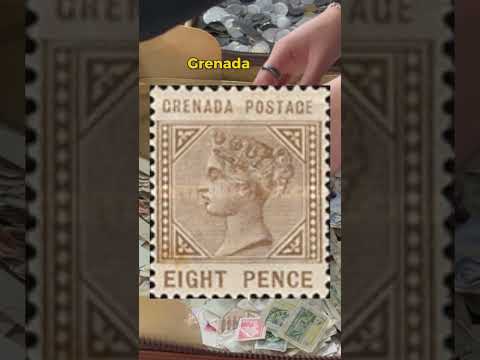
An overprint is additional text or a design applied to an existing stamp. A surcharge is an overprint that changes the face value. Both can identify a new issuer or postal use, but they can also be forged or altered. Paper type, gum, printing method, and shade may matter as well.
If a potentially valuable identification depends on a subtle feature, consult a specialist society, experienced dealer, or recognized expertizing service. A catalog match is an informed attribution, not proof of authenticity.
Common Mistakes When Using a Country Volume Index
- Assuming the index is a valuation tool: It points toward catalog locations; it does not assess condition, demand, or authenticity.
- Using the wrong edition: A volume reference may not match a differently organized or newer catalog set.
- Relying on a single word: General postal terms can appear across several countries.
- Ignoring historical context: A stamp may be listed under a former territory rather than a modern country.
- Stopping at the first visual match: Perforation, watermark, overprint, or printing differences can change the identification.
- Confusing catalog value with a sale price: Actual prices depend on condition, authenticity, demand, and the circumstances of sale.
For difficult stamps, write down competing possibilities rather than forcing an immediate answer. A note such as “issuer likely identified; watermark not checked” is more useful than an unsupported catalog number.
How to Evaluate a Stamp After Identification
Once you have located a likely catalog entry, assess condition separately. Look for tears, thin spots, creases, missing perforations, staining, repairs, and the quality of any cancellation. For unused stamps, gum condition can also matter. Centering and freshness may affect desirability, although their importance varies by issue and market.
Use catalog values as reference points, not guaranteed selling prices. For a more realistic view, compare recent completed sales of genuinely comparable stamps and consider whether expert certification is expected. A rare-looking stamp with a forged overprint, for example, should not be valued as an authenticated example.
Conclusion
The 1847usa Identifier Country Volume Index is most valuable as part of a broader research workflow: identify the likely issuer, locate the relevant catalog section, and verify the individual stamp’s details. Used carefully, it can make worldwide stamp identification faster without replacing the judgment required for historical names, specialist varieties, condition, and authenticity. Keep your catalog edition in mind, document uncertain findings, and seek expert help when a significant attribution depends on fine details.
Frequently Asked Questions
How do I use the 1847usa country volume index to identify a stamp?
Begin with the inscription or another issuer clue on the stamp. Use an identifier to establish a likely country, consult the index for the relevant catalog location, and then compare the stamp with the catalog’s illustrations and descriptions. Confirm that the index matches your catalog system and edition.
Can the 1847usa stamp identifier tell me what my stamp is worth?
An identifier can help you reach a catalog listing, but it cannot independently determine market value. Condition, authenticity, scarcity, demand, and comparable sales all matter. Valuable-looking stamps may require specialist examination.
What if the country name on my stamp is not in English?
Search the inscription exactly as printed and consider local-language names, abbreviations, and older spellings. For example, Helvetia commonly identifies Switzerland and Magyar Posta points toward Hungary. Confirm the attribution using the design and denomination.
Where should I look for stamps from countries that no longer exist?
Start with the historical name printed on the stamp. If necessary, check the catalog’s cross-references for related territories, administering powers, and successor states. The correct placement depends on the catalog’s editorial arrangement.
Why does my stamp match a catalog picture but have a different number?
Similar designs may have separate listings because of different denominations, perforations, watermarks, paper, overprints, or printing methods. Catalog publishers also use different numbering systems. Check the descriptive details and confirm which catalog produced the number.
