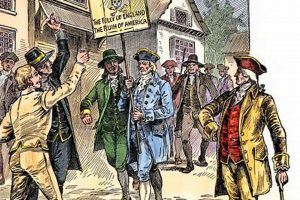
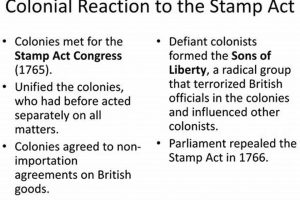
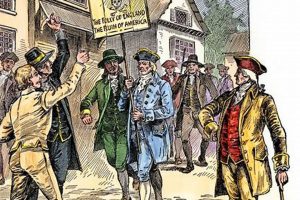
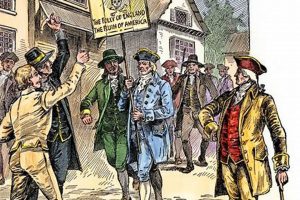
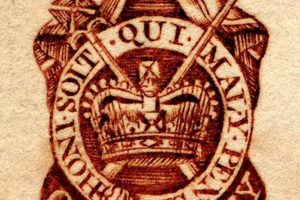
Visual satires produced during the mid-18th century frequently targeted British taxation policies levied upon American colonists. These images, often etched onto woodcuts and then broadly circulated, served as potent tools of protest against measures like the 1765 Stamp Act. A common example depicts a skull and crossbones stamped onto a document, symbolizing the perceived deadly nature of the tax.
These illustrations provided a readily accessible form of commentary for a public with varying levels of literacy. They galvanized colonial resistance by vividly portraying the grievances felt towards the Crown, contributing significantly to the growing discontent that ultimately fueled the American Revolution. Their simplistic, yet powerful imagery proved remarkably effective in disseminating anti-British sentiment and fostering a sense of shared identity among colonists. They serve as invaluable primary source documents for understanding the social and political climate of the era.
This exploration will delve further into specific examples of these historical artifacts, analyzing their symbolism and dissecting their impact on the revolutionary movement.
Understanding 18th-Century Political Satire
Examining satirical engravings from the period surrounding the Stamp Act offers valuable insights into colonial American perspectives. The following tips provide guidance for interpreting these historical images effectively.
Tip 1: Consider the historical context. Research the specific events and legislation, such as the Stamp Act itself, that prompted the creation of the cartoon. Understanding the political climate helps decipher the artist’s intent.
Tip 2: Analyze the symbolism. Identify key symbols like the skull and crossbones, Britannia, or representations of colonial figures. Deconstruct their meaning within the context of the cartoon.
Tip 3: Examine the intended audience. Consider who the cartoon was created for and how its message might have resonated with colonial Americans. Was it aimed at the elite, or a broader audience?
Tip 4: Evaluate the artistic style. Observe the use of caricature, exaggeration, and other artistic techniques employed to convey the message. These stylistic choices often enhance the satirical impact.
Tip 5: Compare and contrast different cartoons. Examining multiple examples allows one to identify recurring themes and motifs, providing a deeper understanding of the collective colonial response to British policies.
Tip 6: Consult scholarly resources. Academic articles and books offer expert analysis of these historical artifacts, providing valuable context and interpretations.
By carefully considering these elements, one gains a deeper appreciation for the power of visual satire as a tool of political protest during the American Revolution. These images offer a unique window into the past, illuminating the anxieties and aspirations of a nation on the brink of independence.
This analysis provides a foundation for further exploration of the Stamp Act and its repercussions, leading to a more comprehensive understanding of the era.
1. Satire

Satire played a crucial role in disseminating anti-British sentiment during the Stamp Act crisis. These cartoons employed humor, irony, and exaggeration to critique British policies and mobilize colonial resistance. Understanding the satirical elements within these visual protests provides critical insight into the political and social climate of the pre-revolutionary era.
- Exaggeration and Caricature
Caricatures of British officials, often depicting them as physically grotesque or foolish, served to undermine their authority and expose their perceived greed. Exaggerated depictions of the impact of the Stamp Act, such as scenes of economic ruin or oppression, aimed to evoke strong emotional responses from colonists and galvanize opposition.
- Irony and Sarcasm
Irony was frequently employed to highlight the hypocrisy of British policies. Cartoons might depict British officials claiming to be acting in the colonists’ best interests while simultaneously imposing burdensome taxes. This satirical approach exposed the disconnect between British rhetoric and actions.
- Symbolism and Allegory
Symbolic imagery, such as the “Liberty Tree” or depictions of Britannia as a tyrannical figure, conveyed complex political messages in a readily accessible format. These symbols resonated with colonists and fostered a sense of shared identity and resistance.
- Humor and Ridicule
Humor played a key role in making these political messages palatable and shareable. By ridiculing British policies and officials, cartoons made complex political arguments accessible to a wider audience and fostered a sense of solidarity among colonists.
By examining the interplay of these satirical elements, one gains a deeper understanding of how these cartoons functioned as powerful tools of protest and contributed to the growing unrest that culminated in the American Revolution. They offer a unique lens through which to examine the complex relationship between Britain and its American colonies in the years leading up to independence.
2. Visual Rhetoric

Visual rhetoric played a critical role in shaping public opinion during the Stamp Act crisis. These cartoons, circulated widely throughout the colonies, employed specific visual strategies to convey powerful messages about British policies and their impact on colonial life. Understanding this visual rhetoric is essential for interpreting the political and social climate of the pre-revolutionary era. For example, the depiction of a stamp as a skull and crossbones immediately communicated the perceived “deadly” nature of the tax, bypassing the need for lengthy written explanations.
The strategic use of symbols, allegory, and caricature proved highly effective in mobilizing colonial resistance. Representations of Britannia as a tyrannical figure, or of colonists as burdened and oppressed, fostered a sense of shared identity and grievance. These visual elements resonated with a broad audience, including those who may have been less literate, contributing significantly to the growing anti-British sentiment. Another example is the portrayal of snakes, symbolizing hidden dangers and treachery, often used to represent the Stamp Act itself or British officials. These easily understood symbols amplified the message of resistance and helped solidify colonial opposition.
Analyzing the visual rhetoric employed in Stamp Act cartoons provides valuable insight into the power of images to shape public discourse and influence political action. These visual protests served not only as expressions of discontent but also as powerful tools for mobilizing resistance and fostering a sense of collective identity among colonists. Recognizing the specific rhetorical strategies used in these cartoons deepens our understanding of the events leading up to the American Revolution. Studying these images illuminates the complex ways visual communication can be utilized to express political dissent and ultimately contribute to social and political change.
3. Colonial Resistance

Colonial resistance to the Stamp Act of 1765 found a potent voice in political cartoons. These engravings, often circulated through newspapers and pamphlets, served as vital tools for disseminating anti-British sentiment and mobilizing opposition. The Act, which imposed a tax on printed materials, directly impacted the dissemination of information, making these visual protests particularly poignant. Cartoons depicting the oppressive nature of the tax, often using symbolic imagery such as skulls and crossbones or coffins, fueled public outrage and contributed to the growing resistance movement. For instance, a cartoon depicting a skeleton representing the Stamp Act, hovering over a cradle, effectively conveyed the perceived threat to colonial prosperity and liberty. This visual representation resonated deeply with colonists, galvanizing support for boycotts and protests against British policies.
The accessibility of these cartoons, compared to written pamphlets or speeches, broadened the reach of revolutionary ideas. Visuals transcended literacy barriers, communicating complex political messages to a wider audience. This widespread dissemination of dissent played a crucial role in unifying the colonies against British rule. Cartoons often portrayed colonists as united against a common enemy, fostering a sense of collective identity and shared purpose. Examples include depictions of colonists from various regions joining hands or participating in collective acts of defiance. This visual reinforcement of unity proved invaluable in solidifying colonial resistance and laying the groundwork for future collective action.
Examining the interplay between these cartoons and the burgeoning resistance movement reveals the power of visual rhetoric in shaping public opinion and influencing political action. These satirical engravings serve as primary source documents, offering valuable insights into the social and political climate of the pre-revolutionary era. Understanding the role these cartoons played in fostering colonial resistance provides a deeper appreciation for the complexities of the American Revolution and the diverse forms of protest that ultimately led to independence. The fusion of art and political commentary, as demonstrated by these cartoons, proved instrumental in transforming public sentiment and igniting the flames of revolution.
4. British Policies

British policies enacted in the mid-18th century significantly impacted the American colonies and directly influenced the creation of Stamp Act political cartoons. These cartoons served as a powerful form of protest against specific legislation perceived as oppressive and unjust by colonists. Understanding the context of these policies is crucial for interpreting the satirical messages conveyed in the cartoons.
- The Stamp Act of 1765
This act, requiring the purchase of stamps for various printed materials, including legal documents, newspapers, and playing cards, became a focal point of colonial resistance. The tax was viewed as a direct violation of colonial rights and sparked widespread protests, boycotts, and the creation of numerous satirical cartoons. These cartoons often depicted the stamp as a skull and crossbones, symbolizing its perceived detrimental impact on colonial life and liberty.
- Mercantilism
The prevailing economic policy of mercantilism, which aimed to enrich the British Empire at the expense of the colonies, fueled colonial resentment. Cartoons often depicted Britain as a greedy and exploitative power, draining resources from the colonies for its own benefit. This underlying economic tension exacerbated the negative reaction to the Stamp Act and other revenue-raising measures. The cartoons often personified Britain as a gluttonous figure, consuming colonial wealth.
- Taxation Without Representation
The cry of “No taxation without representation” encapsulated the colonial grievance of being subjected to taxes imposed by a Parliament in which they had no voice. Cartoons frequently highlighted this injustice, depicting colonists as burdened by unfair taxes levied by a distant and unrepresentative government. Images of colonists forced to carry heavy loads symbolizing taxes underscored this central point of contention.
- Restrictions on Colonial Trade and Manufacturing
British policies aimed at controlling colonial trade and limiting manufacturing, such as the Navigation Acts, further fueled colonial discontent. These restrictions hampered economic growth in the colonies and were seen as another example of British exploitation. Cartoons sometimes depicted these policies as chains binding the colonial economy, further emphasizing the sense of oppression and fueling calls for greater autonomy.
By examining these policies in conjunction with the satirical messages conveyed in Stamp Act cartoons, a clearer understanding emerges of the complex political and economic factors that propelled the colonies toward revolution. The cartoons provide invaluable primary source evidence of the colonial perspective and the depth of resentment towards British rule. They serve as a powerful reminder of the role of visual rhetoric in shaping public opinion and mobilizing political action during this pivotal period in American history.
5. Historical Context

Understanding the historical context surrounding the Stamp Act is crucial for interpreting the political cartoons produced during that era. These cartoons functioned as more than mere satirical expressions; they served as powerful tools of protest and political commentary, reflecting the complex social, economic, and political tensions between Great Britain and its American colonies. Analyzing these cartoons without appreciating the historical context diminishes their significance and impact.
- Pre-Revolutionary Tensions
The Stamp Act was not an isolated incident but rather a culmination of growing tensions between the colonies and Britain. Earlier disputes over issues like trade regulations and colonial autonomy had already laid the groundwork for resistance. The cartoons, therefore, reflected pre-existing grievances and anxieties, serving as a visual manifestation of the escalating conflict. They often depicted British officials as tyrannical and oppressive, building upon existing resentment towards British rule.
- Economic Grievances
The Stamp Act, as a direct tax on the colonies, exacerbated existing economic anxieties. Colonists felt exploited by British mercantilist policies that prioritized the economic interests of the mother country. Cartoons often depicted the economic burden imposed by the Stamp Act, visualizing the financial strain and fueling public anger against British economic policies. Images of colonists being forced to pay exorbitant taxes or struggling under the weight of British economic control were common themes.
- Political Representation
The lack of direct representation in the British Parliament further fueled colonial discontent. The cry of “No taxation without representation” resonated deeply, and cartoons frequently depicted the injustice of being taxed by a government in which colonists had no voice. These images underscored the fundamental political disagreement at the heart of the conflict and helped solidify colonial opposition to British rule. Some cartoons portrayed colonists as voiceless or excluded from political processes.
- The Role of Propaganda
Stamp Act cartoons served as a powerful form of propaganda, disseminating anti-British sentiment and mobilizing resistance. They were readily accessible and easily understood, bypassing literacy barriers and reaching a broad audience. These visual messages contributed significantly to shaping public opinion and galvanizing support for the growing revolutionary movement. The simplicity and emotional impact of the imagery made these cartoons effective tools for swaying public sentiment against British policies.
By considering these interwoven historical factors, the significance of Stamp Act political cartoons becomes clear. They offer valuable insights into the political climate of the pre-revolutionary era, reflecting not only specific grievances related to the Stamp Act but also deeper anxieties about colonial autonomy, economic exploitation, and political representation. These cartoons served as both a reflection of and a catalyst for the growing unrest that ultimately led to the American Revolution, demonstrating the potent influence of visual rhetoric in shaping historical events.
Frequently Asked Questions about Stamp Act Political Cartoons
This section addresses common inquiries regarding the significance and interpretation of political cartoons produced during the Stamp Act era.
Question 1: Why are Stamp Act political cartoons considered important historical artifacts?
These cartoons offer valuable insights into colonial perspectives on British policies and the growing discontent that fueled the American Revolution. They serve as primary source documents, providing visual evidence of the social and political climate of the time.
Question 2: How did these cartoons contribute to colonial resistance?
By employing satire, symbolism, and readily understandable imagery, these cartoons effectively communicated complex political messages to a broad audience, mobilizing opposition to British policies and fostering a sense of shared identity among colonists.
Question 3: What common symbols and themes are found in these cartoons?
Recurring symbols include skulls and crossbones (representing the perceived “deadly” nature of the tax), Liberty Trees, Britannia (often depicted as tyrannical), and snakes (symbolizing hidden dangers). Common themes include taxation without representation, British oppression, and the importance of colonial unity.
Question 4: How were these cartoons disseminated throughout the colonies?
These images were often printed on broadsides, newspapers, and pamphlets, circulated through taverns, coffee houses, and other public spaces. This wide distribution ensured that the messages reached a diverse audience, contributing to the growth of resistance.
Question 5: How can one effectively analyze and interpret these cartoons?
Effective analysis requires understanding the historical context surrounding the Stamp Act, including British policies, colonial grievances, and pre-revolutionary tensions. Careful examination of the symbolism, artistic style, and intended audience is also essential.
Question 6: Where can one find examples of Stamp Act political cartoons for further study?
Numerous digital archives and library collections hold examples of these historical artifacts. Reputable historical societies, museums, and academic institutions offer curated online exhibits and databases providing access to these important primary sources.
Understanding the historical context, symbolism, and distribution of these cartoons is crucial for appreciating their significance in the lead-up to the American Revolution. These seemingly simple images served as powerful tools of protest, contributing significantly to the growing movement for independence.
Further exploration of primary and secondary sources offers a deeper understanding of the Stamp Act’s impact and the role of political satire in shaping historical events.
Conclusion
Engravings created in response to the 1765 Stamp Act offer invaluable insights into the political climate of pre-Revolutionary America. These visual artifacts served as powerful tools of protest, disseminating anti-British sentiment and mobilizing colonial resistance. Analysis of their symbolism, coupled with an understanding of the historical context, reveals the depth of colonial anxieties regarding taxation without representation, economic exploitation, and limitations on liberty. These images functioned as more than mere satirical commentary; they actively shaped public opinion and contributed to the growing unrest that ultimately culminated in the American Revolution. Their readily accessible nature, transcending literacy barriers, ensured widespread dissemination of revolutionary ideas, fostering a sense of shared identity and collective action amongst colonists.
Continued scholarly examination of these historical engravings remains crucial for a comprehensive understanding of the American Revolution’s origins. These visual protests offer a unique lens through which to examine the complexities of the era and the power of political satire to ignite social and political change. Preservation and study of these artifacts ensure that the voices of dissent from this pivotal period continue to inform and inspire future generations. Their enduring legacy lies in their testament to the power of visual communication to challenge authority, mobilize resistance, and shape the course of history.