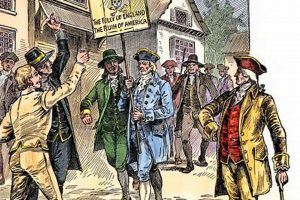
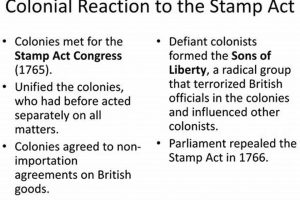
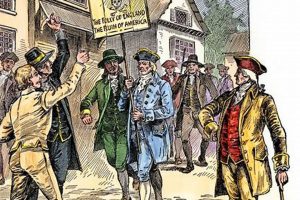
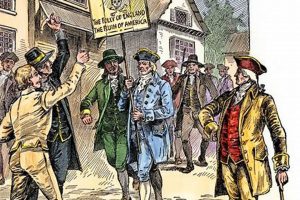
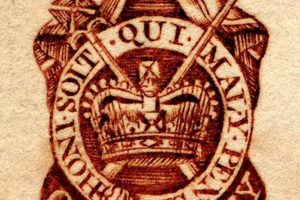
This assembly, comprised of delegates from nine British colonies in North America, convened in New York City in October 1765. Its purpose was to formulate a unified response to the recently enacted British legislation requiring a tax stamp on all legal documents, newspapers, pamphlets, and other paper goods. The gathering produced a Declaration of Rights and Grievances, asserting the colonists’ rights as British subjects and protesting taxation without representation. Petitions were sent to the King and Parliament outlining these grievances.
The event marked a pivotal moment in colonial history, demonstrating the growing discontent with British rule and foreshadowing the revolutionary movement. This collective action signified the first significant unified resistance to British policies and laid the groundwork for future intercolonial cooperation. The declaration, articulating fundamental principles of self-governance, significantly influenced the development of American political thought.
Further exploration of this historical event will delve into the specific grievances raised, the individuals involved, the impact on British policy, and the legacy of this formative chapter in American history. Understanding this pivotal event provides crucial context for the escalating tensions that ultimately led to the American Revolution.
Tips for Researching the Stamp Act Congress
Understanding the Stamp Act Congress requires a multifaceted approach. The following tips offer guidance for effective research and analysis.
Tip 1: Primary Sources: Explore original documents, such as the Declaration of Rights and Grievances, petitions to the King and Parliament, and personal correspondence of delegates. These offer direct insights into the colonists’ motivations and arguments.
Tip 2: Secondary Sources: Consult scholarly articles and books that analyze the historical context, significance, and impact of the Congress. These provide valuable interpretations and perspectives.
Tip 3: Biographical Research: Investigate the key figures involved in the Congress, including their backgrounds, political affiliations, and roles in the event. This helps understand the dynamics and influences at play.
Tip 4: British Perspective: Consider the British government’s perspective on colonial resistance and the rationale behind the Stamp Act. This provides a more complete understanding of the conflict.
Tip 5: Colonial Context: Examine the broader colonial context, including the existing political and economic climate, to understand the underlying tensions and factors contributing to the resistance.
Tip 6: Long-Term Impact: Analyze the long-term effects of the Stamp Act Congress, including its influence on the development of American political thought and its contribution to the growing movement towards independence.
Tip 7: Intercolonial Cooperation: Research how the Stamp Act Congress fostered communication and collaboration among the colonies, laying the groundwork for future unified action.
Effective research requires a combination of primary and secondary sources, along with a careful analysis of the broader historical context. These tips provide a framework for navigating this crucial event in American history.
By exploring these aspects, one gains a deeper understanding of the Stamp Act Congress and its pivotal role in the events leading to the American Revolution.
1. Colonial Opposition
Colonial opposition formed the core impetus behind the Stamp Act Congress. Understanding the nature and scope of this resistance is crucial to comprehending the Congress’s significance as a pivotal event in the burgeoning American Revolution. This section will explore key facets of this opposition.
- Boycotts of British Goods:
Colonists organized widespread boycotts of British goods, targeting merchants and manufacturers who profited from the Stamp Act. These boycotts, enforced through non-importation agreements, aimed to exert economic pressure on Britain by disrupting transatlantic trade. The effectiveness of these boycotts demonstrated the colonists’ commitment to resisting the Act and their ability to mobilize collective action.
- Propaganda and Public Discourse:
Pamphlets, newspapers, and public speeches played a vital role in shaping public opinion and galvanizing resistance. Figures like Samuel Adams and James Otis skillfully articulated arguments against the Stamp Act, emphasizing principles of self-governance and the injustice of taxation without representation. This dissemination of ideas fueled colonial opposition and helped unify the colonies against British policies.
- Formation of Protest Groups:
Groups like the Sons of Liberty emerged as organized forces of resistance. They staged demonstrations, intimidated stamp distributors, and enforced boycotts, often resorting to direct action to challenge British authority. These groups provided a framework for coordinating resistance efforts and amplifying the impact of colonial opposition.
- Legal Challenges:
Colonial legislatures passed resolutions challenging the legality of the Stamp Act, asserting their right to self-taxation. Legal arguments grounded in British constitutional principles were deployed to counter British claims of parliamentary authority over the colonies. These legal challenges, while ultimately unsuccessful in overturning the Act, provided a framework for future legal and political arguments against British rule.
These multifaceted forms of colonial opposition, coalescing around the shared grievance of the Stamp Act, directly led to the convening of the Stamp Act Congress. The Congress provided a platform for channeling this resistance into unified action, marking a critical step towards the eventual break with British rule. The Congress’s success in coordinating intercolonial resistance demonstrated the potential for collective action and laid the groundwork for future revolutionary movements.
2. Taxation without representation
The Stamp Act Congress is inextricably linked to the principle of “taxation without representation,” a central grievance fueling colonial resistance against British rule. The Congress served as a platform to articulate and challenge this perceived injustice, marking a turning point in the relationship between the colonies and Great Britain. Understanding this principle is essential for comprehending the Congress’s historical significance.
- Lack of Colonial Voice in Parliament:
The core issue at stake was the absence of colonial representatives in the British Parliament. Colonists argued that being subjected to taxes levied by a body in which they had no voice violated their fundamental rights as British subjects. This lack of representation meant colonists had no means to influence or contest tax policies imposed upon them, fueling resentment and a sense of injustice. The Stamp Act, a direct tax levied by Parliament, became a focal point for this grievance.
- Violation of Traditional Rights:
Colonists viewed “taxation without representation” as a violation of long-held British legal and political traditions. They argued that the principle of consent to taxation, enshrined in British common law and exemplified by the Magna Carta, extended to them as British subjects. The Stamp Act’s imposition without colonial consent was thus seen as an infringement of these traditional rights, further galvanizing resistance. The Congress provided a forum for articulating this argument on a broader scale.
- Economic Burden:
Beyond the political principle, the Stamp Act presented a significant economic burden on colonists. The tax, applied to a wide range of paper goods, impacted merchants, printers, lawyers, and ordinary citizens alike. This financial strain exacerbated existing economic grievances and contributed to the growing sense of discontent. The Congress provided a platform for colonists to collectively address these economic concerns alongside the political principle of representation.
- Catalyst for Colonial Unity:
The shared grievance of “taxation without representation,” epitomized by the Stamp Act, fostered a sense of unity among the diverse colonies. The Congress, bringing together delegates from different regions, served as a tangible manifestation of this burgeoning intercolonial solidarity. The shared experience of resisting the Stamp Act and articulating their grievances through the Congress laid the foundation for future cooperative action in the lead-up to the American Revolution.
The Stamp Act Congress, by formally addressing “taxation without representation,” crystallized colonial grievances and propelled the colonies toward greater unity. The Congress’s Declaration of Rights and Grievances, directly challenging the legitimacy of the Stamp Act, solidified the principle of “no taxation without representation” as a cornerstone of American political thought and laid the groundwork for the revolutionary movement to come.
3. Intercolonial Unity
The Stamp Act Congress stands as a pivotal moment in the development of intercolonial unity, marking a significant step towards the eventual unification of the American colonies. Prior to the Stamp Act, colonial cooperation was limited, with each colony primarily focused on its own individual interests and concerns. The Stamp Act, however, by impacting all colonies equally, created a shared grievance that transcended regional boundaries. This shared experience of facing an external threat fostered a sense of collective identity and purpose, laying the groundwork for the Congress.
The Congress itself served as a powerful catalyst for intercolonial unity. Bringing together delegates from nine different colonies, it provided a forum for communication, collaboration, and the development of shared strategies for resistance. The delegates, representing diverse regions and interests, engaged in debates and discussions that forged a sense of common purpose. The very act of convening, of assembling representatives from different colonies to address a shared grievance, demonstrated a level of intercolonial cooperation unprecedented in colonial history. The resulting Declaration of Rights and Grievances, a unified statement of colonial opposition, further solidified this burgeoning sense of unity. This collective action, achieved through the Congress, demonstrated the potential for coordinated resistance and laid the foundation for future collaborative efforts in the years leading up to the Revolution. For instance, the networks established during the Congress facilitated communication and coordination during later resistance movements, such as the Townshend Acts protests. This legacy of intercolonial cooperation, initiated by the Stamp Act Congress, proved crucial in the eventual struggle for independence.
Understanding the connection between the Stamp Act Congress and intercolonial unity provides crucial insights into the origins of the American Revolution. The Congress, born out of shared resistance to the Stamp Act, fostered a sense of collective identity and purpose that transcended regional differences. This newfound unity, though fragile and still developing, laid the groundwork for the coordinated resistance that ultimately led to the colonies’ break with Great Britain. The challenges of maintaining this unity in the face of British pressure would continue to shape the course of events in the years to come, but the foundation laid by the Stamp Act Congress proved essential for the eventual success of the American Revolution.
4. Declaration of Rights and Grievances
The Declaration of Rights and Grievances stands as a cornerstone of the Stamp Act Congress, encapsulating the colonists’ unified response to British taxation policies. This document, drafted and adopted during the Congress, articulated the core arguments against the Stamp Act and asserted fundamental colonial rights. Understanding the declaration’s creation and content provides crucial insight into the Congress’s significance in the broader context of the American Revolution.
The declaration served several key purposes. First, it formally articulated the colonists’ objections to the Stamp Act, emphasizing the principle of “no taxation without representation.” It asserted that colonists, as British subjects, possessed the same rights and liberties as those residing in Great Britain, including the right to be taxed only by their own elected representatives. This argument, central to colonial resistance, found its clearest expression in the declaration. Second, the document served as a unified statement of colonial grievances, solidifying the shared sense of purpose among the diverse colonies represented at the Congress. By agreeing upon and adopting the declaration, the delegates demonstrated a remarkable level of intercolonial cooperation, laying the groundwork for future collective action. Finally, the declaration served as a direct appeal to the British Crown and Parliament, petitioning for the repeal of the Stamp Act and the recognition of colonial rights. It represented a formal attempt to resolve the conflict through legal and political means, before the escalation of tensions into armed resistance. For example, the declaration’s assertion of the right to trial by jury resonated with established British legal traditions, aiming to frame colonial grievances within a recognizable legal and political framework.
The declaration’s impact extended beyond the immediate context of the Stamp Act Congress. Its articulation of fundamental rights and principles, such as the right to representation and the illegality of taxation without consent, resonated throughout the colonies and influenced subsequent revolutionary thought. The principles enshrined in the declaration served as a foundation for later arguments against British rule and contributed to the growing momentum for independence. While the Stamp Act was eventually repealed, the declaration’s legacy persisted, shaping the ideological landscape of the American Revolution and contributing to the development of American political thought. Its emphasis on fundamental rights and principles continues to hold relevance in contemporary discussions of governance and individual liberties. The challenges of balancing imperial authority with colonial autonomy, as highlighted by the declaration, offer valuable insights into the complexities of political power and the enduring struggle for self-governance.
5. Petitions to Crown and Parliament
The Stamp Act Congress, convened in response to the controversial Stamp Act of 1765, culminated in the drafting and delivery of petitions to both the British Crown and Parliament. These petitions, representing a unified colonial voice, played a crucial role in articulating grievances, asserting colonial rights, and seeking redress from British authorities. Examining these petitions provides essential context for understanding the Congress’s significance in the escalating tensions between Great Britain and its American colonies.
- Formal Channels of Protest:
The petitions represented a strategic decision by the colonists to utilize established political processes to voice their grievances. Rather than resorting to immediate radical action, the Congress opted for formal channels of protest, demonstrating a commitment to resolving the conflict through legal and political means. This approach aimed to demonstrate the colonists’ loyalty to the Crown while firmly asserting their rights as British subjects.
- Articulation of Grievances:
The petitions meticulously outlined the colonists’ objections to the Stamp Act, emphasizing the principle of “no taxation without representation” and its perceived violation of traditional British liberties. They detailed the economic burdens imposed by the tax and argued that the lack of colonial representation in Parliament rendered the tax illegitimate. This careful articulation of grievances provided a clear and reasoned basis for colonial opposition, aiming to persuade British authorities to reconsider their policies.
- Assertion of Colonial Rights:
Beyond protesting the Stamp Act itself, the petitions asserted broader claims of colonial rights and autonomy. They emphasized the colonists’ right to self-governance and their historical enjoyment of liberties comparable to those in Great Britain. This assertion of rights laid the groundwork for future arguments against British imperial policies and contributed to the evolving understanding of colonial identity and political autonomy.
- Intercolonial Coordination and Unity:
The act of drafting and delivering unified petitions to the Crown and Parliament served as a powerful demonstration of intercolonial cooperation. The Congress, representing diverse colonies with varying interests, managed to coalesce around a shared set of grievances and present a unified front to British authorities. This demonstration of unity underscored the potential for collective action and laid the foundation for future coordinated resistance.
The petitions to the Crown and Parliament, emanating from the Stamp Act Congress, represent a pivotal moment in the relationship between Great Britain and its American colonies. While the petitions ultimately failed to prevent the implementation of the Stamp Act, they played a crucial role in articulating colonial grievances, asserting fundamental rights, and fostering intercolonial unity. The act of petitioning, while adhering to established political processes, simultaneously signaled a growing resolve to resist unjust policies and laid the groundwork for the escalating tensions that ultimately culminated in the American Revolution. The language and arguments employed in the petitions, emphasizing principles of representation and self-governance, continued to resonate throughout the colonies and shaped the ideological trajectory of the revolutionary movement.
6. Precursor to Revolution
The Stamp Act Congress holds a significant place in American history as a precursor to the Revolution. While not overtly revolutionary in its immediate aims, the Congress represented a critical step towards colonial unification and resistance against British policies. The Congress, convened in response to the Stamp Act of 1765, provided a platform for representatives from nine different colonies to articulate shared grievances and strategize collective action. This unprecedented display of intercolonial cooperation laid the foundation for future resistance movements and significantly contributed to the growing sense of colonial identity separate from Great Britain. The Stamp Act itself, while eventually repealed, served as a catalyst for radicalizing colonial sentiment. The act, perceived as an unjust and oppressive measure, galvanized opposition and fostered a sense of shared purpose among colonists. The experience of organizing and participating in the Congress provided valuable experience in intercolonial coordination and laid the groundwork for the more radical actions that would follow.
One crucial outcome of the Stamp Act Congress was the Declaration of Rights and Grievances. This document, asserting fundamental colonial rights and protesting taxation without representation, laid the ideological groundwork for the Revolution. The declaration, while initially aimed at securing the repeal of the Stamp Act, articulated broader principles of self-governance and individual liberty that resonated throughout the colonies and fueled the growing movement for independence. Furthermore, the Congress facilitated the establishment of communication networks and relationships among colonial leaders, which proved invaluable in coordinating later resistance efforts. The Sons of Liberty, for instance, gained momentum and expanded their influence in the wake of the Stamp Act Congress, contributing to the growing resistance movement. Examples of the Congress’s influence can be seen in the subsequent boycotts of British goods and the increasing frequency of public protests and demonstrations against British policies in the years leading up to the Revolution.
In conclusion, the Stamp Act Congress, though ostensibly focused on a specific piece of legislation, served as a critical turning point in the relationship between Great Britain and its American colonies. The Congress fostered intercolonial unity, articulated core grievances, and laid the ideological groundwork for the Revolution. While not an immediate call to arms, the Congress’s actions and pronouncements, combined with the escalating tensions surrounding British policies, undeniably contributed to the cascade of events that ultimately led to the American Revolution. The Stamp Act Congress, therefore, stands as a crucial precursor to the Revolution, illustrating how seemingly isolated acts of resistance can contribute to broader movements for social and political change. Understanding this connection provides valuable insight into the complexities of revolutionary movements and the often-unintended consequences of political actions.
7. Foundation of American Identity
The Stamp Act Congress played a crucial role in forging a nascent American identity distinct from that of British subjects. While colonists initially identified as British, the Stamp Act and subsequent events catalyzed a shift in perspective. The Congress, by bringing together representatives from diverse colonies, fostered a sense of shared grievance and collective purpose. The unified resistance against the Stamp Act, articulated through the Declaration of Rights and Grievances, marked a significant step towards the development of a collective American consciousness. This shared experience of resisting perceived injustice laid the groundwork for a distinct American identity grounded in principles of self-governance and representation. For example, the Congresss emphasis on no taxation without representation resonated throughout the colonies, fostering a sense of shared political identity distinct from that of British subjects represented in Parliament. This principle became a cornerstone of American political thought, contributing to the development of a distinct national ideology.
The Congress’s actions had profound implications for the development of American identity. By asserting colonial rights and challenging British authority, the Congress fostered a sense of autonomy and self-reliance among colonists. This growing sense of independence, coupled with the shared experience of resistance, contributed to the development of a distinct American identity rooted in principles of self-governance and individual liberty. The practical significance of understanding this connection lies in recognizing how shared struggles and collective action can forge a sense of shared identity. The Stamp Act Congress, by providing a platform for unified resistance, inadvertently laid the foundation for a distinct American identity that would ultimately lead to the creation of a new nation. The Congress demonstrated that collective action could effectively challenge established power structures and advance shared goals, a lesson that resonated throughout the American Revolution and beyond. For instance, the success of the boycotts organized in response to the Stamp Act demonstrated the power of collective action, further solidifying the sense of shared identity and purpose among colonists.
In summary, the Stamp Act Congress served as a catalyst for the development of an American identity distinct from British subjecthood. The Congress fostered a sense of shared grievance, promoted intercolonial unity, and articulated principles of self-governance that became central to the American identity. This understanding illuminates the complex interplay between political events and the formation of collective identities. The challenge of balancing loyalty to the Crown with the growing sense of American identity would continue to shape the political landscape in the years leading up to the Revolution, ultimately contributing to the colonies’ decision to declare independence and forge a new nation founded on principles of self-governance and individual liberty. The Stamp Act Congress, therefore, represents a pivotal moment in the development of American identity and the ongoing struggle for self-determination.
Frequently Asked Questions
This section addresses common inquiries regarding the Stamp Act Congress, providing concise and informative responses.
Question 1: What specific colonies sent delegates to the Stamp Act Congress?
Nine colonies participated: Massachusetts, Rhode Island, Connecticut, New York, New Jersey, Pennsylvania, Delaware, Maryland, and South Carolina. Note that New Hampshire, Virginia, North Carolina, and Georgia did not send official delegates, though some expressed support.
Question 2: Where and when did the Stamp Act Congress convene?
The Congress met in New York City from October 7th to 25th, 1765.
Question 3: Was the Stamp Act Congress successful in its immediate objective?
While the Congress effectively unified colonial opposition and articulated grievances, the Stamp Act was not immediately repealed. However, the coordinated resistance and pressure exerted by the colonies, including the boycotts stemming from the Congress’s resolutions, contributed significantly to the eventual repeal in March 1766.
Question 4: What long-term impact did the Stamp Act Congress have?
The Congress is considered a pivotal event leading to the American Revolution. It fostered intercolonial unity, established crucial communication networks, and articulated principles of self-governance and resistance to unjust taxation, all of which fueled the growing movement for independence.
Question 5: How did the British government react to the Stamp Act Congress?
Initially, the British government largely dismissed the Congress and its resolutions. However, the widespread colonial resistance and economic pressure exerted by boycotts ultimately forced Parliament to reconsider the Stamp Act, leading to its repeal.
Question 6: Beyond the Stamp Act, what other factors contributed to the growing tensions between the colonies and Great Britain?
Several factors played a role, including restrictions on colonial trade, British military presence in the colonies, and broader disagreements over the nature of imperial authority and colonial autonomy. The Stamp Act served as a catalyst that exacerbated these existing tensions.
Understanding these key aspects of the Stamp Act Congress provides essential context for comprehending the escalating conflict that culminated in the American Revolution. This period underscores the complex interplay between political action, economic pressures, and the development of distinct national identities.
Further exploration of related topics, such as the Townshend Acts and the Boston Tea Party, can provide a more comprehensive understanding of the events leading to American independence.
The Stamp Act Congress
This exploration of the Stamp Act Congress has highlighted its significance as a pivotal event in the prelude to the American Revolution. The Congress, convened in response to the controversial Stamp Act of 1765, served as a crucial platform for intercolonial unity, articulating shared grievances, and asserting fundamental rights. The Declaration of Rights and Grievances, born from this assembly, encapsulated colonial objections to taxation without representation and laid the ideological groundwork for future resistance. Petitions to the Crown and Parliament, while ultimately unsuccessful in preventing the Stamp Act’s initial implementation, demonstrated a commitment to legal and political processes while simultaneously signaling a growing resolve to resist unjust policies. The Congress’s actions fostered a burgeoning sense of American identity distinct from British subjecthood, contributing to the escalating tensions that ultimately culminated in revolution.
The legacy of the Stamp Act Congress extends far beyond its immediate context. The principles of self-governance, representation, and resistance to unjust authority, articulated during this pivotal event, continue to resonate in contemporary political discourse. Understanding the Stamp Act Congress offers valuable insights into the complexities of revolutionary movements, the power of collective action, and the enduring struggle for individual liberties and self-determination. Further exploration of this period and its key figures provides a deeper understanding of the forces that shaped the American nation and the enduring principles upon which it was founded.