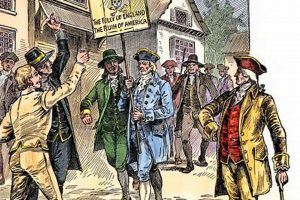
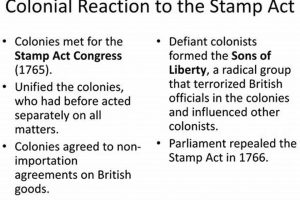
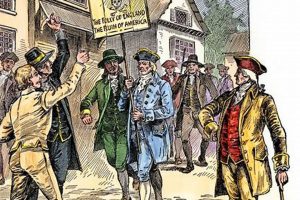
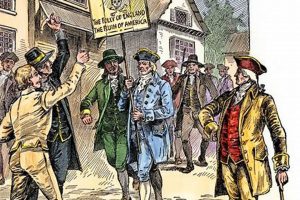
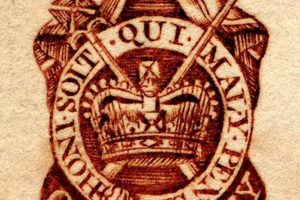
The Stamp Act Congress convened in New York City from October 7 to 25, 1765. Representatives from nine of the thirteen British colonies gathered to formulate a unified response to the recently imposed Stamp Act, a controversial tax levied by the British Parliament.
This gathering represents a pivotal moment in American colonial history. It marked the first significant collective action by the colonies in opposition to British policies. The Congress drafted petitions to the King and Parliament, asserting their rights and protesting taxation without representation. This unified demonstration of colonial resistance laid the groundwork for future collaborations and ultimately contributed to the growing movement towards independence.
Understanding this historical context allows for a deeper appreciation of the events leading up to the American Revolution. Exploring the grievances aired, the resolutions adopted, and the broader implications of this pivotal meeting sheds light on the complexities of colonial politics and the origins of the American nation.
Researching the 1765 Colonial Response to the Stamp Act
Effective research requires a focused approach. The following tips provide guidance for investigating the colonial response culminating in the October 1765 meeting in New York.
Tip 1: Explore Primary Sources: Examine original documents, including letters, diaries, and meeting minutes from the period. These offer direct insights into colonial perspectives and reactions.
Tip 2: Consider the Broader Context: Research the political and economic climate of the time, including British policies leading up to the Stamp Act. Understanding this context illuminates the motivations and anxieties of the colonists.
Tip 3: Analyze the Stamp Act’s Provisions: Scrutinize the details of the Stamp Act itself to understand its specific impact on the colonies and why it provoked such strong resistance.
Tip 4: Investigate Individual Colonies’ Responses: Explore how different colonies reacted to the Stamp Act, recognizing variations in their economic structures and political cultures.
Tip 5: Study the Delegates: Research the backgrounds and political leanings of the delegates who attended the October 1765 meeting to understand the dynamics of the gathering.
Tip 6: Examine the Resolutions and Petitions: Carefully analyze the documents produced by the Congress to understand their arguments and demands.
Tip 7: Trace the Aftermath: Research the events following the Congress, including British responses and subsequent colonial actions, to understand the lasting impact of this pivotal event.
By following these guidelines, one gains a more comprehensive understanding of this crucial period in American history and the significance of colonial resistance to British policies.
These insights facilitate a deeper appreciation of the political climate of the era and the events that ultimately shaped the American Revolution.
1. October 1765

October 1765 holds significant historical relevance as the month in which the Stamp Act Congress convened. This gathering represents a pivotal moment in the growing tensions between Great Britain and its American colonies. Examining the specific facets of this period provides crucial context for understanding the Congress and its implications.
- Colonial Representation
Nine of the thirteen colonies sent representatives to the Stamp Act Congress. This demonstrated a significant degree of colonial unity in opposition to British policies, particularly the recently enacted Stamp Act. The collective action of these colonies signaled a growing sense of shared identity and purpose.
- Pre-Revolutionary Ferment
October 1765 falls within a period of escalating pre-revolutionary unrest. The Stamp Act, passed earlier that year, ignited widespread protests and boycotts throughout the colonies. The Congress provided a formal platform for channeling this discontent into unified action.
- Early Organized Resistance
The Stamp Act Congress stands as an early example of organized colonial resistance against British rule. While earlier instances of dissent existed, the Congress marks a significant step toward more structured and coordinated opposition. This laid the groundwork for future collaborative efforts during the American Revolution.
- Formal Petitions and Declarations
The Congress drafted petitions to the King and Parliament outlining colonial grievances and asserting their rights as British subjects. These documents represent a formal articulation of colonial opposition and provided a framework for future declarations and pronouncements, including the Declaration of Independence.
The specific timing of the Stamp Act Congress within the context of October 1765 underscores its significance. This period represents a turning point in colonial relations with Great Britain, marked by escalating tensions, organized resistance, and the formal expression of colonial grievances. These factors collectively contributed to the trajectory toward revolution.
2. Pre-Revolution

The Stamp Act Congress occurred during a crucial period of escalating tensions between Great Britain and its American colonies, a period historians define as pre-revolutionary. This era, characterized by growing colonial resistance to British policies, directly shaped the context and significance of the Congress. The Stamp Act itself, enacted in 1765, served as a catalyst for this resistance, prompting widespread protests and boycotts throughout the colonies. The Congress, convened in response to the Stamp Act, represents a pivotal moment within this pre-revolutionary ferment. It provided a platform for colonists to formally articulate their grievances and coordinate resistance efforts. The Congress’s petitions to the King and Parliament signify not open rebellion, but rather assertive appeals within the existing political framework. This distinguishes the Congress from later revolutionary actions, while still highlighting its importance in laying the groundwork for the eventual break with Britain.
Analyzing the Stamp Act Congress solely through a revolutionary lens overlooks the nuanced dynamics of the pre-revolutionary period. Colonial leaders at this time sought redress of grievances within the British Empire, not outright independence. The Congresss actions reflect this, emphasizing legal arguments and appeals to established rights as British subjects. Examples include the resolutions asserting the right to trial by jury and protesting taxation without representation. These actions demonstrate a commitment to resolving the conflict within the existing political structure. Understanding this pre-revolutionary context allows for a more accurate interpretation of the Congress’s aims and significance. It reveals the complexities of colonial politics and the gradual evolution of resistance from reform to revolution.
Recognizing the pre-revolutionary context of the Stamp Act Congress provides critical insights into the trajectory towards American independence. The Congress serves as a bridge between early colonial dissent and the later revolutionary movement. It represents an escalation of organized resistance, while stopping short of outright rebellion. This nuanced understanding clarifies the significance of the Congress. It demonstrates the growing unity among the colonies, their assertive defense of their perceived rights, and the gradual shift towards more radical action. The Congress’s place within the broader pre-revolutionary landscape illuminates the complexities and incremental nature of the path to revolution, showcasing the critical role of organized, legal resistance in shaping the course of American history.
3. Unified Resistance

The Stamp Act Congress of 1765 represents a landmark achievement in unified colonial resistance against British policies. Prior to this date, colonial responses to unpopular measures remained largely localized, varying from colony to colony. The Stamp Act, however, with its broad impact across all thirteen colonies, catalyzed a collective response previously unseen. The Congresss date, October 7-25, 1765, signifies the culmination of this growing unity, marking the first significant intercolonial gathering organized specifically to address shared grievances against British rule. This unified front challenged the established power dynamics by demonstrating a collective colonial identity and shared purpose. Representatives from nine colonies, overcoming geographical and political differences, converged to formulate a cohesive strategy against the Stamp Act. This unprecedented collaboration, facilitated by extensive intercolonial communication throughout the summer of 1765, directly influenced the eventual repeal of the Stamp Act, demonstrating the practical power of unified resistance.
The unified resistance demonstrated during the Stamp Act Congress was not merely a reaction to a specific tax; it represented a broader shift in colonial political consciousness. Before 1765, colonial identity often prioritized individual colony interests. The Stamp Act, by impacting all colonies, forced them to recognize their shared vulnerabilities and the potential strength in collective action. The Congress provided a framework for this collective action, facilitating the exchange of ideas and the development of common strategies, such as the non-importation agreements. This newfound unity, forged in the fires of resistance, profoundly influenced subsequent events, including the formation of the Committees of Correspondence and the First Continental Congress, laying the groundwork for the unified action that would characterize the American Revolution.
The date of the Stamp Act Congress serves as a powerful symbol of the importance of unified resistance in achieving political change. The Congress demonstrated that diverse groups, when united by a common purpose, can exert significant influence even against seemingly insurmountable odds. The ability of the colonies to overcome their differences and present a united front contributed directly to the repeal of the Stamp Act and, more importantly, laid the foundation for the collaborative efforts that would ultimately lead to American independence. Studying this period highlights the enduring power of collective action and underscores the importance of unity in achieving lasting political and social change.
4. Nine Colonies Represented
The representation of nine colonies at the Stamp Act Congress, convened in October 1765, holds profound significance in understanding the evolving relationship between Great Britain and its American colonies. This participation demonstrates a substantial degree of colonial unity against the backdrop of growing tensions surrounding British policies, particularly the newly implemented Stamp Act. Examining the facets of this representation provides crucial context for comprehending the Congress’s impact on the path toward revolution.
- Geographic Diversity
The nine colonies spanned a considerable geographic area along the Atlantic coast, from Massachusetts in the north to South Carolina in the south. This geographic diversity highlights the widespread opposition to the Stamp Act and underscores the unifying power of shared grievances against British policies.
- Political and Economic Variations
The participating colonies exhibited diverse political structures and economic interests. Despite these variations, their shared opposition to the Stamp Act demonstrates the overarching concern for colonial autonomy and resistance to taxation without representation, bridging internal differences for a common cause.
- Deliberative Processes and Outcomes
The presence of representatives from nine distinct colonies fostered robust deliberation and debate during the Congress. The resulting petitions to the King and Parliament reflect the collective voice of these colonies, amplifying their concerns and demands for redress within the existing political framework.
- Foundation for Future Collaboration
The collaborative efforts of these nine colonies during the Stamp Act Congress laid the groundwork for future intercolonial cooperation. The experience of working together to address shared grievances fostered a sense of collective identity and purpose, contributing to the formation of more permanent mechanisms for communication and coordination, ultimately shaping the trajectory towards the First Continental Congress.
The representation of nine colonies at the Stamp Act Congress marks a significant milestone in the growing movement toward American independence. This collective action demonstrated the power of unified resistance and foreshadowed the collaborative efforts that would characterize the American Revolution. The Congress served not only as a platform for protesting the Stamp Act, but also as a crucial step in the development of a shared colonial identity, paving the way for the momentous events that followed.
5. Early organized dissent

The Stamp Act Congress, convened in October 1765, stands as a pivotal moment of early organized dissent in American colonial history. While individual colonies had previously protested specific British policies, the Congress represents a significant escalation in coordinated resistance. Understanding the Congress within this context of burgeoning colonial dissent illuminates its importance in shaping the path towards revolution. The specific date, marking the first significant intercolonial gathering focused on opposing British policies, underscores the Congress’s role as a precursor to more widespread and unified resistance movements.
- Formalized Grievances
The Stamp Act Congress moved beyond localized protests by drafting formal petitions to the King and Parliament. These documents articulated shared colonial grievances, providing concrete examples of perceived injustices and outlining specific demands for redress. This formalized approach demonstrated a unified colonial front, signaling a departure from previous, more fragmented forms of dissent.
- Intercolonial Collaboration
The Congress facilitated collaboration among nine different colonies, demonstrating the potential for unified action. Representatives from diverse geographic regions and political backgrounds converged to discuss shared concerns and develop coordinated strategies. This intercolonial collaboration marked a significant step toward overcoming regional differences and fostering a sense of collective identity in opposition to British rule.
- Non-Importation Agreements
Beyond formal petitions, the Congress fostered the development of non-importation agreements among the colonies. These agreements, representing a form of economic protest, demonstrated the colonists’ willingness to exert collective pressure on British merchants and Parliament. This organized economic resistance amplified the impact of colonial dissent, demonstrating the potential for coordinated action to effect real change.
- Foundation for Future Resistance
The Stamp Act Congress laid the groundwork for future resistance movements. The experience of organizing and participating in the Congress provided valuable lessons in intercolonial coordination and the power of collective action. This experience directly informed subsequent resistance efforts, including the formation of the Committees of Correspondence and ultimately the First Continental Congress, solidifying the Congress’s role as a critical precursor to the American Revolution.
The Stamp Act Congress, occurring within a larger context of growing colonial unrest, signifies a crucial turning point. Its date in October 1765 marks not only a response to the Stamp Act itself, but the emergence of a more organized and unified form of colonial dissent. The Congress’s actionsformalizing grievances, fostering intercolonial collaboration, and promoting economic resistancedemonstrate its profound impact on shaping future resistance movements and laying the foundation for the American Revolution.
Frequently Asked Questions
This section addresses common inquiries regarding the October 1765 gathering in New York, providing concise and informative responses.
Question 1: Why is the specific date of the Stamp Act Congress important?
The date signifies the first significant collective action by the colonies in opposition to British policies, marking a turning point in the relationship between the colonies and Great Britain.
Question 2: How did the Stamp Act Congress contribute to the American Revolution?
The Congress fostered intercolonial unity and established a precedent for coordinated resistance, laying the groundwork for future collaborative efforts during the Revolution.
Question 3: What were the primary outcomes of the Stamp Act Congress?
The Congress drafted petitions to the King and Parliament, asserting colonial rights and protesting taxation without representation. These petitions represent an early formal expression of colonial grievances.
Question 4: Which colonies participated in the Stamp Act Congress?
Nine of the thirteen colonies sent representatives: Massachusetts, Rhode Island, Connecticut, New York, New Jersey, Pennsylvania, Delaware, Maryland, and South Carolina.
Question 5: What was the Stamp Act, and why did it provoke such strong resistance?
The Stamp Act, passed by the British Parliament in 1765, imposed a tax on various printed materials in the colonies. This act sparked widespread protests due to the colonists’ belief in “no taxation without representation.”
Question 6: How did the British government respond to the Stamp Act Congress?
Facing significant colonial resistance and pressure from British merchants, Parliament eventually repealed the Stamp Act in 1766. However, the underlying tensions remained, contributing to further conflict.
Understanding the historical context surrounding the Stamp Act Congress provides valuable insight into the events leading up to the American Revolution. Further research into the specific actions, motivations, and outcomes of the Congress can deepen this understanding.
Further exploration of specific topics related to the Stamp Act Congress can provide a more comprehensive understanding of this pivotal period in American history.
The Enduring Legacy of October 1765
Examination of the October 1765 Stamp Act Congress reveals its significance as a pivotal moment in colonial history. This gathering marked a significant escalation in organized resistance against British policies. The unified actions of nine colonies, demonstrated through formal petitions and coordinated strategies, underscore the Congress’s importance in shaping the trajectory towards revolution. The Congress’s legacy lies not solely in its response to the Stamp Act itself, but in its demonstration of the power of collective action and the growing sense of shared identity among the colonies. This early instance of intercolonial collaboration laid the groundwork for future resistance movements and ultimately contributed to the momentous events that led to American independence.
The date of the Stamp Act Congress serves as a reminder of the complex dynamics that shaped the American Revolution. Further exploration of this period, including the individuals involved, the specific grievances aired, and the long-term consequences of the Congress’s actions, provides crucial insight into the foundations of the American nation. Continued scholarly inquiry ensures that the lessons learned in October 1765 remain relevant and continue to inform understanding of collective action, political representation, and the pursuit of self-governance.