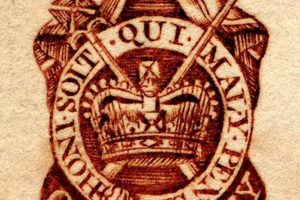
The British Parliament’s levy of a tax on all printed materials in the American colonies, effective November 1, 1765, required the purchase of embossed stamps to validate legal documents, newspapers, pamphlets, and even playing cards. This measure, intended to generate revenue for the British crown following the costly French and Indian War, directly impacted the colonists’ daily lives and commercial activities.
This taxation without colonial representation in Parliament ignited widespread resentment and resistance. It fueled arguments regarding colonial autonomy and sparked protests, boycotts of British goods, and the formation of groups like the Sons of Liberty. These actions contributed significantly to the growing tension between Great Britain and its American colonies, laying crucial groundwork for the American Revolution a decade later.
The following sections delve deeper into the specific factors leading to the implementation of this tax, the diverse reactions it elicited from different colonial groups, and the lasting ramifications on the relationship between Great Britain and the American colonies.
Understanding the Stamp Act 1765
Analyzing the Stamp Act of 1765 requires careful consideration of its multifaceted nature. The following tips offer guidance for a comprehensive understanding.
Tip 1: Consider the British perspective. The British government faced substantial debt after the French and Indian War. Examining their financial motivations helps contextualize the decision to impose the tax.
Tip 2: Explore colonial grievances. The colonists lacked direct representation in Parliament. Understanding “taxation without representation” is crucial for grasping the core of colonial discontent.
Tip 3: Analyze the economic impact. The tax affected diverse groups, from merchants and printers to ordinary citizens. Investigating these economic consequences reveals the widespread impact of the act.
Tip 4: Examine the forms of resistance. Colonists employed various methods to oppose the Stamp Act, including boycotts, protests, and the formation of political organizations. Studying these actions demonstrates the depth of colonial opposition.
Tip 5: Recognize the role of propaganda. Pamphlets, speeches, and other forms of communication played a significant role in shaping public opinion. Analyzing the dissemination of information provides insight into how colonial resistance gained momentum.
Tip 6: Connect the Stamp Act to broader events. The Stamp Act was a critical event leading to the American Revolution. Placing it within the larger context of growing tensions between Britain and the colonies is essential.
Tip 7: Consider the legal arguments. Colonists questioned the legality of the Stamp Act, arguing it violated their rights as Englishmen. Exploring these legal challenges adds another layer to understanding the conflict.
By considering these points, one can gain a deeper understanding of the Stamp Act’s profound impact on the relationship between Great Britain and its American colonies, ultimately contributing to the path toward revolution.
The following section concludes this exploration of the Stamp Act, summarizing its lasting significance in the narrative of American history.
1. French and Indian War Expenses

The French and Indian War (1754-1763), a costly conflict fought between Great Britain and France for dominance in North America, placed a significant financial strain on the British treasury. Victory came at a steep price, leaving the British government with a substantial war debt. Seeking a way to recoup these expenses, the British Parliament turned its attention to the American colonies, believing they should contribute to the costs of their own defense. This financial burden directly led to the implementation of new revenue-generating measures, most notably the Stamp Act of 1765.
The logic behind the Stamp Act stemmed from the perception that the colonies had benefited from British military protection during the war and should therefore share the financial responsibility. However, the manner in which this revenue was soughtthrough direct taxation without colonial representation in Parliamentignited fierce opposition. While the British government viewed the tax as a necessary measure to address its financial woes, the colonists saw it as an infringement on their rights and a dangerous precedent. For example, merchants felt the tax unfairly burdened their businesses, while printers saw it as a threat to freedom of the press. The colonial assemblies protested vehemently, arguing that they should not be taxed without their consent.
The Stamp Act, a direct consequence of the French and Indian War’s financial burden, became a pivotal turning point in the relationship between Great Britain and the American colonies. The ensuing protests, boycotts, and calls for greater autonomy laid the groundwork for the escalating tensions that would ultimately culminate in the American Revolution. Understanding this causal link between wartime expenses and the Stamp Act is essential for comprehending the complex historical forces that shaped the birth of the United States. The failure of the British government to anticipate the colonial reaction to the Stamp Act underscores the importance of considering the political and social ramifications of economic policies.
2. Taxation without representation

The cry of “Taxation without representation” encapsulates the core grievance of the American colonists against the British government leading up to the American Revolution, and the Stamp Act of 1765 stands as a prime example of this principle in action. The colonists argued that they should not be subjected to taxes imposed by the British Parliament, in which they had no elected representatives. This fundamental disagreement over political representation and the right to self-governance played a critical role in escalating tensions and ultimately fueling the movement for independence. Exploring the facets of this concept illuminates its importance in understanding the Stamp Act’s profound impact.
- Lack of Colonial Voice in Parliament
The absence of colonial representatives in the British Parliament meant that American colonists had no direct voice in decisions regarding taxation. They could not vote for or against measures that directly affected their lives and livelihoods, such as the Stamp Act. This lack of representation was perceived as a denial of fundamental rights enjoyed by British subjects in Great Britain, further fueling resentment and resistance.
- Violation of Traditional Rights
Colonists believed the Stamp Act violated their traditional rights as Englishmen, particularly the principle of self-taxation. They argued that only their own elected representatives in colonial assemblies had the authority to levy taxes upon them. The imposition of the Stamp Act by a distant Parliament was seen as a breach of these established customs and a dangerous precedent for future infringements on colonial autonomy.
- Economic Burden and Practical Implications
Beyond the abstract principle of representation, the Stamp Act placed a tangible economic burden on the colonists. The tax affected a wide range of printed materials, including legal documents, newspapers, and commercial papers, impacting merchants, printers, lawyers, and ordinary citizens. This direct economic impact amplified the sense of injustice and fueled resistance movements.
- Catalyst for Collective Action
The rallying cry of “Taxation without representation” served as a powerful mobilizing force, uniting diverse colonial groups in opposition to the Stamp Act. It fostered a sense of shared grievance and facilitated collective action, from boycotts of British goods to organized protests and the formation of groups like the Sons of Liberty. This shared experience of perceived injustice significantly strengthened the movement for colonial autonomy and laid the foundation for future resistance.
The principle of “Taxation without representation” lies at the heart of understanding the Stamp Act’s significance in the lead-up to the American Revolution. The colonists’ fundamental objection to being taxed without a voice in Parliament fueled their resistance and solidified their resolve to challenge British authority. The Stamp Act, therefore, serves not just as a historical event but as a powerful illustration of the enduring principles of self-governance and representative government.
3. Colonial resistance and boycotts

Colonial resistance and boycotts played a pivotal role in the unfolding drama surrounding the Stamp Act of 1765, serving as a direct response to the perceived injustice of taxation without representation. These actions, ranging from organized protests and demonstrations to widespread boycotts of British goods, demonstrated the colonists’ resolve to challenge British authority and defend their economic and political interests. Understanding the nature and impact of these resistance efforts is crucial for grasping the Stamp Act’s broader significance in the leadup to the American Revolution.
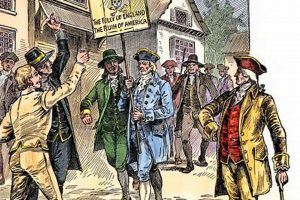
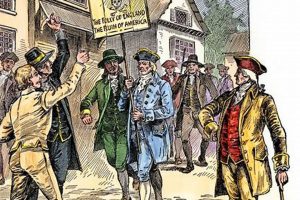
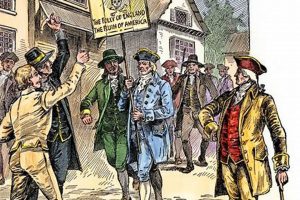
The Stamp Act’s implementation triggered a wave of organized resistance across the colonies. Groups like the Sons of Liberty emerged, mobilizing public opinion and coordinating actions against the tax. Public demonstrations, often involving burning effigies of tax collectors and British officials, became common occurrences. These acts of defiance served not only as expressions of popular anger but also as powerful symbols of colonial unity against British policies. Beyond public displays of discontent, colonists engaged in effective economic boycotts of British goods. Merchants refused to import or sell British products, impacting British trade and putting economic pressure on Parliament to repeal the Act. These boycotts, combined with the political pressure exerted by colonial assemblies and petitions, ultimately contributed to the Stamp Act’s repeal in 1766.
The colonial resistance and boycotts surrounding the Stamp Act proved highly effective, demonstrating the power of collective action and nonviolent resistance. This success served as an important precedent for future resistance movements, emboldening colonists and laying the groundwork for the more widespread and organized resistance that would characterize the years leading to the American Revolution. The Stamp Act episode underscored the limitations of imperial power when confronted with determined colonial resistance, and the experience gained during this period shaped the strategies and tactics employed in later struggles for independence. The legacy of colonial resistance to the Stamp Act resonates far beyond its immediate impact, serving as a testament to the power of collective action in challenging unjust policies and shaping the course of history.
4. Sons of Liberty and activism
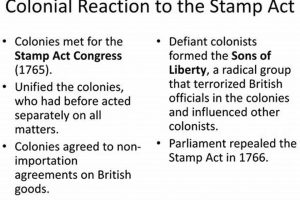
The Sons of Liberty, a clandestine organization formed in response to the Stamp Act of 1765, played a crucial role in mobilizing colonial resistance against British policies. Their activism, characterized by a combination of public demonstrations, boycotts, and targeted acts of intimidation, significantly contributed to the escalating tensions between Great Britain and the American colonies. Understanding the Sons of Libertys methods and impact provides crucial insight into the Stamp Acts causal relationship with the growing movement for independence. The organizations very existence stemmed directly from the Stamp Act, making it a key component in understanding the broader cause and effect of this pivotal historical event.
The Sons of Liberty employed various tactics to challenge the Stamp Act. Public demonstrations, often involving burning effigies of British officials and tax collectors, served to inflame public sentiment and intimidate those tasked with enforcing the Act. For instance, the tarring and feathering of Andrew Oliver, a designated stamp distributor in Massachusetts, effectively deterred others from taking on the role. This type of direct action, while controversial, proved highly effective in disrupting the implementation of the Stamp Act. Furthermore, the Sons of Liberty played a key role in organizing and enforcing boycotts of British goods, exerting significant economic pressure on British merchants and Parliament. These boycotts demonstrated the colonists collective resolve and their willingness to endure economic hardship to defend their principles.
The activism of the Sons of Liberty significantly escalated tensions between the colonies and Great Britain. Their actions, while contributing to the Stamp Act’s eventual repeal, also hardened British attitudes towards colonial defiance. The organization’s legacy is complex, marked by both its effectiveness in resisting unpopular policies and its contribution to the growing climate of violence and unrest. The Stamp Acts implementation and the subsequent rise of groups like the Sons of Liberty illustrate the dynamic interplay between government policies and popular resistance, highlighting the unintended consequences of measures perceived as unjust and the power of organized activism in shaping historical outcomes. The Sons of Libertys direct action campaigns served as a catalyst, pushing the colonies further along the path towards revolution.
5. Heightened Colonial Tensions
The Stamp Act of 1765 significantly escalated tensions between Great Britain and its American colonies. The act, perceived by colonists as an unjust and oppressive measure, fueled widespread resentment and resistance, pushing the colonies closer to open rebellion. Exploring the specific ways in which the Stamp Act heightened colonial tensions provides crucial context for understanding the events leading up to the American Revolution.
- Erosion of Trust in British Authority
The Stamp Act eroded colonists’ trust in the British government. The perceived violation of colonial rights through taxation without representation fostered a sense of betrayal and undermined the legitimacy of British rule. Colonists began to question the fairness and impartiality of the British government, creating a climate of suspicion and distrust. This erosion of trust laid the groundwork for future conflicts and contributed to the growing sense of alienation between the colonies and the mother country. For example, colonial assemblies began to openly challenge Parliament’s authority, asserting their right to govern themselves.
- Increased Intercolonial Unity
While the colonies had historically maintained distinct identities and interests, the Stamp Act fostered a sense of shared grievance and promoted intercolonial unity. The common experience of facing what was perceived as an unjust and oppressive policy encouraged greater communication and cooperation among the colonies. The Stamp Act Congress, held in 1765, exemplified this growing unity, as representatives from nine colonies met to coordinate their resistance. This burgeoning sense of shared identity and purpose proved crucial in the subsequent organization of resistance movements and laid the foundation for future collective action.
- Radicalization of Colonial Politics
The Stamp Act contributed to the radicalization of colonial politics. Groups like the Sons of Liberty, initially formed to oppose the Stamp Act, adopted increasingly aggressive tactics to challenge British authority. Public demonstrations, boycotts, and acts of intimidation became more common, pushing colonial politics in a more confrontational direction. This radicalization further polarized the relationship between the colonies and Great Britain, making reconciliation more difficult and increasing the likelihood of violent conflict. The rise of more radical voices and tactics signaled a shift in the colonial political landscape, creating a more volatile and unpredictable environment.
- Economic Disruption and Hardship
The Stamp Act, coupled with the boycotts it engendered, caused significant economic disruption in the colonies. The boycotts of British goods, while effective in pressuring Parliament, also impacted colonial merchants and consumers. This economic hardship, combined with the political grievances, fueled resentment towards British policies and contributed to the growing sense of unrest. The economic consequences of the Stamp Act and the subsequent boycotts served as a tangible reminder of the colonies’ dependence on Great Britain and the potential costs of challenging its authority, further exacerbating tensions.
The Stamp Act’s impact on colonial tensions extended far beyond its immediate economic and political consequences. By eroding trust, fostering intercolonial unity, radicalizing colonial politics, and causing economic hardship, the Stamp Act significantly altered the relationship between Great Britain and its American colonies. These heightened tensions, a direct consequence of the Stamp Act and the British government’s response, created a climate ripe for rebellion and laid the groundwork for the American Revolution. The Stamp Act serves as a case study in how seemingly isolated policy decisions can have far-reaching and unintended consequences, ultimately shaping the course of history.
6. Path to American Revolution

The Stamp Act of 1765 stands as a significant milestone on the path to the American Revolution. While not the sole cause, it acted as a catalyst, accelerating the growing divide between Great Britain and its thirteen American colonies. The Act’s core issuetaxation without representationcrystallized colonial grievances and ignited widespread resistance, setting in motion a chain of events that ultimately culminated in war. Examining the cause-and-effect relationship between the Stamp Act and the subsequent revolution reveals its crucial role in shaping the course of American history.
The Stamp Act’s immediate effect was widespread colonial outrage and organized resistance. Boycotts of British goods, protests, and the formation of groups like the Sons of Liberty demonstrated the colonists’ resolve to challenge British authority. The Stamp Act Congress, convened in 1765, represented a unified colonial front against what they perceived as an unjust and oppressive measure. This burgeoning sense of collective identity and shared purpose laid the foundation for future coordinated action against British policies. The British government’s eventual repeal of the Stamp Act in 1766, while a victory for the colonists, did not resolve the underlying issue of parliamentary authority over the colonies. The Declaratory Act, passed alongside the repeal, asserted Parliament’s right to legislate for the colonies “in all cases whatsoever,” further fueling colonial anxieties and setting the stage for future confrontations. The Boston Tea Party, the Boston Massacre, and the Intolerable Actsall subsequent events on the path to revolutioncan be viewed, in part, as consequences of the unresolved tensions ignited by the Stamp Act. For example, the experience gained by colonial leaders during the Stamp Act crisis proved invaluable in organizing and mobilizing resistance against later British policies.
The Stamp Act’s legacy lies in its contribution to the growing chasm between Great Britain and the American colonies. It served as a pivotal moment in the development of colonial political thought, solidifying the concept of “taxation without representation” as a rallying cry and contributing to the evolving sense of American identity distinct from British identity. The Act’s impact transcended its immediate consequences, serving as a powerful symbol of British oppression and a catalyst for the revolutionary movement. Understanding the Stamp Act’s place within the larger narrative of the American Revolution underscores the complex interplay of political, economic, and social factors that shaped this pivotal period in history. The Act’s long-term effects resonate far beyond its repeal, highlighting the enduring power of ideas and the profound impact of seemingly isolated events on the course of nations.
Frequently Asked Questions
This section addresses common inquiries regarding the Stamp Act of 1765, providing concise and informative responses to facilitate a deeper understanding of its historical significance.
Question 1: What specific items were taxed under the Stamp Act?
The Stamp Act mandated the purchase of embossed revenue stamps for various printed materials, including legal documents (contracts, wills, licenses), newspapers, pamphlets, almanacs, playing cards, and even dice.
Question 2: Why did the British government implement the Stamp Act?
The primary motivation was financial. The British government sought to recoup the substantial costs incurred during the French and Indian War (1754-1763). The tax was intended to generate revenue specifically from the American colonies, which the British believed should contribute to their own defense.
Question 3: How did the colonists react to the Stamp Act?
Reactions ranged from boycotts of British goods and organized protests to the formation of resistance groups like the Sons of Liberty. Colonial assemblies passed resolutions denouncing the Act, and individuals sometimes resorted to violence against tax collectors.
Question 4: Was the Stamp Act ever repealed? If so, why?
Yes, the Stamp Act was repealed in 1766 due to a combination of factors: colonial resistance, including boycotts that significantly impacted British trade, and pressure from British merchants whose businesses suffered as a result.
Question 5: What was the Declaratory Act, and what was its connection to the Stamp Act?
Passed alongside the Stamp Act’s repeal, the Declaratory Act asserted Parliament’s absolute right to legislate for the colonies “in all cases whatsoever.” This declaration aimed to reaffirm British authority over the colonies despite repealing the Stamp Act, further fueling colonial resentment.
Question 6: How did the Stamp Act contribute to the American Revolution?
The Stamp Act significantly escalated tensions between Great Britain and the colonies. It crystallized colonial grievances regarding taxation without representation, fueled resistance movements, fostered intercolonial unity, and laid crucial groundwork for the escalating conflict that would culminate in the American Revolution.
Understanding the context, implementation, and consequences of the Stamp Act is essential for comprehending its pivotal role in the events leading to the American Revolution. The Act serves as a powerful case study in the complex dynamics between governing bodies and the governed, particularly concerning issues of representation, taxation, and political autonomy.
The next section will delve deeper into the long-term implications of the Stamp Act on the relationship between Great Britain and the American colonies.
The Stamp Act 1765
Exploration of the Stamp Act of 1765 necessitates analysis of its causal relationship with the American Revolution. Driven by the financial burdens of the French and Indian War, the British government implemented the Stamp Act to generate revenue from the American colonies. This decision, however, ignored fundamental colonial concerns regarding representation in Parliament. The resulting outcry, Taxation without representation, fueled widespread resistance, including boycotts orchestrated by groups like the Sons of Liberty. These actions, while ultimately leading to the Act’s repeal, significantly escalated tensions and fostered a growing sense of colonial unity. The Stamp Act, therefore, served as a pivotal turning point, irreversibly altering the relationship between Great Britain and its American colonies and setting them on a course toward revolution.
The Stamp Act serves as a potent reminder of the unintended consequences of policies enacted without considering the perspectives and rights of those affected. Its legacy extends far beyond its repeal, demonstrating the enduring power of collective action and the profound impact of seemingly isolated events on the trajectory of nations. Continued examination of this pivotal period remains essential for understanding the foundational principles of American democracy and the ongoing struggle for self-governance worldwide.