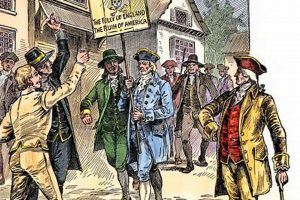
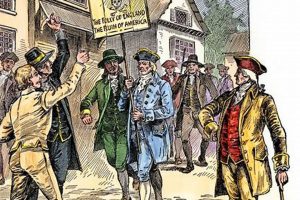
The Stamp Act Congress convened in New York City from October 7 to 25, 1765. Representatives from nine of the thirteen British colonies in North America gathered to devise a unified response to the recently enacted Stamp Act, a British parliamentary measure requiring all legal documents, permits, commercial contracts, newspapers, pamphlets, and playing cards in the American colonies to carry a tax stamp. This marked the first significant collective action by the colonies in opposition to British policies they deemed unjust.
This gathering represents a pivotal moment in American colonial history. It demonstrated the growing dissatisfaction with British rule and fostered a sense of intercolonial unity that would prove essential in the years leading up to the American Revolution. The Congress drafted petitions to the King and Parliament asserting their rights as British subjects and arguing against taxation without representation. This organized resistance played a crucial role in the eventual repeal of the Stamp Act in 1766, marking a temporary victory for the colonists and demonstrating the potential power of collective action. The experience of collaboration and shared grievance laid the groundwork for future cooperation and resistance.
Understanding the events surrounding this historical assembly allows for a deeper appreciation of the complexities of colonial America and the factors that contributed to the American Revolution. Exploring the context of the Stamp Act, the delegates’ deliberations, and the impact of their decisions provides a valuable lens through which to examine this pivotal period.
Understanding the Stamp Act Congress
Gaining a deeper understanding of the Stamp Act Congress requires exploring various facets of this historical event. The following tips offer avenues for further research and analysis.
Tip 1: Explore the context of the Stamp Act. Research the financial pressures facing Britain after the Seven Years’ War and the rationale behind Parliament’s decision to impose the Stamp Act on the colonies. Examining the broader historical context illuminates the motivations behind both British policy and colonial resistance.
Tip 2: Analyze the arguments against the Stamp Act. Investigate the colonists’ claims of “no taxation without representation” and their assertions of rights as British subjects. Understanding these arguments provides insights into the philosophical and political underpinnings of the colonial resistance movement.
Tip 3: Study the delegates of the Stamp Act Congress. Research the backgrounds, motivations, and political leanings of the individuals who represented the colonies. This provides a clearer picture of the diverse perspectives and interests at play during the Congress.
Tip 4: Examine the resolutions and petitions drafted by the Congress. Analyze the language and arguments used in these documents to gain a deeper understanding of the colonists’ grievances and their proposed solutions. These primary sources offer invaluable insight into the political climate of the time.
Tip 5: Research the impact of the Stamp Act Congress on colonial unity. Explore how the shared experience of resistance to the Stamp Act fostered a sense of collective identity and purpose among the colonies. This laid the groundwork for future cooperation in the years leading to the Revolution.
Tip 6: Consider the eventual repeal of the Stamp Act. Research the factors that contributed to the British government’s decision to repeal the Act. Understanding this outcome provides valuable context for understanding the ongoing tensions between Britain and the colonies.
By exploring these various aspects of the Stamp Act Congress, one can develop a comprehensive understanding of its significance in the lead-up to the American Revolution. This pivotal event offers valuable lessons about the power of collective action and the importance of defending fundamental rights.
Through careful examination of these historical events, a clearer understanding of the origins of the American Revolution can be achieved.
1. October 1765

October 1765 marks the specific timeframe during which the Stamp Act Congress convened. This temporal context is essential for understanding the historical significance of the event. The Stamp Act, passed by the British Parliament earlier that year, had ignited widespread resentment in the American colonies. The Congress, held from October 7th to 25th, provided a platform for colonial representatives to formally address their grievances and strategize a collective response. The timing, immediately following the implementation of the Stamp Act and preceding the escalating tensions that would culminate in revolution, underscores the Congress’s role as a pivotal turning point. This meeting provided an opportunity for colonists to articulate their objections and forge a unified front against what they perceived as unjust taxation.
The selection of October also reflects practical considerations. Harvest season had concluded, allowing delegates to travel more easily. Furthermore, the timing allowed for news of the Congress’s resolutions to reach Britain before the next session of Parliament. This strategic timing aimed to maximize the potential impact of colonial protest and increase pressure on the British government to reconsider its policies. The chosen timeframe underscores the calculated and deliberate nature of the colonists’ actions, demonstrating their commitment to seeking redress through organized political action.
In summary, October 1765 signifies more than just a date; it represents a critical juncture in the relationship between Great Britain and the American colonies. The Stamp Act Congress, convened during this month, served as a catalyst for future resistance and laid the groundwork for the events that would ultimately lead to the American Revolution. Understanding this historical context provides crucial insight into the escalating tensions and the evolving political landscape of the era.
2. New York City

New York City’s selection as the location for the Stamp Act Congress in 1765 played a significant role in shaping the event’s impact and the broader course of colonial resistance. Several factors contributed to this choice. New York’s central location among the thirteen colonies facilitated travel for representatives from different regions. This geographical centrality fostered broader participation and enhanced the Congress’s symbolic representation of colonial unity. Moreover, New York possessed established infrastructure and resources capable of accommodating the delegates and facilitating their deliberations. Its status as a major port city ensured convenient communication with Britain, allowing for efficient dissemination of the Congress’s resolutions and petitions.
Beyond logistical advantages, New York City’s vibrant political and commercial landscape provided a fertile ground for the burgeoning revolutionary spirit. The city’s diverse population and bustling mercantile activity fostered the exchange of ideas and grievances concerning British policies. The Stamp Act, with its direct impact on trade and legal transactions, had sparked particular outrage among New York merchants and lawyers, further fueling the momentum for collective action. The Congress’s proceedings, held within this politically charged environment, benefited from the city’s atmosphere of intellectual ferment and growing resistance to British rule. Examples include the active involvement of prominent New York figures like John Cruger and Robert R. Livingston, who played key roles in organizing and shaping the Congress’s agenda. Their influence, combined with the city’s broader political climate, contributed significantly to the event’s impact.
Understanding New York City’s role as the setting for the Stamp Act Congress provides crucial context for interpreting the event’s historical significance. The city’s geographic centrality, robust infrastructure, and vibrant political atmosphere fostered the Congress’s success in uniting colonial representatives and articulating a powerful message of resistance. The selection of New York City proved instrumental in shaping the course of events that would ultimately lead to American independence. The city’s contributions extended beyond mere logistical facilitation; it provided a crucial focal point for the growing movement against British imperial policies, solidifying its place as a key player in the narrative of the American Revolution. Examining the interplay between location and political action in this context underscores the importance of place in shaping historical outcomes.
3. Nine Colonies Represented

The fact that nine colonies sent representatives to the Stamp Act Congress in 1765 is a crucial detail, underscoring the growing intercolonial unity against British policies. While not all thirteen colonies participated, the presence of nine distinct delegations signified a significant collective response to the Stamp Act. This level of participation demonstrates the widespread opposition to the Act and lays the groundwork for understanding the development of colonial resistance.
- Geographic Distribution
The nine represented coloniesMassachusetts, Rhode Island, Connecticut, New York, New Jersey, Pennsylvania, Delaware, Maryland, and South Carolinaspanned a significant portion of the eastern seaboard. This geographic breadth highlights the widespread nature of the discontent and indicates that opposition to the Stamp Act transcended regional boundaries. The participation of both northern and southern colonies foreshadowed the potential for a unified colonial front against British policies. The notable absences (New Hampshire, Virginia, North Carolina, and Georgia) also offer avenues for further research into the varied responses to the Stamp Act across the colonies.
- Collective Action
The Stamp Act Congress represents an early example of organized intercolonial cooperation. The decision for representatives from different colonies to convene and collectively address their grievances marks a significant step toward greater colonial unity. The Congress demonstrated the potential for collective action, laying the foundation for future collaborative efforts in the years leading up to the American Revolution. The delegates’ joint drafting of petitions to the King and Parliament showcases the power of unified resistance.
- Diverse Representation
The delegates to the Congress represented a diverse range of social and economic backgrounds, reflecting the complexities of colonial society. Merchants, lawyers, planters, and other prominent figures participated, demonstrating the broad-based opposition to the Stamp Act. This diversity of perspectives contributed to a richer and more nuanced discussion of colonial grievances. Examining the backgrounds and viewpoints of individual delegates offers further insight into the social and political dynamics of the time.
- Limited but Significant Participation
While the absence of four colonies highlights the challenges of achieving complete colonial unity, the participation of nine colonies demonstrates a significant level of consensus. This partial representation, while not universal, still signifies a powerful message of resistance. The Congress’s resolutions and petitions, endorsed by representatives of a majority of the colonies, carried significant weight and contributed to the eventual repeal of the Stamp Act. Understanding the dynamics of participation provides a nuanced perspective on the complexities of colonial politics.
The representation of nine colonies at the Stamp Act Congress underscores the significance of the event as a pivotal moment in the growing resistance to British rule. This gathering not only provided a platform for airing grievances but also fostered a sense of shared purpose among the colonies, laying the groundwork for future collective action in the struggle for American independence. The specific number of participating colonies offers valuable insight into the evolving political landscape of the era and the complex dynamics that shaped the American Revolution.
4. Pre-Revolution

The Stamp Act Congress occurred in a period crucial for understanding the American Revolutionthe pre-revolutionary era. This period, characterized by growing tensions between Great Britain and its American colonies, witnessed a series of events that directly contributed to the outbreak of war. The Stamp Act Congress stands as a pivotal event within this pre-revolutionary context, marking a significant escalation in colonial resistance to British policies. Analyzing the Congress within this timeframe reveals its importance as a catalyst for future revolutionary action.
The Congress convened in 1765, over a decade before the Battles of Lexington and Concord, traditionally considered the start of the armed conflict. However, the seeds of revolution were sown during this pre-revolutionary period. The Stamp Act, enacted earlier in 1765, ignited widespread colonial resistance, culminating in the convening of the Congress. The Congress’s resolutions and petitions, asserting colonial rights and protesting taxation without representation, represent a critical step towards outright rebellion. The event fostered a sense of shared grievance and intercolonial unity, laying the foundation for the coordinated resistance efforts that characterized the later stages of the pre-revolutionary period and ultimately led to the war. For instance, the Committees of Correspondence, established in the wake of the Stamp Act crisis, facilitated communication and coordination among the colonies, further solidifying the bonds forged during the Congress.
Understanding the Stamp Act Congress’s place within the pre-revolutionary era provides essential context for comprehending the American Revolution’s origins. The Congress demonstrates the escalating tensions of the time, illustrating how seemingly isolated acts of resistance, like protests against the Stamp Act, contributed to a larger movement for independence. Recognizing the Congress’s pre-revolutionary context enables a deeper understanding of the complex interplay of events and grievances that ultimately transformed colonial discontent into a full-fledged revolution. The Congress serves as a powerful example of how pre-revolutionary resistance movements can lay the foundation for transformative political change.
5. Response to Stamp Act
The Stamp Act Congress is intrinsically linked to the colonial response to the Stamp Act of 1765. Understanding this connection requires examining the Congress not merely as an isolated event, but as a direct consequence of the Act and a pivotal component of the broader colonial resistance movement. The Congress represents a formalized, collective response to the Stamp Act, providing a crucial lens through which to analyze the evolving relationship between Great Britain and its American colonies. Examining the specific ways in which the Congress addressed the Stamp Act illuminates the growing divide that would eventually lead to revolution.
- Formalized Protest
The Stamp Act Congress served as a platform for formal, organized protest against the Stamp Act. Prior to the Congress, resistance had primarily manifested through localized demonstrations and boycotts. The Congress, however, brought together representatives from different colonies, allowing them to collectively articulate their grievances and devise a unified strategy. The drafting of petitions to the King and Parliament represents a shift from localized dissent to a more coordinated, intercolonial resistance movement. This formalized protest demonstrated the seriousness of colonial opposition and signaled a growing willingness to challenge British authority.
- Assertion of Rights
The Congress played a vital role in asserting colonial rights and articulating arguments against taxation without representation. Delegates argued that, as British subjects, they possessed the same rights as those residing in Great Britain, including the right to be taxed only by their own elected representatives. This assertion of rights, central to colonial arguments against the Stamp Act, laid the groundwork for future claims of autonomy and self-governance. The Congress provided a forum for these arguments to be formally articulated and disseminated, significantly contributing to the development of revolutionary ideology.
- Intercolonial Unity
The convening of the Congress itself demonstrated a growing sense of intercolonial unity. Representatives from different colonies, recognizing their shared grievances, came together to devise a collective response. This act of collaboration represented a significant step toward greater colonial cohesion and laid the foundation for future cooperative efforts in the years leading up to the American Revolution. The Congress fostered a sense of shared identity and purpose among the colonies, strengthening their collective resolve to resist British policies perceived as unjust.
- Catalyst for Further Action
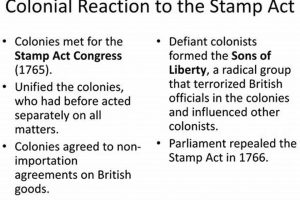
The Stamp Act Congress served as a catalyst for further resistance movements. The Congresss resolutions and petitions, though ultimately unsuccessful in immediately repealing the Stamp Act, galvanized colonial opposition and inspired further acts of defiance. The experience of collective action and the articulation of shared grievances during the Congress emboldened colonists and laid the groundwork for more radical forms of resistance, such as the formation of the Sons of Liberty and the Daughters of Liberty, which further intensified the conflict with Great Britain.
The Stamp Act Congress’s role as a response to the Stamp Act is crucial to understanding its historical significance. By examining the Congress through this lens, one can gain a deeper appreciation for the escalating tensions between Great Britain and its American colonies. The Congress not only represents a specific reaction to a particular piece of legislation but also serves as a microcosm of the broader pre-revolutionary movement, showcasing the growing colonial resistance that would ultimately culminate in the American Revolution. The Congresss focus on formalized protest, assertion of rights, intercolonial unity, and its role as a catalyst for further action provides valuable insight into the complex dynamics that shaped this pivotal period in American history.
6. First Unified Colonial Action
The Stamp Act Congress, convened in October 1765, holds a distinct significance in American history as the first unified colonial action against British policy. While individual colonies had previously protested specific measures, the Congress represents a pivotal moment of intercolonial collaboration in response to the Stamp Act. Exploring this aspect provides crucial context for understanding the development of colonial resistance and the eventual path towards revolution.
- Collective Grievance
The Stamp Act impacted all colonies, creating a shared grievance that transcended regional differences. This shared experience facilitated a collective response, as colonists recognized the need for a united front to effectively challenge British authority. The Congress provided a forum for representatives from various colonies to articulate their shared concerns and solidify a sense of common purpose.
- Coordinated Strategy
The Congress facilitated the development of a coordinated strategy for resistance. Delegates debated and agreed upon a set of resolutions and petitions to be sent to the King and Parliament, demonstrating a commitment to collective action. This coordinated approach marked a significant departure from previous localized protests and laid the groundwork for future intercolonial cooperation in resisting British policies.
- Symbolic Importance
The very act of convening the Congress held immense symbolic importance. It demonstrated to both Great Britain and the colonists themselves the potential for unified action. The Congress served as a powerful symbol of colonial solidarity and resolve, signaling a growing willingness to challenge British rule. This symbolic act of defiance laid the foundation for future collective action, contributing to the momentum of the resistance movement.
- Foundation for Future Unity
The Stamp Act Congress established a precedent for future intercolonial cooperation. The experience of working together to address a common grievance strengthened bonds between colonies and fostered a sense of shared identity. This nascent sense of unity proved crucial in the years leading up to the American Revolution, as colonists increasingly recognized the need for collective action to secure their rights and liberties. The Congress laid the institutional and ideological groundwork for the Continental Congresses that would later guide the colonies through revolution.
By examining the Stamp Act Congress as the first unified colonial action, one gains a deeper understanding of the evolutionary process of colonial resistance. The Congress served not only as a direct response to the Stamp Act but also as a catalyst for future collective action, ultimately contributing to the growing movement for independence. The unified nature of the Congress highlights the importance of collective action in challenging established power structures and shaping historical trajectories.
7. Foundation for Future Resistance

The Stamp Act Congress, convened in October 1765, served as a crucial foundation for future colonial resistance against British policies. While ostensibly a response to the Stamp Act itself, the Congress fostered intercolonial communication, established shared grievances, and developed strategies for collective action that would prove essential in the years leading up to the American Revolution. Examining the Congress through this lens reveals its lasting impact on the development of the revolutionary movement.
- Intercolonial Communication Networks
The Congress facilitated the establishment of vital communication networks between colonies. Representatives from different regions met face-to-face, forging personal connections and establishing lines of communication that would prove invaluable in coordinating future resistance efforts. The exchange of ideas and information during the Congress laid the groundwork for more formalized communication networks, such as the Committees of Correspondence, which played a crucial role in disseminating revolutionary ideas and mobilizing resistance across the colonies.
- Shared Grievances and Collective Identity
The shared experience of protesting the Stamp Act fostered a sense of collective identity among the colonies. The Congress provided a platform for delegates to articulate common grievances and recognize their shared interests in opposing British policies. This burgeoning sense of unity transcended regional differences and laid the foundation for a broader movement for colonial autonomy. The articulation of shared principles, such as “no taxation without representation,” provided a unifying rallying cry for future resistance efforts.
- Development of Resistance Strategies
The Stamp Act Congress provided an opportunity for colonists to develop and refine strategies for resistance. Delegates debated and implemented various methods, including petitions, boycotts, and non-importation agreements, which would become key tools in the broader revolutionary movement. The Congress served as a testing ground for these strategies, providing valuable experience and insights that would inform future resistance efforts. The success of the boycott in pressuring Parliament to repeal the Stamp Act demonstrated the effectiveness of collective action and encouraged the use of similar tactics in later protests.
- Precedent for Future Cooperation
The Congress established a crucial precedent for future intercolonial cooperation. The act of convening representatives from different colonies to address a shared grievance demonstrated the potential for collective action and set the stage for future collaborative efforts. This precedent proved invaluable in the lead up to the American Revolution, as colonists increasingly relied on intercolonial cooperation to organize and coordinate resistance against British rule. The Continental Congresses, which guided the colonies through the war, drew directly upon the precedent established by the Stamp Act Congress.
The Stamp Act Congress’s role as a foundation for future resistance underscores its significance as a pivotal event in the American Revolution’s prelude. By fostering communication, establishing shared grievances, developing resistance strategies, and setting a precedent for future cooperation, the Congress laid the groundwork for the organized resistance movement that would ultimately challenge British rule and lead to American independence. Understanding this aspect of the Congress allows for a more nuanced appreciation of the complex and interconnected factors that shaped the American Revolution.
Frequently Asked Questions
This section addresses common inquiries regarding the Stamp Act Congress, providing concise yet informative responses to enhance understanding of this pivotal historical event.
Question 1: Why was the Stamp Act Congress convened?
The Stamp Act Congress was convened in direct response to the British Parliament’s passage of the Stamp Act in 1765. Colonial representatives sought to devise a unified strategy to challenge the Act, which they viewed as an unjust form of taxation without representation.
Question 2: When and where did the Stamp Act Congress take place?
The Stamp Act Congress met in New York City from October 7th to 25th, 1765.
Question 3: Which colonies participated in the Stamp Act Congress?
Nine of the thirteen colonies sent representatives: Massachusetts, Rhode Island, Connecticut, New York, New Jersey, Pennsylvania, Delaware, Maryland, and South Carolina.
Question 4: What were the key outcomes of the Stamp Act Congress?
The Congress drafted a Declaration of Rights and Grievances and petitioned the King and Parliament, asserting colonial rights as British subjects and protesting taxation without representation. These documents laid the groundwork for future resistance efforts.
Question 5: Did the Stamp Act Congress achieve its immediate goals?
While the Congress did not immediately secure the repeal of the Stamp Act, it played a crucial role in mobilizing colonial resistance and demonstrating the potential for unified action. The widespread boycotts and protests that followed, partially spurred by the Congress, ultimately contributed to the Act’s repeal in 1766.
Question 6: What is the lasting significance of the Stamp Act Congress?
The Stamp Act Congress is recognized as a pivotal event in the pre-revolutionary era. It marked the first significant instance of unified colonial action against British policies, fostering intercolonial communication and laying the foundation for the resistance movements that would culminate in the American Revolution.
Understanding the context and significance of the Stamp Act Congress is essential for grasping the complex factors that led to the American Revolution. This pivotal event offers valuable insights into the evolution of colonial resistance and the struggle for self-governance.
Further exploration of the individuals involved, the specific resolutions adopted, and the broader historical context can provide an even richer understanding of this significant period in American history.
Conclusion
The examination of the Stamp Act Congress reveals its significance as a pivotal moment in the pre-revolutionary era. Convened in October 1765 in New York City, the Congress brought together representatives from nine colonies to formulate a unified response to the recently enacted Stamp Act. This collective action demonstrated the growing discontent with British policies and the increasing willingness of the colonies to assert their rights. The Congress’s resolutions and petitions, articulating arguments against taxation without representation, served as a catalyst for further resistance movements and laid the foundation for future intercolonial cooperation. While the Stamp Act itself was repealed in 1766, the Congress’s legacy extended far beyond this immediate outcome. It fostered a sense of shared identity and purpose among the colonies, contributing significantly to the escalating tensions that ultimately culminated in the American Revolution.
The Stamp Act Congress stands as a testament to the power of collective action and the importance of defending fundamental rights. This historical event offers valuable lessons about the complex relationship between government and the governed, the evolution of political dissent, and the transformative potential of unified resistance. Further exploration of this period, including the individuals involved, the specific arguments presented, and the broader historical context, can provide a deeper understanding of the forces that shaped the American Revolution and the birth of a nation. The Congress remains a critical point of study for those seeking to understand the foundations of American democracy and the ongoing struggle for liberty and self-governance.