



An Argentina classic stamps catalog is more than a price list: it is a guide to a formative period in South American postal history, when separate provinces issued stamps, a national postal system emerged, and printers experimented with designs, papers, and perforations. For collectors, the challenge is rarely just finding an attractive portrait or an early issue. It is identifying the correct stamp, understanding its postal context, and knowing which differences genuinely affect scarcity and value.
This guide explores the major issues, catalog references, identification methods, and buying considerations that make classic Argentine philately so rewarding. Whether you are sorting an inherited album or building a specialized collection, it will help you approach each stamp with greater confidence.
What Is an Argentina Classic Stamps Catalog?
An Argentina classic stamps catalog identifies and organizes early Argentine postage stamps by issue date, denomination, design, color, and other distinguishing features. Depending on its scope, it may also list provincial issues, postal stationery, varieties, cancellations, and estimates of market value.
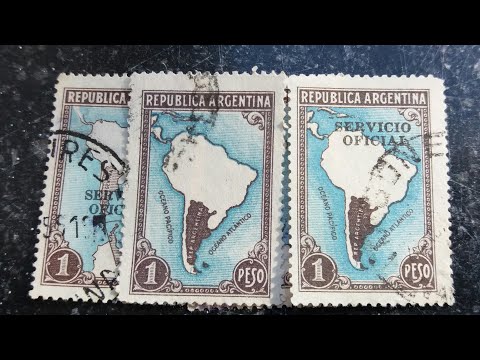
There is no universally fixed end date for the “classic” period. Many collectors focus on the nineteenth century, beginning with provincial issues of the 1850s and continuing through the early national issues. Others extend their collections into the early twentieth century. When comparing catalogs or buying an album, check which period and territories are actually covered.
Argentina’s philatelic story is especially distinctive because several provinces produced stamps before a unified national system was firmly established. A comprehensive collection may therefore include both Argentine Confederation and national issues and the separate stamps of Buenos Aires, Corrientes, Córdoba, and other provinces.
Understanding Argentina’s Earliest Stamp Issues
Provincial stamps and the road to unification
Argentina’s early postal history reflects the political divisions of the nineteenth century. Provincial stamps were not simply local versions of national issues: they were products of different administrations, printing arrangements, and postal needs. Their designs and production methods can differ markedly from one another.
Buenos Aires is particularly important. Its early stamps include the famous “Barquitos,” or little boats, issued in 1858. The ship design and distinctive format make them immediately recognizable, although identifying individual denominations and assessing condition still requires care. Buenos Aires also issued portrait stamps before its postal administration was absorbed into the national system.
Corrientes provides another collecting specialty. Its long-running issues, beginning in 1856, were locally produced and used a profile based on the French Ceres design. Collectors study their paper colors, denominations, printing impressions, and recurring plate characteristics. Because production was relatively crude, an unusual appearance alone does not prove that a stamp is a major variety.
The Argentine Confederation and national issues
The Argentine Confederation issued stamps in 1858, including designs featuring the confederation’s coat of arms. These early issues occupy a central place in an Argentina classic stamps catalog because they document an important stage in the development of national postal administration.
Later nineteenth-century issues feature prominent figures and national symbols. Portraits associated with Argentine independence and state-building, including José de San Martín and Bernardino Rivadavia, connect stamp collecting with political and cultural history. Catalog descriptions help distinguish similar-looking designs issued at different times and produced using different printing methods.
Key Classic Argentine Issues to Know
| Collecting area | Why it matters | What to examine |
| Corrientes provincial issues | Early locally produced stamps with a distinctive Ceres-inspired design | Paper, denomination, impression, margins, and plate characteristics |
| Buenos Aires “Barquitos” | Iconic 1858 ship designs from a separate provincial administration | Denomination, color, margins, cancellation, and authenticity |
| Argentine Confederation issues | Early stamps associated with the confederation’s postal system | Coat-of-arms design, paper, printing, and condition |
| Early national portrait issues | Trace the development of a unified postal system and national imagery | Portrait, inscription, perforation, watermark, and shade |
| Covers and postal history | Show stamps used to pay actual postage | Rate, route, postmark, address, and whether the stamp belongs on the cover |
This overview is a starting point, not a substitute for an illustrated catalog. Within each area, apparently small differences can separate common examples from much scarcer printings. Conversely, a dramatic color difference may result from fading, chemical exposure, or inconsistent printing rather than a separately recognized issue.
How to Use an Argentina Stamp Catalog Effectively
Major international catalogs such as Scott, Stanley Gibbons, Michel, and Yvert et Tellier can provide useful identification frameworks. Their numbering systems are proprietary and are not interchangeable. A Scott number, for example, should not be assumed to match a Michel or Gibbons number.
Specialized Argentine references and philatelic society publications can add detail that general worldwide catalogs may omit. They are particularly useful for provincial issues, printing varieties, postal markings, and covers. Check the publication date: research, market conditions, and catalog classifications can change.
- Start with the design and inscription. Identify the portrait, coat of arms, ship, or other central image, then look for the issuing authority.
- Check the denomination. Read the value and currency carefully; similar designs may appear in several denominations.
- Compare the date and issue. Use the catalog illustration and description together rather than relying on the picture alone.
- Examine physical characteristics. Measure perforations where applicable, inspect the paper, and check for a watermark if the catalog lists one.
- Assess condition and authenticity. Look for repairs, altered cancellations, thins, missing perforations, and other faults before assigning a value.
- Record the reference. Note the catalog publisher, edition, number, and relevant variety description in your inventory.
Keep tentative identifications clearly marked. Early Argentine stamps can be challenging, and a provisional catalog number is more useful than an inaccurate attribution presented as certain.
Identification Details That Affect Scarcity and Value
Imperforate margins and perforations
Many early stamps were issued imperforate and had to be separated with scissors. Collectors generally prefer examples with clear margins on all sides, especially when the design is complete. A stamp cut into the printed design can still be collectible, but its value is often lower than that of a comparable sound, four-margin example.
For perforated issues, use a perforation gauge rather than estimating by eye. Count or measure according to the gauge’s instructions, and check more than one side: some stamps have different measurements horizontally and vertically. Damaged or trimmed perforations should not be confused with a legitimately different perforation variety.
Paper, watermark, and shade
Paper thickness, texture, and color can help identify an issue, although aging and storage can alter appearance. A watermark may be visible from the back under suitable conditions, but use collector-safe equipment and methods. If you are unfamiliar with watermark fluids or handling valuable stamps, seek experienced help rather than risking damage.
Color identification is another area where caution pays. Compare stamps in consistent natural or neutral light, and remember that catalog illustrations are guides rather than exact color standards. Expert comparison with authenticated examples may be necessary for a valuable shade.
Cancellations and postal use
A cancellation can identify a town, establish a period of use, or add interest to an otherwise ordinary stamp. On early Argentine material, manuscript, numeral, and handstamped cancellations may all be relevant. However, a rare postmark is valuable only if it is genuine and appropriate to the issue.
Stamps on cover deserve particular attention. An intact envelope can preserve the postal rate, destination, route, and date in a way that a removed stamp cannot. Avoid soaking stamps from old covers until their postal history significance has been assessed.
How Much Are Classic Argentine Stamps Worth?
Classic Argentina stamp values range from modest sums for common, faulty examples to substantial prices for genuine rarities in exceptional condition. There is no reliable single price for an issue without considering its exact catalog identification and physical characteristics.

Catalog values are reference points, not guaranteed selling prices. Actual results depend on demand, condition, presentation, and the sales venue. An authenticated example with full margins and a desirable cancellation may sell very differently from a damaged stamp with the same basic catalog number.
- Authenticity: Is the stamp genuine, and are the cancellation and any claimed variety genuine?
- Condition: Are there tears, creases, thin spots, repairs, stains, or missing perforations?
- Completeness: Are the design and margins intact, and is the cover unaltered?
- Rarity and demand: How often do comparable examples appear, and do specialists actively seek them?
- Documentation: Is there a recognized expert certificate, provenance, or clear auction history?
For a realistic estimate, compare recent realized auction prices for closely matching examples, including condition and authentication status. Dealer asking prices can offer context, but they do not necessarily show what buyers ultimately paid. For potentially valuable material, obtain an independent appraisal or expert opinion before selling.
Forgeries, Reprints, and Expert Authentication
Early Argentine and provincial stamps have attracted reproductions, altered examples, and misleading descriptions. Some were made to deceive; others were produced as reference material or souvenirs. A collector should not assume that every old-looking stamp is an original, or that every reproduction was created as a fraud.
Warning signs include an impression inconsistent with genuine examples, suspicious paper, an inappropriate cancellation, or a rare variety offered without convincing documentation. Repairs and added margins can also be difficult to detect from a small online image. None of these signs alone proves a stamp is fake; they indicate that closer examination is warranted.
For an expensive purchase, ask for high-resolution images of both sides, a clear return policy, and any existing certificate. A certificate should identify the actual item and describe its condition; it is not an unconditional guarantee of current market value. Established philatelic expertizing services and specialist societies can help determine the appropriate route for examination.

Building and Caring for an Argentina Collection
Beginners can build knowledge without chasing the rarest provincial issues immediately. A focused collection of nineteenth-century national portraits, for example, offers opportunities to compare denominations, cancellations, and printing details. More advanced collectors might study Corrientes plate positions, Buenos Aires postal history, or a particular town’s cancellations.
- Buy an appropriate catalog before making expensive purchases.
- Use stamp tongs and archival-quality mounts or stock pages.
- Store material in a stable, dry environment away from direct sunlight.
- Keep certificates, invoices, and provenance records with your inventory.
- Join a philatelic society or consult specialist publications when attribution is uncertain.
Expert tip: Photograph covers and valuable stamps before changing their storage. Record both sides, dimensions, and any distinguishing marks. Good records make future identification, insurance discussions, and resale much easier.
Conclusion
A useful Argentina classic stamps catalog brings together design, production, postal use, and market context. The most rewarding approach is to start with accurate identification, study condition carefully, and treat price estimates as evidence to investigate rather than promises. From the boats of Buenos Aires to the Ceres-inspired stamps of Corrientes and the early national portraits, Argentina offers a rich field for collectors at every level.
Frequently Asked Questions About Argentina Classic Stamps
What are the first stamps of Argentina?
The answer depends on whether “Argentina” means the modern country’s territory or its national postal administration. Corrientes began issuing provincial stamps in 1856, while Buenos Aires and the Argentine Confederation issued stamps in 1858. A catalog should identify the issuing authority rather than combining these issues without distinction.
How can I identify an old Argentine stamp?
Begin with its design, inscription, and denomination. Then compare it with an illustrated catalog and check relevant details such as perforation, paper, watermark, and cancellation. For provincial issues or potentially scarce varieties, consult specialized references or an expert.
Are all old Argentina stamps valuable?
No. Age alone does not establish rarity or value. Many nineteenth-century stamps survive in quantities sufficient to make them affordable, especially when damaged. Scarcity, authenticity, condition, and collector demand matter more than age by itself.
Which catalog is best for classic Argentina stamps?
A major worldwide catalog is a practical starting point, particularly if it uses the numbering system common in your market. For detailed work on provincial issues, varieties, and postal history, supplement it with specialized Argentine literature and current research.
Should I remove an Argentine stamp from an old envelope?
Usually not before having the cover evaluated. The envelope, postmarks, routing, and postal rate may provide historical information and can make the complete item more desirable than the stamp alone.
