



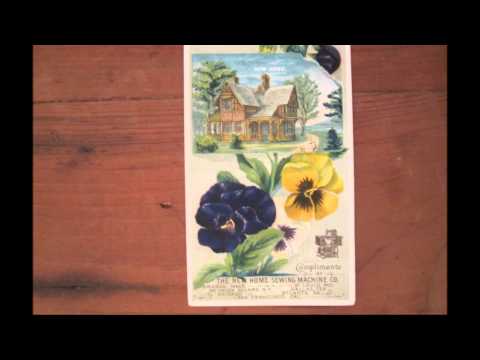
A nineteenth-century business envelope could advertise a dry-goods store, display a factory, promise prompt service, and carry a letter across the country—all on a few square inches of paper. These printed return-address designs, known as advertising corner cards, are especially rewarding because they connect commercial art with postal history. The best examples reveal not only what a company sold, but also how it wanted customers to see its business.
For collectors, researchers, and family historians, advertising corner cards offer clues about local commerce, printing technology, transportation, and everyday communication. This guide explains what they are, describes representative nineteenth-century examples, and shows how to evaluate and preserve an original cover without mistaking an attractive design for a rare one.
What Are Nineteenth-Century Advertising Corner Cards?
An advertising corner card is a printed business identification, return address, or promotional design placed in the corner of an envelope, most often at the upper left. A surviving envelope is called a cover in postal collecting. Some corner cards are modest lines of type; others expand into elaborate illustrated advertisements occupying much of the envelope’s front.
These designs became particularly useful as envelopes, commercial printing, and regular mail service spread during the nineteenth century. A corner card identified the sender and could help with return delivery, while also giving the business inexpensive exposure to clerks, postal workers, and recipients.
Not every old business envelope qualifies as an illustrated advertising cover. A simple printed return address is a corner card, but collectors often use “advertising cover” more broadly for envelopes bearing promotional text or pictures. The categories overlap, and dealers do not always use the terms consistently.
Advertising Corner Cards: Nineteenth-Century Examples
The examples below describe common historical types rather than specific, individually documented covers. Their details varied by printer, location, and decade, but each illustrates the information an original envelope can preserve.
Dry-Goods and General Store Envelopes
A dry-goods merchant might print the store name, street address, and a list of merchandise in the upper-left corner. Wording could mention textiles, clothing, household goods, or wholesale and retail sales. Some designs resemble miniature newspaper advertisements, with decorative lettering emphasizing the merchant’s name.
These covers are useful for local historians because an address can place a store on a particular street before later renumbering or redevelopment. Compare it with a dated city directory, since a company name alone may have remained in use for decades.
Farm Equipment and Agricultural Supply Cards
Agricultural implement dealers used envelopes to promote plows, harvesters, seed drills, and other machinery. An illustrated corner card might show an implement in profile or depict a farm scene. Such images linked a local dealer to the growing market for mechanized agriculture.
Look carefully at whether the envelope names a manufacturer, an agent, or a retailer. A local seller’s imprint does not necessarily mean the machinery was made locally. Advertising language such as “sole agent” can also describe a territory or arrangement that needs independent verification.
Hotel and Railroad-Related Covers
Hotel corner cards frequently advertised a property’s name and location, sometimes with a building illustration or claims about conveniences. A hotel near a railroad station might emphasize its accessibility to travelers. Railroad-related business covers, meanwhile, could feature locomotives, routes, or corporate offices.
These envelopes are particularly informative when paired with dated postmarks. A hotel image may show a building before an alteration or fire, although printers sometimes reused older artwork. Treat the illustration as evidence of advertising practice, not automatically as a precise architectural record.
Factories, Mills, and Industrial Landscapes
Manufacturers often presented their premises as proof of scale and reliability. A corner card could depict a mill, warehouse, foundry, or factory complex, sometimes with prominent smokestacks and surrounding rail lines. The printed image communicated industrial capacity even when the actual letter concerned a routine order or invoice.
Collectors should remember that commercial engravings could be idealized. A large-looking complex, busy yard, or dramatic plume of smoke may reflect the advertiser’s ambitions as much as the site’s appearance. Maps, photographs, and insurance surveys can help test the image against other evidence.
Patent Medicine and Pharmacy Advertising
Drugstores and proprietary-medicine sellers used corner cards to promote remedies, preparations, and retail services. Some designs rely on typography; others include bottles, portraits, or eye-catching claims. These covers illuminate nineteenth-century marketing and the largely different regulatory environment in which many products were sold.
Historical health claims should not be treated as medical advice or evidence that a remedy worked. For research, focus instead on the seller, product name, language, and distribution network, then consult contemporary advertisements or pharmaceutical reference collections.
How Corner Cards Were Printed and Designed
Many nineteenth-century envelopes were printed by letterpress, a relief process in which inked, raised surfaces transferred text and images to paper. Printers could combine metal type with an engraved illustration, producing everything from plain address blocks to intricate commercial scenes. Wood engravings and other relief blocks enabled detailed images to appear alongside type.
Lithography was another important process, especially for designs requiring drawn images or more elaborate visual effects. Color printing existed, but a colorful envelope should not automatically be assigned to a particular decade or technique. Paper, printing processes, and design styles overlap across long periods.
Printers often balanced several practical elements:
- Business identity: The firm’s name, proprietor, address, and sometimes an agent’s name.
- Product information: A concise list of goods, services, or specialties.
- Visual appeal: Decorative type, borders, trade symbols, portraits, or buildings.
- Postal function: Space for the recipient’s address, stamp, and postmark.
- Return instructions: Language requesting return to the sender if the letter could not be delivered.
The placement and printing tell their own story. A small design tucked into the upper-left corner may have been economical and functional; a large illustrated cover made a stronger advertising statement but still needed room to travel through the mail.
Comparing Common Nineteenth-Century Corner Card Types

| Type | Typical features | Research value |
| Text-only business card | Name, address, and line of trade | Identifies a merchant and business location |
| Illustrated product cover | Machinery, merchandise, bottles, or trade symbols | Shows how products were presented to customers |
| Building or factory cover | Hotel, shop, mill, or industrial complex | Supports research into architecture and local industry |
| Transportation-related cover | Railroad imagery, routes, or travel connections | Connects commerce with travel and distribution |
| Return-instruction cover | Printed sender information and return request | Shows the practical postal role of business identification |
These types are not mutually exclusive. A single factory cover might include a product illustration, a return instruction, and several lines of promotional text.
How to Identify and Date an Original Advertising Cover
Dating a nineteenth-century advertising envelope works best when several independent clues agree. Start with the postal evidence, then investigate the business and the printed design.
- Read the postmark: Record the town, state or country, and visible date. A legible year can anchor when the cover was mailed, though unclear strikes require caution.
- Examine the postage: Identify the stamp or postal stationery imprint and check its period of use. A stamp’s issue date establishes a possible starting point, not necessarily the mailing date.
- Transcribe the corner card: Capture the exact company name, address, proprietor, products, and return wording.
- Check the contents: If an original letter or invoice remains, compare its date and address with the envelope. Contents can be separated or mismatched over time, so consistency matters.
- Consult period sources: Search city directories, newspapers, business histories, maps, and digitized library collections for the same firm and address.
- Assess the whole object: Consider paper, printing, wear, and postal markings together rather than relying on one stylistic detail.
An unused envelope can still be authentic and historically interesting, but it may be harder to date precisely. If the business operated from 1882 to 1905, for example, an undated cover may span both centuries unless additional evidence narrows the range.
What Makes an Advertising Corner Card Valuable?
Value depends on the interaction of subject, condition, rarity, postal history, and collector demand. A dramatic illustration may attract visual collectors, while a plain-looking cover from a short-lived post office may interest postal historians. Neither age nor elaborate printing guarantees a high price.
Scarcity and Historical Context
Ask what is actually scarce: the business, the design, the postmark, the stamp combination, or the complete surviving correspondence. A cover associated with a well-documented local industry may be compelling even if similar envelopes exist. Conversely, a seller’s claim that an item is “one of a kind” should be supported by evidence, not inferred from a limited online search.
Condition and Completeness
Collectors generally prefer clear printing, readable postal markings, an intact stamp, and an envelope without major tears, heavy staining, or extensive repairs. However, ordinary opening marks and mailing wear are part of a used cover’s history. Do not remove a stamp or cut out the illustration: separating the elements destroys context and can substantially reduce collecting interest.
Comparable Sales
To estimate market value, look for completed sales of genuinely comparable covers, not just asking prices. Compare the business category, illustration, date, condition, postal markings, and whether the item was mailed. Specialist auction archives and established postal-history dealers can provide useful reference points, but a professional appraisal is sensible for a potentially significant item.
Where to Find and Research Historical Advertising Envelopes
Antique paper fairs, stamp shows, postal-history dealers, estate collections, and online auctions are common sources. Libraries, historical societies, and museum collections may also hold examples, often with catalog descriptions that help identify a firm or location.
Search beyond the exact phrase “advertising corner cards 19th century examples.” Try combinations such as “illustrated advertising cover,” “Victorian business envelope,” “nineteenth-century postal history,” or a specific trade and town. Add a company name or street address when you have one. Digitized newspapers and city directories can then turn a decorative envelope into a documented business story.
Before buying online, request images of both sides and any contents. Check whether the cover has been repaired, whether the stamp belongs to the envelope, and whether the seller distinguishes a used original from an unused example or reproduction.
Preserving Antique Advertising Covers
Store covers flat in archival-quality sleeves or folders made for paper collectibles. Keep them in a stable, dry environment away from direct sunlight, heat, and damp basements. Handle them with clean, dry hands and support fragile envelopes fully when moving them.
Avoid adhesive tape, lamination, household cleaning products, and attempts to flatten an envelope with heat or moisture. If a valuable cover has severe damage or an active conservation problem, consult a professional paper conservator. Keep research notes separately so inscriptions, prices, or labels do not mark the original paper.
Conclusion
Nineteenth-century advertising corner cards are small but unusually rich historical documents. Their lettering and illustrations show how businesses marketed themselves, while addresses, stamps, and postmarks connect that message to a real place and journey. Whether you collect factory scenes, hotel covers, or local merchants, the strongest approach is to preserve the complete envelope and verify its story through independent sources.
Frequently Asked Questions
What is a nineteenth-century advertising corner card on an envelope?
It is a printed sender identification or promotional design, usually in the upper-left corner of a business envelope. It may contain only a name and address or add illustrations, product information, and return instructions.

How can I tell whether an old advertising cover is from the 1800s?
Look for a dated postmark, identify the postage, and research the company’s name and address in period directories or newspapers. An undated or unused envelope may require a broader date range, especially if the business continued into the twentieth century.
Are illustrated Victorian advertising envelopes always valuable?

No. Attractive artwork can increase interest, but price also depends on scarcity, condition, subject matter, postal markings, and demand. Compare completed sales of similar covers rather than relying on age or a seller’s asking price alone.
What is the difference between a corner card and an advertising cover?
A corner card is the printed identification or advertisement on an envelope, typically at the upper left. An advertising cover is the envelope bearing promotional material. One object can be described using both terms.
Should I remove the stamp from a nineteenth-century business envelope?
No. The stamp, postmark, address, and printed advertising are most informative together. Removing the stamp separates it from its postal context and may reduce the cover’s historical and market value.
