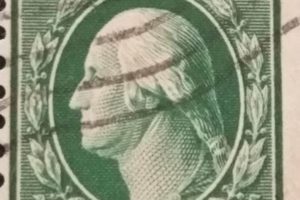
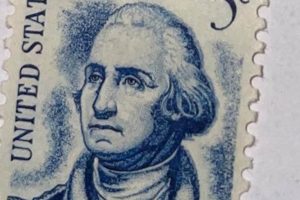
The earliest United States postage stamps featuring George Washington were issued with a face value of one cent. These stamps, first released in 1847, depicted the nation’s first president and marked a significant step in the development of the American postal system. An example is the 1851 issue featuring a portrait of Washington based on a painting by Gilbert Stuart.
These initial low-denomination stamps played a vital role in facilitating widespread and affordable communication throughout the burgeoning nation. They democratized access to mail services, enabling individuals to connect with one another across growing distances for a minimal cost. Their introduction reflects a pivotal moment in the history of American communication and commerce. These stamps are now highly collectible and offer a window into the postal history and engraving techniques of the era.
This article will further delve into specific issues, varieties, and the enduring legacy of these foundational pieces of American philately. Topics covered will include design variations, printing methods, notable examples, and the evolution of the one-cent Washington stamp throughout the 19th and 20th centuries.
Tips for Collecting Early One-Cent Washington Stamps
Careful consideration of several factors is essential when pursuing these significant pieces of American philately. Condition, authenticity, and variety play key roles in determining a stamp’s value and historical significance.
Tip 1: Assess Condition Carefully: Examine stamps for flaws such as tears, thin spots, creases, and fading. The presence and severity of these issues greatly impact value.
Tip 2: Verify Authenticity: Compare potential purchases against established catalogs and consult with reputable experts to avoid forgeries or altered stamps.
Tip 3: Understand Different Issues: Familiarize oneself with the various printings and design variations throughout the years, such as the 1851 and 1857 issues. Subtle differences can significantly affect a stamp’s rarity and collectibility.
Tip 4: Focus on Centering and Margins: Well-centered designs with ample margins are generally more desirable and valuable than off-center or poorly-margined examples.
Tip 5: Consider Perforations: Examine the perforations (small holes separating stamps) for their gauge (size) and condition. Damage or variations can be significant.
Tip 6: Proper Storage is Crucial: Protect stamps from light, humidity, and temperature fluctuations by storing them in archival-quality albums or protective sleeves.
Tip 7: Research Current Market Values: Consult reputable price guides, auction results, and dealer catalogs to understand prevailing market prices and trends.
By adhering to these guidelines, collectors can build a meaningful collection of these historical artifacts, preserving a tangible link to America’s postal heritage.
The following section will offer a detailed exploration of specific examples and further insights into the world of early one-cent Washington stamps.
1. George Washington's Portrait

George Washington’s portrait is intrinsically linked to the one-cent stamp, serving as more than mere decoration. Its presence establishes the stamp’s identity and underscores its connection to American history and national identity. The choice of Washington’s likeness for this early and essential postal medium reflects his foundational role in the nation’s formation. The portrait transforms the stamp into a miniature tribute, reinforcing Washington’s image as a symbol of the United States. The 1847 issue, the first to bear his image, utilized a profile based on a bust by Jean-Antoine Houdon, solidifying this association from the inception of U.S. postage. Subsequent issues, such as the 1851 stamp based on a Gilbert Stuart painting, further cemented this connection. The portrait’s presence immediately communicated the stamp’s origin and purpose, visually linking it to the authority and legitimacy of the federal government.
Different portrayals of Washington on various one-cent stamp issues offer valuable insights into evolving artistic styles and printing techniques. The transition from the Houdon-inspired profile to the Stuart frontal portrait demonstrates a shift in artistic preferences and engraving capabilities. Examining these variations allows collectors and historians to understand the development of stamp production and the changing perceptions of Washington’s image over time. For instance, the 1857 issue, featuring a subtly different Stuart portrait and a new frame design, exemplifies the ongoing refinement of stamp production. This evolution in design details adds to the complexity and richness of these stamps as historical artifacts.
Recognizing the specific portrait used on a one-cent stamp is crucial for accurate identification, authentication, and valuation. Distinguishing between the Houdon and Stuart portrayals, for example, is fundamental for proper categorization and understanding a stamp’s historical context within the broader narrative of one-cent Washington stamps. This detailed analysis provides essential knowledge for collectors and researchers seeking to navigate the nuances of these philatelic treasures. Understanding the significance and variations in Washington’s portrait on these stamps enhances their appreciation as both historical documents and artistic representations.
2. One-cent Denomination

The one-cent denomination is fundamental to the significance of the Washington one-cent stamp. It represents the stamp’s initial purpose: providing affordable access to postal services. This accessibility fostered widespread communication and democratized the exchange of information across the burgeoning nation. Understanding the implications of this low denomination is crucial for appreciating the stamp’s impact on 19th-century American society.
- Affordability and Accessibility:
The one-cent rate made mailing letters and other documents financially viable for a broader population. This affordability contributed significantly to increased literacy rates and facilitated personal and commercial correspondence across geographical distances. The low cost removed a significant barrier to communication, fostering social and economic development.
- High Volume Usage:
The low denomination resulted in high demand and widespread usage of the one-cent Washington stamp. This extensive circulation led to numerous printings and variations in design and production, providing collectors with a rich array of examples to study and acquire. The sheer volume of these stamps underscores their integral role in everyday life during this period.
- Reflecting Economic Conditions:
The one-cent denomination reflects the economic realities of the 19th century. It represented a substantial value for many, underscoring the importance of efficient and affordable communication for personal and business transactions. Changes in postal rates over time offer insights into economic shifts and evolving postal policies.
- Foundation of Philatelic Study:
The prevalence of the one-cent Washington stamp, combined with its numerous variations, makes it a cornerstone of philatelic study. Collectors can trace the evolution of printing techniques, design changes, and paper types through the examination of these readily available stamps. They provide a tangible link to the history of postal services and offer a window into 19th-century engraving and printing practices.
The one-cent denomination of the Washington stamp is inextricably linked to its historical importance. By facilitating widespread communication and reflecting the economic context of its time, it played a pivotal role in shaping American society. The abundance and variety of these stamps provide collectors and historians with invaluable resources for understanding the development of postal services and the evolution of printing techniques throughout the 19th and early 20th centuries.
3. Early U.S. postage
The one-cent Washington stamp represents a pivotal moment in early U.S. postage. Before adhesive stamps, postal rates were complex and often based on distance and weight, paid by the recipient upon delivery. This system proved inefficient and cumbersome. The introduction of the 1847 one-cent issue, featuring Washington, marked a significant shift toward a pre-paid, standardized system. This innovation simplified postal operations and made mail services more accessible to the public, fostering greater communication and facilitating commerce. The stamp itself became a symbol of national unity, bearing the image of the nation’s first president.
The adoption of pre-paid postage, exemplified by the one-cent Washington stamp, directly influenced the growth and development of the United States. Improved communication facilitated westward expansion, economic growth, and the dissemination of information. Businesses could more easily correspond with suppliers and customers across vast distances, while families stayed connected with loved ones migrating westward. Newspapers and periodicals reached wider audiences, contributing to a more informed citizenry. The efficient and affordable postal system, symbolized by the one-cent Washington stamp, became the backbone of a rapidly expanding nation.
Understanding the context of early U.S. postage is essential for fully appreciating the significance of the one-cent Washington stamp. It represents not just a philatelic artifact, but a tangible representation of a transformative period in American history. The stamp’s introduction reflects broader societal shifts towards efficiency, accessibility, and national cohesion. Its study provides insights into the challenges and innovations of early postal systems and their profound impact on communication, commerce, and national development. Further exploration into specific printing variations and usage patterns of the one-cent Washington stamp offers deeper understanding of this pivotal era in postal history.
4. Historical Artifact

The “washington 1 cent stamp” transcends its function as mere postage; it serves as a tangible historical artifact, offering insights into 19th and early 20th-century America. These stamps are miniature time capsules, reflecting the political, economic, and technological landscape of their era. Their design, printing methods, and usage patterns provide valuable clues about historical communication practices, artistic trends, and even the economic climate of the time. For example, the shift in printing techniques from the 1847 issue to later versions demonstrates advancements in engraving and printing technology. The sheer volume of one-cent stamps produced reflects their crucial role in facilitating widespread communication across the expanding nation.
Specific examples illustrate the historical value embedded in these stamps. The 1851 issue, with its distinctive perforations, provides evidence of the adoption of new stamp production methods. Examining the wear and tear, cancellations, and any handwritten notes on individual stamps offer glimpses into their usage and journey through the postal system. These seemingly minor details provide researchers and collectors with valuable historical data, connecting individual stamps to broader historical narratives. The different paper types used throughout the stamp’s production history can even reveal information about paper manufacturing practices and resource availability during specific periods.
Recognizing the “washington 1 cent stamp” as a historical artifact allows for a deeper understanding of its significance beyond its face value. These stamps offer a unique window into the past, revealing the evolution of communication technologies, economic conditions, and even artistic sensibilities. Preserving and studying these artifacts contribute significantly to historical scholarship, enabling a more nuanced understanding of 19th and 20th-century American life. This understanding underscores the importance of philately not merely as a hobby, but as a discipline contributing to broader historical knowledge. The study of these stamps allows researchers to piece together a more complete picture of the past, illuminating the lives and experiences of individuals and communities during these transformative periods.
5. Collectible Item

The “washington 1 cent stamp” holds a prominent position within philately as a highly sought-after collectible. Its historical significance, coupled with the numerous variations produced over time, contributes to its desirability among collectors. Understanding the factors that drive its collectibility provides insight into the broader world of stamp collecting and the historical value embedded within these small pieces of paper.
- Rarity and Scarcity
Certain issues and varieties of the one-cent Washington are scarcer than others, driving up their value and desirability among collectors. Factors contributing to rarity include limited print runs, specific plate varieties, and unique errors in production. For example, the 1857 3-cent Washington, while not a one-cent stamp, shares a similar design and illustrates how variations within a series can significantly impact rarity. The 1857 3-cent with a “B” grill is considerably rarer than the “C” grill variety. Similarly, certain shades and perforation types of the one-cent Washington command higher prices due to their scarcity.
- Condition and Preservation
The condition of a stamp plays a crucial role in determining its value. Stamps free from flaws such as tears, creases, thin spots, and fading are more desirable and command higher prices. Proper storage in archival-quality materials is essential for preserving a stamp’s condition and maximizing its long-term value. A well-preserved example of an early one-cent Washington can be significantly more valuable than a damaged example of the same issue. The presence of original gum, the adhesive on the back of the stamp, also significantly impacts value.
- Historical Context and Significance
The historical context surrounding a stamp contributes significantly to its collectibility. Stamps associated with significant historical events, such as the introduction of new postal rates or changes in printing technology, often hold greater appeal for collectors. The one-cent Washington, being one of the earliest U.S. postage stamps, carries significant historical weight. Specific issues, like those used during the Civil War era, have added historical context, increasing their collectibility.
- Demand and Market Trends
Collector demand and market trends influence the value of stamps. Fluctuations in market interest can impact prices, creating opportunities for both buyers and sellers. Understanding current market trends and consulting reputable price guides and auction records is essential for making informed collecting decisions. The ongoing interest in classic U.S. stamps ensures a continuing market for the one-cent Washington, though specific values fluctuate based on market conditions and collector preferences.
The collectibility of the “washington 1 cent stamp” is a multifaceted aspect of its legacy. Rarity, condition, historical significance, and market demand all contribute to its value and desirability. Understanding these factors enables collectors to appreciate these small pieces of paper not just as historical artifacts, but as tangible pieces of American history with enduring cultural and financial value. By carefully considering these elements, collectors can build meaningful collections that preserve and celebrate the rich history of U.S. postage.
Frequently Asked Questions
This section addresses common inquiries regarding one-cent Washington stamps, providing concise and informative responses.
Question 1: What distinguishes the different types of one-cent Washington stamps?
Variations exist across different issue years, impacting portraits, frames, paper types, and perforations. The 1847 issue features a Houdon profile, while the 1851 utilizes a Stuart portrait. Subsequent issues introduce further design modifications.
Question 2: How is the value of a one-cent Washington stamp determined?
Several factors influence value, including condition, rarity, centering, and demand. Stamps in pristine condition with vibrant colors, sharp impressions, and ample margins command higher prices. Rarer varieties, such as those with specific perforation errors or shade variations, are generally more valuable.
Question 3: Where can one acquire one-cent Washington stamps?
Reputable stamp dealers, online marketplaces, and auctions offer avenues for acquiring these stamps. Due diligence is recommended to ensure authenticity and accurate condition assessments. Consulting established philatelic resources aids in informed purchasing decisions.
Question 4: How should one-cent Washington stamps be stored to prevent damage?
Archival-quality materials, such as acid-free albums and protective sleeves, are essential for preservation. Avoid exposure to direct sunlight, humidity, and temperature fluctuations to prevent fading, discoloration, and other forms of deterioration. Proper storage safeguards these historical artifacts for future generations.
Question 5: Are there forged or counterfeit one-cent Washington stamps?
Counterfeits exist, emphasizing the importance of careful authentication. Consulting experienced philatelists or reputable dealers provides expert guidance in verifying authenticity. Comparing potential purchases with established catalogs and utilizing specialized tools can help identify forgeries.
Question 6: How can one learn more about one-cent Washington stamps?
Numerous resources provide in-depth information. Philatelic societies, specialized publications, online forums, and museum exhibits offer valuable learning opportunities. Engaging with these resources allows individuals to expand their knowledge and connect with other enthusiasts.
Careful consideration of these frequently asked questions provides a foundation for understanding and appreciating the historical significance and collectible nature of one-cent Washington stamps.
This concludes the FAQ section. The following section will delve into advanced collecting strategies for these fascinating pieces of American history.
One-Cent Washington Stamps
This exploration has illuminated the multifaceted significance of the one-cent Washington stamp. From its initial purpose of facilitating affordable communication to its current status as a sought-after collectible, its impact on American history and culture remains undeniable. Key aspects discussed include the evolution of its design, the intricacies of its production, and the factors influencing its value within philately. The examination of various issues, coupled with insights into proper preservation techniques, provides a comprehensive understanding of these miniature historical artifacts.
The one-cent Washington stamp stands as a testament to the enduring power of objects to connect us with the past. Further research and continued appreciation of these philatelic treasures promise deeper insights into 19th and 20th-century America. Their study offers not just a glimpse into postal history, but a broader understanding of communication, technology, and the evolution of a nation. These unassuming pieces of paper hold within them stories waiting to be discovered, reminding us of the enduring power of historical artifacts to illuminate the past and inform the present.