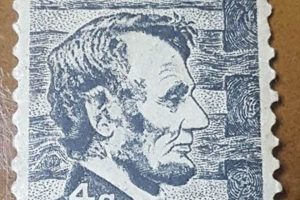
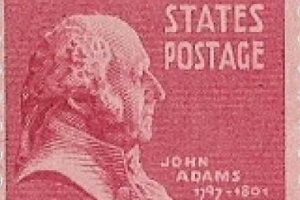
A United States postage stamp issued in 1954 featured the 16th president’s portrait and had a face value of four cents. This denomination frequently covered the first-class postage rate for standard letters within the United States during that era. One specific design within this category featured a portrait based on Douglas Volk’s 1907 bust of Abraham Lincoln.
The four-cent denomination played a significant role in everyday communication for Americans throughout the mid-20th century. Representing an affordable means of correspondence, these stamps facilitated personal and business connections across the nation. Issued during a period of growth and change in the United States, these small pieces of postal history offer a glimpse into the communication practices of the time. They reflect not only postal rates but also design trends and the enduring importance of national figures in American iconography.
Further exploration will delve into specific designs, printing methods, and notable uses of this particular postage value within the broader context of American philately and history. This includes an examination of the stamp’s variations, its role in specific historical events, and its enduring appeal among collectors.
Tips for Collectors of the 1954 Four-Cent Lincoln Stamp
These tips offer guidance for individuals interested in acquiring or enhancing a collection focused on the four-cent Lincoln stamp issued in 1954.
Tip 1: Identify the specific design. Several varieties exist within the four-cent Lincoln stamp category issued during 1954. Distinguishing features, such as the presence of perforation gauge variations and differences in the shade of the stamp’s color, are crucial for proper identification.
Tip 2: Examine the condition. Condition significantly influences value. Factors such as centering, gum condition (if unused), and the absence of tears or creases are critical assessment points.
Tip 3: Research current market values. Stamp catalogs and online marketplaces offer insights into recent sales data, providing a benchmark for valuation.
Tip 4: Consult with reputable dealers. Experienced philatelic dealers possess specialized knowledge regarding stamp identification, condition assessment, and market pricing.
Tip 5: Consider professional grading services. For valuable stamps, third-party grading and encapsulation services can enhance their marketability and provide an objective assessment of condition.
Tip 6: Store stamps properly. Appropriate storage protects stamps from environmental damage. Acid-free albums and protective mounts help preserve condition and value.
Tip 7: Focus on building a cohesive collection. Developing a thematic collection, such as acquiring examples of all known varieties or focusing on specific plate number blocks, enhances the collection’s overall coherence and intellectual value.
Following these tips facilitates informed acquisition and responsible stewardship of these historical artifacts, fostering a deeper understanding and appreciation for their significance within American philately.
By applying these practices, collectors can better navigate the complexities of the philatelic market and cultivate collections of enduring value and historical interest.
1. Abraham Lincoln Portrait

The portrait of Abraham Lincoln featured on the four-cent United States postage stamp issued in 1954 serves as a crucial link between national iconography and postal functionality. This depiction of the 16th president reinforces his enduring presence in American culture while also serving the practical purpose of identifying a specific postal denomination.
- Symbolic Representation
Lincoln’s image on the stamp acts as a symbol of national unity and historical significance. His likeness instantly connects the stamp to American history and values, further solidifying its cultural relevance.
- Design Source
The specific portrait used on the 1954 four-cent stamp derives from a bust created by sculptor Douglas Volk in 1907. This artistic origin imbues the stamp with a connection to a specific work of art, adding another layer of meaning for collectors and historians.
- Distinctive Feature
The portrait’s presence distinguishes the four-cent stamp from other denominations and contributes to its unique identity within a larger series of postage. This clear visual identifier ensures easy recognition and efficient postal operations.
- Philatelic Significance
The use of Lincoln’s portrait elevates the stamp’s appeal among collectors. The connection to a prominent historical figure increases the stamp’s desirability and contributes to its value within the philatelic market.
The presence of Lincoln’s portrait on the 1954 four-cent stamp transforms a utilitarian object into a piece of historical and cultural significance. This combination of practical function and symbolic representation ensures its continued interest for both stamp collectors and those studying American history and visual culture. Furthermore, the choice of a specific artistic rendering of Lincoln adds depth and complexity to the stamp’s story, highlighting the intersection of art, history, and postal communication.
2. Four-cent denomination

The four-cent denomination represents a crucial element in understanding the 1954 Lincoln US postage stamp. This specific face value dictated the stamp’s utility within the postal system, directly linking it to the cost of first-class mail delivery during that period. The four-cent rate typically covered the cost of sending a standard letter within the United States. Consequently, the widespread use of this denomination for everyday correspondence resulted in substantial print runs and contributed to its prevalence in both period usage and present-day collections. A letter mailed using this stamp offers a tangible example of its practical function. The cost of mailing influenced communication practices, impacting both the volume of mail and the choices individuals and businesses made regarding correspondence.
Examining postal rate history reveals the fluctuating cost of mailing a letter. The four-cent rate reflects a specific point in this history, situated between earlier lower rates and subsequent increases. Understanding this context provides insights into economic factors and the affordability of communication during the mid-20th century. The availability of the four-cent Lincoln stamp facilitated communication during a period of growth and change in American society. Its widespread usage contributed to the dissemination of information, personal connections, and business transactions.
The association of the four-cent denomination with the 1954 Lincoln stamp provides a focal point for collectors and researchers. This specific intersection of face value, historical period, and iconic portraiture creates a distinct collectible item. Furthermore, the four-cent denomination offers a lens through which to analyze postal history, economic trends, and communication practices of the era. Challenges in researching this topic might include variations within the four-cent stamp category itself and the need to correlate postal rates with specific periods and types of mail. However, these challenges also present opportunities for deeper exploration and a richer understanding of the stamp’s historical significance.
3. 1954 Issuance
The year 1954 represents a specific and significant point in the history of the four-cent Lincoln US postage stamp. Issuance within this particular year places the stamp within a distinct historical and philatelic context. 1954 marks a specific period in the evolution of US postage design, printing techniques, and postal rates. The stamps issued in 1954 reflect the prevailing aesthetic and technological standards of the time. Furthermore, the 1954 issuance date helps differentiate these stamps from earlier and later issues featuring Lincoln, enabling collectors and researchers to categorize and identify them precisely. For example, the 1954 series employed specific printing processes and perforation gauges that distinguish them from Lincoln stamps issued in other years.
Understanding the 1954 issuance date allows for a deeper appreciation of the stamp’s historical significance. This date connects the stamp to the specific social, political, and economic climate of the mid-20th century United States. The stamps circulated during a period of postwar growth, technological advancement, and evolving communication practices. Analyzing mail volume and usage patterns during 1954 provides insights into how Americans communicated and the role of postal services in their daily lives. Researching contemporaneous events and cultural trends further illuminates the backdrop against which these stamps were issued and used. This context enhances understanding beyond mere philatelic categorization and delves into the stamp’s role within broader historical narratives.
The 1954 issuance date serves as a crucial identifier for collectors and researchers seeking to study or acquire these stamps. Precise dating enables differentiation within the broader category of Lincoln stamps and facilitates accurate valuation. The 1954 issuance provides a key for accessing relevant philatelic resources, including catalogs, market data, and specialized publications. Challenges might arise in distinguishing 1954 issues from stamps of similar design issued in adjacent years. Careful examination of printing characteristics and perforation details becomes essential for proper identification. This underscores the importance of meticulous research and reliance on authoritative sources within the field of philately. Ultimately, a precise understanding of the 1954 issuance contributes significantly to a comprehensive appreciation of the four-cent Lincoln stamp’s place within American philatelic and broader historical narratives.
4. Standard Postage Usage

The four-cent Lincoln US postage stamp issued in 1954 played a vital role in standard postage usage during that era. Its designated value corresponded directly to the first-class postage rate for a standard letter within the United States. This alignment with the prevailing postal rate ensured its widespread adoption for everyday correspondence. The stamp facilitated communication across the nation, supporting personal letters, business mailings, and official documents. The volume of mail generated during this period underscores the stamp’s extensive utilization and its integral function within the postal system. The stamp’s design, featuring a readily identifiable portrait of Abraham Lincoln, contributed to efficient processing and delivery of mail.
The prevalence of the four-cent Lincoln stamp in period correspondence reflects its significance in facilitating communication during a time of considerable social and economic change. The readily available and affordable stamp enabled individuals and businesses to connect across geographical distances. This ease of communication contributed to national cohesion and the efficient exchange of information. Examples of its standard usage include mailing personal letters, sending invoices, and distributing advertising materials. Examining surviving envelopes and postal records provides tangible evidence of the stamp’s pervasive use and its role in connecting individuals and communities across the United States.
Understanding the link between standard postage usage and the four-cent Lincoln stamp offers insights into communication practices of the mid-20th century. This connection illuminates not only postal history but also the social and economic dynamics of the era. Challenges in researching this area might include the sheer volume of mail processed during this period and the potential degradation of historical postal records. However, the widespread use of the stamp ensures ample opportunity for continued research and analysis, offering a tangible link to the past and a deeper understanding of the stamp’s practical significance within American history. The four-cent Lincoln stamp, through its function in standard postage, served as a silent facilitator of countless interactions, contributing significantly to the fabric of American society during the 1950s.
5. Collectible Item

The 1954 four-cent Lincoln US postage stamp holds a significant position as a collectible item within philately. Its historical context, widespread usage, and accessible price point contribute to its appeal among collectors of various experience levels. Understanding the stamp’s collectibility requires examination of its specific attributes and their relevance within the broader philatelic market. This exploration will analyze the factors contributing to the stamp’s desirability and its enduring presence in collections worldwide.
- Historical Context
Issued during a period of significant change and growth in the United States, the 1954 four-cent Lincoln stamp embodies a specific moment in American history. This association with a particular era enhances its value and provides a tangible connection to the past. The stamp’s usage during this time reflects prevailing communication practices and offers a glimpse into the social and economic landscape of the mid-20th century. For example, its use on correspondence related to historical events of 1954 adds another layer of historical significance.
- Variations and Rarities
The existence of different printing variations, plate number blocks, and perforation types creates opportunities for specialized collecting within the 1954 four-cent Lincoln stamp category. Collectors often seek specific varieties, adding complexity and depth to their collections. For instance, certain plate number blocks are known to be scarcer than others, increasing their desirability and value. Recognizing these variations requires careful examination and knowledge of specialized philatelic resources.
- Condition and Grading
The condition of a stamp significantly impacts its collectibility and value. Factors such as centering, gum condition (for unused stamps), and the absence of flaws like tears or creases play a crucial role in determining a stamp’s grade and subsequent market value. Collectors often seek stamps in pristine condition, and professional grading services provide standardized assessments that enhance confidence and transparency within the philatelic market.
- Accessibility and Affordability
The relatively widespread availability and affordable price point of the 1954 four-cent Lincoln stamp make it an attractive entry point for novice collectors. This accessibility encourages participation in philately and provides a foundation for building broader collections. While rare varieties can command higher prices, common examples remain within reach of most collectors, fostering a sense of inclusivity within the hobby.
The convergence of historical context, variations, condition considerations, and affordability solidifies the 1954 four-cent Lincoln stamp’s status as a desirable collectible. Its appeal spans from novice collectors seeking accessible entry points to experienced philatelists pursuing rare varieties and pristine examples. This widespread appeal contributes to the stamp’s enduring presence in collections and its continued relevance within the philatelic market. Furthermore, the stamp serves as a tangible representation of a specific historical moment, offering collectors a connection to the past and a window into the communication practices of mid-20th century America.
6. Philatelic History

Philatelic history and the 1954 four-cent Lincoln US postage stamp share a crucial connection. This stamp represents a specific point within the broader narrative of American postal history, reflecting design trends, printing technologies, and postal rate structures of the mid-20th century. Its issuance coincided with a period of growth in stamp collecting, further solidifying its place within philatelic history. Understanding this context provides valuable insights into the stamp’s significance beyond its face value. For instance, the stamp’s design, derived from a 1907 bust of Lincoln by sculptor Douglas Volk, reflects artistic trends of the early 20th century that continued to influence stamp design decades later. The choice of Lincoln’s image also reinforces the enduring presence of historical figures in American iconography. The stamp’s widespread usage due to its correspondence with the first-class postage rate for standard letters further cements its importance within philatelic history, offering a tangible example of a commonly used postal artifact.
The four-cent Lincoln stamp’s role in philatelic history extends beyond its initial issuance. Its presence in countless collections, both large and small, ensures its continued relevance among collectors and researchers. The stamp’s accessibility and affordability make it a popular choice for novice collectors, while variations in printing and perforation provide opportunities for more specialized collecting. The study of these variations contributes to a deeper understanding of printing processes and quality control measures employed by the Bureau of Engraving and Printing during that era. Furthermore, examination of postmarks and cancellations found on used examples offers valuable data for reconstructing mail routes and postal practices of the 1950s. For example, a 1954 four-cent Lincoln stamp postmarked in a specific town can pinpoint a letter’s origin and provide insights into historical mail flow.
A nuanced understanding of the 1954 four-cent Lincoln stamp’s place within philatelic history enriches appreciation for its significance. This understanding moves beyond mere identification and categorization, offering insights into broader historical, social, and technological contexts. While challenges exist in accessing comprehensive postal records and tracing individual stamp usage, the stamp’s prevalence and continued presence in collections provide ample opportunities for research. Ultimately, the four-cent Lincoln stamp serves as a tangible link to the past, offering a window into American communication practices, design aesthetics, and the ever-evolving landscape of philately itself.
Frequently Asked Questions
This section addresses common inquiries regarding the four-cent Lincoln US postage stamp issued in 1954, providing concise and informative responses.
Question 1: What distinguishes the 1954 four-cent Lincoln stamp from other Lincoln stamps issued in different years?
Key distinctions include the specific portrait rendition based on the Douglas Volk bust, the 1954 issuance date itself, and variations in perforation gauge and printing methods used during that year. Careful examination of these details aids accurate identification.
Question 2: Why is the four-cent denomination significant?
The four-cent denomination corresponded to the first-class postage rate for standard letters within the United States in 1954. This resulted in widespread usage, making the stamp a common artifact of mid-20th century communication.
Question 3: How can one determine the value of a 1954 four-cent Lincoln stamp?
Several factors influence value, including condition, centering, presence of gum (if unused), and any existing flaws. Consulting stamp catalogs, reputable dealers, and online marketplaces provides insights into current market valuations. Professional grading can enhance value for particularly well-preserved examples.
Question 4: Are there different varieties within the 1954 four-cent Lincoln stamp category?
Yes, variations exist, including different perforation gauges and subtle shade differences in the stamp’s color. Specialized catalogs and philatelic resources provide detailed information regarding these distinctions.
Question 5: Where can one acquire 1954 four-cent Lincoln stamps?
Reputable stamp dealers, online marketplaces, stamp shows, and auctions represent potential sources for acquisition. Due diligence is recommended to ensure authenticity and accurate condition assessment.
Question 6: What is the best way to store these stamps to preserve their condition?
Acid-free albums and protective mounts safeguard stamps from environmental damage, including humidity, light exposure, and pests. Proper storage maintains condition and helps preserve value over time.
Understanding these key aspects of the 1954 four-cent Lincoln stamp provides a foundation for appreciating its historical and philatelic significance. Further research using specialized resources can enhance this knowledge and facilitate informed collecting practices.
This concludes the FAQ section. The following section will provide a glossary of philatelic terms relevant to the 1954 four-cent Lincoln stamp.
The 1954 Four-Cent Lincoln US Postage Stamp
This exploration of the 1954 four-cent Lincoln US postage stamp has provided a comprehensive overview of its significance within philately and American history. Key aspects discussed include the stamp’s design, its role as a representation of Abraham Lincoln, its function within the postal system of the era, and its enduring appeal as a collectible item. The connection between the four-cent denomination and the standard first-class postage rate of the time underscores the stamp’s widespread usage and its impact on communication practices during the mid-20th century. Variations in printing and perforation offer further avenues for philatelic study, adding depth and complexity to collecting and research. Moreover, the stamp’s accessibility and affordability make it a popular choice among collectors, ensuring its continued presence in collections worldwide.
The 1954 four-cent Lincoln stamp represents more than just a postal artifact; it embodies a tangible link to a specific period in American history. Further research and study within the field of philately offer opportunities to uncover deeper historical connections and expand understanding of this unassuming yet significant piece of postal history. Its continued presence in collections ensures that the legacy of this small stamp will endure, offering future generations a tangible connection to the past.