

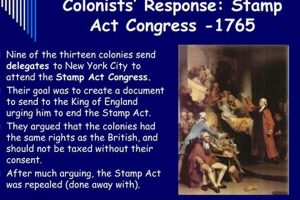

Colonial reaction to the 1765 Stamp Act was swift and multifaceted, ranging from boycotts and protests to intellectual arguments and organized political resistance. The Act, which imposed a tax on all printed... Read more »
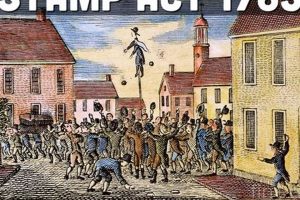
The Stamp Act of 1765, requiring colonists to pay a tax on printed materials, ignited widespread resistance in the American colonies. Colonists formed groups like the Sons of Liberty, boycotted British goods,... Read more »


Virginia’s House of Burgesses witnessed fiery oratory against the 1765 British levy on printed materials in the American colonies. A young legislator, known for his persuasive rhetoric, introduced resolutions denouncing the tax... Read more »
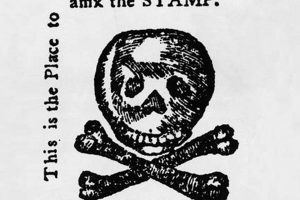
Depictions of the Stamp Act of 1765, whether through simple sketches or elaborate illustrations, can encompass a variety of subjects. These might include representations of the stamps themselves, scenes of colonial protests... Read more »

A concise explanation of the 1765 legislation levied by the British Parliament requiring all printed materials in the American colonies to carry a tax stamp can be expressed in a single sentence.... Read more »

The Stamp Act, requiring embossed revenue stamps on various printed materials in the American colonies, was enacted by the British Parliament in 1765 and repealed in 1766. This legislation mandated that legal... Read more »

The formal declarations issued by the Stamp Act Congress in 1765 outlined colonial grievances against British taxation without representation. These pronouncements asserted the colonists’ rights as Englishmen, including the right to trial... Read more »
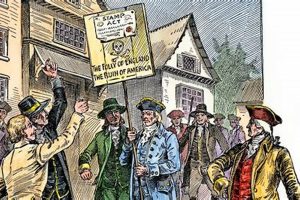
The Stamp Act of 1765, along with several other taxes levied by the British Parliament upon the American colonies, sparked widespread resistance due to the colonists’ belief that these measures represented unjust... Read more »
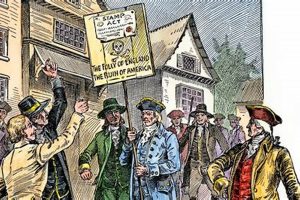
The British Parliament’s passage of the Stamp Act in 1765 marked a significant turning point in the relationship between Great Britain and its American colonies. This legislation imposed a tax on all... Read more »
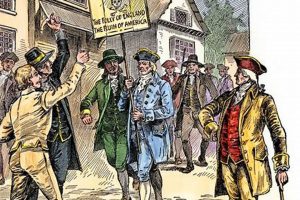
The Stamp Act Congress convened in New York City from October 7 to 25, 1765. Representatives from nine of the thirteen British colonies in North America gathered to devise a unified response... Read more »