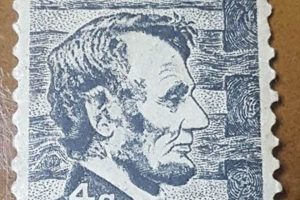
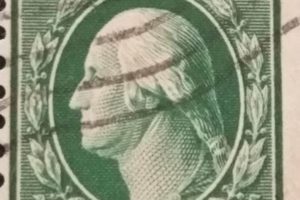
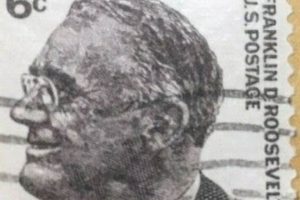
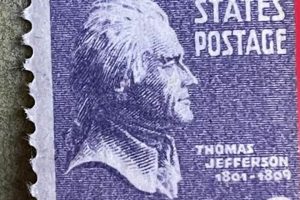
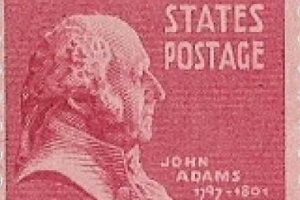
This specific issue, released as part of a large set of new designs in 1880, represents a key moment in American philately. The 1880 series, often referred to as the “American Bank Note Company” issues, marked a shift in production and design. The one-cent denomination, featuring the head of Benjamin Franklin, was a workhorse of the postal system, used for everyday correspondence and printed in vast quantities.
These stamps offer a tangible connection to a pivotal period in US history. The relatively low face value of the one-cent stamp made it accessible to a broad segment of the population, reflecting the increasing importance of written communication in commerce and personal life during this era. Studying these stamps provides insights into printing techniques of the time, postal rates, and even the cultural climate of late 19th-century America. Their widespread usage contributes to their availability today, making them an excellent starting point for collectors.
Further exploration of this topic will cover specific design details, variations, and the historical context surrounding the 1880 series. Additional areas of interest include examining the impact of these stamps on postal history and discussing their enduring appeal to philatelists.
Tips for Evaluating 1880 One-Cent Stamps
Careful examination is crucial when assessing these historical artifacts. Condition significantly impacts value and desirability. The following tips offer guidance for both novice and experienced collectors.
Tip 1: Centering: Examine the margins surrounding the central design. Stamps with balanced, even margins are highly prized.
Tip 2: Color: The original shade should be a rich, deep brown. Fading or discoloration can detract from value. Compare the stamp’s color to certified examples.
Tip 3: Perforations: Check for clean, well-defined perforations. Damage or missing perfs significantly reduce a stamp’s worth.
Tip 4: Gum: Original gum, if present, should be intact and undisturbed. Regummed or hinged examples are less desirable.
Tip 5: Cancellation Marks: Clear, legible cancellations can add historical interest. Heavy or distracting cancellations may decrease value depending on the stamp’s rarity.
Tip 6: Paper Type: The 1880 series was printed on different paper types. Identifying the specific paper variety can be important for accurate assessment.
Tip 7: Expertise: For valuable or rare examples, consulting a professional philatelic expert is recommended for authentication and grading.
By focusing on these key aspects, collectors can gain a deeper understanding of condition and its impact on value. This knowledge allows for informed decisions during acquisition and enhances appreciation for these historical pieces.
The following section will delve into specific examples and illustrate the practical application of these evaluation techniques.
1. American Bank Note Company Printing
The American Bank Note Company’s involvement in producing the 1880 series, including the one-cent stamp, represents a significant chapter in American philately. Understanding this connection provides crucial context for appreciating the stamp’s historical and collectible value. The company’s printing expertise and influence on design elements shaped the characteristics of this iconic issue.
- Engraving Expertise
The American Bank Note Company possessed advanced engraving capabilities, resulting in intricate and detailed designs. This expertise is evident in the crisp, finely executed portrait of Benjamin Franklin on the one-cent stamp. Such high-quality engraving served as a deterrent to counterfeiting and enhanced the stamp’s aesthetic appeal.
- Production Scale
The company’s large-scale printing capacity enabled the production of vast quantities of stamps required to meet the growing demands of the postal service. This widespread availability contributed to the one-cent stamp’s ubiquity and its enduring presence in collections today. The sheer volume produced also presents collectors with opportunities to find examples in varying conditions.
- Design Influence
The American Bank Note Company played a role in shaping the overall design aesthetic of the 1880 series. This influence extended to elements such as frame lines, lettering, and the overall layout of the stamp. The resulting standardized format contributed to the series’ cohesive visual identity.
- Security Measures
In addition to intricate engraving, the company incorporated various security features to prevent counterfeiting. These measures, while often subtle, played a crucial role in maintaining the integrity of the postal system. The specific techniques employed by the American Bank Note Company are of significant interest to philatelists specializing in this era.
The American Bank Note Company’s printing prowess significantly impacted the 1880 one-cent stamp, influencing its design, production, and security. These factors contribute to the stamp’s enduring appeal among collectors and its importance within the broader context of 19th-century postal history. Studying these aspects provides valuable insight into the stamp’s historical significance and its place within American philately.
2. Benjamin Franklin Portrait
The portrait of Benjamin Franklin on the 1880 one-cent stamp serves as more than mere decoration; it represents a symbolic link between the nation’s founding ideals and its burgeoning postal system. Franklin’s prominent role in early American postal history makes his image a fitting choice for this ubiquitous denomination, further solidifying his legacy and associating him with efficient communication and national unity.
- Historical Significance
Franklin’s contributions as an early Postmaster General for the colonies underscore the portrait’s relevance. His efforts to establish and improve postal routes laid the groundwork for the nation’s communication infrastructure. The portrait, therefore, commemorates his pivotal role in shaping the very system the stamp represents.
- Iconographic Representation
The image portrays Franklin as a respected statesman, reflecting his intellectual prowess and contributions to the founding of the nation. This depiction reinforces his status as a symbol of American ingenuity and reinforces the stamp’s authority as an instrument of official communication.
- Widespread Recognition
Franklin’s readily identifiable image fostered public trust and familiarity with the stamp. This widespread recognition contributed to the acceptance and usage of the postal service. His likeness served as a visual reminder of the nation’s values and the importance of reliable communication.
- Enduring Legacy
The continued use of Franklin’s portrait on postage throughout subsequent decades solidifies his enduring legacy within the postal system. The 1880 one-cent stamp marks one instance in a long tradition of associating Franklin with American communication, highlighting the lasting impact of his contributions.
The inclusion of Benjamin Franklin’s portrait on the 1880 one-cent stamp elevates the stamp from a simple postal instrument to a symbolic representation of American history and ingenuity. This deliberate design choice underscores Franklin’s foundational role in the postal system and reinforces his enduring legacy within the fabric of the nation. The portrait’s presence adds depth and historical context to the stamp, enriching its significance for collectors and historians alike.
3. One-Cent Denomination
The one-cent denomination of the omnibus 1880 issue played a crucial role in the accessibility and widespread usage of postal services during this period. This affordability facilitated communication for a broader segment of the population, impacting both personal correspondence and commercial activities. Examining the implications of this low denomination provides valuable insights into the stamp’s historical context and significance.
- Affordability and Accessibility
The low cost of the one-cent stamp made postage accessible to a wider range of individuals, including those with limited financial resources. This affordability democratized written communication, allowing more people to participate in correspondence and fostering social connections across geographical distances. It also facilitated the growth of businesses reliant on mail order catalogs and advertising.
- High Volume Usage
The one-cent denomination became a workhorse of the postal system, used extensively for everyday correspondence, circulars, and printed materials. This high volume of usage resulted in large print runs, leading to a greater number of surviving examples available to collectors today. The prevalence of these stamps offers opportunities to study variations in printing and paper types.
- Postal Rate Structure
The one-cent denomination reflected the postal rate structure of the time, providing an economical option for single-piece letters and lightweight printed matter. This rate structure played a role in shaping communication practices and influencing the volume of mail handled by the postal service. The one-cent rate incentivized the use of postcards and brief letters.
- Commercial Applications
Businesses utilized the one-cent stamp for mass mailings, advertising, and billings. The low cost made it feasible to reach a larger audience through direct mail campaigns, contributing to the growth of advertising and commerce. This usage further solidified the one-cent stamp’s role in the expanding American economy.
The one-cent denomination of the 1880 omnibus issue significantly impacted communication practices and commerce during this era. Its affordability broadened access to postal services, fueled high-volume usage, and facilitated business applications. Understanding the implications of this denomination provides a deeper appreciation for the stamp’s historical significance and its contribution to the development of the American postal system. This accessibility cemented the one-cent stamp’s place as a key artifact of late 19th-century communication.
4. 1880 Issue Date
The 1880 issue date holds significant relevance for the one-cent stamp, placing it within a specific historical and philatelic context. This date marks the introduction of a new series of stamps produced by the American Bank Note Company, signifying a transition in design and printing techniques. Understanding the 1880 issue date allows for accurate identification and authentication, crucial for collectors and historians alike. It also provides a framework for analyzing the stamp’s usage during a period of significant economic and social change in the United States.
The 1880 issue followed earlier series produced by the National Bank Note Company, showcasing distinct differences in engraving style and overall appearance. Distinguishing the 1880 issue from earlier and later releases is essential for determining value and rarity. For example, the perforations, paper type, and shade of the one-cent stamp can vary depending on the printing period, influencing its collectibility. The 1880 date pinpoints the stamp’s production within a specific timeframe, enabling researchers to connect it with contemporary postal rates, usage patterns, and historical events.
In summary, the 1880 issue date serves as a critical identifier for the one-cent stamp, differentiating it from other similar issues. This date provides crucial context for understanding the stamp’s production, design, and usage within the broader historical landscape. Recognizing the significance of the 1880 issue date enhances the ability to accurately assess the stamp’s philatelic and historical value, contributing to a more comprehensive understanding of its place within American postal history. This knowledge enables collectors and researchers to connect seemingly small details with larger narratives of economic development, communication practices, and technological advancements in 19th-century America.
5. Widespread Usage
The widespread usage of the 1880 one-cent stamp stemmed directly from its affordability and the expanding communication needs of a growing nation. This low denomination made postage accessible to a broad spectrum of society, facilitating both personal correspondence and the burgeoning mail-order industry. The sheer volume of stamps produced reflects the integral role this denomination played in everyday communication during this era. Examples of its use include personal letters, bill payments, subscription renewals, and advertising circulars. This prevalence resulted in a substantial number of surviving examples, offering present-day collectors ample opportunities for study and acquisition. The stamp’s ubiquitous nature provides a tangible connection to the communication practices of late 19th-century America.
The high volume of use contributes significantly to the 1880 one-cent stamp’s importance within philately. The abundance of surviving examples allows for detailed analysis of printing variations, paper types, and cancellation methods. The stamp’s widespread distribution also means that examples can be found with a wide range of cancellations, reflecting diverse geographical locations and postal routes. These variations offer valuable insights into postal history and provide collectors with opportunities to specialize in specific aspects of the 1880 issue. Moreover, the stamp’s commonality makes it an accessible entry point for those beginning to explore stamp collecting.
Understanding the widespread usage of the 1880 one-cent stamp provides crucial context for appreciating its historical and philatelic significance. This usage reflects the evolving communication landscape of the late 19th century, highlighting the increasing reliance on postal services for both personal and commercial purposes. The stamp’s accessibility contributed to the democratization of written communication, enabling wider participation in the exchange of information and ideas. The sheer volume of surviving examples offers a tangible link to this era, allowing researchers and collectors to explore the intricacies of postal history and the stamp’s enduring relevance within the field of philately. The widespread usage underscores the stamp’s importance not just as a postal artifact, but as a reflection of broader societal trends and historical developments.
6. Philatelic Importance
The omnibus 1880 one-cent stamp holds a significant place within philately due to a confluence of factors. Its high production volume, widespread usage, and position within a pivotal period of American postal history contribute to its enduring appeal among collectors. The stamp serves as a readily available and affordable entry point for those new to the hobby, while also offering opportunities for advanced collectors to specialize in variations, cancellations, and plate varieties. The 1880 issue, including the one-cent denomination, represents a transition in printing and design, marking the shift to production by the American Bank Note Company. This change resulted in distinct characteristics that differentiate the 1880 series from earlier issues, adding another layer of complexity and interest for philatelists.
Several key aspects enhance the stamp’s philatelic importance. The Benjamin Franklin portrait connects the stamp to a prominent figure in early American postal history, further enriching its historical context. The one-cent denomination’s affordability resulted in widespread usage across various correspondence types, from personal letters to commercial mailings. This ubiquity leads to a diverse range of cancellations and usage markings, providing collectors with opportunities to study postal routes, rates, and historical events. Furthermore, the 1880 issue offers a wealth of plate varieties and printing errors, adding another dimension for specialized collecting and research. For example, variations in shade, perforation gauge, and paper type can significantly impact a stamp’s value and rarity.
Understanding the philatelic importance of the omnibus 1880 one-cent stamp provides collectors with a framework for appreciating its value and pursuing specialized collecting interests. Its historical context, combined with the potential for in-depth study of variations and cancellations, elevates the stamp beyond a simple postal artifact. The accessibility of the one-cent denomination allows both novice and seasoned collectors to engage with this historically significant issue. Further research into specific plate varieties, cancellation types, and historical usage can deepen understanding and contribute to a richer appreciation of this seemingly commonplace yet remarkably significant stamp within the world of philately.
Frequently Asked Questions
This section addresses common inquiries regarding the omnibus 1880 one-cent stamp, providing concise and informative responses for both novice collectors and seasoned philatelists.
Question 1: How can one differentiate the 1880 one-cent stamp from similar issues of different years?
Key distinguishing features include the American Bank Note Company imprint, specific perforation gauge measurements, and subtle variations in the portrait engraving compared to earlier National Bank Note Company issues. Specialized catalogs and online resources offer detailed comparisons.
Question 2: What factors influence the value of an 1880 one-cent stamp?
Condition plays a critical role, with well-centered examples exhibiting vibrant color and intact original gum commanding higher prices. Rarity, determined by factors such as plate varieties and cancellation types, also significantly impacts value.
Question 3: Are there known counterfeits of the 1880 one-cent stamp, and how can they be identified?
Counterfeits exist, though they are often distinguishable through careful examination of engraving details, paper type, and perforation characteristics. Consultation with experienced philatelic experts is recommended for authentication of potentially valuable examples.
Question 4: Where can one acquire genuine 1880 one-cent stamps for a collection?
Reputable stamp dealers, online marketplaces specializing in philately, and auctions offer avenues for acquisition. Exercising due diligence regarding seller reputation and stamp authenticity is crucial.
Question 5: What resources are available for researching and identifying variations within the 1880 one-cent stamp issue?
Specialized stamp catalogs, philatelic societies, and online databases provide detailed information regarding plate varieties, shades, and cancellation types. These resources aid collectors in identifying specific characteristics and understanding their significance.
Question 6: Why is the 1880 one-cent stamp considered a worthwhile addition to a philatelic collection?
Its historical significance, affordability, and availability make it an excellent starting point for new collectors. Additionally, the stamp offers opportunities for advanced collectors to specialize in variations and study the postal history of the period.
Careful examination, informed decision-making, and utilization of available resources contribute to a rewarding collecting experience focused on the 1880 one-cent stamp. This knowledge empowers collectors to build meaningful collections grounded in historical and philatelic understanding.
The following section will delve further into specific examples of variations within the 1880 one-cent stamp, providing a practical application of the information presented here.
Conclusion
The omnibus 1880 one-cent stamp represents a significant artifact within American postal and philatelic history. Exploration of its production by the American Bank Note Company, the iconic Benjamin Franklin portrait, the implications of its one-cent denomination, its placement within the 1880 issue, its widespread usage, and its enduring philatelic importance reveals a wealth of information about late 19th-century communication practices and printing technologies. This seemingly commonplace stamp offers a tangible connection to a transformative period in American history.
Further research and dedicated study of variations within the 1880 one-cent stamp issue offer opportunities for continued discovery. Careful examination of individual stamps, informed by available resources, enhances appreciation for the nuances of printing, paper types, and cancellation markings. The omnibus 1880 one-cent stamp stands as a testament to the power of philately to illuminate historical narratives and preserve tangible links to the past. Its enduring presence in collections underscores the importance of preserving these small yet significant pieces of history for future generations.