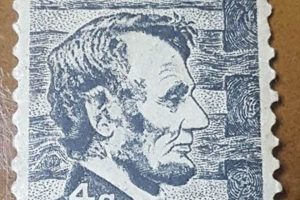
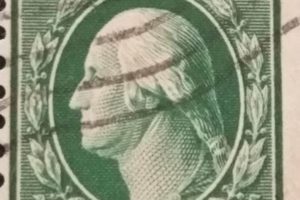
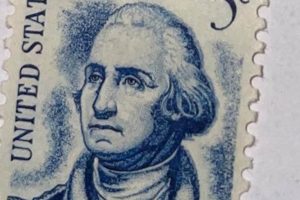
A United States postage stamp issued with a face value of three cents, featuring an image of George Washington, can command a wide range of prices in today’s market. Factors such as the stamp’s specific design, issue date, condition (mint, used, cancelled), and any existing errors or varieties significantly influence its worth. For instance, a pristine, unused three-cent Washington stamp from the 1850s could be considerably more valuable than a used, later issue.
Understanding the nuances of these philatelic details is crucial for collectors and enthusiasts. Accurate valuation requires careful consideration of these factors, utilizing specialized catalogs like the Scott catalogue, and often consulting with experienced philatelic appraisers. The historical context surrounding the stamp’s issuance also plays a role, as stamps from particular periods or commemorating specific events can hold greater historical significance, impacting their desirability and thus their value. These small pieces of paper offer glimpses into American history, reflecting changing printing techniques, artistic styles, and national priorities over time.
This exploration delves further into the complexities of assessing early American postage, examining specific examples of three-cent Washington stamps, and offering guidance on how to identify and value these historical artifacts. Topics covered will include a detailed examination of key design variations, an overview of grading standards, and resources for conducting further research.
Tips for Evaluating Early American Postage
Accurate assessment of early American postage requires careful consideration of several factors. The following tips provide guidance for navigating the complexities of these historical artifacts.
Tip 1: Consult Specialized Catalogs: Utilize reputable philatelic catalogs, such as the Scott catalogue, to identify specific stamps and gain preliminary value estimations. These resources provide detailed information on various issues, including images and pricing.
Tip 2: Assess Condition Carefully: Condition plays a crucial role in determining value. Examine stamps closely for any signs of wear, including tears, creases, thin spots, and fading. Mint condition stamps, particularly those with original gum, typically command higher prices.
Tip 3: Identify Design Variations: Be aware of subtle design differences within a given issue. Variations in perforation, shade, and watermark can significantly impact a stamp’s value. Specialized literature and expert consultation can aid in identifying these nuances.
Tip 4: Understand Historical Context: Research the historical period surrounding the stamp’s issue. Stamps commemorating significant events or reflecting particular printing techniques can hold greater historical value.
Tip 5: Seek Expert Opinions: For high-value stamps or complex issues, consult experienced philatelic appraisers. Professional authentication and grading can provide added assurance and help determine fair market value.
Tip 6: Consider Centering and Margins: Examine the centering of the design within the stamp’s frame. Well-centered stamps with balanced margins are generally more desirable.
Tip 7: Note Cancellation Types: Different cancellation methods and markings can affect value. A clear, unobtrusive cancellation is often preferred over heavy or distracting marks.
By carefully considering these factors, collectors can gain a deeper understanding of the value and historical significance of early American postage. Accurate assessment enables informed collecting decisions and preservation of these historical artifacts.
This information provides a foundation for building a comprehensive understanding of philately and engaging with the rich history embedded within these small pieces of paper. The subsequent sections will delve into specific case studies and offer practical examples.
1. Condition
Condition is paramount in determining a 3-cent Washington postage stamp’s value. The degree of preservation directly impacts desirability and price. Even minor imperfections can significantly influence a stamp’s market worth. Understanding the various aspects of condition allows for more accurate appraisals and informed collecting decisions.
- Centering
Centering refers to the position of the printed design within the stamp’s margins. Ideally, the design should be perfectly balanced with equal borders on all sides. Off-center stamps, where the design is closer to one or more edges, are generally less valuable. The degree of off-centering impacts the price; slightly off-center stamps might experience a minor reduction, while severely off-center examples can be significantly devalued.
- Gum
The presence and condition of original gum, the adhesive applied to the back of unused stamps, is a critical factor. Mint stamps with undisturbed, full original gum command premium prices. Hinged gum, where a hinge has been used to mount the stamp in an album, diminishes value. Regummed stamps, where the original gum has been replaced, are generally less desirable than original gum examples.
- Faults
Faults encompass a range of imperfections, including tears, creases, thin spots, stains, and short perforations. These flaws detract from a stamp’s desirability and negatively impact its value. The severity of the fault influences the degree of devaluation; minor imperfections might have a small effect, while significant flaws can render a stamp virtually worthless.
- Cancellations
Cancellations, the markings applied to stamps to prevent reuse, also influence value. Light, clear cancellations that do not obscure the design are generally preferred. Heavy or messy cancellations, especially those that obliterate significant portions of the stamp’s design, can reduce its value. Certain types of cancellations, such as fancy cancels or first-day-of-issue cancellations, can sometimes enhance a stamp’s desirability.
These facets of condition work in concert to determine a 3-cent Washington stamp’s overall grade and market value. A stamp in perfect condition with flawless centering, full original gum, and no faults will command the highest price. Conversely, a stamp with significant flaws will be worth considerably less. Therefore, careful evaluation of these factors is essential for accurate appraisal and informed collecting practices.
2. Issue Date

Issue date significantly impacts a 3-cent Washington postage stamp’s value. Earlier issues generally command higher prices due to factors like lower print runs, increased rarity resulting from attrition over time, and historical significance. Stamps from the first few decades of issuance, particularly those before the widespread adoption of mechanized printing techniques, are often more sought after by collectors. For example, an 1851 3-cent Washington, part of the first series of perforated U.S. stamps, holds greater value than a later issue from the 1870s, even in comparable condition. The 1851 issue represents an important milestone in philatelic history, further contributing to its desirability and value.
Beyond general chronological scarcity, specific issue dates can carry additional weight. Stamps issued to commemorate historical events, or those representing short-lived design variations within a particular series, can become highly collectible. Furthermore, understanding printing processes and paper types associated with specific issue dates helps collectors identify genuine stamps and avoid forgeries. Variations in perforation types, ink colors, and watermarks can also be tied to specific periods of production, adding another layer of complexity to valuation based on issue date. Pinpointing the precise issue date requires careful examination and often consultation with specialized resources like the Scott catalogue.
Therefore, accurately determining a 3-cent Washington stamp’s issue date is crucial for accurate valuation. It allows collectors to assess rarity, historical context, and potential design variations, all of which contribute to a stamp’s market worth. This information is essential for making informed purchasing decisions and building a valuable and historically significant collection. Understanding the relationship between issue date and value equips collectors to navigate the complexities of the stamp market and appreciate the historical narrative embedded within these small artifacts.
3. Design Variations

Design variations play a crucial role in determining the value of a 3-cent Washington postage stamp. Subtle differences in design elements, often overlooked by the casual observer, can significantly impact a stamp’s rarity and desirability among collectors. Understanding these nuances is essential for accurate valuation and informed collecting practices. These variations can arise from different printing processes, die changes, paper types, and other factors related to production.
- Perforations
Perforations, the small holes punched around a stamp to facilitate separation, exhibit variations that affect value. Different perforation gauges (the number of perforations per two centimeters) exist, and some stamps exhibit imperforate edges. The placement and type of perforations can distinguish different printings and significantly impact value. For instance, an early imperforate 3-cent Washington commands a higher premium than a later perforated issue. Collectors often specialize in specific perforation varieties, adding another layer of complexity to the market.
- Shades and Colors
Variations in shade and color can result from different ink batches, printing processes, and paper types. A seemingly minor difference in shade can distinguish a rare variety from a common one, significantly impacting value. Specialized color charts and expert opinions are often necessary to discern these subtle differences. For example, a 3-cent Washington with a deep rose shade might be considerably more valuable than one with a pale rose shade, even within the same issue. The study of these variations constitutes an entire subfield within philately.
- Watermarks
Watermarks, faint designs embedded in the paper during production, are another key design variation. Different watermark patterns or the absence of a watermark can distinguish specific printings and affect value. Detecting watermarks often requires specialized tools and techniques, such as holding the stamp up to a light source or using a watermark detector fluid. Certain watermark varieties on 3-cent Washington stamps are considered scarcer and more desirable, increasing their market value.
- Die Varieties
Die varieties encompass a range of minor flaws or variations that occur during the stamp production process. These can include cracks in the printing plates, re-engraved elements, and double transfers. Identifying die varieties often requires meticulous examination and comparison with known examples. Certain die varieties on 3-cent Washington stamps are highly sought after by collectors, commanding substantial premiums due to their rarity and the specialized knowledge required for their identification.
These design variations, often minute but significant, add layers of complexity to the valuation of 3-cent Washington postage stamps. Careful examination, consultation with specialized resources, and expertise in identifying these variations are essential for accurate appraisal. Understanding these nuances allows collectors to appreciate the intricate history and artistry embedded within these seemingly simple pieces of paper, further enriching the collecting experience and contributing to the preservation of philatelic history.
4. Rarity
Rarity significantly influences the value of a 3-cent Washington postage stamp. Scarcity, driven by factors like limited print runs, specific design variations, or historical events impacting survival rates, directly correlates with market value. Stamps issued in smaller quantities or those surviving in fewer numbers due to usage or damage command higher prices. The interplay between supply and demand dictates that as rarity increases, so does the potential value, assuming consistent collector interest. For instance, the 1857 3-cent Washington, issued with a Type I perforation, exists in significantly fewer numbers than the later Type II perforation of the same design. This scarcity contributes to the Type I’s substantially higher value amongst collectors.
Understanding rarity requires considering factors beyond initial print runs. Subsequent events, like natural disasters or wartime destruction, can drastically reduce surviving quantities of specific issues, increasing their rarity and value over time. Specific plate varieties or errors occurring during the printing process can also create rare and highly sought-after stamps. The 1861 3-cent Washington, printed on silk paper due to a wartime paper shortage, exemplifies this phenomenon. Its limited production and unique substrate contribute to its exceptional rarity and high value.
Accurately assessing rarity requires in-depth research using specialized catalogs like the Scott catalogue, which provides detailed information on known varieties, print runs, and relative scarcity. Consulting with expert philatelic appraisers is also beneficial, especially when evaluating potentially rare or valuable stamps. Understanding the role of rarity in determining value empowers collectors to make informed decisions, appreciate the historical context of their collections, and potentially identify undervalued stamps based on their scarcity. The pursuit of rarity adds a layer of complexity and excitement to stamp collecting, driving the search for elusive treasures and contributing to the preservation of philatelic history.
5. Market Demand
Market demand significantly influences the value of a 3-cent Washington postage stamp. Collector interest, driven by factors like historical significance, aesthetic appeal, and perceived rarity, directly impacts a stamp’s market price. Fluctuations in demand, influenced by trends within the philatelic market and broader economic conditions, can cause values to rise or fall. Understanding these dynamics is crucial for collectors seeking to assess current market values and make informed decisions.
- Collector Trends
Current collecting trends play a substantial role in determining market demand. Periods of heightened interest in specific historical periods, printing techniques, or design variations can drive up demand and prices for corresponding 3-cent Washington stamps. For instance, a surge in popularity of 19th-century American philately might increase demand for early 3-cent Washington issues, regardless of their inherent rarity. These trends are often cyclical and influenced by factors such as new discoveries, exhibitions, and publications within the philatelic community.
- Economic Conditions
Broader economic conditions can also influence market demand for collectibles like stamps. During periods of economic prosperity, collectors may have more disposable income, leading to increased demand and higher prices. Conversely, economic downturns can dampen demand and depress prices as collectors become more cautious with their spending. The impact of economic fluctuations on the stamp market can be complex and varies depending on the specific stamp and its target collector demographic. High-value rarities might be less susceptible to economic fluctuations than more common or lower-priced stamps.
- Availability and Auctions
The availability of specific 3-cent Washington stamps on the market also impacts demand. Recent discoveries of previously unknown hoards or significant collections coming up for auction can temporarily increase supply, potentially affecting prices. Conversely, a scarcity of certain varieties on the market can intensify demand and drive up prices. Public auctions provide a visible platform for gauging market interest and establishing current market values. Prices realized at reputable auctions often serve as benchmarks for private sales and appraisals.
- Condition and Grading
The condition and professional grading of a 3-cent Washington stamp significantly influence its desirability and thus market demand. Collectors generally prefer stamps in excellent condition with minimal flaws and original gum. Professional grading services, such as the Philatelic Foundation and Professional Stamp Experts, provide standardized assessments of condition, enhancing confidence and transparency in the market. Certified stamps, especially those graded in high grades, often command higher prices due to increased buyer confidence and reduced risk. Condition is a critical factor interacting with market demand to determine final value.
These factors, interwoven and constantly evolving, shape market demand and contribute to the dynamic pricing of 3-cent Washington postage stamps. Understanding these market forces enables collectors to navigate the complexities of the philatelic market, make informed purchasing decisions, and appreciate the interplay between historical significance, rarity, condition, and collector interest in determining a stamp’s ultimate value.
Frequently Asked Questions
This section addresses common inquiries regarding the valuation of 3-cent Washington postage stamps. Understanding these key aspects helps collectors navigate the complexities of the stamp market and make informed decisions.
Question 1: How is the value of a 3-cent Washington stamp determined?
Value is determined by a confluence of factors, including condition, issue date, design variations, rarity, and market demand. A thorough assessment requires careful examination and consultation with reputable resources.
Question 2: What are the most significant factors affecting value?
Condition and rarity are typically the most influential factors. A pristine, unused stamp from a scarce issue commands a premium. However, all factors contribute to the overall valuation.
Question 3: Where can one find reliable pricing information?
Specialized philatelic catalogs, such as the Scott catalogue, provide detailed listings and price estimations. Auction records and expert appraisals offer additional valuation insights.
Question 4: How does one determine a stamp’s condition?
Careful examination under magnification is crucial. Assess centering, gum condition, presence of faults (tears, creases, thins), and cancellation type. Consulting grading guides and expert opinions is recommended.
Question 5: Are all 3-cent Washington stamps valuable?
No. While some rare varieties command significant prices, many common 3-cent Washington stamps have relatively modest values. Accurate assessment is essential to avoid overpaying or undervaluing a stamp.
Question 6: How can one learn more about identifying design variations?
Specialized philatelic literature, online resources, and joining stamp collecting clubs offer valuable insights into design nuances. Consulting with experienced collectors and appraisers is highly beneficial.
Accurate valuation requires careful consideration of all relevant factors. Seeking expert advice is recommended, especially for potentially valuable stamps. Continuous learning and engagement with the philatelic community enhances one’s understanding and ability to navigate the complexities of stamp valuation.
For further information and a deeper exploration of specific examples, consult the following resources
3-Cent Washington Postage Stamp Value
The value of a 3-cent Washington postage stamp represents a complex interplay of factors. Condition, ranging from pristine unused examples to those with faults, significantly influences market prices. Issue date, tied to historical context and production techniques, adds another layer of complexity. Design variations, often subtle yet crucial, distinguish rare and valuable stamps from their more common counterparts. Rarity, driven by limited print runs and survival rates, directly correlates with potential value. Finally, market demand, influenced by collector trends and economic conditions, ultimately dictates a stamp’s worth. Accurate valuation requires careful consideration of these interconnected elements, informed by reputable catalogs, expert opinions, and ongoing engagement with the philatelic community.
These small pieces of paper offer a tangible connection to American history. Understanding the factors that contribute to their value enhances appreciation for their historical significance and the artistry embedded within their designs. Continued research and exploration within the field of philately promise further discoveries and a deeper understanding of these historical artifacts, ensuring their preservation and appreciation for generations to come. Careful consideration of these factors ensures responsible collecting practices and fosters a deeper appreciation for these miniature windows into the past.