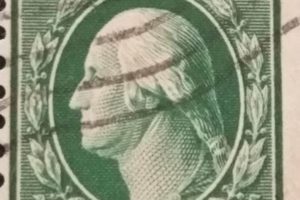
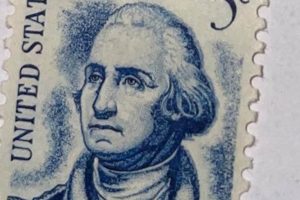
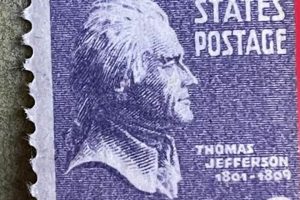
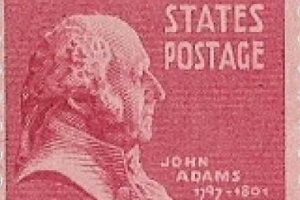
A three-cent stamp featuring the first President of the United States was issued multiple times throughout the 19th century. These stamps represent a tangible piece of American history, reflecting both postal rates and printing technologies of their respective eras. Distinguishing factors such as issue date, color, paper type, and perforation gauge differentiate the various printings and significantly impact their individual worth. For instance, an 1861 rose three-cent Washington stamp in pristine condition can command a considerably higher price than a later, more common issue.
Understanding the historical context surrounding these philatelic items provides collectors and enthusiasts with valuable insight. The denominations reflect the cost of postage at the time, offering a glimpse into the evolution of communication and commerce. The engraved portraits of Washington, often based on iconic paintings, solidify their cultural significance. The condition of these stamps, influenced by factors such as handling, storage, and postal usage, plays a critical role in determining their present-day market value. This underscores the importance of proper preservation and the expertise required for accurate appraisal.
This resource will delve further into specific three-cent Washington stamp issues, exploring their unique characteristics and providing guidance on identifying and evaluating them. Subsequent sections will cover topics such as condition grading, market trends, and notable auction records. Additionally, resources for further research and collector communities will be highlighted.
Tips for Evaluating 19th-Century Three-Cent Washington Stamps
Careful consideration of several factors is crucial for accurately assessing 19th-century three-cent stamps featuring George Washington. These tips provide guidance for both novice and experienced collectors.
Tip 1: Identify the Issue Date. Pinpointing the year of issue is paramount. Different printings exhibit variations in design, color, and perforation. Specialized catalogs and online resources offer comprehensive information on specific issues.
Tip 2: Assess the Condition. Condition significantly impacts value. Examine the stamp for any flaws, such as tears, creases, thin spots, or fading. Centering within the margins is also a critical factor.
Tip 3: Determine the Color and Shade. Color variations exist within certain issues. Subtle shade differences can significantly affect a stamp’s rarity and value. Comparing the stamp to certified color standards is recommended.
Tip 4: Examine the Perforations. Gauge, or the number of perforations per two centimeters, helps distinguish different printings. A perforation gauge is an essential tool for accurate measurement.
Tip 5: Consult Expert Resources. Specialized stamp catalogs, reputable dealers, and philatelic societies offer valuable expertise and resources for identification and valuation.
Tip 6: Consider Professional Grading. Submitting valuable stamps to a professional grading service provides an objective assessment of condition and authenticity, enhancing their marketability.
Tip 7: Research Market Trends. Auction records and dealer pricing provide insights into current market values. Understanding trends helps collectors make informed decisions.
By diligently applying these tips, collectors can gain a deeper understanding of the nuances of 19th-century three-cent Washington stamps, leading to more informed collecting and investment decisions.
This information provides a solid foundation for evaluating these historical artifacts. The subsequent conclusion will reiterate key takeaways and offer further avenues for exploration.
1. Condition

Condition is arguably the most significant factor influencing the value of a George Washington three-cent stamp. Even minor imperfections can drastically reduce a stamp’s worth, while pristine examples often command substantial premiums. Understanding the nuances of condition grading is essential for accurate assessment.
- Centering
Centering refers to the stamp’s placement within its margins. Ideally, the design should be perfectly balanced with equal borders on all sides. Off-center examples, where the design is closer to one or more edges, are generally less desirable and therefore less valuable. The degree of off-centering directly correlates with the price impact; slight off-centering might have a minimal effect, whereas significant misalignment can severely depreciate the value.
- Gum
Original gum, the adhesive applied to the back of the stamp, is another crucial factor. Mint stamps with undisturbed, well-preserved gum are typically more valuable than those with hinged gum (gum disturbed by a stamp hinge) or no gum at all. The quality of the gum itselfwhether it’s pristine, lightly hinged, or heavily hingedplays a significant role in determining value. For unused examples of the 1861 three-cent Washington, the presence of original gum can significantly increase its worth.
- Faults
Faults encompass any imperfections affecting the stamp’s appearance or integrity. These can include tears, creases, thin spots, stains, fading, and short perforations. The severity and location of the fault influence its impact on value. A small, unobtrusive fault might have a minor effect, while a major tear or crease could render the stamp virtually worthless. For instance, a small tear on an otherwise well-centered and vibrant 1857 three-cent Washington would diminish its value compared to a flawless example.
- Color and Vibrancy
Color and vibrancy are especially important for stamps prone to fading or discoloration. Stamps with bright, original colors are typically more desirable than those with faded or altered hues. This is particularly relevant for certain issues of the three-cent Washington, where color variations exist. A vibrant, correctly colored example will be worth significantly more than a faded or discolored one.
These facets of condition, when considered collectively, paint a comprehensive picture of a stamp’s state of preservation and directly impact its market value. A thorough understanding of these elements is essential for collectors seeking to accurately assess and appreciate the worth of George Washington three-cent stamps.
2. Rarity

Rarity significantly influences the value of three-cent George Washington stamps. Scarcity, driven by factors such as limited print runs, specific plate varieties, or unique errors, directly correlates with market desirability. Stamps produced in smaller quantities or those exhibiting unusual characteristics are inherently more challenging to acquire, thus increasing their value. For instance, the 1857 perforated three-cent Washington, issued in much smaller numbers compared to its imperforate counterpart, commands a higher price due to its relative scarcity. Similarly, stamps with documented printing errors, such as inverted centers or missing colors, achieve substantial premiums due to their extreme rarity.
Understanding the nuances of rarity within specific issues proves crucial for collectors. Factors such as perforation varieties, paper types, and watermark variations can distinguish common stamps from their rarer counterparts. Specialized catalogs and expert opinions provide essential resources for identifying these subtle distinctions, enabling collectors to accurately assess rarity and its corresponding impact on value. An 1861 three-cent Washington printed on silk paper, a relatively scarce variety, exemplifies how specialized knowledge enhances value assessment.
The interplay between rarity and condition further complicates valuation. A rare stamp in poor condition might be less valuable than a common stamp in pristine condition. Conversely, a rare stamp in exceptional condition can achieve extraordinary prices. Therefore, discerning collectors prioritize both rarity and condition when evaluating potential acquisitions. Recognizing this interplay allows for informed decisions and strategic investments within the three-cent George Washington stamp market.
3. Issue Date
The issue date of a three-cent George Washington stamp is fundamental to determining its value. Different issue dates correspond to distinct printings, each possessing unique characteristics that influence desirability and price. These characteristics encompass design variations, paper types, perforation gauges, and color shades. Understanding the historical context of each issue date provides valuable insight into production methods and quantities, further informing value assessments. For example, the 1851 three-cent Washington exists in both imperforate and perforated versions, with the latter commanding a premium due to its later issue date and relative scarcity.
Analyzing issue dates allows collectors to distinguish between common and scarce varieties. Certain issues, produced in smaller quantities or for shorter durations, are inherently rarer and, consequently, more valuable. Additionally, specific issue dates might correspond to notable philatelic events or historical periods, enhancing their appeal and value to collectors. The 1869 pictorial issue, depicting Washington as a Freemason, stands as an example of an issue date tied to specific historical and cultural contexts, influencing its collectibility.
The issue date serves as a crucial starting point for any serious evaluation of a three-cent George Washington stamp. This information, coupled with careful consideration of condition, rarity, and market trends, enables collectors to make informed decisions. Accurately identifying the issue date empowers collectors to navigate the complexities of the stamp market, facilitating informed purchases and building valuable collections. Understanding the significance of issue dates ultimately unlocks the rich history and nuanced value embedded within these philatelic treasures.
4. Printing Variations
Printing variations play a crucial role in determining the value of three-cent George Washington stamps. These variations, arising from inconsistencies and changes during the printing process, create distinguishable subtypes within a given issue. Understanding these nuances is essential for accurate valuation. Variations can manifest in several forms, including different perforation gauges (the number of perforations per two centimeters), paper types (such as silk paper versus wove paper), watermark positions, and even subtle color shades. For example, the 1857 three-cent Washington exists with different perforation gauges, with certain gauges being considerably rarer and thus more valuable than others. Similarly, the presence or absence of a grill, a waffle-like embossing intended to improve ink absorption, creates distinct varieties with varying values.
The significance of printing variations stems from their impact on rarity and collectibility. A seemingly minor variation, like a shifted watermark or a change in perforation gauge, can significantly alter a stamp’s scarcity and, consequently, its market value. Collectors actively seek these variations, often building specialized collections focused on specific printing characteristics. This demand for specific variations drives price discrepancies within a given issue. An 1861 three-cent Washington with an inverted center, a rare printing error, exemplifies the dramatic price increases attributable to significant printing variations. Such errors are highly sought after by collectors and command substantial premiums compared to correctly printed examples.
Careful examination and specialized knowledge are crucial for identifying and understanding printing variations. Utilizing philatelic resources such as specialized catalogs, microscopes, and expert opinions allows collectors to discern these subtle differences. Accurate identification enables informed purchasing decisions and facilitates the construction of valuable and historically significant collections. Ignoring printing variations can lead to misidentification and inaccurate valuation, potentially resulting in missed opportunities or costly mistakes. Therefore, a thorough understanding of printing variations empowers collectors to navigate the complexities of the three-cent George Washington stamp market, maximizing their collecting potential and appreciating the nuances within these historical artifacts.
5. Market Demand
Market demand exerts a powerful influence on the value of three-cent George Washington stamps. This dynamic interplay between collector interest and available supply ultimately dictates price fluctuations. Understanding market forces provides crucial context for evaluating these historical artifacts.
- Collector Trends
Current collector trends significantly impact market demand. Periods of heightened interest in specific issues or eras drive prices upward, while waning enthusiasm can lead to price decreases. For instance, a surge in popularity of 19th-century American stamps could increase demand for all three-cent Washington issues, regardless of individual rarity. Conversely, a decline in overall stamp collecting could depress prices across the board.
- Economic Conditions
Broader economic conditions also play a role. During periods of economic prosperity, collectors may have more disposable income, leading to increased demand and higher prices. Conversely, economic downturns can dampen collecting activity, potentially softening prices. The value of high-end collectibles, such as rare three-cent Washington stamps, can be particularly sensitive to economic fluctuations.
- Auction Results
Auction results offer valuable insights into current market demand. High prices realized at auction indicate strong demand and can influence subsequent market valuations. Conversely, lower-than-expected auction results can signal softening demand. Monitoring auction records provides collectors with real-time data on market trends and price movements for specific three-cent Washington stamps and related philatelic items.
- Availability and Supply
The available supply of specific three-cent Washington stamps directly impacts their value. Stamps in limited supply, particularly those in high grades, command higher prices due to their scarcity. Conversely, readily available issues, especially those in lower grades, tend to be less expensive. The discovery of a previously unknown hoard of a particular issue could significantly impact its market value by increasing supply and potentially lowering prices.
The interplay of these market forces ultimately determines the prevailing prices for three-cent George Washington stamps. By understanding these dynamics, collectors can make more informed decisions, recognizing that market demand is a fluid and ever-evolving factor influencing the value of these historical artifacts. Analyzing market trends, economic conditions, auction results, and available supply allows for a comprehensive understanding of the forces shaping the current and future value of these collectible stamps.
6. Expert Authentication

Expert authentication plays a critical role in establishing the value of three-cent George Washington stamps. Authentication verifies a stamp’s genuineness, confirming it as an original printing and not a forgery or reproduction. This verification process involves careful examination of various factors, including the stamp’s design, paper, ink, perforations, and any identifiable printing characteristics. Expert opinions provide an objective assessment of authenticity, eliminating uncertainty and bolstering market confidence. For example, an 1861 three-cent Washington with a suspected double transfer might require expert authentication to confirm its genuineness and determine its value, as double transfers are scarce and often command significant premiums. Without authentication, uncertainty surrounding the stamp’s legitimacy could negatively impact its perceived worth.
Furthermore, expert authentication often extends beyond verifying genuineness to include an assessment of the stamp’s condition. Grading services, conducted by experienced philatelists, assign a numerical grade reflecting the stamp’s state of preservation. This objective assessment provides a standardized metric for evaluating condition, facilitating transparent transactions and enabling accurate price comparisons. A professionally graded 1857 three-cent Washington in gem condition carries more weight in the market than an ungraded example, even if the latter appears to be in excellent condition. The assigned grade provides buyers with confidence and eliminates ambiguity surrounding the stamp’s condition, ultimately contributing to its market value.
In conclusion, expert authentication serves as a cornerstone of value determination for three-cent George Washington stamps. Authentication confirms genuineness, while professional grading provides an objective assessment of condition. Both processes enhance market confidence, facilitate transparent transactions, and contribute significantly to a stamp’s overall worth. Collectors and investors rely on expert opinions to mitigate risk and ensure accurate valuations, recognizing the crucial role authentication plays in navigating the complexities of the stamp market. This reliance underscores the integral connection between expert authentication and the value assigned to these historical artifacts.
Frequently Asked Questions
This section addresses common inquiries regarding the valuation of three-cent George Washington stamps, providing concise yet informative responses.
Question 1: How is the value of a three-cent George Washington stamp determined?
Value is determined by a confluence of factors, including condition, rarity, issue date, printing variations, market demand, and expert authentication. Condition encompasses aspects like centering, gum presence, and any flaws. Rarity depends on the specific issue and its surviving quantity. The issue date distinguishes different printings. Printing variations, such as perforations and shades, influence value. Market demand fluctuates, impacting current prices. Expert authentication verifies genuineness and provides an objective condition assessment.
Question 2: Where can one find reliable information on three-cent George Washington stamp values?
Reputable resources include specialized stamp catalogs (such as Scott and Michel), online databases, auction records, and expert philatelic dealers. Cross-referencing information from multiple sources is recommended.
Question 3: Does a postmark devalue a three-cent George Washington stamp?
A clear, well-positioned postmark generally does not significantly detract from value and can sometimes add historical context. However, a poorly placed or excessively heavy postmark that obscures the stamp’s design can negatively impact its worth, especially for unused examples.
Question 4: What are the most valuable three-cent George Washington stamps?
The most valuable examples typically combine rarity with exceptional condition. Stamps with rare printing errors, such as inverted centers or missing colors, often command substantial premiums, especially in pristine condition. Specific issue dates and perforation varieties are also known for their high value.
Question 5: How should three-cent George Washington stamps be stored to preserve their value?
Proper storage is crucial for value preservation. Stamps should be stored in acid-free albums or mounts, away from direct sunlight, excessive humidity, and temperature fluctuations. Handling should be minimized, and stamps should be held by their edges to avoid transferring oils or fingerprints.
Question 6: Should I have my three-cent George Washington stamps professionally graded?
Professional grading is recommended for valuable stamps. Grading provides an objective assessment of condition and authenticity, enhancing marketability and potentially increasing value. Reputable grading services encapsulate the stamp in a protective holder with the assigned grade, offering long-term preservation.
Understanding these key aspects contributes to a more informed approach to collecting and evaluating these historical artifacts.
The subsequent section offers a glossary of philatelic terms relevant to stamp collecting.
George Washington 3-Cent Stamp Value
This exploration of the value associated with three-cent George Washington stamps has highlighted the multifaceted factors influencing their worth. Condition, rarity, issue date, printing variations, market demand, and expert authentication all contribute significantly to a stamp’s valuation. Careful consideration of these elements is essential for accurate appraisal and informed collecting decisions. Understanding the interplay of these factors allows for a nuanced appreciation of these historical artifacts, moving beyond mere face value to recognize the rich history and intricate details embedded within each stamp.
The enduring appeal of three-cent George Washington stamps lies not only in their monetary value but also in their historical significance. These small pieces of paper offer a tangible connection to the past, reflecting communication practices, printing technologies, and artistic trends of their respective eras. Continued research and engagement within the philatelic community further enrich the collecting experience, fostering a deeper appreciation for the artistry, history, and enduring value embodied within these philatelic treasures. The pursuit of knowledge remains paramount in navigating the complexities of the stamp market and unlocking the full potential held within these miniature windows to the past.