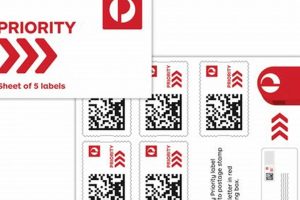
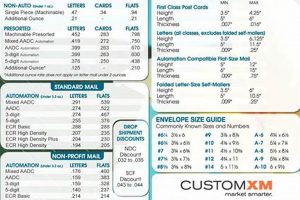
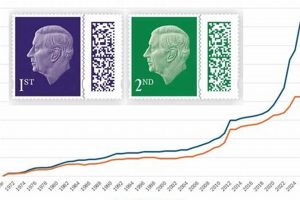
Creating personalized postage offers individuals and small businesses a unique way to brand mail. This can involve designing and printing custom indicia, subject to postal regulations, or using services that allow for the integration of personal images onto approved postage labels. For example, one might incorporate a company logo or a photograph onto a package or envelope.
Customized mail can enhance brand recognition, add a personal touch to correspondence, and create a more memorable experience for the recipient. Historically, postage stamps themselves have served as miniature canvases for artistic expression and cultural representation. Extending this personalization to the present day allows for a contemporary twist on this tradition, enabling individuals and businesses to connect with their audience in a distinctive way.
This article will further explore the methods, regulations, and resources available for creating distinctive mail, covering topics such as design software, printing requirements, postal service guidelines, and the potential cost savings and marketing advantages associated with this practice.
Tips for Creating Custom Postage
Careful planning and execution are crucial for successfully creating and using personalized postage. The following tips offer guidance through the process.
Tip 1: Understand Postal Regulations. Before initiating any design work, thoroughly research and understand the specific guidelines and requirements stipulated by the relevant postal authority. Non-compliance can lead to mail rejection.
Tip 2: Choose Appropriate Software. Utilize design software capable of producing high-resolution images suitable for printing. Vector-based graphics are generally preferred for scalability and print quality.
Tip 3: Select Quality Materials. The chosen label stock and ink should be compatible with both the printer and postal processing equipment. Using unsuitable materials can result in smudging, jamming, or rejection.
Tip 4: Test Prints Thoroughly. Conduct test prints on the intended label material before committing to a full production run. Verify color accuracy, barcode readability, and overall print quality.
Tip 5: Consider Pre-approved Vendor Services. Several vendors offer services for creating personalized postage that adheres to postal regulations. This option can simplify the process and ensure compliance.
Tip 6: Factor in Costs. Analyze the costs associated with design, software, materials, printing, and vendor services (if applicable). Compare these expenses with potential savings from bulk mailing or marketing benefits.
Tip 7: Maintain Design Simplicity. While personalization is key, avoid overly complex designs that could interfere with postal scanning equipment or readability of essential information.
By following these tips, one can create effective and compliant personalized postage that enhances communication and strengthens brand identity.
This information provides a foundation for successfully navigating the creation and implementation of customized postage. The following section will conclude with a summary of key considerations and potential future developments.
1. Design
Design plays a pivotal role in the effectiveness of customized postage. Visual appeal and clear communication of information are essential. A well-designed custom postage solution balances aesthetics with practical considerations such as readability and postal regulations. Effective designs often incorporate elements of branding, using logos, color schemes, or specific typography to reinforce brand identity. For example, a non-profit organization might incorporate its logo and a tagline within the permitted area of a customized postage label, thereby increasing visibility and recognition.
Several design principles contribute to successful custom postage. Simplicity and clarity are paramount, ensuring that key information is easily discernible. Visual hierarchy guides the recipient’s eye to the most important elements, such as the postage indicia and delivery address. Color palettes should be chosen strategically, considering both brand consistency and potential impact on readability. The chosen design must also adhere to postal regulations regarding placement, size, and content of elements within the designated area on the mailpiece. Practical applications range from incorporating seasonal themes for marketing campaigns to highlighting specific products or services on packaging.
Understanding the interplay between design and postal regulations is crucial for successful implementation. Challenges can include balancing creative expression with mandatory elements and ensuring compatibility with postal scanning technology. Careful consideration of design principles, combined with adherence to postal guidelines, yields custom postage that enhances communication, reinforces branding, and leaves a lasting impression. This approach ultimately contributes to a more impactful and professional mailing strategy.
2. Printing
Printing represents a critical stage in creating personalized postage, bridging the gap between digital design and physical mailpiece. The chosen printing method significantly impacts the final appearance, quality, and deliverability of the customized postage. Understanding available printing options and their implications is crucial for achieving desired results.
- Printer Type
Different printer types offer varying levels of quality, cost-effectiveness, and suitability for personalized postage. Inkjet printers are commonly used for smaller print runs due to their affordability and accessibility, while laser printers provide sharper text and graphics, especially beneficial for barcodes and small details. Thermal printers offer a specialized approach, often used for creating shipping labels with integrated postage. Selecting the appropriate printer type depends on the volume of mail, desired quality, and budget constraints. For example, a small business sending occasional promotional mail might opt for an inkjet printer, while a larger enterprise with high mailing volume would likely benefit from a laser or thermal printer.
- Resolution
Print resolution directly affects the clarity and sharpness of the final output. Higher resolution, measured in dots per inch (DPI), translates to finer details and smoother gradients. Postal services often have minimum DPI requirements for barcodes and other essential information on mailpieces. Insufficient resolution can lead to scanning errors and mail rejection. Therefore, understanding and adhering to these requirements is paramount. For personalized postage, a resolution of at least 300 DPI is generally recommended to ensure legibility and compliance.
- Ink and Toner
The choice of ink or toner impacts color vibrancy, durability, and compatibility with postal processing equipment. Dye-based inks offer vibrant colors but can be susceptible to smudging or fading, while pigment-based inks are more resistant to water and light. Similarly, toner quality affects the sharpness and longevity of printed images. Using incompatible inks or toners can lead to issues during mail sorting and potentially result in mail rejection. Careful selection of ink and toner, considering factors like longevity and postal compatibility, ensures optimal print quality and successful delivery.
- Label Stock
The label stock, or material upon which the postage is printed, must be compatible with the chosen printer and adhere to postal regulations. Label size, adhesive properties, and material composition (e.g., paper, synthetic) influence printability and how the mailpiece travels through the postal system. Using inappropriate label stock can lead to printing issues, such as jamming or smudging, and can also result in mail being damaged or rejected. Selecting a label stock that meets both printer specifications and postal requirements is essential for successful implementation. Factors such as adhesive type, material thickness, and finish should be considered to ensure optimal performance.
These facets of printing are interconnected and crucial for creating effective personalized postage. Careful consideration of printer type, resolution, ink/toner, and label stock, alongside adherence to postal guidelines, ensures that the final printed output meets quality standards, facilitates efficient processing, and ultimately contributes to a successful mailing strategy. Overlooking any of these aspects can compromise the integrity and deliverability of the mailpiece. Therefore, a comprehensive understanding of the printing process is fundamental to achieving the desired outcomes in a DIY postage stamp project.
3. Regulations
Regulations governing personalized postage are crucial for ensuring mailpiece acceptance and efficient processing within the postal system. Compliance with these regulations is not merely a suggestion but a requirement for successful delivery. Navigating these rules effectively necessitates understanding key facets of postal regulations and their implications for customized mail.
- Indicia Format
Specific rules dictate the format and placement of postage indicia, including dimensions, barcode requirements, and permitted information within the indicia area. These regulations ensure that automated sorting equipment can correctly identify and process mailpieces. For instance, using an incorrectly formatted barcode can lead to delays or rejection. Understanding and adhering to indicia format regulations is paramount for seamless mail processing.
- Content Restrictions
Postal regulations often restrict the content that can be included on a mailpiece, especially concerning prohibited items, hazardous materials, and certain types of advertising. These restrictions safeguard postal workers and the public while maintaining the integrity of the mail system. Attempting to send prohibited items can result in legal penalties. Awareness of content restrictions is essential for compliance and avoids potential legal ramifications.
- Size and Weight Limits
Mailpieces must adhere to specific size and weight limitations to ensure compatibility with postal processing equipment and prevent damage during transit. Exceeding these limits can result in additional postage fees or rejection of the mailpiece. Understanding these limitations and designing mailpieces accordingly is crucial for cost-effectiveness and successful delivery. For example, exceeding maximum thickness can necessitate alternative shipping methods.
- Pre-Approval Requirements
In certain cases, particularly for large mailings or non-standard formats, pre-approval from the postal authority may be required before mailing. This process ensures compliance with regulations and facilitates smooth processing. Failing to obtain necessary pre-approval can lead to delays or rejection of the entire mailing. Understanding when and how to seek pre-approval is essential for larger-scale personalized postage projects.
These regulatory facets are integral to the success of any personalized postage endeavor. Non-compliance can result in delays, rejection, additional costs, and even legal repercussions. Careful attention to these regulations ensures efficient processing, successful delivery, and a positive experience for both sender and recipient. Ultimately, understanding and adhering to postal regulations is not just a legal obligation but a strategic necessity for effective and reliable customized mailing.
4. Software
Software plays a crucial role in creating personalized postage, providing the digital tools necessary to design, format, and prepare custom indicia or integrated postage labels. Selecting appropriate software is essential for achieving desired results and ensuring compliance with postal regulations. The following facets highlight the key considerations regarding software for DIY postage creation.
- Graphic Design Software
Specialized graphic design software provides the functionality needed to create custom postage designs. Applications like Adobe Photoshop and Illustrator offer advanced image editing and vector graphics capabilities, enabling precise control over design elements. Free or open-source alternatives, such as GIMP or Inkscape, can also provide adequate functionality for basic designs. Choosing software with features like layering, precise measurement tools, and high-resolution export options is crucial for creating print-ready artwork that meets postal requirements. For example, vector-based graphics ensure scalability without loss of quality, essential for barcodes and small text within the postage indicia.
- Online Postage Services
Several online platforms and postal service providers offer integrated solutions for creating and printing personalized postage. These services often provide pre-designed templates, image upload capabilities, and direct integration with printing services. This approach simplifies the process, especially for users without advanced design skills. However, design flexibility might be limited compared to dedicated graphic design software. These services typically handle compliance aspects, ensuring adherence to postal regulations regarding indicia format and content. They can also offer convenient options for managing postage payments and tracking mail delivery.
- Barcode Generation Tools
Accurate barcode generation is critical for automated mail processing. Dedicated barcode generation tools or plugins within graphic design software ensure compliance with postal barcode standards. These tools allow users to generate and integrate the correct barcode type, size, and placement within the postage indicia. Incorrectly formatted barcodes can lead to mail rejection or delays. Therefore, utilizing reliable barcode generation tools is essential for seamless mail processing.
- Label Printing Software
Specialized label printing software facilitates accurate placement and printing of postage designs onto label stock. These applications often integrate with various printer models and provide features for managing label templates, importing designs, and adjusting print settings. Precise control over label alignment and print margins is crucial for avoiding printing errors and ensuring that the postage indicia is correctly positioned on the mailpiece. Some label printing software also offers integration with online postage services, streamlining the entire process from design to printing.
The software choices made for DIY postage creation significantly impact the design process, printing accuracy, and compliance with postal regulations. Selecting appropriate software, considering factors such as design complexity, printing volume, and budget, is essential for successful implementation. Integrating these software tools effectively streamlines the workflow, ensuring efficient and compliant personalized postage solutions.
5. Materials
Material selection significantly impacts the quality, cost-effectiveness, and postal compliance of DIY postage. Appropriate materials ensure seamless printing, processing, and delivery. Choosing unsuitable materials can lead to issues ranging from print smudging to mail rejection. This section explores key material considerations for successful custom postage creation.
- Label Stock
Label stock forms the foundation of the DIY postage stamp. Its compatibility with the chosen printer and adherence to postal regulations are crucial. Factors like adhesive type, material thickness, and finish influence printability and how the mailpiece travels through the postal system. Standard adhesive paper labels are commonly used for inkjet and laser printers, while synthetic materials might be preferred for durability and water resistance. Incorrect label stock can lead to printer jams, smudging, or postal rejection due to incompatibility with automated sorting equipment.
- Ink or Toner
Ink or toner compatibility with both the printer and label stock is essential. Dye-based inks offer vibrant colors but are susceptible to smudging or fading, especially if exposed to moisture. Pigment-based inks provide greater water and light resistance, crucial for ensuring barcode readability throughout the postal process. Toner, used in laser printers, also varies in quality and compatibility. Using incompatible ink or toner can result in illegible postage, leading to processing errors and potential mail rejection.
- Protective Coatings (Optional)
Applying a protective coating, such as a clear sealant or UV varnish, can enhance the durability and longevity of DIY postage, especially for mailpieces exposed to harsh conditions. These coatings protect against moisture, scratches, and fading, preserving the integrity of the postage indicia and other printed elements. However, it’s crucial to ensure that the chosen coating doesn’t interfere with barcode readability or postal processing equipment. Testing compatibility before applying any coating is recommended.
- Packaging (For Storage)
Proper storage of printed postage labels, especially for larger quantities, preserves their quality and usability. Archival-quality storage materials, such as acid-free sleeves or boxes, protect against environmental factors like humidity and light exposure, which can degrade print quality over time. Proper packaging ensures that the labels remain in optimal condition until use, minimizing waste and maintaining consistent print quality throughout a mailing campaign.
Careful consideration of these material aspects, combined with an understanding of printer and postal service compatibility, ensures the creation of high-quality, compliant, and durable DIY postage. Choosing the right materials contributes significantly to the overall success of a personalized mailing strategy, minimizing potential issues and maximizing the impact of customized postage.
6. Costs
Cost analysis plays a crucial role in determining the feasibility and overall value proposition of creating personalized postage. A comprehensive cost assessment considers both direct and indirect expenses, enabling informed decisions about resource allocation and potential return on investment. Accurately evaluating expenses associated with DIY postage involves examining several key cost drivers.
Direct costs encompass tangible expenses directly attributable to postage creation. These include software acquisition or subscription fees for design and printing, hardware costs such as printer purchase and maintenance, material expenses including label stock, ink, and any protective coatings, and potential vendor fees for services like pre-approved indicia or bulk printing. For example, a small business opting for an in-house printing solution would incur costs for printer ink and label stock. In contrast, utilizing a third-party vendor might involve design and printing fees per piece, potentially offset by bulk discounts.
Indirect costs, while not immediately apparent, contribute to the overall expense. These include design time, whether performed in-house or outsourced, labor costs associated with printing, processing, and application of postage, and potential costs associated with resolving issues like rejected mail due to non-compliance or printing errors. For instance, troubleshooting printer malfunctions or redesigning non-compliant indicia consumes time and resources, indirectly impacting the overall cost. Accurately assessing both direct and indirect costs provides a realistic picture of the total investment required for DIY postage.
Understanding the cost implications facilitates informed decision-making. Comparing DIY postage costs against traditional postage expenses, considering potential savings from bulk mailing or marketing benefits from customized branding, helps determine the most cost-effective approach. A thorough cost analysis also allows for adjustments to the DIY process. Opting for less expensive materials, utilizing free or open-source software, or outsourcing specific tasks can optimize expenses without significantly compromising quality or compliance. Ultimately, a comprehensive cost evaluation ensures that DIY postage aligns with budgetary constraints while maximizing its potential benefits.
7. Vendors
Vendors play a significant role in the DIY postage landscape, offering a range of services and products that cater to varying needs and levels of involvement. Their offerings span from providing compliant pre-designed templates and printing services to supplying specialized materials like label stock and inks. Understanding the vendor landscape is crucial for navigating the complexities of creating personalized postage and optimizing the process for efficiency and compliance. For individuals or businesses lacking the resources or expertise for a fully DIY approach, vendors offer a valuable alternative. For example, a small business might contract a vendor to print custom-designed postage labels incorporating its logo, ensuring compliance with postal regulations without investing in printing equipment.
Several vendor types participate in the DIY postage ecosystem. Online postage services offer integrated platforms for designing, printing, and purchasing postage, streamlining the process and often handling compliance aspects automatically. Printing companies specializing in custom labels and stickers can adapt their services to produce compliant postage, providing expertise in material selection and printing techniques. Specialty vendors offer niche products, such as custom-perforated label stock or postal-compliant inks, catering to specific DIY postage requirements. Selecting the right vendor type depends on the specific needs of the project, balancing cost-effectiveness with desired control over the design and printing process. A larger organization with high mailing volume might partner with a printing company for bulk orders of pre-approved indicia, optimizing cost efficiency and ensuring consistent quality.
Strategic vendor selection is crucial for successful DIY postage implementation. Factors to consider include vendor reputation and reliability, pricing structures and potential bulk discounts, turnaround times and delivery options, customer support and technical assistance, and the vendor’s ability to meet specific design and printing requirements. Evaluating these aspects ensures alignment between project needs and vendor capabilities. Potential challenges include navigating varying pricing models, ensuring timely delivery, and addressing potential compatibility issues between vendor-supplied materials and user-owned equipment. Successfully leveraging vendor services streamlines the DIY postage process, allowing individuals and businesses to focus on design and messaging while relying on vendor expertise for compliant and efficient execution.
Frequently Asked Questions
This section addresses common inquiries regarding the creation and utilization of personalized postage.
Question 1: Is creating personalized postage legal?
Yes, creating personalized postage is legal, provided it adheres to all applicable postal regulations. Non-compliance can result in mail rejection.
Question 2: What are the primary postal regulations one must consider?
Regulations vary by postal authority but generally address indicia format, content restrictions, size and weight limits, and pre-approval requirements. Thorough research is essential.
Question 3: What software is recommended for designing personalized postage?
Graphic design software like Adobe Photoshop or Illustrator offers extensive design control. Online postage services often provide simplified design interfaces with built-in compliance features.
Question 4: What type of printer is best suited for printing personalized postage?
The ideal printer depends on volume and quality needs. Inkjet printers suit smaller runs, while laser or thermal printers are better for higher volumes and finer details.
Question 5: What materials are needed for printing personalized postage?
Essential materials include compatible label stock and ink or toner. Protective coatings can enhance durability. Proper storage materials preserve label quality.
Question 6: What are the typical costs associated with DIY postage?
Costs vary based on chosen methods and materials. Expenses include software, hardware, materials, vendor services (if used), and indirect costs like design and labor time.
Careful consideration of these frequently asked questions provides a foundational understanding of the key aspects of creating and using personalized postage. Addressing these common concerns facilitates informed decision-making and contributes to successful project implementation.
The following section offers additional resources for further exploration of this topic.
Conclusion
Creating personalized postage offers a unique avenue for enhancing communication and brand identity. This article explored essential aspects of this practice, encompassing design principles, printing processes, postal regulations, software utilization, material selection, cost considerations, and available vendor services. Successful implementation requires careful planning, meticulous execution, and adherence to postal guidelines.
The ability to personalize postage empowers individuals and businesses to transform mundane mailpieces into distinctive representations of their brand or personality. As technology continues to evolve, further innovation within the postal landscape may present new opportunities and challenges for customized mailing solutions. Informed decision-making, grounded in a thorough understanding of the processes and regulations involved, remains crucial for leveraging the full potential of personalized postage.