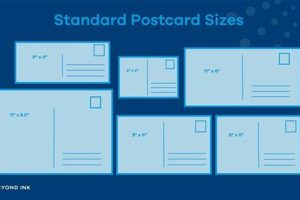
Addressing and completing a postcard involves several key steps. The recipient’s address is written on the right-hand side, typically within designated lines. This address should include the full name, street address, city, state/province, and postal code. The sender’s message is written on the left-hand side. A postage stamp, appropriate for the destination, must be affixed to the designated area, usually in the upper right corner. An example might be sending a scenic postcard from a vacation destination, sharing a brief travel experience with a friend or family member.
Effective postcard communication provides a concise and tangible way to connect with others. Its compact format encourages thoughtful message composition. Historically, postcards have served various purposes, from personal correspondence and travel updates to advertising and political campaigning. Their enduring popularity stems from their affordability, ease of use, and the unique charm of sharing a visual snapshot alongside a written message. They offer a personal touch in a digital age, representing a physical memento of a shared experience or a simple greeting.
This article will further explore specific aspects of postcard completion, including addressing conventions for various international destinations, tips for crafting impactful messages within the limited space, and creative uses for postcards beyond simple correspondence.
Tips for Completing Postcards
Effective postcard communication requires attention to detail and adherence to established conventions. The following tips offer guidance for ensuring successful delivery and maximizing impact.
Tip 1: Use a Pen with Permanent Ink. Ink pens are recommended to prevent smudging or fading caused by moisture or handling during transit.
Tip 2: Write Legibly. Clear handwriting ensures the recipient can easily decipher the message. Print if necessary for optimal readability.
Tip 3: Verify the Address. Double-checking the recipient’s address minimizes the risk of misdelivery or return to sender.
Tip 4: Apply Sufficient Postage. Confirm the required postage for the destination country and postcard size to avoid delays or returns.
Tip 5: Keep the Message Concise. Limited space requires thoughtful message composition. Focus on key information or sentiments.
Tip 6: Consider the Picture Side. The image should complement the written message, enhancing the overall communication.
Tip 7: Place Address Within Designated Lines. Writing within the provided lines ensures automated sorting equipment can process the postcard efficiently.
Following these guidelines ensures clear communication, increases the likelihood of successful delivery, and enhances the recipient’s experience.
By understanding these practical considerations, one can effectively utilize postcards for a variety of communication purposes.
1. Recipient's Address

Accurate recipient addressing forms the cornerstone of successful postcard delivery. Without a correctly written and placed address, the postcard may be delayed, returned to sender, or lost entirely. Understanding the components and conventions of address formatting is therefore crucial for effective postcard communication.
- Name and Address Lines
The recipient’s full name should appear on the first line, followed by the street address, apartment or building number if applicable. Each element should occupy a separate line for clarity. For example, “John Smith,” followed by “123 Main Street,” and then “Apartment 4B.” Clear delineation ensures efficient processing by postal services. Legible handwriting or printing further enhances accurate interpretation.
- City, State/Province, and Postal Code
These elements comprise the next section of the address, each on its own line. The city name is followed by the state or province abbreviation, then the postal code. For international addresses, the country name should be included on the final line. Correct placement of these elements is critical for efficient routing within postal systems. For example, “Anytown, CA 90210” or “London, ON N6A 5B7, Canada.” Accuracy in this section minimizes delays and ensures proper delivery.
- Placement and Formatting
The recipient’s address should be written on the right-hand side of the postcard, typically within designated lines or a boxed area. Adhering to this convention ensures compatibility with automated sorting equipment. Clear separation from the sender’s message, located on the left-hand side, further aids in efficient processing. Consistent formatting practices enhance overall readability and minimize potential errors.
- International Addressing Conventions
International addresses may require specific formatting variations, such as different ordering of address elements or the inclusion of specific country codes. Researching the destination country’s postal regulations ensures proper formatting. For example, some countries place the postal code before the city name. Awareness of these nuances is essential for successful international postcard delivery.
Proper attention to the recipient’s address ensures efficient processing within postal systems, maximizing the likelihood of timely and accurate delivery. By adhering to established conventions and understanding the importance of each component, individuals can utilize postcards effectively as a means of communication.
2. Sender's Message
The sender’s message constitutes a crucial element of postcard communication. Its purpose extends beyond mere information conveyance; it represents the core communicative intent. A well-crafted message enhances the postcard’s value, transforming it from a simple notification into a personalized form of connection. This message occupies the left-hand side of the postcard, providing space for personal greetings, travel anecdotes, or brief observations. Its significance lies in its ability to forge a tangible link between sender and recipient. For example, a message detailing a local culinary experience adds a personal dimension to a postcard showcasing a famous landmark. Another example could be a brief message expressing gratitude for a recent gift, accompanying a postcard depicting a shared memory.
Effective message composition requires consideration of the limited space. Conciseness and clarity are paramount. Focusing on key information ensures the message remains impactful without becoming cluttered. Choosing words that evoke emotion or resonate with the recipient adds depth to the communication. While brevity is essential, the message should still reflect genuine sentiment. For instance, instead of a generic “Having a great time,” a message like “The sunset over the Aegean Sea was breathtaking” conveys a more vivid and personal experience. Similarly, expressing specific details, such as “The street market was filled with vibrant colors and delicious aromas,” paints a more evocative picture than a simple “Enjoying the city.” Such specificity amplifies the message’s impact.
The sender’s message imbues the postcard with personal significance, bridging geographical distance and fostering a sense of connection. Its careful composition elevates the act of sending a postcard beyond mere correspondence, transforming it into a gesture of shared experience and personal touch. Understanding its importance within the overall process of completing a postcard enables more impactful and meaningful communication. Successfully integrating the message with the visual element of the postcard enhances its overall effect, creating a lasting memento of connection.
3. Affixing Postage

Affixing correct postage represents a critical step in the process of completing a postcard. Without sufficient postage, the postcard will not be delivered to the recipient. Understanding postal regulations and applying the appropriate denomination are essential for successful transmission.
- Determining Correct Postage
Postage cost depends on several factors, including destination, postcard size, and weight. Domestic postage typically differs from international rates. Oversized or unusually shaped postcards may also incur additional fees. Consulting the postal service website or visiting a local post office provides accurate pricing information. Using online postage calculators offers a convenient method for determining the necessary postage amount. Accurate calculation prevents delays or return-to-sender situations.
- Postage Stamp Placement
Postage stamps should be affixed to the designated area on the postcard, typically the upper right corner. Ensuring the stamp is securely attached and does not obstruct any essential address information is vital. Using a slightly moistened sponge or adhesive ensures proper adhesion. Avoid excessive moisture, which could damage the stamp or postcard. Correct placement facilitates efficient processing by postal sorting equipment.
- Alternative Postage Options
In addition to traditional adhesive stamps, other postage options may be available, such as pre-printed postage or metered mail. Pre-printed indicia eliminate the need for physical stamps, streamlining the mailing process. Metered mail utilizes a postage meter to print postage directly onto the postcard. These options provide efficiency and convenience, particularly for bulk mailings. Choosing the most appropriate method depends on individual mailing needs and volume.
- Consequences of Insufficient Postage
Insufficient postage can lead to several undesirable outcomes. The postcard may be returned to sender, requiring re-application of postage and resending. Alternatively, the recipient may be required to pay the postage due upon delivery, creating an inconvenience. In some cases, the postcard may be discarded entirely if the postage deficiency is significant. Adequate postage ensures smooth processing and delivery, demonstrating respect for postal regulations and consideration for the recipient.
Properly affixing postage is an integral part of completing a postcard. Overlooking this crucial step can negate all other efforts in addressing and composing the message. By understanding postage requirements and applying them correctly, individuals ensure successful postcard delivery and contribute to the efficient functioning of postal systems. This seemingly small detail plays a significant role in the overall success of postcard communication.
4. Legible Handwriting
Legible handwriting plays a crucial role in successful postcard delivery. Automated postal systems primarily rely on optical character recognition (OCR) to process addresses. While OCR technology has advanced significantly, it remains susceptible to misinterpreting poorly written characters. Illegible handwriting increases the risk of misrouting, delays, or return-to-sender situations. Consider a postcard addressed to “Springfield.” If the handwriting is unclear, the OCR might misinterpret it as “Springfeld” or “Springhield,” leading to delivery errors. Conversely, clear, well-formed characters enhance OCR accuracy, facilitating efficient processing and timely delivery.
Beyond automated systems, human intervention remains a vital component of postal operations. Postal workers often handle postcards manually, particularly in cases where OCR fails or when addresses are incomplete or ambiguous. Legible handwriting significantly eases their task, allowing them to quickly and accurately discern the intended destination. For example, a poorly written postal code can cause significant delays if postal workers must decipher it manually. Clear handwriting minimizes the time required for manual processing, contributing to overall operational efficiency and reducing the likelihood of human error. Moreover, clear handwriting demonstrates consideration for postal workers, recognizing the importance of their role in the delivery process.
Therefore, legible handwriting forms an integral part of accurately completing a postcard. It directly impacts the efficiency of both automated and manual processing within postal systems, influencing delivery speed and accuracy. While seemingly a small detail, its impact is substantial, affecting not only successful delivery but also the overall effectiveness of postcard communication. Understanding this connection underscores the importance of clear handwriting as a practical consideration in the broader context of how to effectively utilize postcards for communication.
5. Appropriate Ink

Ink selection significantly impacts the legibility and longevity of information written on a postcard. Choosing appropriate ink contributes to successful delivery and ensures the message remains readable throughout its journey. Inappropriate ink can smudge, fade, or bleed, rendering the address or message indecipherable, potentially leading to delays or non-delivery. This facet of completing a postcard often receives less attention than addressing or postage, yet its importance is undeniable for effective communication.
- Ink Properties
Ideal ink possesses several key properties: permanence, water resistance, and quick drying time. Permanent ink resists fading caused by light exposure or environmental factors. Water resistance prevents smudging or bleeding due to humidity or accidental spills. Quick-drying ink minimizes the risk of smudging during handling and stacking. Archival quality inks offer the highest level of permanence, ensuring the message remains legible for extended periods. For example, pigment-based inks generally offer superior lightfastness and water resistance compared to dye-based inks.
- Ink Types to Avoid
Certain ink types are unsuitable for postcards due to their susceptibility to smudging, fading, or bleeding. These include water-soluble inks found in some gel pens and markers. These inks are prone to smearing if exposed to moisture, potentially obscuring the address or message. Similarly, some ballpoint pens use inks that can fade over time, especially with exposure to sunlight. Avoiding these ink types minimizes the risk of illegibility and ensures the message remains clear throughout transit.
- Ink Color Considerations
While black ink remains the standard for address information, the message side offers more flexibility. However, using light-colored inks on a light-colored postcard background reduces contrast and impairs readability. Opting for dark, contrasting colors against the postcard’s background ensures the message remains easily discernible. For example, using a dark blue or brown ink on a cream-colored postcard provides sufficient contrast for easy reading. Conversely, light yellow or pale pink ink on a similar background would be difficult to decipher.
- Writing Instrument Selection
The writing instrument influences ink flow and line quality. Fine-tipped pens allow for greater precision, particularly within the confined space often allocated for addresses. Broader nibs can create bolder lines for the message, enhancing visibility. The choice of writing instrument should complement the chosen ink, facilitating smooth application and minimizing the risk of smudging or skipping. A fine-tipped permanent marker, for example, offers both precision and permanence, making it suitable for addressing. A broader nibbed fountain pen with archival ink provides a distinctive style and long-lasting legibility for the message itself.
Selecting appropriate ink directly affects the postcard’s readability and its likelihood of successful delivery. Choosing ink based on its properties, avoiding unsuitable types, considering color contrast, and selecting a compatible writing instrument all contribute to a clearly communicated and well-preserved message. These seemingly minor details play a substantial role in the effectiveness of postcard communication, emphasizing the importance of thoughtful consideration in every aspect of completing a postcard.
Frequently Asked Questions
This section addresses common inquiries regarding postcard completion, offering practical guidance for effective communication.
Question 1: What information is required for the recipient’s address?
The recipient’s full name, street address (including apartment or building number, if applicable), city, state/province, postal code, and country (for international mail) are required. Each element should occupy a separate line for clarity.
Question 2: Where should the postage stamp be placed?
The postage stamp should be affixed to the designated area, typically the upper right-hand corner of the postcard, ensuring it does not obscure the address.
Question 3: What type of ink is recommended for writing on a postcard?
Permanent, waterproof ink is recommended to prevent smudging or fading caused by moisture or handling during transit. Archival ink offers the highest degree of permanence.
Question 4: What should one do if the postcard’s message area is limited?
Prioritize essential information and employ concise language. Focus on conveying key sentiments or details effectively within the available space.
Question 5: Can one use a pencil to address a postcard?
Pencil is not recommended. Graphite can smudge or fade, potentially rendering the address illegible and hindering successful delivery. Permanent ink is preferred.
Question 6: How does one determine the correct postage for a postcard?
Consult the postal service website or a local post office for current postage rates. Online postage calculators can also determine the correct amount based on destination, size, and weight.
Addressing accuracy, appropriate ink selection, and correct postage application are critical for successful postcard delivery. Attention to these details ensures effective communication and demonstrates consideration for postal processes.
Further sections will explore specific examples of addressing conventions for various regions and provide additional tips for crafting effective postcard messages.
Conclusion
Proper postcard completion involves a series of deliberate steps, each contributing to successful delivery and effective communication. Accurate recipient addressing, adhering to established formatting conventions, ensures efficient processing within postal systems. Thoughtful message composition, constrained by limited space, maximizes impact and conveys personal connection. Appropriate ink selection, prioritizing permanence and legibility, safeguards the message against environmental factors and handling during transit. Correct postage affixation, reflecting destination and size considerations, facilitates seamless passage through postal networks. These combined elements transform a simple card into a tangible expression of connection.
Effective postcard communication represents a blend of practicality and personal expression. Adherence to established guidelines ensures successful delivery, while thoughtful message crafting elevates the postcard beyond mere correspondence. In a world increasingly dominated by digital communication, the tangible nature of a postcard offers a unique and enduring form of connection. Its continued relevance underscores the value of personal touch within an often impersonal digital landscape. Mastery of these seemingly simple yet crucial steps empowers individuals to utilize postcards effectively, fostering meaningful connections across geographical boundaries.