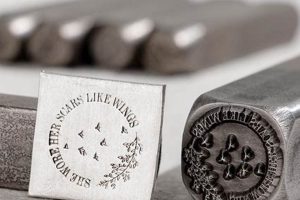
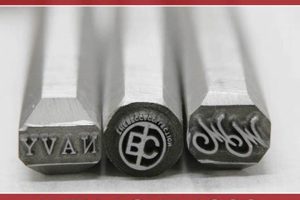
A personalized, pre-inked stamping device automates the process of adding a sender’s address to mail. This eliminates the need for handwritten return addresses, ensuring consistent legibility and saving time. A typical example comprises a rubber die with the customized information, an internal ink reservoir, and a spring mechanism for effortless application.
Automated addressing solutions offer significant advantages in terms of efficiency and professionalism. Clear, consistent return addresses improve mail deliverability and contribute to a polished image for businesses and individuals. While handwritten addresses have a long history, the development of self-inking stamps represents a notable advance in convenience. These tools enable rapid processing of large mail volumes, a crucial factor for businesses and organizations conducting regular mailings.
This exploration will delve further into the practical applications, available customization options, and selection considerations for these valuable tools.
Tips for Selecting and Using Return Address Stamps
Choosing and utilizing a pre-inked, personalized address stamp effectively involves several key considerations to maximize efficiency and achieve desired results.
Tip 1: Font Selection: Opt for clear, legible fonts. Highly stylized or overly elaborate fonts can hinder readability, impacting mail delivery. Sans-serif fonts are generally recommended for optimal clarity.
Tip 2: Ink Color: Black ink offers the highest contrast and readability on most envelopes. While other colors can be visually appealing, ensure sufficient contrast with the envelope color for effective scanning by postal equipment.
Tip 3: Information Inclusion: Essential information typically includes name, street address, city, state, and ZIP code. Additional details, such as apartment or suite numbers, should be included if applicable. Avoid unnecessary information that may clutter the stamp.
Tip 4: Stamp Size: Consider the available space on envelopes and the volume of information required. Larger stamps can accommodate more details but may not be suitable for smaller envelopes.
Tip 5: Ink Refill Availability: Select a stamp model with readily available replacement ink pads to ensure continued use. Knowing the refill process beforehand streamlines future maintenance.
Tip 6: Storage: Store the stamp horizontally and away from extreme temperatures to prevent ink leakage and maintain optimal stamping performance.
Tip 7: Test Impressions: Before using the stamp on official mail, test it on scrap paper to ensure proper alignment and ink coverage. This allows for adjustments and prevents wasted envelopes.
Following these guidelines ensures efficient, professional, and hassle-free addressing, contributing to seamless mail processing and delivery.
By understanding the nuances of selection and usage, one can fully leverage the benefits of automated return address solutions.
1. Personalization
Personalization options transform a functional return address stamp into a distinctive representation of an individual or brand. Beyond the basic function of providing a return address, personalization imbues these tools with character and style, enhancing both practical utility and aesthetic appeal.
- Font Selection
Font choice significantly impacts the overall impression. A classic serif font conveys formality, while a modern sans-serif suggests clean efficiency. Script fonts add a touch of elegance, particularly suitable for personal correspondence. Selecting a font that aligns with the user’s personality or brand identity enhances the stamp’s communicative power.
- Graphical Elements
Incorporating a small logo, monogram, or simple graphic elevates a basic stamp into a personalized branding tool. Businesses can reinforce their visual identity, while individuals might include a symbol reflecting a hobby or personal interest. Such additions create a visually distinctive mark.
- Ink Color
While black ink remains the standard for legibility, exploring alternative colors can add a personalized touch. A business might use a color from its brand palette, while an individual might choose a favorite color. Careful consideration of envelope color and contrast is essential for maintaining readability.
- Layout and Arrangement
Customizing the layout allows for unique arrangements of text and graphical elements. This might involve placing the address in a circular format, incorporating a decorative border, or strategically positioning a logo. Such choices contribute to a bespoke aesthetic.
These personalization options demonstrate the potential of these tools to be more than just functional instruments. They become expressions of personal style and brand identity, transforming mundane mailings into opportunities for subtle yet impactful communication.
2. Automation
Automation lies at the heart of the self-inking return address stamp’s value proposition. This technology transforms the repetitive task of writing a return address into a single, swift action. The mechanism automatically inks the stamp with each impression, eliminating the need for separate ink pads or manual inking. This automation yields significant efficiency gains, particularly for high-volume mailers such as businesses, non-profit organizations, or individuals managing frequent correspondence. Consider a small business owner sending out promotional materials to potential clients. Manually addressing hundreds of envelopes consumes valuable time and resources. A self-inking stamp reduces this process to a few seconds per envelope, freeing time for other essential tasks. This fundamental shift from manual to automated addressing represents a significant advancement in mail processing efficiency.
The automation provided by these tools extends beyond simple time savings. It also ensures consistency and accuracy in return addressing. Handwritten addresses can be illegible or contain errors, potentially leading to delayed or misdirected mail. A self-inking stamp guarantees a clear, consistent imprint with every use, minimizing the risk of postal errors. This reliability is particularly crucial for time-sensitive mailings, such as invoices, legal documents, or important announcements. Furthermore, consistent return addresses project a professional image, reflecting attention to detail and enhancing credibility. For businesses, this consistent branding reinforces a professional identity across all correspondence. In contrast, handwritten return addresses, while personal, can appear less formal and potentially detract from a polished business image.
The automation inherent in self-inking return address stamps significantly impacts mail processing efficiency and professionalism. By eliminating repetitive manual tasks and ensuring consistent accuracy, these tools streamline workflows and enhance communication effectiveness. The ability to rapidly and reliably address mail allows individuals and businesses to focus on core activities, contributing to increased productivity and a more professional image. However, users must remain mindful of ink levels and ensure proper storage to maintain optimal functionality and prevent malfunctions. This awareness ensures consistent performance and maximizes the benefits of automation.
3. Return Address
A return address plays a crucial role in mail delivery, serving as the sender’s designated point of contact for undeliverable or returned mail. Its inclusion facilitates the efficient operation of postal systems worldwide. Without a clear return address, misdirected or undeliverable mail becomes lost, hindering communication and potentially causing significant inconvenience. The integration of a return address within a personalized, pre-inked stamping device streamlines the process of ensuring its inclusion on every piece of outgoing mail. This connection represents a significant advancement in addressing efficiency and mail deliverability.
Consider the scenario of a wedding invitation sent without a return address. If the recipient has moved, the invitation cannot be forwarded, resulting in a missed communication. Conversely, invitations imprinted with a clear return address via a pre-inked stamp ensure efficient redirection or return to the sender. This underscores the practical significance of incorporating return addresses, particularly for important correspondence. Businesses rely on return addresses for customer inquiries, order confirmations, and invoice processing. The use of pre-inked, personalized stamps ensures consistent inclusion of this essential information, enhancing communication efficiency and professionalism. The ability to rapidly and reliably apply return addresses through automation contributes to streamlined workflows and improved operational efficiency in various contexts.
Effective communication hinges on accurate and reliable addressing. Integrating return addresses within self-inking stamps represents a practical solution for ensuring consistent inclusion, thereby enhancing mail deliverability and facilitating efficient communication. Challenges related to legibility and formatting can be mitigated through careful font selection and appropriate stamp sizing, further maximizing the effectiveness of this integrated approach. The adoption of these tools reflects a broader trend towards automation and efficiency in communication practices, underscoring the importance of clear and consistent addressing in modern correspondence.
4. Stamp Format

Stamp format plays a critical role in the effectiveness of a custom, self-inking return address stamp. Format encompasses size, shape, and layout, each influencing legibility, aesthetic appeal, and practical application. A well-chosen format ensures clear communication and contributes to a professional image. Conversely, an ill-suited format can hinder readability, impacting mail delivery and diminishing the stamp’s overall effectiveness. Consider a rectangular stamp format for a business address containing multiple lines of information. This format accommodates the necessary details without compromising clarity. Alternatively, a smaller, circular format might suit a personal address with fewer lines, offering a compact and visually appealing solution. The interplay between format and content is crucial for achieving optimal results.
Practical considerations further underscore the importance of stamp format. Envelope size restricts the available space for a return address. A large, square stamp might overwhelm a small envelope, while a compact rectangular stamp proves more suitable. Similarly, the volume of information to be included dictates the necessary stamp size. A lengthy address with multiple lines necessitates a larger format compared to a concise address requiring minimal space. Understanding these practical constraints ensures the chosen format aligns with the intended use and maximizes its effectiveness. For instance, a legal office requiring inclusion of firm name, address, and contact details benefits from a larger, rectangular format. In contrast, an individual sending personal mail might opt for a smaller, round or square format containing only essential address information. These choices reflect the diverse applications and format considerations associated with personalized return address solutions.
Careful consideration of stamp format is essential for maximizing the utility and aesthetic impact of custom, self-inking return address stamps. Balancing information volume, envelope size, and desired aesthetic contributes to a professional and effective solution. A thoughtfully chosen format ensures clear communication, enhances readability, and contributes to a polished image. Failure to address these format considerations can result in a less effective tool, potentially hindering mail delivery and diminishing the stamp’s overall value. Therefore, format selection represents a critical step in the process of creating a functional and visually appealing return address solution.
5. Self-Inking Mechanism
The self-inking mechanism forms the core functionality of a custom return address stamp, distinguishing it from traditional rubber stamps. This built-in ink reservoir and automated stamping action streamline the addressing process, offering convenience and efficiency. Understanding its components, operation, and maintenance is crucial for maximizing the stamp’s lifespan and ensuring consistent, high-quality impressions.
- Internal Ink Reservoir
The internal ink reservoir holds a pre-determined supply of ink, eliminating the need for separate ink pads. This reservoir typically consists of a porous material saturated with ink. Examples include felt or foam pads. The reservoir’s capacity dictates the number of impressions achievable before requiring a refill. A larger reservoir reduces refill frequency, ideal for high-volume mailing. Conversely, smaller reservoirs suit occasional use.
- Automated Stamping Action
The automated stamping action involves a spring-loaded mechanism that retracts the stamp after each impression, re-inking the die for the next use. This automated process ensures consistent ink coverage and eliminates the need for manual inking, a significant advantage over traditional stamps. The spring mechanism’s durability directly impacts the stamp’s lifespan. High-quality springs ensure consistent performance over extended periods.
- Ink Refill Process
The ink refill process varies depending on the stamp model, but generally involves replacing the ink reservoir or adding ink directly to the existing reservoir. Some models utilize replaceable ink cartridges, while others require adding drops of ink onto the existing pad. Understanding the specific refill process for a given model ensures continued functionality and prevents premature drying or ink leakage. Accessible and clearly documented refill instructions simplify maintenance and prolong the stamp’s useful life.
- Maintenance and Care
Proper maintenance and care are essential for preserving the self-inking mechanism’s functionality. Storing the stamp horizontally prevents ink from settling unevenly within the reservoir, ensuring consistent impressions. Avoiding extreme temperatures further safeguards ink quality and prevents premature drying. Regular cleaning of the stamping surface removes dust and debris, maintaining clear imprints. Adhering to these maintenance practices maximizes the stamp’s lifespan and ensures consistent performance.
The self-inking mechanism’s seamless integration within a custom return address stamp transforms a mundane task into an efficient and convenient process. Understanding its components, operation, and maintenance ensures optimal performance and longevity, maximizing the benefits of personalized, automated addressing. This automated functionality contributes significantly to the overall value and practicality of custom return address stamps, making them an indispensable tool for individuals and businesses alike.
Frequently Asked Questions
This section addresses common inquiries regarding personalized, self-inking return address stamps, providing concise and informative responses.
Question 1: What are the advantages of using a pre-inked, personalized stamp compared to handwritten return addresses?
Pre-inked stamps offer superior efficiency, ensuring consistent legibility and saving significant time, particularly for high-volume mailings. They also project a professional image.
Question 2: How long does the ink typically last before requiring a refill?
Ink longevity varies based on usage frequency and stamp model. Generally, thousands of impressions are possible before refill. Manufacturers often provide estimated impression yields.
Question 3: Can logos or graphical elements be incorporated into the stamp design?
Yes, many vendors offer customization options including logo integration, monograms, or simple graphics, enhancing personalization and branding.
Question 4: What are the typical size options available for these stamps?
Sizes vary to accommodate diverse needs. Smaller sizes suit personal correspondence, while larger formats accommodate business logos and additional information.
Question 5: What type of ink is typically used in these stamps, and are different colors available?
Black ink is standard for optimal legibility. Other colors are often available but should be chosen carefully to ensure sufficient contrast with envelope color.
Question 6: What is the recommended storage method to maintain optimal stamp performance?
Storing the stamp horizontally, away from extreme temperatures, and with the cap on preserves ink quality and prevents leakage or drying.
Understanding these key aspects contributes to informed decision-making and effective utilization of these practical tools.
Further exploration of specific vendor offerings and customization options is recommended for selecting a stamp tailored to individual needs.
Custom Return Address Stamp Self Inking
Personalized, self-inking return address stamps offer a significant advantage in efficiency and professionalism for individuals and businesses alike. From the automation provided by the self-inking mechanism to the customization options available, these tools streamline the addressing process while enhancing communication. Careful consideration of factors such as font selection, ink color, stamp format, and proper maintenance ensures optimal performance and longevity. The ability to incorporate logos and personalized graphics further elevates these stamps beyond mere functionality, transforming them into tools for branding and personal expression. Proper utilization maximizes efficiency and contributes to a polished, professional image.
Effective communication relies on clarity and efficiency. Custom, self-inking return address stamps represent a practical solution for streamlining correspondence and ensuring accurate delivery. As communication methods evolve, leveraging such tools becomes increasingly crucial for individuals and organizations seeking to optimize their processes and project a professional image. Investing in a high-quality, personalized stamp ultimately represents an investment in streamlined communication and enhanced professionalism.