The one-cent postage stamp issued in 1968, featuring a portrait of Benjamin Franklin against a green background, represents a significant piece of American philatelic history. This specific stamp was part of the Prominent Americans series and replaced an earlier version with a similar design but different coloration. Collectors often distinguish it by its Scott catalog number 1314.
This small piece of postal history reflects a period of significant change in the United States. Its introduction coincided with increasing postal rates and a growing reliance on automated mail sorting, necessitating changes in stamp design and production. The continued use of Benjamin Franklin, a Founding Father and key figure in the early development of the American postal system, reinforces his enduring legacy. These seemingly simple stamps serve as tangible artifacts of their time, offering insights into graphic design trends, printing techniques, and the historical context of their issuance.
This exploration into this particular stamp opens avenues to deeper understanding of wider topics, including the evolution of American stamp design, the impact of historical figures on postal history, and the role of philately in preserving historical artifacts. Further investigation might consider the printing methods employed, the reasons for design choices, and the stamp’s relative scarcity and value among collectors.
Tips for Collecting and Understanding the 1968 One-Cent Franklin Stamp
Careful consideration of several factors contributes to a more informed appreciation and effective management of these historical artifacts. The following offers guidance for both novice and experienced collectors.
Tip 1: Condition is Key: A stamp’s condition significantly impacts its value. Examine stamps closely for tears, creases, thin spots, or fading. Well-preserved examples command higher prices.
Tip 2: Note the Gum: Original gum, undisturbed and free from hinges, adds to a stamp’s desirability. Regummed or hinged examples are generally less valuable.
Tip 3: Centering Matters: Ideally, the design should be perfectly centered within the perforated border. Off-center examples are common but can affect value.
Tip 4: Understand Variations: Be aware of potential variations, such as shade differences in the green ink or plate flaws. These variations can be significant to specialized collectors.
Tip 5: Utilize a Catalog: A reputable stamp catalog, such as the Scott Specialized Catalogue of United States Stamps and Covers, provides valuable information regarding identification, variations, and pricing.
Tip 6: Proper Storage is Essential: Protect stamps from humidity, light, and pests. Archival-quality storage materials are recommended.
Tip 7: Seek Expert Advice: Consulting with experienced philatelists or reputable dealers can provide valuable insights and guidance.
By understanding these considerations, one can gain a deeper appreciation for the nuances of collecting and the historical significance embodied within these small pieces of history. Careful attention to detail, coupled with a commitment to proper preservation, ensures the continued enjoyment and potential value appreciation of these artifacts.
This focus on collecting and preservation practices naturally leads to a broader discussion of the historical and cultural context surrounding the 1968 one-cent Franklin stamp, paving the way for a more comprehensive understanding of its place within American philately.
1. Green color

The green color of the 1968 one-cent Benjamin Franklin stamp is a defining characteristic, distinguishing it from earlier and later issues. Analysis of this specific shade provides insights into the production processes, design choices, and historical context of the stamp.
- Symbolic Meaning:
Green often symbolizes growth, stability, and prosperity. While the specific rationale for choosing green remains undocumented, it potentially reflects these positive connotations, aligning with Franklin’s contributions to the nation’s growth and stability. The color also provides a visual contrast against earlier Franklin stamps, aiding in differentiation.
- Ink Formulation and Printing:
The specific shade of green results from the ink formulation used in the printing process. Variations in ink batches or printing conditions could lead to subtle color shifts, creating distinct shades recognizable by collectors. Understanding the printing process and ink composition provides valuable insights for authenticating and valuing these stamps.
- Design and Aesthetics:
The green backdrop complements Franklin’s portrait, creating a visually appealing and harmonious design. The choice of green likely involved aesthetic considerations, balancing the portrait’s details with a background color that was both visually pleasing and functional for postal use.
- Differentiation and Recognition:
The green color serves a practical purpose, differentiating the 1968 issue from previous one-cent Franklin stamps. This clear visual distinction aided postal workers and the public in readily identifying the current denomination.
By considering these facets of the green coloration, one gains a deeper understanding of the 1968 one-cent Franklin stamp. This seemingly simple design choice reflects a complex interplay of symbolic meaning, technical considerations, and practical functionality. Further research into historical printing processes and design trends within philately can offer additional insights.
2. Benjamin Franklin Portrait

The portrait of Benjamin Franklin on the 1968 one-cent green stamp serves as more than mere decoration. It connects the stamp to a rich historical narrative, symbolizing Franklin’s foundational role in the American postal system and his broader contributions to the nation. Understanding the portrait’s significance enhances appreciation for the stamp’s historical context and cultural value.
- Historical Representation:
The portrait’s presence reinforces Franklin’s enduring legacy as a Founding Father and a key figure in establishing the United States Postal Service. His image acts as a visual reminder of his contributions to communication and national unity. This visual connection strengthens the stamp’s historical significance, transforming it from a simple postage marker into a miniature historical artifact. The continued use of his likeness on postage underscores his lasting impact on American society.
- Design Continuity:
The 1968 stamp maintains a visual link to earlier Franklin stamps, reflecting a design continuity within American philately. While specific design elements, such as the background color, may evolve, the consistent use of Franklin’s portrait provides a sense of familiarity and tradition. This continuity reinforces the stamp’s place within a larger historical narrative of postal design and iconography. It links the 1968 issue to a broader tradition of honoring Franklin through postage.
- Public Recognition:
Franklin’s instantly recognizable image aids in the stamp’s functionality. His widespread recognition ensures immediate identification and understanding of the stamp’s purpose and value, even for those unfamiliar with the nuances of stamp collecting. This immediate recognition contributes to the stamp’s effectiveness as a tool of communication and commerce. It underscores the practical considerations alongside the symbolic value embedded within the design.
- Symbolic Value:
Beyond its practical function, the portrait imbues the stamp with symbolic weight. Franklin represents ingenuity, diligence, and public service, qualities associated with the postal service itself. This symbolic association elevates the stamp beyond its utilitarian purpose, transforming it into a small embodiment of American values. It adds a layer of cultural significance, connecting everyday postal operations to broader national ideals.
By exploring the various facets of the Benjamin Franklin portrait, one gains a deeper appreciation for the 1968 one-cent green stamp. The portrait connects the stamp to a broader historical and cultural narrative, enriching its significance for collectors and historians alike. Further investigation into portraiture in philately and the evolving iconography of American postage can provide additional context and understanding.
3. One-cent denomination

The one-cent denomination of the 1968 green Benjamin Franklin stamp provides crucial context for understanding its place within postal history. This seemingly minor detail reflects broader economic trends, postal rate structures, and the practical utility of low-denomination stamps during this period. Analysis of the one-cent value reveals significant insights into the stamp’s purpose and its reflection of contemporary circumstances.
The one-cent denomination served a crucial role in facilitating everyday postal transactions. Postcards, letters, and various printed materials often required only a single one-cent stamp for delivery. This affordability ensured widespread access to postal services, promoting communication and commerce throughout the nation. The high volume of mail requiring one-cent postage necessitated large print runs of these stamps, contributing to their commonality among collectors today. For instance, bulk mailings from businesses and organizations relied heavily on one-cent stamps, further illustrating their practical importance within the postal system.
The one-cent denomination also reflects the postal rate structure of the time. Understanding these rates provides valuable context for interpreting the stamp’s usage and purpose. While seemingly insignificant today, the one-cent value played a vital role in the daily operations of the postal service and the affordability of communication. Changes in postal rates often necessitate new stamp denominations, making the one-cent green Franklin stamp a marker of a specific period in postal history. This understanding underscores the value of philately in preserving historical records and reflecting broader societal trends.
4. 1968 Issuance
The 1968 issuance of the green one-cent Benjamin Franklin stamp places this specific artifact within a crucial historical context. This year witnessed significant social and political upheaval in the United States, including the Vietnam War protests, the Civil Rights Movement, and the assassinations of Martin Luther King Jr. and Robert F. Kennedy. While the stamp itself does not explicitly depict these events, its issuance date inextricably links it to this turbulent period. Understanding the societal backdrop of 1968 enriches the stamp’s significance, transforming it from a mere postal artifact into a tangible representation of a pivotal moment in American history. For example, letters sent with this stamp during 1968 may have carried news of these events, adding a poignant layer of historical context to the stamp’s usage. This connection underscores the value of philately in preserving historical memory and providing tangible links to the past.
Furthermore, the 1968 issuance coincided with technological advancements within the postal service. The increasing automation of mail sorting and processing necessitated changes in stamp design and production. The green ink and the specific design elements of the 1968 stamp likely reflect these technological adaptations, potentially incorporating features that facilitated automated processing. Analyzing these technical aspects provides insights into the evolution of postal technology and the stamp’s role within this changing landscape. Researching contemporary postal technology and its influence on stamp design can further illuminate this connection.
In conclusion, the 1968 issuance date provides crucial context for understanding the green one-cent Benjamin Franklin stamp. Connecting this seemingly mundane detail to the broader historical and technological landscape of the time enriches its significance and transforms it into a more meaningful artifact. This approach underscores the importance of considering historical context when analyzing philatelic materials and demonstrates the potential for even small artifacts to reflect larger societal trends and historical narratives. Further research into the specific technological advancements within the postal service during this era and their impact on stamp design could provide additional valuable insights.
5. Prominent Americans Series

The Prominent Americans series provides crucial context for understanding the 1968 one-cent green Benjamin Franklin stamp. This series, initiated by the United States Postal Service, aimed to honor individuals who made significant contributions to American history and culture. Placement within this series elevates the Franklin stamp beyond its purely postal function, imbuing it with added historical and cultural significance. Examining the series as a whole illuminates the stamp’s place within a larger narrative of national commemoration and recognition.
- Honoring National Figures:
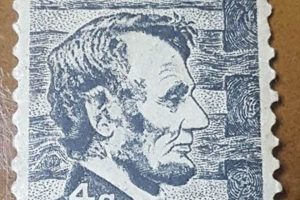
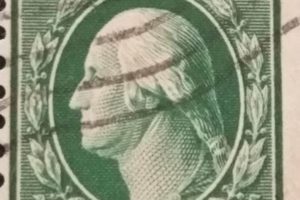
The series sought to recognize individuals from various fields, including politics, science, arts, and literature. Inclusion in this series signifies national recognition of Benjamin Franklin’s multifaceted contributions. Other figures featured in the series, such as George Washington and Abraham Lincoln, further emphasize the stamp’s association with prominent figures in American history. This shared platform elevates the Franklin stamp, placing it within a pantheon of nationally recognized individuals.
- Educational Value:
The Prominent Americans series provided an opportunity to educate the public about important historical figures. By featuring these individuals on commonly used postage stamps, the series exposed a wide audience to their accomplishments and legacies. The Franklin stamp, within this context, served as a small but accessible educational tool, reminding users of Franklin’s contributions to the nation’s founding and development. This educational aspect adds another layer of value to the stamp, transforming it into a vehicle for historical awareness.
- Philatelic Significance:
The Prominent Americans series holds a significant place within American philately. Collectors often seek to acquire complete sets of these stamps, further enhancing the Franklin stamp’s desirability. The series’ popularity among collectors contributes to the stamp’s market value and ensures its continued preservation. The Franklin stamp, as a component of this sought-after series, benefits from increased collector interest and preservation efforts.
- Reflecting National Values:
The selection of individuals featured in the Prominent Americans series reflects prevailing national values and priorities. The inclusion of Benjamin Franklin underscores the importance of ingenuity, public service, and intellectual curiosity within American culture. By honoring these values through postage stamps, the series reinforces their significance within the national consciousness. The Franklin stamp, in this context, serves as a small embodiment of these cherished American ideals.
In conclusion, understanding the Prominent Americans series provides crucial context for appreciating the 1968 one-cent green Benjamin Franklin stamp. The series elevates the stamp’s significance beyond its postal function, linking it to a broader narrative of national commemoration, education, and cultural values. Further exploration of other stamps within the series can provide additional insights into the historical and cultural landscape of the period and the evolving criteria for national recognition.
6. Engraved printing

Engraved printing played a crucial role in the production of the 1968 one-cent green Benjamin Franklin stamp. This intricate process, involving the meticulous incision of the design onto a metal plate, offers distinct advantages in security, detail, and aesthetic quality. The engraved printing process contributes significantly to the stamp’s visual appeal and its resistance to counterfeiting. The resulting textured surface, created by the ink held within the incised lines, provides a tactile and visual richness not achievable through other printing methods. This tactile quality also enhances the stamp’s security, making unauthorized reproduction more difficult. Examples of other stamps produced using engraving during this period demonstrate the prevalence and established nature of this technique within security printing.
The Bureau of Engraving and Printing, responsible for producing United States postage stamps, employed skilled engravers to create the dies used in the stamp’s production. This meticulous process ensured fine details and precise lines within the portrait of Benjamin Franklin and the surrounding design elements. The engraved lines hold ink differently than a flat printed surface, creating subtle variations in tone and shading that contribute to the stamp’s visual depth and complexity. This attention to detail, facilitated by the engraved printing method, enhances the stamp’s aesthetic appeal and its value for collectors. Comparison with stamps produced using other printing methods, such as lithography or offset printing, reveals the distinct visual characteristics imparted by engraving.
Understanding the role of engraved printing in the creation of the 1968 one-cent green Benjamin Franklin stamp provides valuable insights for collectors and philatelic enthusiasts. Recognizing the characteristics of engraved printing allows for authentication and informed assessment of a stamp’s condition and value. Furthermore, appreciation for the craftsmanship involved in this traditional printing method deepens understanding of the stamp’s historical context and the technical expertise employed in its production. This knowledge enhances the overall appreciation of the stamp as both a historical artifact and a work of art. Continued exploration of engraved printing techniques and their evolution within security printing offers further avenues for research and deeper understanding within the field of philately.
7. Perforated edges

Perforated edges represent a crucial functional element of the 1968 one-cent green Benjamin Franklin stamp. Prior to widespread perforation usage, stamp separation required scissors or other cutting implements, a time-consuming and often imprecise process. Perforations, introduced in the mid-19th century, revolutionized stamp handling, enabling quick and clean separation. This seemingly minor innovation significantly improved postal efficiency, facilitating faster processing and handling of large mail volumes. The presence of perforations on the one-cent Franklin stamp reflects this broader shift towards standardized, efficient postal practices. Examples of imperforate stamps from earlier periods highlight the practical challenges posed by their separation and underscore the significance of perforation adoption.
Analysis of the perforation gauge, measured by the number of perforations per two centimeters, provides further insight. Variations in perforation gauge can exist within a single stamp issue due to different printing presses or perforation equipment. These variations often become key distinguishing features for collectors seeking specific varieties. The 1968 one-cent Franklin stamp typically exhibits a perforation gauge of 11, although minor variations might exist. Knowledge of these variations allows collectors to identify and categorize their stamps with greater precision, adding a layer of complexity to the collecting process. Specialized philatelic literature often provides detailed information regarding perforation varieties and their relative scarcity.
Perforated edges, therefore, contribute significantly to both the practical functionality and the collector value of the 1968 one-cent green Benjamin Franklin stamp. Understanding the historical development of stamp perforation, the technical aspects of perforation gauge, and the potential variations within this specific issue provides a more nuanced appreciation for this seemingly minor detail. This knowledge enhances one’s ability to assess a stamps condition, identify potential variations, and understand its place within the broader context of postal history and philately. Further research into the evolution of perforation technology and its impact on stamp production and collecting practices offers valuable avenues for continued exploration within this field.
Frequently Asked Questions
This section addresses common inquiries regarding the 1968 one-cent green Benjamin Franklin stamp, providing concise and informative responses.
Question 1: How can one distinguish the 1968 one-cent green Franklin stamp from earlier issues featuring Franklin?
The most obvious distinction lies in the green ink color. Earlier one-cent Franklin stamps utilized different shades, including carmine rose and red-orange. Consulting a specialized stamp catalog, such as the Scott catalogue, provides definitive identification based on Scott numbers.
Question 2: What factors influence the value of a 1968 one-cent green Franklin stamp?
Condition plays a crucial role. Factors like centering, gum condition (original gum undisturbed by hinges is preferred), and absence of flaws such as tears or creases significantly impact value. Variations, such as subtle shade differences or plate flaws, can also influence value for specialized collectors.
Question 3: Where can one acquire these stamps for a collection?
Reputable stamp dealers, online marketplaces specializing in philatelic materials, and stamp auctions represent potential acquisition sources. Exercising caution and verifying seller reputations is crucial when purchasing online or through auctions.
Question 4: Are there any notable variations within the 1968 one-cent green Franklin stamp issue?
While not as dramatically varied as some other stamp issues, subtle shade differences in the green ink can occur. Plate varieties, identifiable by flaws or anomalies in the printing plate, also exist and are documented in specialized stamp catalogs.
Question 5: How should one store these stamps to ensure their long-term preservation?
Archival-quality storage materials are essential. Acid-free albums, mounts, and protective sleeves help shield stamps from humidity, light, and environmental pollutants that can cause deterioration. Maintaining a stable temperature and humidity environment is also recommended.
Question 6: What resources are available for individuals interested in learning more about this stamp and philately in general?
Specialized stamp catalogs, such as the Scott catalogue, provide detailed information on identification, variations, and pricing. Philatelic societies and organizations offer opportunities for networking, education, and access to specialized resources. Numerous online resources and forums also cater to collectors of all levels.
Careful consideration of these frequently asked questions provides a foundation for informed collecting and a deeper appreciation of the 1968 one-cent green Benjamin Franklin stamp’s historical and philatelic significance. Further research through reputable resources can enhance understanding and contribute to a rewarding collecting experience.
This FAQ section naturally leads into a discussion of broader collecting strategies and resources, providing a pathway for continued learning and engagement within the field of philately.
Conclusion
Exploration of the 1968 one-cent green Benjamin Franklin stamp reveals a wealth of information beyond its face value. Analysis of its individual componentsthe distinctive green ink, the iconic portrait, the one-cent denomination, the 1968 issuance date, its inclusion within the Prominent Americans series, the engraved printing method, and the perforated edgesprovides a multifaceted understanding of this small yet significant artifact. Each element contributes to a deeper appreciation of the stamp’s historical context, production techniques, and cultural significance. The stamp emerges not merely as a postage marker but as a tangible representation of a specific moment in American history, reflecting broader technological advancements, societal trends, and national values.
The seemingly simple one-cent green Benjamin Franklin stamp serves as a microcosm of historical, technological, and cultural forces at play in 1968. Continued investigation within philately offers opportunities to uncover further insights into seemingly mundane objects, revealing their capacity to embody complex historical narratives and connect us to the past. Preservation and study of these artifacts enrich our understanding of history and underscore the power of small objects to hold significant meaning. This exploration encourages further investigation into other historical artifacts and their capacity to illuminate the past.