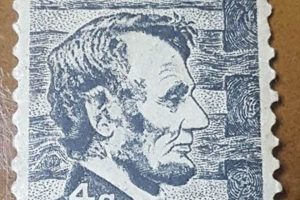
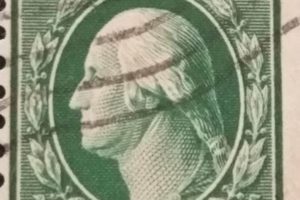
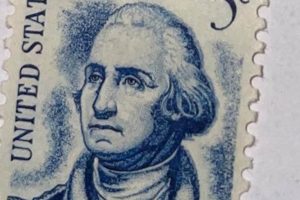
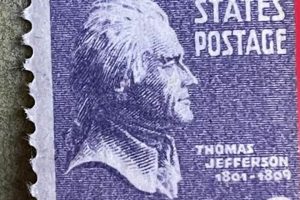
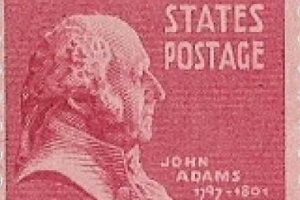
The 18511857 three-cent postage stamp, featuring the nation’s first president, represented a significant step in American postal history. This denomination was introduced to facilitate the prepayment of postage for printed materials, reflecting the growing importance of printed communication in the mid-19th century. The design, based on a Gilbert Stuart portrait, became an iconic image, widely recognized and circulated throughout the country. Examples exist with varying shades and perforations, offering collectors opportunities for specialized study.
This diminutive piece of postal history offers a window into a transformative period in American communication. The reduced postage rate it represented fostered the expansion of newspapers, periodicals, and the dissemination of information across the expanding nation. Its introduction signaled a shift towards more accessible and affordable mail services, democratizing access to written communication. The stamp itself served as a constant visual reminder of national identity and leadership during a period of growth and change.
Further exploration will cover specific aspects of this philatelic artifact, including its design variations, production methods, and enduring legacy within both postal history and broader American culture. Topics to be addressed include the different printings and their distinguishing characteristics, the impact of the stamp’s design on later issues, and its role in shaping public perception of national figures.
Collecting Tips for the 1851-1857 Three-Cent Stamp
Careful consideration of several factors contributes to successful acquisition and preservation of these historically significant stamps. Attention to detail and a methodical approach are recommended for both beginning and experienced collectors.
Tip 1: Authentication: Verify authenticity through reputable dealers or expert authentication services. Counterfeit examples exist, and careful scrutiny is essential.
Tip 2: Condition: Assess the condition of the stamp, noting any imperfections such as tears, thin spots, or creases. Condition significantly impacts value.
Tip 3: Color and Perforations: Recognize the variations in color shades and perforation types, as these distinguish different printings and can affect value.
Tip 4: Centering: Evaluate the centering of the design within the margins. Well-centered examples are generally more desirable.
Tip 5: Gum: Examine the gum, if present. Original gum in good condition enhances the stamp’s value. Regummed or disturbed gum diminishes value.
Tip 6: Provenance: Research the stamp’s history, if possible. Knowing its previous owners and any associated documentation can add to its value and historical significance.
Tip 7: Storage: Store stamps in archival-quality materials, protected from light, humidity, and temperature fluctuations, to ensure long-term preservation.
Adherence to these guidelines increases the likelihood of acquiring genuine examples in good condition and preserving their historical and financial value for future generations.
These tips provide a foundation for building a meaningful collection. Further research into specialized areas, such as plate varieties and cancellations, can enrich the collecting experience.
1. 1851 Issue

The “1851 Issue” denotes the initial release of the three-cent George Washington stamp, a pivotal moment in United States postal history. This release directly responded to the burgeoning demand for affordable postage for printed materials, reflecting the increasing importance of newspapers, periodicals, and pamphlets in public discourse. Prior to 1851, higher postal rates hindered widespread dissemination of printed information. The 1851 three-cent stamp, featuring Washington’s portrait, facilitated broader access to printed media, thereby promoting literacy and information sharing across the expanding nation. This specific issue represents the first appearance of this denomination and design combination, distinguishing it from subsequent three-cent Washington stamps released in later years.
The 1851 issue exhibits specific characteristics, including the use of perf 14 (later changed to perf 16) and a distinctive deep rose color. Variations in shade exist within this issue, providing collectors with opportunities for specialized study. Examples of these variations might include stamps exhibiting a more orange-rose hue compared to the standard deep rose, or variations in the intensity of the color saturation. Understanding the 1851 issue allows collectors to distinguish these early printings from later releases. This differentiation is crucial for accurate assessment of rarity and value. For example, an 1851 three-cent stamp with original gum and vibrant color in excellent condition holds significantly greater value than a later, less well-preserved example.
Recognizing the significance of the 1851 issue provides a foundational understanding of this key philatelic item. This knowledge is essential for collectors and historians alike. It highlights the stamps role in the evolution of American communication and its place within the broader context of 19th-century social and technological development. Challenges in identifying genuine 1851 issues arise due to the existence of counterfeits and later reprints. Careful examination of perforations, color, and paper type is crucial for authentication. Further research into plate varieties and cancellations can deepen understanding and appreciation for the complexities and nuances of this historically significant stamp.
2. Three-Cent Denomination

The three-cent denomination represents a pivotal element in understanding the significance of the George Washington three-cent stamp. Prior to its introduction in 1851, higher postal rates presented a barrier to the widespread dissemination of printed materials. The establishment of a three-cent rate specifically for printed matter, including newspapers, periodicals, and pamphlets, fostered greater accessibility to information and communication. This change facilitated broader public discourse and contributed to rising literacy rates. The George Washington three-cent stamp, therefore, became a tangible symbol of this important postal reform. Its existence directly reflects the social and political climate of the era, marked by a growing emphasis on the importance of an informed citizenry.
The choice of the three-cent denomination was not arbitrary. It represented a calculated effort to strike a balance between affordability for the public and financial viability for the postal service. Contemporary examples illustrate the impact of this decision. Newspapers, previously burdened by high postage costs, experienced increased circulation, allowing for wider distribution of news and diverse perspectives. The proliferation of affordable periodicals contributed to the growth of specialized publications catering to various interests and hobbies. This expansion of the printed word had profound effects on intellectual life, political discourse, and social reform movements.
Understanding the connection between the three-cent denomination and the George Washington three-cent stamp provides essential context for appreciating its historical significance. This specific denomination was not merely a monetary value; it served as a catalyst for societal change. Challenges in maintaining the delicate balance between affordable postage and postal service revenue continued throughout the 19th century. The three-cent rate, however, established a precedent for accessible communication that shaped the development of the American postal system and influenced the growth of a more informed and interconnected society.
3. Washington Portrait
The portrait of George Washington featured on the three-cent stamp represents a crucial element in understanding its historical and cultural significance. This image, based on a painting by Gilbert Stuart, became an iconic representation of the nation’s first president, reproduced millions of times and disseminated across the expanding nation. The specific choice of this portrait, its adaptation for the stamp format, and its subsequent impact on visual culture form key aspects for exploration.
- Source Image
The portrait on the stamp derives from the “Athenaeum Portrait,” a painting by Gilbert Stuart completed in 1796. Stuart’s depiction of Washington became one of the most widely recognized and reproduced images of the president. Its selection for the stamp design solidified its iconic status and contributed to its enduring presence in American visual culture.
- Engraving and Adaptation
The process of transferring Stuart’s painted portrait to the stamp format involved skilled engraving, reducing the image to a miniature scale while retaining its essential features. Engravers faced the challenge of capturing the likeness and gravitas of Washington within the limited space of the stamp. Variations in engraving quality and details can be observed across different printings, adding another layer of complexity for collectors.
- Symbolic Significance
The use of Washington’s image on the three-cent stamp served a crucial symbolic function. It reinforced national identity and patriotism during a period of significant national expansion and development. The image of the revered founding father circulated throughout the country on mail, constantly reinforcing his image and legacy in the public consciousness.
- Impact on Later Issues
The 1851 three-cent stamp established a precedent for depicting Washington on postage. Its design influenced subsequent stamp issues, shaping the visual representation of Washington throughout philatelic history. This recurring motif solidified Washington’s image as a central figure in American iconography and contributed to the lasting impact of Stuart’s original portrait.
The Washington portrait on the three-cent stamp transcended its purely functional role. It became a symbol of national unity, leadership, and historical continuity. The image itself, its adaptation to the stamp format, and its enduring influence on later issues contribute to the rich and complex narrative surrounding this significant piece of American postal and visual history. Further examination of the specific engraving techniques, the historical context of portraiture in the 19th century, and the evolving symbolism of Washington’s image can enrich understanding of the stamp’s enduring legacy.
4. Printed by Toppan, Carpenter & Co.

The designation “Printed by Toppan, Carpenter & Co.” holds significant relevance for collectors and historians of the George Washington three-cent stamp. This firm played a crucial role in the stamp’s production, and understanding their involvement provides valuable context for appreciating the stamp’s historical and philatelic significance. Toppan, Carpenter & Co.’s printing processes, contractual relationship with the government, and overall impact on the stamp’s appearance and variations constitute key areas for exploration.
- Printing Contract
Toppan, Carpenter & Co. secured the government contract for producing the 1851-1857 series of three-cent stamps. This contract represents a significant undertaking for the firm, and it played a crucial role in shaping the early development of American stamp production. The details of the contract, including the specified printing methods, quantities, and timeframes, offer insights into the logistical challenges and technical requirements of 19th-century stamp manufacturing.
- Printing Methods and Technology
Toppan, Carpenter & Co. employed specific printing techniques and technologies for producing the three-cent stamp. Understanding these methods, such as the use of engraved plates and printing presses of the era, provides crucial context for analyzing the stamp’s appearance and variations. Examining the printing process allows for identification of specific characteristics and flaws, informing authentication and valuation efforts.
- Variations and Plate Characteristics
The printing process employed by Toppan, Carpenter & Co. resulted in specific variations and plate characteristics observable in the three-cent stamps. These variations, arising from factors like plate wear, ink variations, and paper differences, offer collectors opportunities for specialized study. Identifying and categorizing these variations adds another layer of complexity and interest to the study of these stamps.
- Impact on Philatelic Study
The involvement of Toppan, Carpenter & Co. has lasting implications for philatelic study. Understanding their printing processes, contract details, and the resulting stamp variations enhances appreciation for the nuances and complexities of these historical artifacts. This knowledge informs authentication efforts, aids in accurate valuation, and contributes to a richer understanding of 19th-century printing and postal history.
Examining Toppan, Carpenter & Co.’s role in producing the three-cent George Washington stamp illuminates key aspects of its production and historical context. This understanding enriches the collecting experience and provides valuable insight into the early development of American stamp manufacturing. Further research into the firm’s history, printing contracts, and the technological landscape of the era deepens appreciation for these philatelic treasures.
5. Perf 14 (Later Perf 16)

The designation “Perf 14 (Later Perf 16)” refers to the perforation gauge of the George Washington three-cent stamp, a crucial aspect for collectors and philatelic enthusiasts. “Perf” denotes perforations, the small holes punched between stamps for easy separation. The number indicates the quantity of perforations within a two-centimeter span. The 1851 three-cent Washington stamp initially featured Perf 14. Later printings transitioned to Perf 16. This seemingly minor alteration holds significant implications for stamp identification, valuation, and understanding the production process.
The shift from Perf 14 to Perf 16 reflects changes in printing technology and postal requirements. Perf 14 proved less efficient for separating stamps, potentially leading to damage. The finer Perf 16 addressed this issue, enabling cleaner separation and improved handling. Distinguishing between these variations necessitates careful examination. A magnifying glass or perforation gauge assists in accurate identification. Examples of Perf 14 stamps often exhibit wider spacing between perforations compared to the denser Perf 16 variety. This distinction impacts value, with Perf 14 examples generally considered rarer and more desirable among collectors due to their earlier production period.
Understanding the significance of “Perf 14 (Later Perf 16)” provides essential context for evaluating and appreciating the three-cent Washington stamp. This seemingly technical detail offers valuable insights into the stamp’s production history and the evolution of printing practices. Challenges arise in distinguishing between genuine examples and forgeries, particularly concerning perforations. Careful scrutiny, consultation with expert resources, and comparison with authenticated examples remain crucial for accurate identification and assessment. This knowledge empowers collectors to make informed decisions, contributing to the preservation and appreciation of these important philatelic artifacts.
6. Deep rose color (variations exist)

The “deep rose color (variations exist)” designation for the George Washington three-cent stamp signifies a key area of interest for collectors and philatelic scholars. While “deep rose” describes the intended color, variations in shade occurred during production, creating collectible distinctions among these stamps. Understanding these color nuances provides crucial context for authentication, valuation, and appreciating the complexities of 19th-century printing processes.
- Color Designation and Intended Shade
The official designation “deep rose” provides a baseline reference for the stamp’s color. This specific shade aimed to distinguish the three-cent stamp from other denominations. However, achieving color consistency proved challenging with the printing technologies of the era, leading to inevitable variations.
- Causes of Color Variations
Several factors contributed to color variations in the deep rose three-cent stamps. Ink batches, paper quality, and printing pressure inconsistencies all played a role. Environmental factors during storage, such as light exposure and humidity, could also affect color over time.
- Identifying and Classifying Color Variations
Collectors often categorize deep rose variations using descriptive terms like “rose-carmine,” “pale rose,” or “brownish rose.” Specialized color charts and comparison with certified examples aid in accurate identification. Precise classification requires careful observation under controlled lighting conditions.
- Implications for Collectors
Color variations significantly impact the value and collectibility of three-cent Washington stamps. Rarer shades, such as a distinct “orange-rose” or a particularly vibrant “deep rose,” command higher prices. Condition also plays a crucial role; faded or discolored examples diminish in value regardless of the initial shade.
The “deep rose color (variations exist)” aspect of the George Washington three-cent stamp underscores the importance of nuanced observation in philately. These variations, arising from the limitations and complexities of 19th-century printing, offer collectors a fascinating area of study. Careful attention to color distinctions informs authentication, valuation, and a deeper appreciation for these historical artifacts. Further exploration into ink chemistry, paper manufacturing processes, and the historical context of color perception enhances understanding of this intricate and captivating aspect of philatelic study.
Frequently Asked Questions
This section addresses common inquiries regarding the 1851-1857 three-cent George Washington stamp, providing concise and informative responses.
Question 1: How can one differentiate between the 1851 issue and later three-cent Washington stamps?
Key distinguishing features include perforation gauge (perf 14 initially, later perf 16), shade variations within the deep rose color, and plate characteristics specific to the 1851 printing. Microscopic examination and comparison with authenticated examples are recommended.
Question 2: What factors influence the value of these stamps?
Condition, color shade, centering, presence of original gum, and perforation type significantly impact value. Rarity, determined by factors like production numbers and surviving examples, also plays a crucial role. Consulting specialized catalogs and expert appraisers provides accurate valuations.
Question 3: Are there known counterfeits of the three-cent Washington stamp, and how can they be identified?
Counterfeits exist, posing challenges for collectors. Careful examination of perforations, paper type, ink characteristics, and design details is crucial. Authentication by reputable experts or certification services offers reliable verification.
Question 4: What is the historical significance of the three-cent denomination specifically?
The three-cent rate facilitated wider distribution of printed materials, including newspapers and periodicals, contributing to increased literacy and broader access to information. This rate represented a significant postal reform, fostering greater public discourse and intellectual exchange.
Question 5: Where can one find reliable information and resources for further research on these stamps?
Reputable philatelic societies, specialized stamp catalogs, and established dealers offer valuable resources. Museum collections and online archives often provide historical context and access to digitized examples. Academic libraries may also hold relevant publications and research materials.
Question 6: How should these stamps be stored to ensure long-term preservation?
Archival-quality materials, including acid-free mounts and protective sleeves, are essential. Storage in a cool, dark, and stable environment, free from humidity and temperature fluctuations, minimizes deterioration and preserves the stamp’s condition and value.
Careful consideration of these factors enhances understanding and appreciation for the 1851-1857 three-cent George Washington stamp, enabling informed collecting practices and contributing to the preservation of these philatelic treasures.
Further exploration of specialized areas, such as plate varieties, cancellations, and postal history, can enrich the collecting experience and deepen understanding of this significant piece of American history.
The 1851-1857 Three-Cent George Washington Stamp
Exploration of the 1851-1857 three-cent George Washington stamp reveals a multifaceted artifact reflecting significant historical, technological, and cultural influences. From its role in facilitating widespread dissemination of printed information to the nuances of its production by Toppan, Carpenter & Co., this small piece of postal history offers valuable insights into a transformative period in American society. Key aspects, including the iconic Washington portrait based on Gilbert Stuarts painting, the variations in deep rose color, and the shift from Perf 14 to Perf 16, provide collectors and researchers with opportunities for in-depth study and nuanced appreciation.
The three-cent George Washington stamp stands as a testament to the evolving landscape of 19th-century communication and the enduring power of visual representation. Continued study of this philatelic artifact promises deeper understanding of its historical context, production complexities, and lasting legacy within American culture. Its enduring presence in collections worldwide underscores its significance as a tangible link to a pivotal era in the nations past.