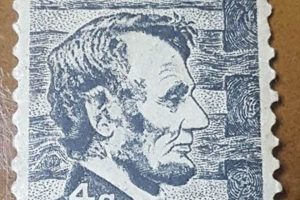
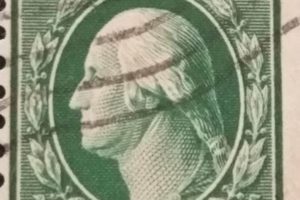
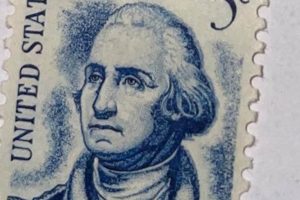
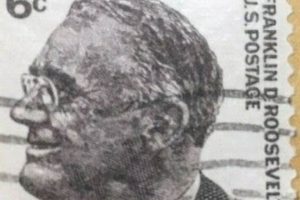
The value of a one-cent stamp featuring the seventh U.S. President, Andrew Jackson, varies significantly based on factors such as condition, printing method, and any unique characteristics. Stamps in mint condition, particularly those with intact original gum, often command higher prices than used examples. Variations like perforations, watermarks, and errors can also greatly influence a stamp’s potential worth. For example, an unused 1863 one-cent Jackson stamp in perfect condition could be worth hundreds of dollars, while a common used example might only be worth a few cents.
Understanding the factors that influence the value of these stamps is crucial for collectors. The historical context surrounding these stamps adds another layer of interest. Issued during a period of significant change and expansion in the United States, these small pieces of postal history offer a tangible connection to the past. Beyond their monetary value, these stamps provide insights into printing techniques, postal rates, and historical iconography. Their ongoing appeal lies in their accessibility and the potential for discovery of rare and valuable specimens.
This discussion will explore the nuanced world of these philatelic treasures, delving into grading standards, specific examples of valuable varieties, and resources for determining current market values. Further topics will include preservation best practices and strategies for building a specialized collection.
Tips for Evaluating Early U.S. Postage
Careful examination is crucial when assessing early U.S. postage, particularly one-cent Jackson stamps. Condition plays a vital role in determining value, impacting potential investment returns.
Tip 1: Examine the centering. Stamps with the design perfectly centered within the perforated edges are generally more desirable and valuable.
Tip 2: Check for clear margins. Full, undamaged margins around the printed design contribute significantly to a stamp’s worth.
Tip 3: Assess the condition of the gum. For unused stamps, original gum in pristine condition adds considerable value. Hinged stamps, which have been previously mounted in an album, are typically worth less.
Tip 4: Look for any flaws or damage. Tears, creases, thin spots, and stains can detract significantly from a stamp’s value. Even minor imperfections can impact price.
Tip 5: Identify the printing method. Different printing methods and paper types were used throughout the stamp’s production. Knowing these distinctions can help determine rarity and value.
Tip 6: Research specific varieties. Certain varieties, such as those with inverted centers or missing design elements, are highly sought after by collectors and command premium prices.
Tip 7: Consult a reputable stamp catalog or expert. Professional guidance can offer valuable insights into a stamp’s authenticity, condition, and potential market value.
By considering these factors, collectors can make informed decisions regarding acquisition and potential investment value. Proper assessment ensures accurate valuation and facilitates informed transactions within the philatelic market.
These tips provide a foundation for understanding the complexities of evaluating early U.S. postage. Further research and consultation with experts are recommended for advanced collectors and investors.
1. Condition
Condition is paramount in determining the value of an Andrew Jackson one-cent stamp. Even minor imperfections can significantly impact a stamp’s worth, especially for rarer or historically significant issues. Collectors prioritize well-preserved specimens, and condition directly correlates with market desirability and price.
- Centering
Centering refers to the position of the printed design relative to the stamp’s perforated edges. Ideally, the design should be perfectly balanced within the perforations. Off-center examples, where the design is closer to one or more edges, are generally less desirable and thus less valuable. The degree of off-centering directly influences the price; minor variations might have a negligible impact, while severely off-center stamps can be significantly devalued.
- Margins
Margins are the blank spaces surrounding the printed design. Full, undamaged margins are highly valued. Stamps with trimmed or no margins are considerably less desirable, especially in older issues like the Andrew Jackson one-cent series. Collectors often scrutinize margins for thin spots, tears, or other imperfections that can detract from a stamp’s overall condition and value.
- Gum
For unused stamps, the presence and condition of the original gum significantly affect value. Mint stamps with undisturbed, original gum are typically the most sought after. Hinged stamps, where the gum has been damaged by previous mounting in an album, are generally less valuable. The extent of hinge damage and any remnants of previous hinges are carefully considered when assessing a stamp’s worth.
- Faults
Faults encompass any damage or imperfections affecting the stamp’s surface or structure. These can include tears, creases, thin spots, stains, foxing (age-related discoloration), or perforations that are either missing or damaged. The severity and location of faults are crucial factors in determining a stamp’s grade and ultimately its value. A small, unobtrusive fault might have a minimal impact, while major flaws can dramatically reduce a stamp’s worth.
These facets of condition work in concert to determine a stamp’s overall grade, which directly correlates to market value. A stamp’s condition is a critical factor for collectors seeking high-quality examples and significantly influences the price they are willing to pay. Understanding these nuances allows for informed decision-making in the philatelic market, especially when evaluating early U.S. postage like the Andrew Jackson one-cent stamp series.
2. Rarity

Rarity significantly influences the value of an Andrew Jackson one-cent stamp. Scarcity, driven by limited print runs, specific production errors, or unique historical circumstances, can dramatically increase a stamp’s desirability among collectors. Understanding the factors contributing to rarity is crucial for accurately assessing market value.
- Print Runs and Dates
Stamps from smaller print runs or specific years are inherently rarer. Certain issues of the one-cent Jackson stamp were printed in significantly smaller quantities than others, making them more challenging to find and therefore more valuable. Knowing the mintage figures for specific years is crucial for collectors seeking rare examples.
- Production Errors
Errors during the printing process can create rare and valuable varieties. Examples include inverted centers, missing colors, double prints, or misplaced perforations. These unintentional deviations from the standard design are highly sought after by collectors and can significantly increase a stamp’s worth. The rarity and desirability of an error depend on its type and severity.
- Special Editions and Commemoratives
While not strictly part of the regular one-cent Jackson series, special editions or commemorative issues featuring his portrait can also be rare and valuable. These stamps, often issued to mark specific anniversaries or historical events, might have limited distribution or unique design elements that contribute to their desirability and value. Collectors should research any associated historical context or limited production details to understand their rarity.
- Survival Rates
The number of surviving stamps in good condition contributes to their rarity. Given the age of one-cent Jackson stamps, factors like environmental damage, improper storage, and postal usage have significantly reduced the number of pristine examples. Stamps that have survived in excellent condition become rarer over time, further increasing their market value. This is particularly true for earlier issues.
The interplay of these factors contributes to a stamp’s overall rarity, which directly correlates with its market value. Understanding these nuances is crucial for collectors seeking rare and potentially valuable one-cent Jackson stamps. Expert authentication and consultation with specialized dealers are recommended when assessing the rarity and value of potentially scarce examples.
3. Printing method
The printing method employed for Andrew Jackson one-cent stamps significantly impacts their value. Different techniques result in variations in appearance, texture, and overall quality, influencing collector interest and market prices. Distinguishing between these methods is crucial for accurate assessment and understanding of a stamp’s worth. For instance, early examples produced using engraved printing exhibit fine detail and crisp lines, often commanding higher prices than later issues printed using less intricate methods like typography or lithography.
Specific printing methods used for these stamps include engraved printing, typography, and lithography. Engraved printing, employed for many early U.S. stamps, involved meticulously carving the design onto a metal plate, resulting in high-quality, detailed impressions. Typography, a relief printing method using raised type, produced a less refined image. Lithography, based on the principle of oil and water repulsion, allowed for larger print runs but often lacked the sharpness and detail of engraved stamps. These differences in printing technique directly influence a stamp’s visual appeal and perceived quality, impacting collector demand and ultimately market value. Variations within a printing method, such as different papers or perforation types, can also affect a stamp’s rarity and desirability. For example, stamps printed on experimental paper types or with unique perforation patterns often command premium prices.
Understanding the printing method is essential for accurate identification and valuation. Recognizing the nuances of each technique allows collectors to differentiate between common and rare varieties, and to assess the quality and condition of a stamp effectively. This knowledge contributes to informed decision-making in the philatelic market, allowing for precise pricing and potential investment evaluation. Further research and consultation with experts are recommended for in-depth analysis and authentication of specific printing methods.
4. Errors/variations

Errors and variations during the production of Andrew Jackson one-cent stamps significantly impact their value. These deviations from the intended design, arising from various printing or production mishaps, create unique and often scarce varieties highly sought after by collectors. The presence of such anomalies can dramatically increase a stamp’s worth compared to standard issue examples. Understanding the types and significance of these errors is crucial for accurate valuation within the philatelic market.
Several factors contribute to the occurrence of errors and variations. Inverted centers, a classic example, result from the printing plate being incorrectly aligned during the production process. Double impressions, where the design is printed twice, often slightly offset, arise from a sheet being fed through the press multiple times. Missing colors, due to ink shortages or malfunctioning printing equipment, create distinctive variations. Misplaced perforations, critical for separating individual stamps, can result in stamps with irregular or missing perforations. Each of these errors, categorized by their cause and visual characteristics, commands varying premiums in the collector market. An 1863 one-cent Jackson with a clearly inverted center, for example, can be worth thousands of dollars, while a less dramatic error like a slightly off-center perforation might only add a small premium to the stamp’s value.
The rarity and desirability of specific errors drive their market value. Errors occurring less frequently, due to prompt correction during the printing process or inherent production limitations, are generally more valuable. The condition of the stamp, even with an error, remains a crucial determinant of value. A well-preserved stamp exhibiting a rare error will command a higher price than a damaged example with the same error. Accurate identification and authentication of genuine errors are crucial. Expert consultation and specialized resources are recommended for verifying the authenticity and accurately assessing the value of stamps with potential errors or variations. This knowledge is fundamental for informed collecting and investment decisions within the specialized field of philately.
5. Market Demand
Market demand significantly influences the value of an Andrew Jackson one-cent stamp. The interplay of collector interest, availability, and prevailing economic conditions dictates the prices these stamps command in the philatelic market. Understanding these dynamics is crucial for assessing current values and potential investment prospects.
- Collector Interest
The level of collector interest in specific Andrew Jackson one-cent stamp varieties directly impacts their value. Certain issues, due to their rarity, historical significance, or unique features, attract greater demand, driving up prices. Shifts in collector preferences, influenced by new discoveries or renewed interest in particular historical periods, can significantly affect market values. For example, a surge in interest in 19th-century U.S. postal history could increase demand for all stamps from that era, including the Andrew Jackson one-cent series.
- Availability and Scarcity
The scarcity of a particular stamp variety relative to collector demand plays a crucial role in determining its value. Stamps with lower survival rates, limited print runs, or unique errors are inherently scarcer, and thus command higher prices when demand exists. Conversely, common varieties readily available in the market generally have lower values, even if collector interest in the broader series remains strong. The balance between supply and demand dictates market pricing.
- Economic Conditions
Prevailing economic conditions influence collector behavior and spending patterns, impacting stamp values. During periods of economic prosperity, collectors may have more disposable income to invest in philatelic pursuits, driving up demand and prices. Conversely, economic downturns can lead to decreased spending on collectibles, potentially softening demand and impacting market values. These broader economic trends exert a significant influence on the overall philatelic market.
- Auction Results and Market Trends
Monitoring auction results and tracking market trends provide valuable insights into the current demand for specific Andrew Jackson one-cent stamps. Recent auction prices offer concrete data points reflecting real-time market valuations. Analyzing trends reveals patterns in collector interest, indicating which varieties are appreciating or declining in value. This information empowers collectors and investors to make informed decisions based on current market dynamics.
These interconnected factors collectively shape market demand, directly influencing the value of Andrew Jackson one-cent stamps. Understanding these dynamics provides a framework for evaluating current market conditions and making informed decisions about acquiring, selling, or holding these philatelic assets. Careful consideration of market demand is crucial for successful collecting and investment within this specialized area.
6. Gum condition (if unused)

For unused Andrew Jackson one-cent stamps, original gum condition is a critical factor influencing value. The presence, quality, and disturbance of the gum significantly impact a stamp’s desirability and market price. Collectors prioritize unused examples with pristine, undisturbed gum, viewing them as superior to stamps with damaged or missing gum. This preference stems from the perception of originality and the belief that undisturbed gum reflects careful handling and preservation throughout a stamp’s existence. Therefore, understanding the nuances of gum condition is essential for accurately assessing the worth of unused one-cent Jackson stamps.
- Mint Never Hinged (MNH)
Stamps designated as “Mint Never Hinged” represent the pinnacle of gum condition. These stamps possess their original gum, completely undisturbed by any hinge or mounting adhesive. MNH stamps are considered the most desirable among unused examples and command premium prices. They represent the purest form of preservation, reflecting the stamp’s state as it left the printing facility. Within the MNH designation, further gradations exist based on the gum’s clarity, sheen, and overall appearance.
- Lightly Hinged (LH)
Lightly hinged stamps exhibit minimal disturbance to the original gum, typically a small, unobtrusive hinge mark. While not as valuable as MNH examples, LH stamps still retain a significant portion of their original gum and are desirable to collectors. The size and placement of the hinge mark influence the stamp’s value within the LH category. Smaller, less noticeable hinge remnants are preferred.
- Hinged (H)
Hinged stamps have more significant gum disturbance due to previous mounting. The hinge mark may be larger, more pronounced, or show remnants of the hinge itself. Hinged stamps are generally less valuable than MNH or LH examples, with the extent of gum damage directly impacting price. Multiple hinge marks or evidence of re-hinging further detract from a stamp’s value.
- No Gum (NG)
Stamps designated as “No Gum” are unused examples that, for various reasons, lack any original gum. This can occur due to manufacturing flaws, chemical reactions, or deliberate removal. NG stamps are typically the least valuable among unused examples, as the absence of gum significantly diminishes their desirability among collectors. However, in certain cases, particularly with rare varieties or significant errors, even NG examples can hold considerable value due to their scarcity.
The condition of the gum, therefore, plays a pivotal role in establishing the value of an unused Andrew Jackson one-cent stamp. The preservation of original gum significantly enhances desirability and market value. Collectors meticulously evaluate gum condition, recognizing its impact on a stamp’s overall quality and historical integrity. This meticulous assessment underscores the importance of gum condition as a critical factor determining worth in the philatelic market, especially for classic U.S. stamps like the Andrew Jackson one-cent series.
7. Expert Authentication

Expert authentication plays a crucial role in determining the value of an Andrew Jackson one-cent stamp. Authentication verifies a stamp’s genuineness, differentiating it from forgeries or alterations. This process is particularly critical for older stamps like the one-cent Jackson, where counterfeits and fraudulent alterations can deceive untrained eyes. A certificate from a reputable expertizing service significantly enhances a stamp’s marketability and value, providing potential buyers with confidence in its authenticity. The absence of expert authentication can cast doubt on a stamp’s legitimacy, potentially diminishing its value or hindering its sale. For example, an 1863 one-cent Jackson with a suspected double transfer error could be worth a substantial sum if authenticated, but might be dismissed as a printing anomaly or even a fake without proper verification.
Several reputable organizations and individuals offer expertizing services for stamps. These experts possess specialized knowledge in printing techniques, paper types, and design characteristics specific to different stamp issues. They utilize advanced tools and techniques, including microscopic examination and spectral analysis, to identify forgeries, alterations, and repairs. The expertizing process typically involves submitting the stamp to the service, where it undergoes rigorous examination and comparison against known genuine examples. A certificate of authenticity is then issued, detailing the stamp’s attributes and confirming its genuineness. This documentation becomes an integral part of the stamp’s provenance, enhancing its value and appeal to serious collectors. The cost of expertization varies depending on the stamp’s value and the complexity of the analysis required. However, the investment in expert authentication can be worthwhile, especially for potentially valuable or rare stamps, as it protects buyers and sellers alike.
Expert authentication provides a crucial safeguard against fraud and misrepresentation within the philatelic market. It establishes a stamp’s legitimacy, ensuring accurate valuation and facilitating informed transactions. This process is particularly important for valuable stamps like the Andrew Jackson one-cent, where the potential for financial gain incentivizes counterfeiting and fraudulent alterations. By relying on expert authentication, collectors can confidently build collections of genuine stamps, preserving philatelic history and protecting their investments. The authentication process not only verifies a stamp’s genuineness but also provides valuable documentation that adds to its provenance and overall historical significance. This further underscores the integral role of expert authentication in the world of stamp collecting, ensuring the integrity and value of these historical artifacts.
Frequently Asked Questions
This section addresses common inquiries regarding the valuation of one-cent stamps featuring Andrew Jackson.
Question 1: What is the most valuable one-cent Andrew Jackson stamp?
Several rare varieties command high prices. The 1863 pink variety with an inverted center is exceptionally valuable, with certified examples fetching thousands of dollars. Other rare errors and color variations also command significant premiums.
Question 2: How can one determine the value of an inherited one-cent Jackson stamp?
Consulting a reputable stamp dealer or expertizing service is recommended. Professional assessment considers factors such as condition, printing variations, and market demand to determine an accurate valuation. Online resources and stamp catalogs can offer preliminary guidance.
Question 3: Are all one-cent Jackson stamps valuable?
No. Commonly issued examples in average circulated condition typically hold minimal monetary value. Rarity, condition, and unique characteristics drive significant value increases. Common varieties often trade for a few cents each.
Question 4: Where can one sell a valuable one-cent Jackson stamp?
Reputable stamp dealers, auction houses specializing in philately, and online marketplaces offer potential avenues for selling valuable stamps. Researching each option carefully is recommended to ensure fair market value and secure transactions.
Question 5: How should one store one-cent Jackson stamps to preserve their value?
Archival-quality materials, such as acid-free albums and protective mounts, are essential for preservation. Avoid direct sunlight, excessive humidity, and temperature fluctuations. Proper storage safeguards against damage and value degradation.
Question 6: Does cleaning a one-cent Jackson stamp increase its value?
Improper cleaning attempts often damage stamps, diminishing their value. Consulting a professional conservator is recommended for cleaning valuable stamps. Amateur cleaning attempts can cause irreversible damage, significantly reducing market value.
Understanding these factors is crucial for accurate valuation and preservation of these historical artifacts. Further research and consultation with philatelic experts are recommended for advanced collectors and investors.
This FAQ section provides a foundational understanding of valuing one-cent Andrew Jackson stamps. The next section delves into specific examples of rare and valuable varieties within this series.
Andrew Jackson 1 Cent Stamp Worth
The value of an Andrew Jackson one-cent stamp hinges on a confluence of factors, each contributing to its desirability and market price. Condition, encompassing centering, margins, gum integrity (if unused), and absence of faults, plays a paramount role. Rarity, influenced by print runs, production errors, and survival rates, significantly impacts value. Printing methods, ranging from detailed engraving to simpler typography and lithography, further differentiate stamps within the series. Errors and variations, arising from production mishaps, create unique and often highly sought-after varieties. Market demand, shaped by collector interest, availability, and economic conditions, ultimately dictates prevailing prices. Expert authentication provides crucial validation, especially for valuable examples, ensuring genuineness and protecting against fraud. Understanding these interconnected elements provides a comprehensive framework for assessing the worth of these historical artifacts.
Careful consideration of these factors empowers informed collecting and investment decisions. Further research and consultation with experienced philatelists are encouraged for those seeking deeper knowledge within this specialized area of study. The enduring fascination with these small pieces of postal history reflects their tangible connection to the past, offering insights into printing techniques, postal rates, and the historical figures they depict. The pursuit of knowledge within philately provides a rewarding journey of discovery, uncovering the historical and artistic significance embedded within these miniature treasures.