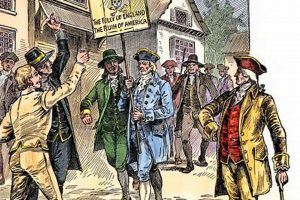
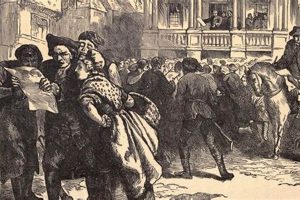
Visual representations of the Stamp Act of 1765 encompass a range of materials, including original documents such as the act itself, stamped paper, and related correspondence. Engravings, political cartoons, and later recreations in textbooks and museums also fall under this category. These visuals provide concrete examples of the legislation’s impact on daily life in colonial America.
These artifacts offer valuable insights into the political and social climate of the era. They illustrate the tax’s scope, the forms it took, and the public’s reaction to it. Studying these materials can deepen understanding of the growing tensions between Great Britain and its American colonies, ultimately contributing to the American Revolution. The act’s mandated use of specially marked paper for legal documents, newspapers, pamphlets, and other printed items is vividly portrayed through surviving examples, highlighting the direct impact on colonists’ communication and commerce.
Examination of these historical artifacts can enhance comprehension of key topics, such as the specifics of the legislation, the colonial response through boycotts and protests, and the act’s eventual repeal. They provide a tangible connection to the past, enriching the study of this pivotal period in American history.
Tips for Researching Visuals Related to the Stamp Act of 1765
Locating and interpreting visual materials related to the Stamp Act requires careful consideration of various sources and their historical context.
Tip 1: Explore Archival Collections: Major archives, such as the National Archives and Records Administration and prominent university libraries, hold significant collections of original documents. These institutions often provide online access to digitized materials.
Tip 2: Examine Museum Holdings: Many museums possess artifacts related to the era. Museum websites and online catalogs can facilitate searches for relevant items.
Tip 3: Analyze Political Cartoons: Periodical publications and digitized databases frequently contain political cartoons that satirized the Stamp Act and its impact. These offer valuable insights into public opinion.
Tip 4: Consider the Source’s Bias: Recognize that images, like other historical sources, can reflect specific viewpoints. Evaluate the creator’s perspective and potential biases when interpreting their meaning.
Tip 5: Cross-Reference Information: Compare information gleaned from visual materials with other primary and secondary sources to gain a more comprehensive understanding.
Tip 6: Pay Attention to Details: Closely examine visual elements like symbols, captions, and artistic style to extract deeper meaning and understand the intended message.
Tip 7: Utilize Specialized Search Terms: Employ specific keywords related to the Stamp Act when searching online databases and library catalogs. Terms like “stamped paper,” “colonial currency,” or “British revenue stamps” can yield more targeted results.
By following these research tips, one can effectively utilize visual sources to enrich their understanding of the Stamp Act and its historical significance.
These insights into the visual representations of the Stamp Act provide a deeper appreciation for the complexities of this pivotal period in American history.
1. Original Documents
Original documents represent a cornerstone of understanding visual representations of the Stamp Act of 1765. These primary sources offer direct evidence of the act’s implementation and impact. Examples include the text of the act itself, official correspondence discussing its enforcement, and financial records documenting stamp purchases. These materials provide crucial context for other visual interpretations, such as political cartoons or commemorative engravings, allowing researchers to verify their accuracy and understand contemporary perspectives.
The significance of original documents extends beyond their factual content. Physical characteristics, like the type of paper used, watermarks, handwriting styles, and the presence of actual revenue stamps, offer further insights. For instance, examining a letter written on stamped paper demonstrates the act’s direct intrusion into colonists’ daily lives. Comparing different versions of the act’s text can reveal revisions and amendments made during its development. The condition of a document, such as folds, tears, or stains, might even suggest how it was handled and used, offering clues about its historical journey.
Access to and analysis of these original documents is essential for historical accuracy and a nuanced comprehension of the Stamp Act’s impact. They provide a tangible link to the past, grounding visual interpretations in verifiable evidence and enriching scholarly understanding. Preservation and digitization efforts play a crucial role in ensuring continued access to these vital resources for researchers and the public alike. Challenges remain in locating and interpreting these materials due to their age and fragility, reinforcing the importance of archival work and responsible historical scholarship.
2. Stamped Paper
Stamped paper represents a central visual element in understanding the Stamp Act of 1765. Its mandated use provides a tangible manifestation of the act’s impact on colonial life, making it a key component of related imagery. Surviving examples of stamped paper offer direct insight into how the tax was implemented and the types of materials affected. Studying these artifacts deepens comprehension of the act’s practical consequences and its contribution to growing tensions between Great Britain and the American colonies.
- Types of Stamped Materials
The Stamp Act encompassed a broad range of printed materials, including legal documents, newspapers, pamphlets, playing cards, and even dice. Each type required a specific stamp, demonstrating the pervasiveness of the tax. Images of these varied stamped items illustrate the extent of the act’s reach into daily colonial life. For example, a newspaper bearing a revenue stamp visually underscores how the act affected the dissemination of information and public discourse.
- Visual Design of the Stamps
Revenue stamps possessed distinct visual characteristics, often featuring emblems of British authority or intricate designs intended to deter counterfeiting. The appearance of these stamps contributed to their symbolic significance as a representation of British control. Images depicting these designs offer insight into the act’s visual language and its perception by colonists. The stamps themselves became a visual shorthand for the broader political and economic issues at stake.
- Evidence of Use and Evasion
Stamped paper can exhibit evidence of use, such as cancellation marks or handwritten annotations. Conversely, the absence of stamps on certain materials can suggest attempts at evasion. Visual examination of these features allows researchers to analyze compliance and resistance to the act. For example, a document with a torn stamp might indicate an act of defiance. Similarly, documents printed on unstamped paper can illuminate the strategies colonists employed to circumvent the tax.
- Symbolic Significance
Beyond its functional purpose, stamped paper became a potent symbol of British oppression and a catalyst for colonial resistance. Images depicting stamped paper serve as visual reminders of the act’s unpopularity and its role in escalating tensions. These images frequently appear in historical accounts and educational materials, solidifying stamped paper’s role as a key visual element in the narrative of the American Revolution.
The various facets of stamped paper the types of materials affected, the design of the stamps, evidence of use and evasion, and its symbolic significance contribute significantly to understanding “stamp act 1765 images.” These visual artifacts, often preserved in archives and museums, offer valuable insights into the political, economic, and social climate of the era, enriching historical understanding and offering tangible connections to a pivotal period in American history.
3. Political Cartoons
Political cartoons represent a crucial category within the visual record of the Stamp Act of 1765. These satirical images served as a powerful tool for expressing public opinion and disseminating dissenting views regarding the controversial tax. Analysis of these cartoons provides valuable insights into the colonial response, revealing popular anxieties and the growing discontent that fueled resistance to British policies.
- Satirizing British Authority
Cartoons frequently depicted British officials in unflattering or ridiculous scenarios, undermining their authority and exposing the perceived injustice of the Stamp Act. One common motif portrayed British politicians as greedy and out of touch with colonial realities. This mockery contributed to a sense of shared grievance among colonists and fostered a rebellious spirit.
- Symbolism and Allegory
Political cartoons often employed symbolic imagery to convey complex political messages. Common symbols included the liberty tree, the skull and crossbones (representing death of liberty), and depictions of Britannia, often shown as oppressive or tyrannical. These visual metaphors resonated with a broad audience, transcending literacy barriers and fostering a sense of collective identity among colonists.
- Dissemination and Impact
Printed in newspapers and pamphlets, political cartoons reached a wide audience, contributing significantly to the spread of anti-Stamp Act sentiment. Their accessible nature and often humorous tone made them effective tools for mobilizing public opinion and galvanizing resistance. The shared experience of viewing and discussing these images fostered a sense of community and solidified opposition to British policies.
- Historical Interpretation
Political cartoons offer valuable perspectives on how the Stamp Act was perceived and experienced by colonists. They serve as primary source evidence of the social and political climate of the time, capturing the anxieties, frustrations, and burgeoning sense of American identity that ultimately culminated in revolution. Modern interpretations of these cartoons require careful consideration of their historical context, including the intended audience and the prevailing political discourse of the era.
By examining the satirical depictions, symbolic language, and dissemination methods of these political cartoons, researchers gain a deeper understanding of the Stamp Act’s significance in shaping colonial resistance and paving the way for the American Revolution. These visual artifacts provide crucial context for other “stamp act 1765 images,” such as stamped documents and commemorative engravings, enriching our understanding of this pivotal period in American history.
4. Engravings
Engravings hold a significant place among visual representations of the Stamp Act of 1765. These meticulously crafted images, often appearing in newspapers, pamphlets, and books, served as both historical records and tools for shaping public opinion. Analyzing engravings related to the Stamp Act offers valuable insights into how the event was perceived and commemorated, contributing to a richer understanding of its historical context and lasting legacy.
- Depiction of Key Figures and Events
Engravings often portrayed key figures associated with the Stamp Act, such as prominent colonial leaders or British officials. They also depicted important events, like protests, legislative sessions, or the act’s eventual repeal. These visual representations served to document and disseminate information about the unfolding political drama. For instance, engravings of figures like Samuel Adams or Patrick Henry helped solidify their image as leaders of the resistance. Similarly, depictions of public demonstrations provided visual evidence of colonial discontent.
- Symbolic Representation and Allegory
Similar to political cartoons, engravings frequently employed symbolic imagery to convey complex political messages. Images of liberty trees, broken chains, or defiant colonists served as visual metaphors for the struggle against British oppression. These symbols resonated deeply with colonial audiences, fostering a sense of shared identity and purpose. An engraving might depict a colonist refusing to purchase stamped paper, using this act of defiance to symbolize broader resistance to British policies.
- Commemoration and Legacy
Following the Stamp Act’s repeal, engravings played a role in commemorating the event and shaping its historical narrative. Images celebrating colonial resistance and the triumph of liberty reinforced a sense of collective victory. These commemorative engravings contributed to the development of a national identity and solidified the Stamp Act’s place as a pivotal moment in the struggle for American independence. An example might be an engraving depicting the act’s repeal as a triumph of colonial resistance, contributing to the narrative of American exceptionalism.
- Dissemination and Influence
Engravings, through their reproduction in printed materials, reached a wide audience, contributing to the dissemination of information and the shaping of public opinion. Their presence in newspapers, pamphlets, and books ensured their accessibility to a broad public, amplifying their influence on the political discourse of the time. The wide circulation of these images contributed to a shared visual understanding of the Stamp Act and its implications.
By studying engravings related to the Stamp Act, researchers gain a deeper appreciation for the complex interplay of visual representation, political messaging, and historical memory. These images provide valuable context for other “stamp act 1765 images,” such as original documents and political cartoons, enriching our understanding of this pivotal period in American history and its lasting impact on the development of American identity.
5. Museum Artifacts
Museum artifacts represent tangible connections to the Stamp Act of 1765, enriching the study of stamp act 1765 images through direct engagement with the material culture of the era. These objects offer valuable insights into the acts practical implementation and its impact on daily life. Examples include original stamped documents, such as legal papers, newspapers, and playing cards; printing equipment used to produce stamped materials; and personal items belonging to individuals involved in the events surrounding the act. The physical presence of these artifacts adds a layer of immediacy and depth to historical understanding, allowing for closer examination of details often lost in textual or pictorial representations. For example, the texture of stamped paper, the wear and tear on a printed document, or the craftsmanship of a printing press offer tactile evidence of the acts tangible impact on colonial society.
The significance of museum artifacts extends beyond their individual characteristics. Their careful preservation and display within a museum context provide opportunities for public engagement and historical interpretation. Curatorial decisions regarding artifact selection, arrangement, and accompanying information shape visitor understanding of the Stamp Acts historical context and legacy. Furthermore, museum collections often contain items related to both British and colonial perspectives, fostering a more nuanced and comprehensive understanding of the eras complexities. For instance, a museum might display a stamped legal document alongside a colonists diary entry expressing outrage at the tax, offering multiple viewpoints on the issue. The juxtaposition of such items encourages critical thinking and deeper engagement with the historical narrative.
Challenges remain in accessing and interpreting museum artifacts related to the Stamp Act. Limited resources, preservation concerns, and the geographical distribution of collections can restrict access for researchers and the public. Furthermore, the inherent biases in historical record-keeping mean that certain perspectives and experiences might be underrepresented in existing collections. Despite these limitations, museum artifacts play a crucial role in enriching the study of “stamp act 1765 images.” Their tangible nature, contextualized within museum settings, provides a unique and powerful avenue for engaging with this pivotal period in American history.
6. Historical Context
Understanding the historical context surrounding the Stamp Act of 1765 proves crucial for interpreting related images. The act arose from Britain’s need to generate revenue following the costly French and Indian War. The British government believed colonists should contribute to their own defense and administrative costs. This context informs the imagery produced at the time, both in support of and opposition to the act. Images sympathetic to the British perspective might emphasize the financial burdens of empire, while those opposing the act often depict the colonists as unfairly burdened by taxation without representation. Analyzing these images without understanding the underlying financial and political pressures distorts their meaning. For example, an image depicting Britannia burdened by debt helps explain the British rationale for implementing the tax, offering a counterpoint to colonial depictions of oppression.
Further complicating the context is the existing tension between Britain and the colonies regarding issues of self-governance and autonomy. Colonists cherished their representative assemblies and saw the Stamp Act as an infringement on their traditional rights. This pre-existing tension fueled the outrage sparked by the act, influencing the creation and dissemination of images designed to galvanize resistance. Political cartoons, for example, frequently depict the act as a violation of colonial liberties, tapping into existing anxieties about British overreach. Ignoring this context diminishes the understanding of the intensity of colonial reaction as expressed visually. The symbolism employed in these images, such as depictions of liberty trees or broken chains, resonates more deeply when viewed through the lens of colonial anxieties about self-governance.
In summary, analyzing “stamp act 1765 images” requires careful consideration of the financial pressures on the British Empire, the existing tensions surrounding colonial governance, and the evolving concept of American identity. These contextual factors provide essential background for interpreting the motivations, symbolism, and impact of these images. Disregarding the historical context risks misinterpreting the messages conveyed and diminishing the understanding of the act’s pivotal role in the escalating conflict between Great Britain and its American colonies. Studying these images alongside historical documents and accounts provides a richer, more nuanced understanding of the era and the events that led to the American Revolution.
7. Modern Depictions
Modern depictions of “stamp act 1765 images” encompass a wide range of media, including textbook illustrations, museum exhibits, documentaries, and digital recreations. These modern interpretations serve to translate and transmit historical visuals to contemporary audiences, shaping public understanding of this pivotal period. The creation of these modern depictions involves choices regarding style, emphasis, and historical accuracy, influenced by current societal values and historical interpretations. For example, a modern textbook illustration might simplify a complex political cartoon to convey its core message to younger audiences. A museum exhibit might juxtapose original stamped documents with interactive displays explaining their historical significance. These choices inevitably influence how viewers perceive and understand the original materials and the events they represent. Consequently, analyzing modern depictions requires critical evaluation of their potential biases and interpretations.
The influence of modern depictions extends beyond simply representing historical visuals. They can shape public memory and understanding of the Stamp Act, influencing perceptions of its causes, consequences, and legacy. For instance, a documentary focusing on colonial resistance might emphasize the act’s role as a catalyst for the American Revolution, potentially overshadowing other contributing factors. A digital reconstruction of a colonial town might highlight the act’s impact on daily life, providing a tangible connection to the past for modern viewers. These interpretations, while potentially valuable, can also perpetuate certain historical narratives while neglecting others. Therefore, engaging with modern depictions requires an awareness of their role in shaping historical memory and a critical approach to evaluating their interpretations.
Modern depictions, while offering valuable access points to understanding “stamp act 1765 images,” present challenges related to historical accuracy and interpretative bias. The simplification or embellishment of historical visuals, driven by educational goals or narrative choices, can lead to misunderstandings or the perpetuation of historical myths. Furthermore, the accessibility and widespread dissemination of modern depictions, particularly through digital media, can amplify their influence, making critical evaluation even more crucial. Ultimately, effective engagement with modern depictions necessitates a nuanced approach, acknowledging their value as educational tools while simultaneously recognizing their potential to shape and potentially distort historical understanding. Cross-referencing modern depictions with primary source materials and diverse historical interpretations fosters a more complete and informed understanding of the Stamp Act and its enduring significance.
Frequently Asked Questions about Stamp Act 1765 Images
This section addresses common inquiries regarding visual representations of the Stamp Act of 1765, aiming to clarify their significance and interpretative challenges.
Question 1: Where can one find original Stamp Act documents and stamped paper?
Major archival repositories, such as the National Archives and Records Administration, Library of Congress, and prominent university libraries, hold significant collections. Many institutions offer online access to digitized materials.
Question 2: How can one differentiate between authentic and reproduced stamped materials?
Consulting with archival and museum professionals is recommended. Key indicators of authenticity include paper type, watermarks, printing methods, and the presence of official revenue stamps. Careful comparison with known authentic examples is essential.
Question 3: What are the challenges in interpreting political cartoons from this era?
Understanding the historical context, including specific political figures, events, and cultural references, is crucial. Recognizing the cartoonist’s perspective and potential biases is also essential for accurate interpretation. Consulting scholarly analyses can provide valuable insights.
Question 4: How do modern depictions of the Stamp Act in textbooks and museums shape public understanding?
Modern depictions involve interpretative choices that can influence how audiences perceive historical events. Simplification, emphasis on particular aspects, and the selection of specific visuals can shape historical narratives. Critical evaluation of these choices is essential.
Question 5: How can researchers effectively utilize “stamp act 1765 images” in historical research?
Visual materials should be analyzed in conjunction with other primary and secondary sources to provide a comprehensive understanding. Careful attention to detail, cross-referencing information, and considering the source’s context are crucial for accurate interpretation.
Question 6: What is the significance of studying visual materials related to the Stamp Act?
Visual materials provide valuable insights into the social, political, and economic climate of the era. They offer tangible connections to the past, humanizing historical events and enhancing understanding of the act’s impact on individuals and communities. They often convey emotional responses and popular opinions in ways that textual records may not.
Examining visual representations of the Stamp Act provides a deeper understanding of the act’s impact and the complexities of the era. Critical analysis of these images, informed by historical context and awareness of potential biases, is crucial for accurate interpretation.
Further exploration of specific categories of “stamp act 1765 images” can enrich this understanding. Continuing to the next section will provide a deeper dive into these categories.
Conclusion
Visual representations of the Stamp Act of 1765 offer invaluable insights into a pivotal period in American history. From original documents and stamped paper to political cartoons and engravings, these artifacts illuminate the act’s multifaceted impact. Examination of these materials reveals not only the practical implications of the tax but also the emotional responses it evoked and the political climate it fostered. Modern interpretations, while offering valuable educational tools, necessitate careful consideration of potential biases and their influence on historical narratives. Museum artifacts, providing tangible connections to the past, enrich understanding of the material culture surrounding the act.
The legacy of the Stamp Act continues to resonate, reminding us of the power of visual communication in shaping historical narratives and influencing public perception. Continued exploration of these images, combined with rigorous historical analysis, deepens understanding of this crucial era and its enduring relevance. Preservation and access to these visual resources remain essential for fostering informed historical discourse and ensuring a nuanced perspective on the events that shaped the American Revolution.