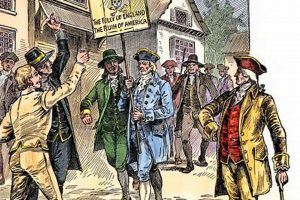
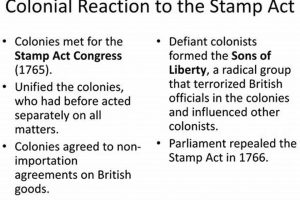
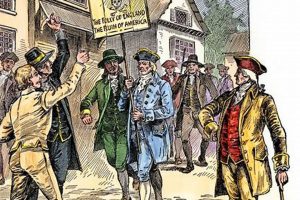
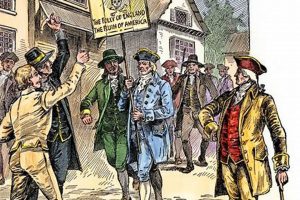
The Stamp Act of 1765, requiring all printed materials in the American colonies to carry a tax stamp purchased from British authorities, had profound consequences. This levy, intended to raise revenue for British military expenses in North America after the French and Indian War, sparked widespread resistance. Colonists argued that they were being taxed without representation in the British Parliament, a violation of their rights as Englishmen. Boycotts of British goods, protests, and the formation of groups like the Sons of Liberty demonstrated the colonists’ growing discontent.
The act’s significance lies not only in the immediate economic hardship it imposed, but also in its long-term impact on colonial political thought. It crystallized colonial grievances and fueled the growing movement for independence. The act’s implementation brought to the forefront fundamental questions about the relationship between the colonies and Great Britain, laying the groundwork for future conflicts that ultimately culminated in the American Revolution.
Examining the specific consequences of the Stamp Act economic disruption, political radicalization, and the development of colonial unity provides a deeper understanding of the era and the forces that shaped the birth of a nation.
Understanding the Impact of the Stamp Act
Gaining a deeper understanding of the Stamp Act’s ramifications requires examining its multifaceted impact on colonial society. The following points offer valuable insights into this pivotal period.
Tip 1: Explore the economic repercussions. The mandatory tax on printed materials disrupted colonial commerce and placed a financial burden on printers, merchants, and legal professionals. Consider the impact on newspapers, legal documents, and other essential printed goods.
Tip 2: Analyze the political consequences. The cry of “No taxation without representation” encapsulates the core political grievance ignited by the Stamp Act. Research the emergence of organized resistance groups like the Sons of Liberty and their role in challenging British authority.
Tip 3: Investigate the social impact. The act fostered a sense of shared identity and purpose among colonists from different backgrounds. Explore how public protests, boycotts, and intellectual debates contributed to the growing sense of colonial unity.
Tip 4: Consider the legal challenges. Examine the legal arguments employed by colonists to contest the act’s constitutionality. Research the role of colonial legislatures and legal professionals in resisting the Stamp Act.
Tip 5: Research the British perspective. Understanding the British government’s rationale for implementing the Stamp Act provides valuable context. Explore the financial pressures facing the British Empire after the French and Indian War and their perceived need to raise revenue from the colonies.
Tip 6: Examine the act’s repeal. The repeal of the Stamp Act in 1766 demonstrates the power of colonial resistance. However, research the accompanying Declaratory Act, which asserted Parliament’s right to tax the colonies, and its implications for future conflict.
By considering these points, one can gain a comprehensive understanding of the Stamp Act’s significance as a catalyst for the American Revolution and its enduring legacy in shaping American political thought.
This exploration of the Stamp Act’s effects lays the groundwork for a deeper understanding of the complex relationship between Great Britain and its American colonies in the years leading up to independence.
1. Colonial Resistance
Colonial resistance stands as a direct consequence and perhaps the most significant effect of the Stamp Act. The Act, perceived as an unjust imposition by the British Parliament, ignited a firestorm of opposition in the American colonies, shaping the political landscape and paving the way for the Revolution. Understanding the multifaceted nature of this resistance is crucial to grasping the Act’s full impact.
- Boycotts of British Goods
Colonists organized widespread boycotts of British goods, impacting merchants and manufacturers in Britain. These boycotts, enforced by groups like the Sons of Liberty, demonstrated colonial unity and economic power, applying significant pressure on the British government to reconsider the Act. The economic disruption caused by these boycotts served as a tangible demonstration of colonial displeasure and significantly contributed to the Act’s eventual repeal.
- Formation of Protest Groups
Groups like the Sons of Liberty and the Daughters of Liberty emerged as organized forces of resistance. They mobilized public opinion, disseminated information, and took direct action against British officials and symbols of authority. These groups provided a framework for collective action and facilitated the spread of revolutionary ideas, laying the foundation for future coordinated resistance efforts.
- Legal and Intellectual Arguments
Colonial leaders and intellectuals challenged the legality and philosophical underpinnings of the Stamp Act, arguing for the principle of “No taxation without representation.” These arguments, circulated in pamphlets and newspapers, fueled public discourse and provided a framework for understanding the colonists’ grievances. This intellectual resistance helped solidify colonial opposition and frame the conflict in terms of fundamental rights and liberties.
- Direct Action and Protests
Colonists engaged in various forms of direct action, including protests, demonstrations, and acts of defiance against British officials enforcing the Act. These actions, ranging from public demonstrations to the burning of effigies, vividly demonstrated the depth of colonial anger and frustration. This direct action, often involving violence and intimidation, escalated the conflict and contributed to a climate of unrest.
The various forms of colonial resistance, from economic boycotts to intellectual arguments and direct action, collectively represent a pivotal reaction to the Stamp Act. These responses not only led to the Act’s repeal but also fostered a sense of shared identity and purpose among colonists, profoundly shaping the political trajectory of the colonies and setting the stage for the American Revolution.
2. Economic Hardship

The Stamp Act of 1765, while intended to generate revenue for the British crown, inflicted considerable economic hardship upon the American colonies. This hardship fueled resentment and resistance, becoming a significant catalyst for the growing discontent that ultimately culminated in the American Revolution. Examining the specific economic consequences provides critical insight into the act’s destabilizing effect on colonial society.
- Increased Cost of Business
The tax on printed materials, including legal documents, newspapers, pamphlets, and even playing cards, directly increased the cost of conducting business. Merchants, printers, lawyers, and other professionals faced reduced profits and increased expenses. This financial strain rippled through the colonial economy, impacting various sectors and contributing to widespread discontent.
- Restriction of Trade and Commerce
The Stamp Act further complicated trade and commerce by requiring specific stamped paper for transactions. This bureaucratic hurdle hampered business operations and increased costs, particularly for merchants engaged in intercolonial and international trade. The added complexity and expense discouraged economic activity and further fueled resentment toward British policies.
- Financial Burden on Colonists
The tax represented a direct financial burden on colonists, many of whom already faced economic challenges. The added expense of purchasing stamped paper for everyday transactions, legal documents, and essential business operations further strained household budgets and contributed to a sense of economic injustice.
- Disruption of the Printing Industry
The printing industry experienced significant disruption due to the Stamp Act. Printers, forced to purchase expensive stamped paper and navigate complex regulations, faced declining profits and increased operational challenges. This disruption impacted the dissemination of information and contributed to the growing unrest by limiting access to news and political discourse.
The economic hardship caused by the Stamp Act extended beyond mere financial strain. It fostered a sense of injustice and fueled colonial resistance, uniting diverse segments of society against what they perceived as unfair and oppressive taxation. This widespread economic discontent played a crucial role in escalating tensions between the colonies and Great Britain, ultimately contributing to the outbreak of the American Revolution.
3. Political Radicalization

The Stamp Act of 1765 proved to be a significant catalyst for political radicalization in the American colonies. While colonial resistance to British policies existed prior to the Act, the tax on printed materials ignited a new level of political fervor and organization. This radicalization stemmed from several key factors directly linked to the Acts implementation.
The Acts perceived violation of fundamental rights, particularly the principle of “No taxation without representation,” fueled widespread anger and resentment. Colonists argued that being taxed by a Parliament in which they had no voice was a direct assault on their liberties as Englishmen. This sense of injustice propelled individuals previously uninvolved in political activism to join the resistance movement. The Sons of Liberty, for example, gained considerable momentum during this period, organizing protests, boycotts, and disseminating revolutionary ideas through pamphlets and public speeches. The Stamp Act Congress, formed in response to the Act, provided a platform for colonial leaders to articulate their grievances and coordinate resistance efforts, further solidifying intercolonial unity and political organization against British rule.
The Acts economic consequences also contributed to political radicalization. The financial burden imposed on merchants, printers, and ordinary citizens exacerbated existing economic anxieties and fueled resentment towards British policies. This economic hardship transformed political discourse, leading to more radical calls for self-governance and independence. The Acts impact extended beyond immediate financial concerns, fostering a deeper questioning of the legitimacy of British authority and strengthening the arguments for greater colonial autonomy.
The political radicalization spurred by the Stamp Act had enduring consequences. It laid the groundwork for future acts of resistance, solidified colonial unity, and normalized increasingly radical political ideologies. The experience of organizing against the Stamp Act provided valuable lessons in collective action and political mobilization, which colonists would draw upon in the years leading up to the American Revolution. This period of intensified political activism fundamentally shifted the relationship between the colonies and Great Britain, moving the colonies closer to outright rebellion and establishing a precedent for challenging British authority. The legacy of this radicalization is evident in the subsequent events that ultimately led to the Declaration of Independence and the birth of a new nation.
4. Unification of Colonies

The Stamp Act of 1765, while intended to bolster British revenue, inadvertently fostered a sense of unity among the American colonies. Prior to the Act, intercolonial collaboration remained limited, with regional identities and interests often superseding any broader sense of American identity. The Act’s universal application and perceived injustice transcended these regional divides, forcing colonies to recognize their shared predicament and the potential strength in collective action. This burgeoning sense of unity, a direct consequence of the Stamp Act, proved crucial in the escalating conflict with Great Britain.
- The Stamp Act Congress
The Stamp Act Congress, convened in October 1765, stands as a powerful symbol of this newfound unity. Representatives from nine colonies gathered to discuss and coordinate their response to the Act. This unprecedented intercolonial assembly facilitated the exchange of ideas, grievances, and strategies for resistance. The Congress drafted petitions to the British Crown and Parliament, articulating shared concerns and demonstrating a unified front against the perceived injustice of the Act. This collective action laid the groundwork for future collaborations and represented a significant step towards a more cohesive colonial identity.
- Shared Grievances and Common Cause
The Stamp Act’s universal application across the colonies created a common enemy and a shared grievance. Regardless of regional differences, colonists faced the same financial burden and perceived violation of their rights. This shared experience fostered a sense of solidarity and mutual understanding, transcending prior divisions and fostering a collective identity rooted in opposition to British policies. This unified front strengthened the resistance movement and provided a foundation for future coordinated actions.
- Development of Intercolonial Communication Networks
The need to coordinate resistance efforts spurred the development and expansion of intercolonial communication networks. Committees of Correspondence, established to share information and strategies, facilitated the dissemination of revolutionary ideas and helped maintain a unified front against British policies. These networks played a critical role in mobilizing public opinion and coordinating actions across geographically dispersed colonies. The improved communication infrastructure strengthened colonial unity and laid the groundwork for future collaborative efforts in the struggle for independence.
- Emergence of a Collective Identity
While regional identities persisted, the Stamp Act fostered a nascent sense of collective American identity. The shared experience of resisting the Act, coupled with increased intercolonial communication and collaboration, fostered a sense of belonging to a larger community with shared interests and goals. This evolving collective identity played a crucial role in solidifying colonial resistance and provided a powerful foundation for the future struggle for independence.
The unification of the colonies, catalyzed by the Stamp Act, proved to be a turning point in the relationship between Great Britain and its American colonies. The Act’s unintended consequence of fostering colonial unity laid the foundation for future coordinated resistance, ultimately contributing to the outbreak of the American Revolution. This newfound unity, born out of shared grievances and strengthened through collective action, proved more powerful than the sum of its parts and fundamentally reshaped the political landscape of the American colonies.
5. Heightened Tensions
The Stamp Act of 1765 significantly escalated tensions between Great Britain and its American colonies. The act, viewed by colonists as an unjust and oppressive measure, ignited widespread resistance and fueled a growing sense of discontent. This heightened tension stemmed directly from the perceived violation of colonial rights, the economic burden imposed by the tax, and the increasingly strained relationship between colonial legislatures and the British Parliament. The act’s implementation marked a critical turning point, pushing the colonies and Great Britain closer to open conflict.
The mandatory tax on printed materials, without colonial representation in Parliament, fueled accusations of “taxation without representation.” This perceived injustice galvanized colonial opposition, leading to the formation of protest groups like the Sons of Liberty, who actively challenged British authority. Boycotts of British goods, organized in response to the Stamp Act, further strained commercial relations and contributed to a climate of defiance. The Boston Tea Party, while occurring several years later, exemplifies the escalating tensions and growing colonial resistance to British policies that originated with measures like the Stamp Act.
The heightened tensions resulting from the Stamp Act proved crucial in shaping the course of events leading to the American Revolution. The act’s implementation and the subsequent colonial resistance created an environment of distrust and animosity. This period witnessed the radicalization of colonial political thought, the strengthening of intercolonial unity, and the development of organized resistance movements. Understanding the connection between the Stamp Act and the escalation of tensions provides valuable insight into the complex dynamics that ultimately led to the colonies’ fight for independence. The Stamp Act, while eventually repealed, left an enduring legacy of resentment and defiance, solidifying colonial opposition to British rule and setting the stage for the inevitable conflict.
6. Parliamentary Debate

Parliamentary debates surrounding the Stamp Act of 1765 offer crucial insights into the political climate of the time and the complex relationship between Great Britain and its American colonies. These debates, recorded in parliamentary records, reveal the differing perspectives on colonial taxation, representation, and the escalating tensions that ultimately led to the American Revolution. Examining these discussions provides a deeper understanding of the act’s significance and its lasting impact.
- Arguments for Revenue Generation
Proponents of the Stamp Act, primarily government officials and members of Parliament aligned with the Crown, emphasized the need for increased revenue to offset the costs of defending the colonies. They argued that the colonies benefited from British military protection during the French and Indian War and should contribute financially to the Empire’s defense. This perspective, emphasizing financial responsibility and imperial authority, often overlooked or dismissed colonial concerns about representation and self-governance.
- Colonial Representation and Rights
Opponents of the Act, both within Parliament and in the colonies, argued that taxing colonists without representation in Parliament violated fundamental rights as Englishmen. Figures like William Pitt the Elder championed the colonial cause, arguing for greater autonomy and recognition of colonial legislatures. These arguments, emphasizing principles of self-governance and individual liberties, highlighted the growing divide between British policy and colonial aspirations.
- Economic Impact and Colonial Resistance
Parliamentary debates also addressed the economic consequences of the Stamp Act and the growing colonial resistance. Reports of boycotts, protests, and the formation of resistance groups like the Sons of Liberty reached Parliament, prompting discussions about the Act’s efficacy and potential repercussions. These debates reflected the growing awareness of colonial discontent and the potential for escalating conflict, although the British government’s response remained largely dismissive of colonial grievances.
- Repeal and the Declaratory Act
The eventual repeal of the Stamp Act in 1766, while celebrated in the colonies, was accompanied by the passage of the Declaratory Act. This act asserted Parliament’s ultimate authority to legislate for the colonies “in all cases whatsoever.” Parliamentary debates surrounding the Declaratory Act reveal the British government’s determination to maintain control over the colonies, despite acknowledging the detrimental effects of the Stamp Act. This assertion of parliamentary supremacy laid the groundwork for future conflicts and ultimately contributed to the escalating tensions that led to the American Revolution.
The parliamentary debates surrounding the Stamp Act provide valuable context for understanding the act’s profound impact on the relationship between Great Britain and its American colonies. These debates reveal the conflicting perspectives on taxation, representation, and imperial authority that ultimately shaped the course of events leading to the American Revolution. Examining these discussions offers a deeper understanding of the act’s significance as a catalyst for colonial resistance, political radicalization, and the eventual fight for independence.
7. Eventual Repeal
The repeal of the Stamp Act in 1766 represents a pivotal moment in the escalating tensions between Great Britain and its American colonies. While the act itself lasted little more than a year, its eventual repeal offers crucial insights into the dynamics of colonial resistance, British political calculations, and the evolving relationship between the metropole and its colonial subjects. Examining the repeal’s context, motivations, and consequences is essential to understanding the broader impact of the Stamp Act.
- Colonial Resistance and Economic Pressure
Widespread colonial resistance, manifested through boycotts of British goods, non-importation agreements, and acts of civil disobedience, played a significant role in the British government’s decision to repeal the Stamp Act. These boycotts had a tangible impact on British merchants and manufacturers, who petitioned Parliament to reconsider the Act’s detrimental effects on trade. The economic pressure exerted by colonial resistance demonstrated the potential power of collective action and provided a compelling argument for repeal.
- Political Maneuvering in Great Britain
The repeal of the Stamp Act resulted from complex political maneuvering within the British government. While some members of Parliament recognized the validity of colonial grievances regarding representation, others prioritized maintaining imperial authority. The changing political landscape in Great Britain, including the rise of figures sympathetic to the colonial cause, such as William Pitt the Elder, contributed to the eventual decision to repeal. The repeal represented a pragmatic compromise, aiming to quell colonial unrest while asserting Parliament’s ultimate authority.
- The Declaratory Act and Lingering Resentment
The repeal of the Stamp Act, while celebrated in the colonies, was accompanied by the passage of the Declaratory Act. This act asserted Parliament’s right to legislate for the colonies “in all cases whatsoever.” The Declaratory Act, intended to reaffirm British sovereignty, ultimately fueled lingering resentment and suspicion in the colonies. It underscored the fundamental disagreement over representation and self-governance, setting the stage for future conflicts.
- Legacy of Resistance and Future Conflicts
The successful resistance to the Stamp Act and its eventual repeal had a lasting impact on the relationship between Great Britain and the American colonies. It emboldened colonial resistance movements, demonstrating the potential for collective action to influence British policy. The experience of successfully challenging the Stamp Act provided valuable lessons in organization, mobilization, and political strategy, which colonists would draw upon in future conflicts. The repeal, while seemingly a victory for the colonies, ultimately served as a prelude to the escalating tensions that culminated in the American Revolution.
The repeal of the Stamp Act demonstrates the complex interplay of economic pressure, political maneuvering, and ideological conflict that characterized the relationship between Great Britain and its American colonies. While the repeal provided temporary relief from the Act’s oppressive measures, the underlying issues of representation, self-governance, and imperial authority remained unresolved. The legacy of the Stamp Act, including its eventual repeal, shaped the course of events leading to the American Revolution, highlighting the Act’s significance as a pivotal moment in American history.
Frequently Asked Questions
This FAQ section addresses common inquiries regarding the effects of the 1765 Stamp Act, aiming to provide clear and concise information about this pivotal piece of legislation and its impact on the American colonies.
Question 1: What was the primary purpose of the Stamp Act?
The British government implemented the Stamp Act primarily to raise revenue to offset the costs of defending the American colonies during the French and Indian War. The act mandated a tax on all printed materials, including legal documents, newspapers, pamphlets, and playing cards.
Question 2: How did the Stamp Act affect colonial commerce?
The tax imposed on printed materials significantly disrupted colonial commerce by increasing the cost of essential business transactions and legal proceedings. This economic burden fueled resentment among merchants, printers, and other professionals, contributing to widespread discontent.
Question 3: Why did the colonists object to the Stamp Act?
Colonists primarily objected to the Stamp Act due to the lack of colonial representation in the British Parliament. The cry of “No taxation without representation” encapsulated the core grievance, asserting that being taxed without a voice in the legislative process violated fundamental rights as Englishmen.
Question 4: How did the Stamp Act contribute to colonial unity?
The Stamp Act’s universal application across the colonies created a shared grievance and fostered a sense of common cause. This shared experience, coupled with the formation of the Stamp Act Congress and intercolonial communication networks, strengthened colonial unity and laid the foundation for future coordinated resistance.
Question 5: What led to the repeal of the Stamp Act?
Widespread colonial resistance, including boycotts of British goods and organized protests, combined with pressure from British merchants affected by the boycotts, ultimately led to the repeal of the Stamp Act in 1766.
Question 6: Did the repeal of the Stamp Act resolve the underlying tensions between Great Britain and the colonies?
While the repeal of the Stamp Act provided temporary relief, the underlying tension regarding colonial representation and self-governance persisted. The British government’s passage of the Declaratory Act, asserting Parliament’s right to legislate for the colonies “in all cases whatsoever,” reaffirmed British control and fueled lingering resentment in the colonies, ultimately contributing to the escalating conflict that led to the American Revolution.
Understanding the context, implementation, and consequences of the Stamp Act is essential for comprehending the origins of the American Revolution. The Act’s effects extended beyond immediate economic and political concerns, shaping the course of American history and contributing to the development of American political thought.
Further exploration of specific aspects of the Stamp Act and its impact can provide a more nuanced understanding of this pivotal period in American history. Continue reading to delve deeper into the key events and figures that shaped this era.
The Lasting Impact of the Stamp Act
The Stamp Act’s effects resonated far beyond its brief existence. While intended as a simple revenue measure, the Act ignited a firestorm of colonial resistance, fueled by the perceived injustice of taxation without representation. This resistance, manifested in boycotts, protests, and intellectual arguments, demonstrated the growing rift between Great Britain and its American colonies. The Act’s economic consequences, political radicalization, and the subsequent unification of the colonies laid the groundwork for the American Revolution. Though repealed, the Stamp Act’s legacy persisted in the heightened tensions, parliamentary debates, and lingering resentment that ultimately shaped the course of American history.
The Stamp Act serves as a potent reminder of the profound consequences of political decisions that disregard fundamental rights and liberties. Its study offers invaluable insights into the dynamics of power, resistance, and the enduring struggle for self-determination. Examining this pivotal period encourages reflection on the delicate balance between governance and individual freedoms, a balance that continues to shape political discourse today. Further exploration of this era remains crucial for understanding the foundations of American democracy and the ongoing pursuit of a more just and equitable society.