



A good 10x triplet jeweler’s loupe can reveal the tiny clues that make a gemstone, diamond, watch, or piece of jewelry easier to understand. A poor one can leave you chasing blurry edges, distorted colors, and misleading reflections. For beginners, the challenge is that many loupes look almost identical in product photos, even when their optics and construction are very different. This guide explains what matters, what you can safely ignore, and how to choose and use a loupe with confidence.
What Is a 10x Triplet Jeweler’s Loupe?
A 10x triplet jeweler’s loupe is a handheld magnifier designed to make an object appear approximately ten times larger under its intended viewing conditions. “Triplet” describes an optical design using three lens elements, typically combined to reduce visual aberrations. Jewelers and gemologists use these loupes to examine gemstone inclusions, diamond clarity characteristics, hallmarks, settings, and signs of wear.
For jewelry inspection, 10x offers a useful balance between magnification, field of view, and ease of handling. It is also the standard magnification used in diamond clarity grading, although professional grading involves controlled procedures, suitable lighting, and trained judgment—not just a loupe.
Why Choose a Triplet Loupe Instead of a Basic Magnifier?
A simple single-element magnifier may enlarge an object, but it can also introduce colored fringes and blur toward the edge. A well-designed triplet generally controls these issues better, helping small details remain clearer across more of the viewing area. The difference becomes apparent when you inspect a bright facet junction or a dark inclusion against a light background.
That said, “triplet” is not a guarantee of quality. Glass, alignment, coatings, assembly, and quality control all affect performance. An inexpensive loupe advertised as a triplet may be useful, but its label alone does not prove that it has excellent color correction or a flat field.
Key Features to Check Before Buying
Magnification: Stick With a True 10x
For a first jewelry loupe, choose a model marked 10x from a seller that provides clear optical specifications. Higher magnification is not automatically better. A 20x or 30x loupe usually gives you a smaller field of view, a shorter working distance, and a less forgiving focus. Those trade-offs make it harder to locate a feature and understand where it sits within a stone.
Avoid treating unusually high magnification claims on very cheap products as proof of performance. If possible, test the loupe on a printed scale or another familiar object and compare it with a trusted 10x model.
Lens Diameter and Field of View
Many jewelry loupes have lens diameters around 18–21 mm. A larger lens can make viewing more comfortable and provide a more generous field, but diameter alone does not determine optical quality. The usable, sharp area matters more than the number printed in a listing.
For most beginners, an approximately 18–21 mm lens is a sensible starting point. Smaller loupes are compact; larger models can be easier to look through but may be bulkier in a pocket.
Optical Corrections and Coatings
Look for a loupe described as achromatic, which indicates correction for certain color aberrations, and consider aplanatic designs, intended to reduce certain forms of spherical aberration and improve image sharpness. These terms describe design goals, not a promise that every part of the image will be perfect.
Anti-reflective coatings can reduce distracting reflections and improve contrast. They are helpful, but a well-assembled, well-corrected lens matters more than a long list of marketing claims. Check reviews for reports of haze, internal dust, loose lenses, or color fringing.
Housing, Finish, and Folding Mechanism
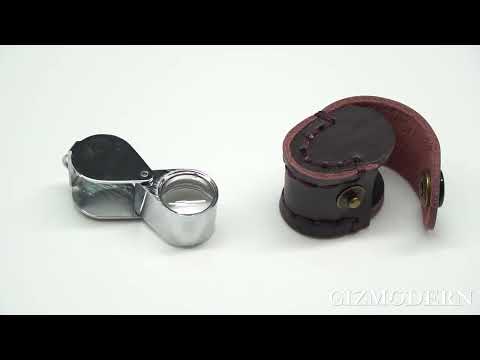
A folding metal housing protects the lens in a pocket or tool kit. Choose a hinge that moves smoothly but holds its position, with no rattling or sharp edges. A matte black or dark interior can help limit stray reflections; shiny interiors may be more distracting under bright lights.
A lanyard loop is useful at gem shows and workbenches. If you wear glasses, try the loupe before buying where possible: eye relief is limited on many compact designs, and some users prefer removing their glasses for close inspection.
10x Loupe Comparison: Which Type Is Best for Beginners?

| Type | Best use | Main limitation |
| Single-lens magnifier | Occasional, low-cost viewing | May show more distortion and color fringing |
| 10x triplet loupe | Everyday jewelry and gemstone inspection | Quality varies considerably by manufacturer |
| Illuminated 10x loupe | Quick checks in dim settings | Built-in light can create glare or affect color appearance |
| Higher-power loupe | Closer examination of a located detail | Smaller field and more difficult handling |
| Gemological microscope | Extended, detailed examination | More expensive and less portable |
For most buyers, a well-made, non-illuminated 10x triplet is the most versatile first purchase. Add a separate light source rather than assuming a built-in LED is necessary for every task.
How Much Should You Spend on a Jewelry Loupe?
Budget loupes may cost under $20, while better-known professional models often cost several times that amount. Prices vary by retailer, location, and optical design. The cheapest option can be adequate for reading a hallmark, but inconsistent sharpness or a loose housing may become frustrating if you inspect gemstones regularly.
A practical approach is to buy from a reputable jewelry-tool or gemological supplier with a clear return policy. Spend enough to get consistent optics and durable construction, then test the loupe promptly. Avoid paying a premium solely for dramatic packaging, an unspecified “professional” label, or accessories you do not need.
How to Test a 10x Triplet Loupe Before Keeping It
- Inspect the lens: Check under a light for scratches, haze, trapped debris, and loose components. A little exterior dust is easy to clean; internal contamination is harder to address.
- Read fine print: Focus on small, high-contrast text. The center should look crisp, with no obvious double image.
- Check the edges: Move the print across the field. Some edge softness can occur, but severe smearing or colored outlines may indicate weak optics or poor assembly.
- Examine a reflective object: Look at a polished metal edge or faceted stone. Notice whether glare overwhelms detail or colored fringes appear along high-contrast boundaries.
- Test the housing: Open and close it several times. The lens should remain secure, and the hinge should not wobble excessively.
Keep in mind that lighting, focus, and viewing angle affect these tests. Compare under the same conditions rather than rejecting a loupe because one quick look seems unfamiliar.
How to Use a Jeweler’s Loupe Correctly
The most common beginner mistake is holding the loupe halfway between the eye and the jewelry. Instead, bring the lens close to your eye and move the object until it comes into focus. The focused distance is short, so steady hands matter more than force.
- Open the loupe and hold its housing close to your eye without touching your eyelashes.
- Rest your elbows on a table or brace your hands together to reduce movement.
- Bring the jewelry or stone toward the lens slowly until the surface appears sharp.
- Rotate the item and adjust the light to distinguish surface marks from reflections and internal features.
- Scan systematically rather than staring at one spot: start with the setting, then inspect the stone and its edges.
For loose gemstones, gem tweezers can help, but practice over a padded, uncluttered surface. Do not squeeze a stone hard or grip a delicate setting in a way that risks damage.
What Can You See With a 10x Loupe?
Gemstones and Diamonds
A 10x loupe can reveal some inclusions, surface-reaching fractures, chips, facet abrasion, and polishing marks. In diamonds, you may see features such as crystals, feathers, or pinpoint-like inclusions, depending on their size and visibility. Tilt the stone under different lighting angles: a feature that disappears may be a reflection, although reflections and real inclusions can be difficult to distinguish.
Do not use a loupe alone to declare a stone natural, laboratory-grown, treated, or genuine. These conclusions may require a gemological microscope, specialized instruments, and professional testing.
Mountings, Hallmarks, and Wear
Inspect prongs for unevenness, thinning, or gaps around the stone. Look at clasps, solder joints, and bracelet links for cracks or heavy wear. A loupe may also help you read stamps such as karat marks or maker’s marks, but a stamp is not independent proof of metal content or authenticity.
If a stone moves, a prong looks damaged, or you notice a possible crack, stop handling the piece unnecessarily and consult a qualified jeweler. A loupe helps you spot concerns; it does not replace a secure-setting check or repair assessment.
Lighting Tips for More Reliable Inspection
Use a clean, neutral-looking light and change its position as you work. Diffused light can make the overall object easier to see, while a more directional beam may reveal scratches, chips, and some internal features. For transparent stones, try lighting from the side as well as from above.
Be cautious when judging color. Warm bulbs, colored surroundings, and built-in LEDs can change a gem’s appearance. A loupe is useful for observing details, but reliable color comparison requires appropriate lighting and controlled conditions.
Common Buying Mistakes to Avoid

- Choosing by magnification alone: A clearer 10x image is often more useful than a blurry higher-power view.
- Assuming every triplet performs equally: Check the return policy and evaluate actual sharpness, contrast, and construction.
- Ignoring handling comfort: A loupe that is awkward to hold may stay in your drawer.
- Expecting gem identification: Magnification reveals clues, not necessarily definitive answers.
- Cleaning aggressively: Grit and harsh chemicals can damage lens surfaces or coatings.
How to Clean and Store Your Loupe
Blow away loose grit first, then gently wipe the lens with a clean optical microfiber cloth. If needed, use a small amount of cleaner suitable for coated optical lenses, following the manufacturer’s instructions. Avoid soaking the housing or rubbing a dry, dusty lens with a shirt.
Fold the loupe closed when not in use and store it in a pouch away from keys and abrasive tools. Periodically check the hinge and lens retaining components for looseness. Care keeps both the optics and your observations more reliable.
Conclusion: The Best First Loupe Is Clear, Comfortable, and Dependable
Choose a 10x triplet jeweler’s loupe with a comfortable field of view, solid housing, good central sharpness, and a return policy that lets you check it yourself. An achromatic, aplanatic design from a reputable supplier is a strong starting point, but practical performance matters more than labels. Learn to brace your hands, vary the lighting, and recognize the limits of magnification, and your loupe will become one of the most useful tools in your jewelry kit.
Frequently Asked Questions
Is a 10x triplet loupe good for a beginner looking at diamonds?
Yes. It provides a manageable view for learning to locate inclusions, inspect facets, and check settings. It will not, by itself, establish a diamond’s grade or origin.
What lens size is best for a beginner’s jewelry loupe?
Approximately 18–21 mm is a practical range for many users. Prioritize a sharp, comfortable view and a secure housing over diameter alone.
Is an illuminated 10x jeweler’s loupe better than a standard loupe?
Not necessarily. Built-in lighting is convenient in dim spaces, but it may create glare or alter apparent color. A standard loupe paired with an adjustable external light is often more flexible.
Can a 10x loupe tell if a gemstone is real?
It can reveal useful clues, including inclusions and surface features, but it cannot reliably identify every gemstone or detect every treatment. Seek professional testing when authenticity or value matters.
Should I buy a 10x or 20x loupe for jewelry inspection?
Start with 10x. Its wider, more forgiving view makes it easier to find and interpret features. A 20x loupe can supplement it later when you need a closer look at a specific detail.
