

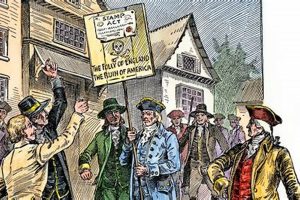

Colonial resistance to the 1765 British tax on printed materials in America took many forms, from boycotts and legislative petitions to popular demonstrations and acts of violence. These actions arose from the... Read more »
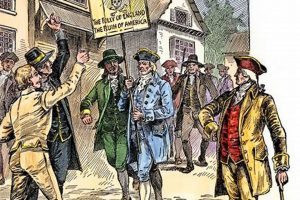
In October 1765, representatives from nine of the thirteen British colonies gathered in New York City for a historic meeting. This assembly, spurred by widespread opposition to the recently enacted Stamp Act,... Read more »


Conceptualizing effective visuals for disseminating dissent against the 1765 British levy on printed materials required a blend of symbolism, clear messaging, and an understanding of the target audience. Imagine posters depicting a... Read more »
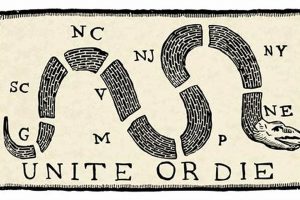
The 1765 act imposed a tax on all printed materials in the British colonies in North America, including legal documents, newspapers, pamphlets, playing cards, and even dice. Colonists were required to purchase... Read more »
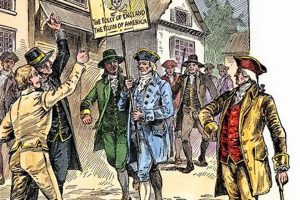
A depiction of the 1765 Stamp Act, whether through illustrative engravings, political cartoons, or artistic representations, serves as a visual record of this pivotal moment in pre-Revolutionary American history. These visuals often... Read more »
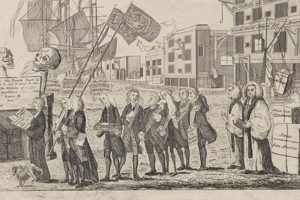
Satirical etchings and engravings produced during the mid-18th century frequently depicted the controversial British Stamp Act of 1765. These visual representations often employed symbolic imagery, such as a skull and crossbones stamped... Read more »
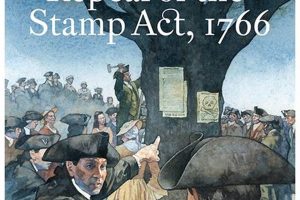
The Stamp Act of 1765, requiring colonists in British North America to pay a tax on printed materials, was met with fierce resistance. Colonists argued that they were being taxed without representation... Read more »

A term equivalent to “Stamp Act” would refer to a tax or levy imposed on legal documents, newspapers, pamphlets, or other paper goods. The 1765 British levy on printed materials in the... Read more »
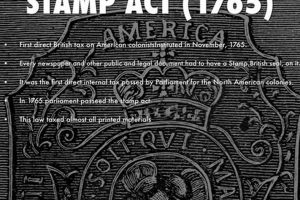
The Stamp Act of 1765, requiring all printed materials in the American colonies to carry a tax stamp issued by the British Crown, ignited widespread colonial resistance. Colonists argued that they were... Read more »
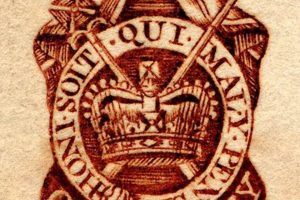
Visual representations of the stamps mandated by the 1765 Stamp Act serve as primary source material for understanding this pivotal period in American history. These images depict the various denominations and designs... Read more »